A quick spin through the southern Grenadines

Phew! We finally finished all of our boat maintenance and received all of our parts and packages and untied the lines from our mooring in Grenada. Hooray!!!

We picked a tight little weather window in the heavy Christmas winds and headed north with the goal of making it to Bequia in time for Christmas. First stop, Carriacou – the little sister island to Grenada with a much more laid back, island time feel. With only a couple nights in Tyrell Bay, we made sure to hit our favorite spots. Paradise Beach Club is absolutely amazing. It’s owner, Allison, remembered our names and Sanitas’s name, even though we last visited almost a year ago 😲 We spent a wonderful afternoon on the beach during Paint and Sip, admiring the wall of boat signs and enjoying delicious seared tuna Greek salad and fresh lime margaritas.
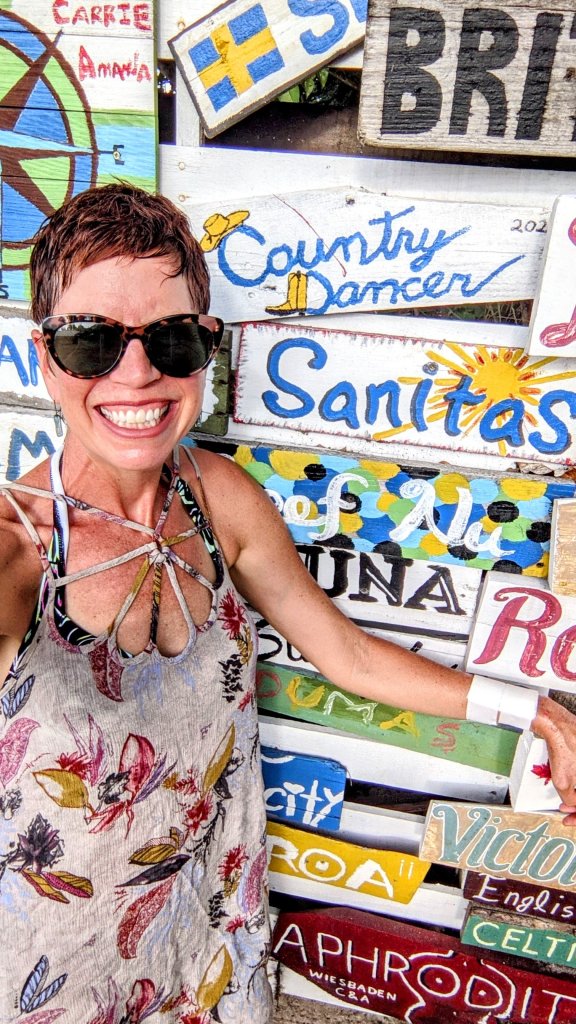
We were among the first to paint a sign. Now the entire wall is full!
Doesn’t this look amazing?

Well fortified with that delicious meal, I prepared for our first international border crossing of the cruising season. I don’t know about you, but I sure never thought we would still be dealing with border closures and COVID restrictions at the dawn of 2022. This year, things are honestly a bit easier for fully vaccinated travelers – there are fewer requirements for long quarantines, for example. To travel by sea from Grenada to St Vincent and the Grenadines Team Sanitas took the following steps:

  • Submit an on-line pre-arrival form for each passenger
  • Submit a “Request for entry and quarantine aboard” form
  • Create a SailClear departure declaration for Grenada
  • Create a SailClear arrival form for SVG
  • Submit digital vaccination certificates
  • Document recent travel history
  • Get a PCR test at the clinic where swabs are sent the Grenada’s main island for processing. Wait impatiently for results
  • Wait for permission to enter SVG on our desired day
  • Upon arrival at Union Island, grab a quarantine mooring and dinghy ashore for health checks and processing

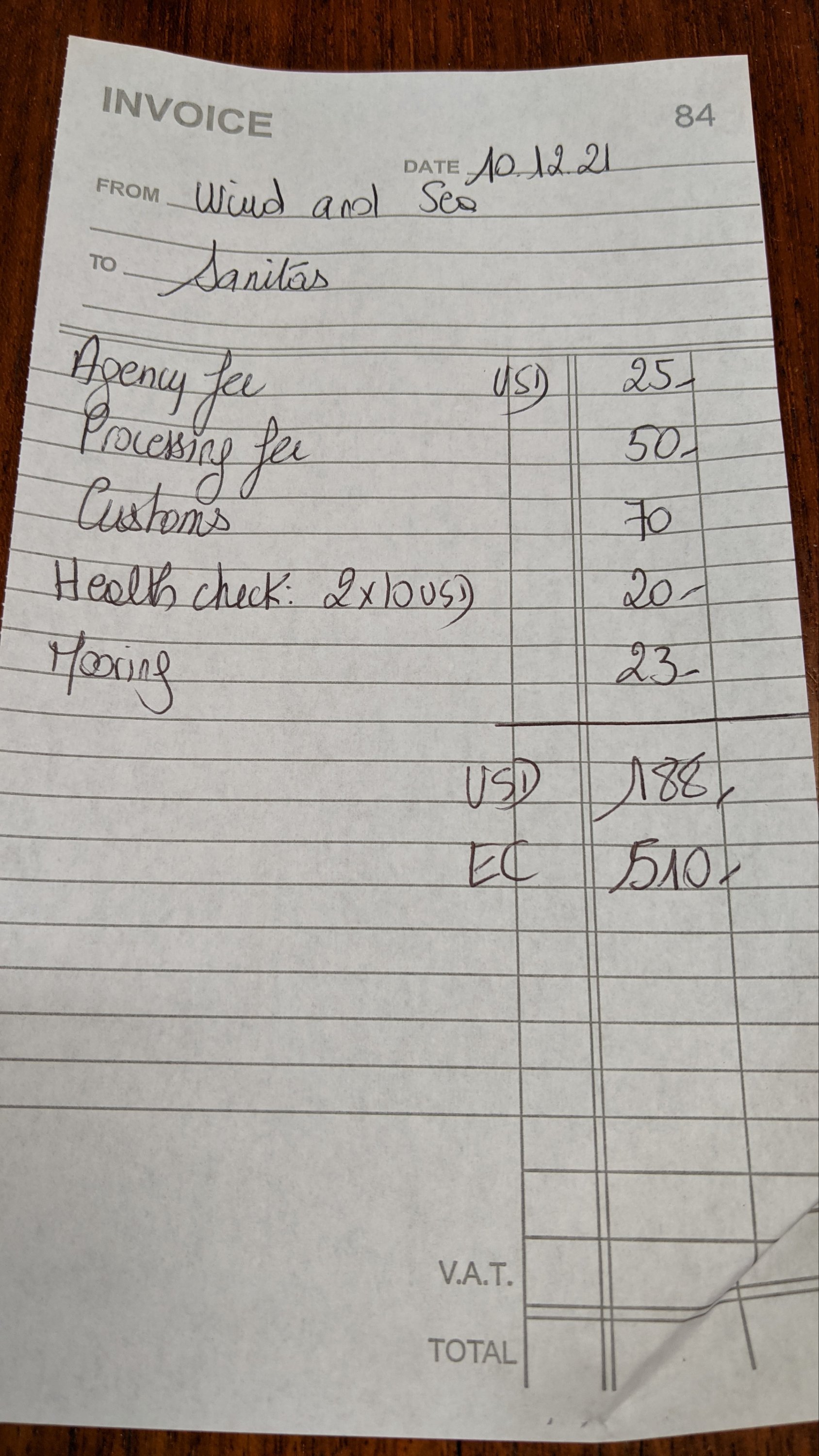
Processing at Clifton, Unions Island went quite smoothly, although it was slow and expensive. We joke that they slow-rolled the paperwork so that the Bougainvillea restaurant would get more of our tourist dollars as we sat at the bar waiting for nearly two hours. Hmmm, maybe it’s not a joke 😜 By contrast, friends who cleared into SVG at Bequia found a somewhat chaotic process and were required to stay in quarantine for over 24 hours. Pandemic travel is still not easy!
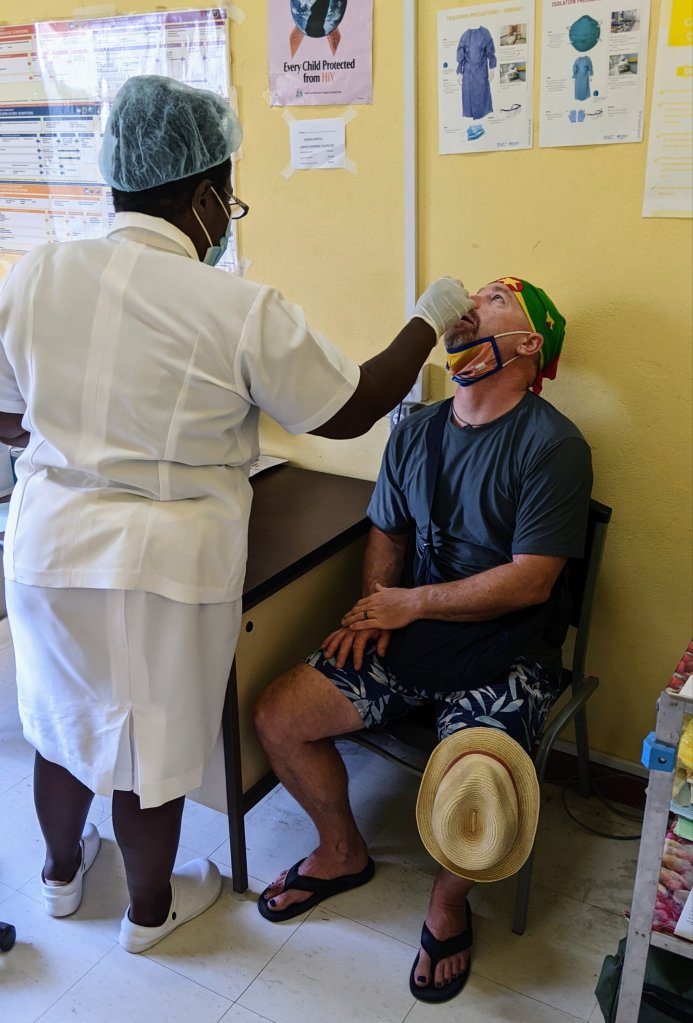
We’re not afraid of these tests anymore but they still aren’t fun!
Ouch! It all adds up!
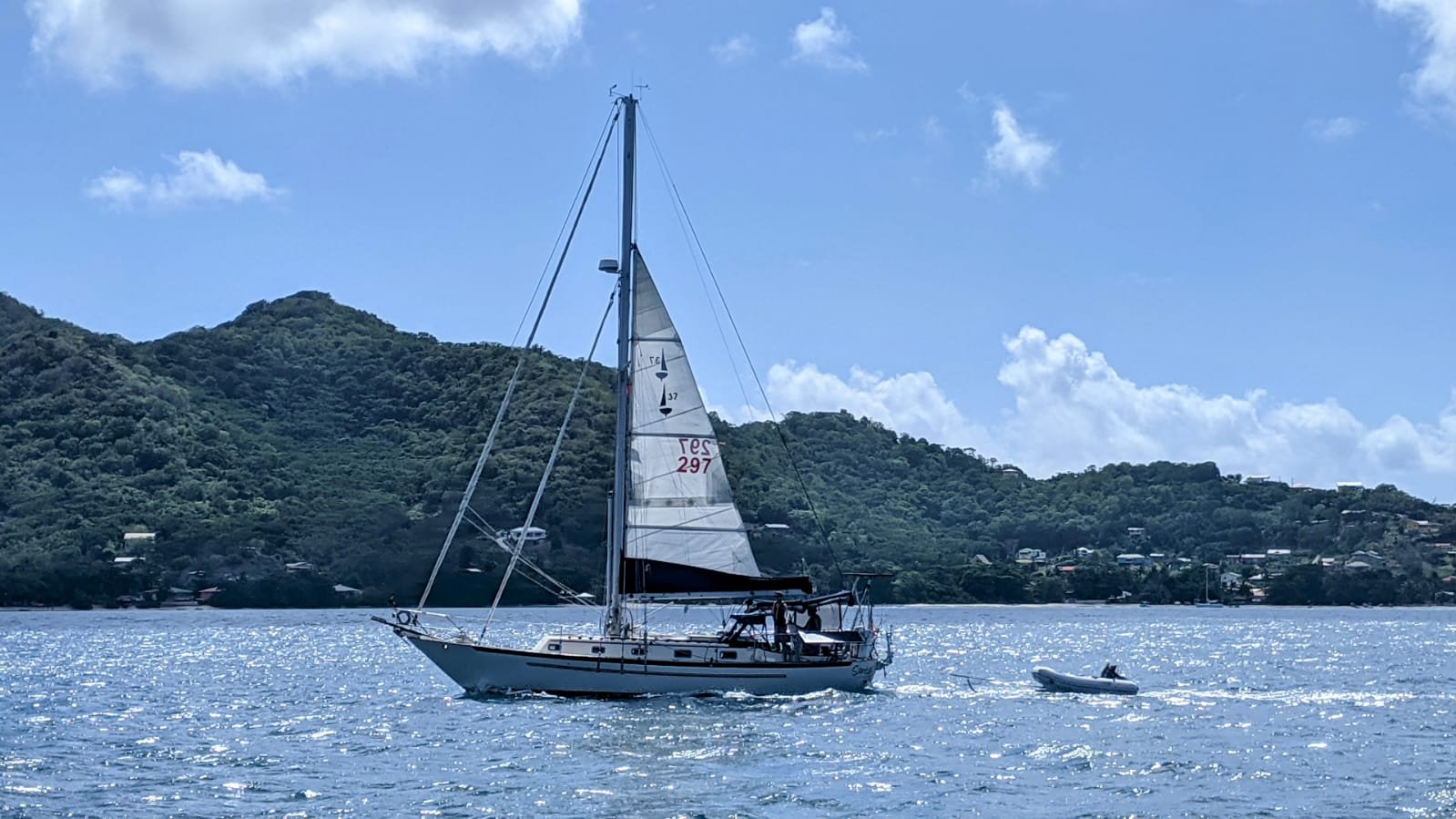
Leaving Tyrell Bay and getting sails up
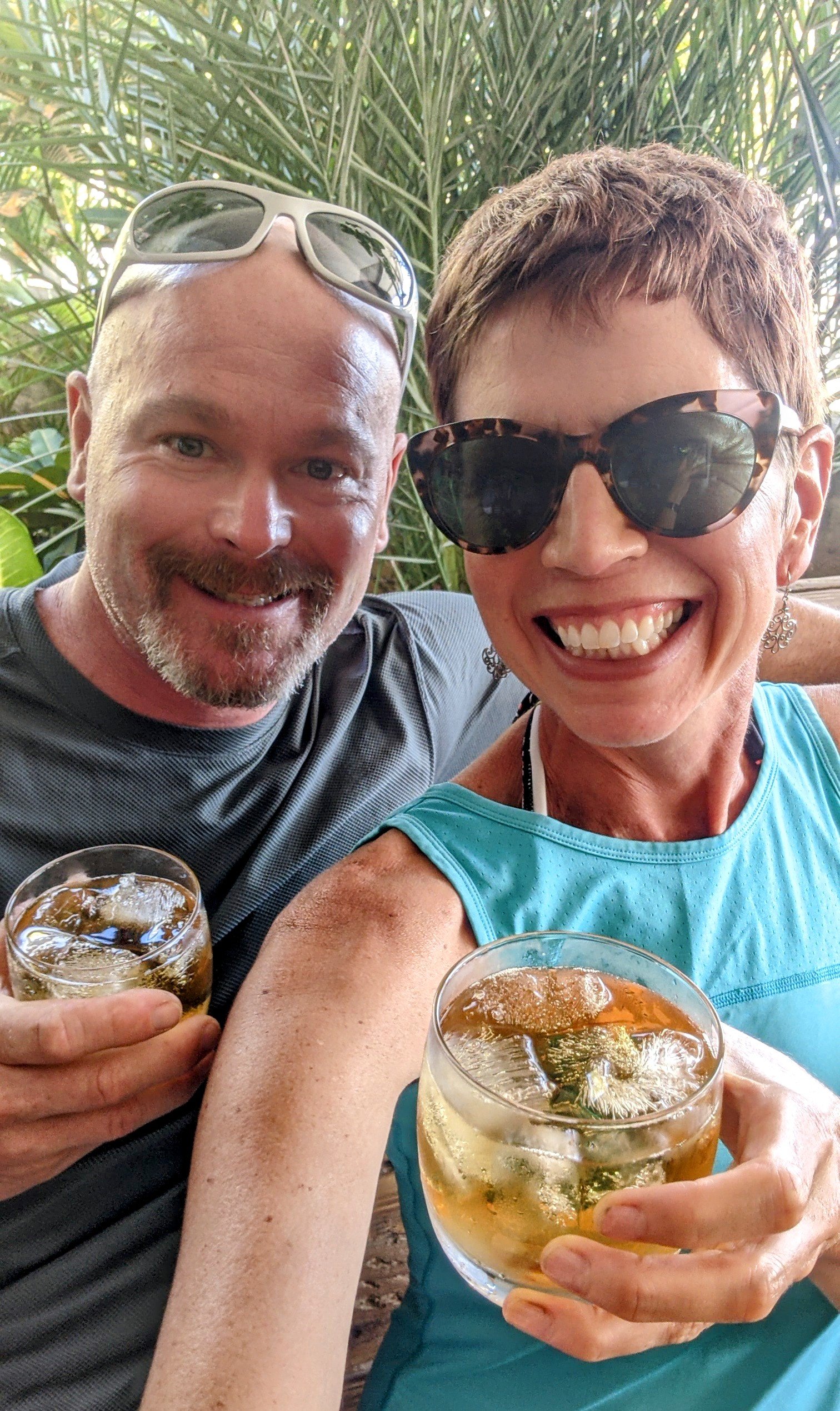
Celebrating a successful entry to SVG

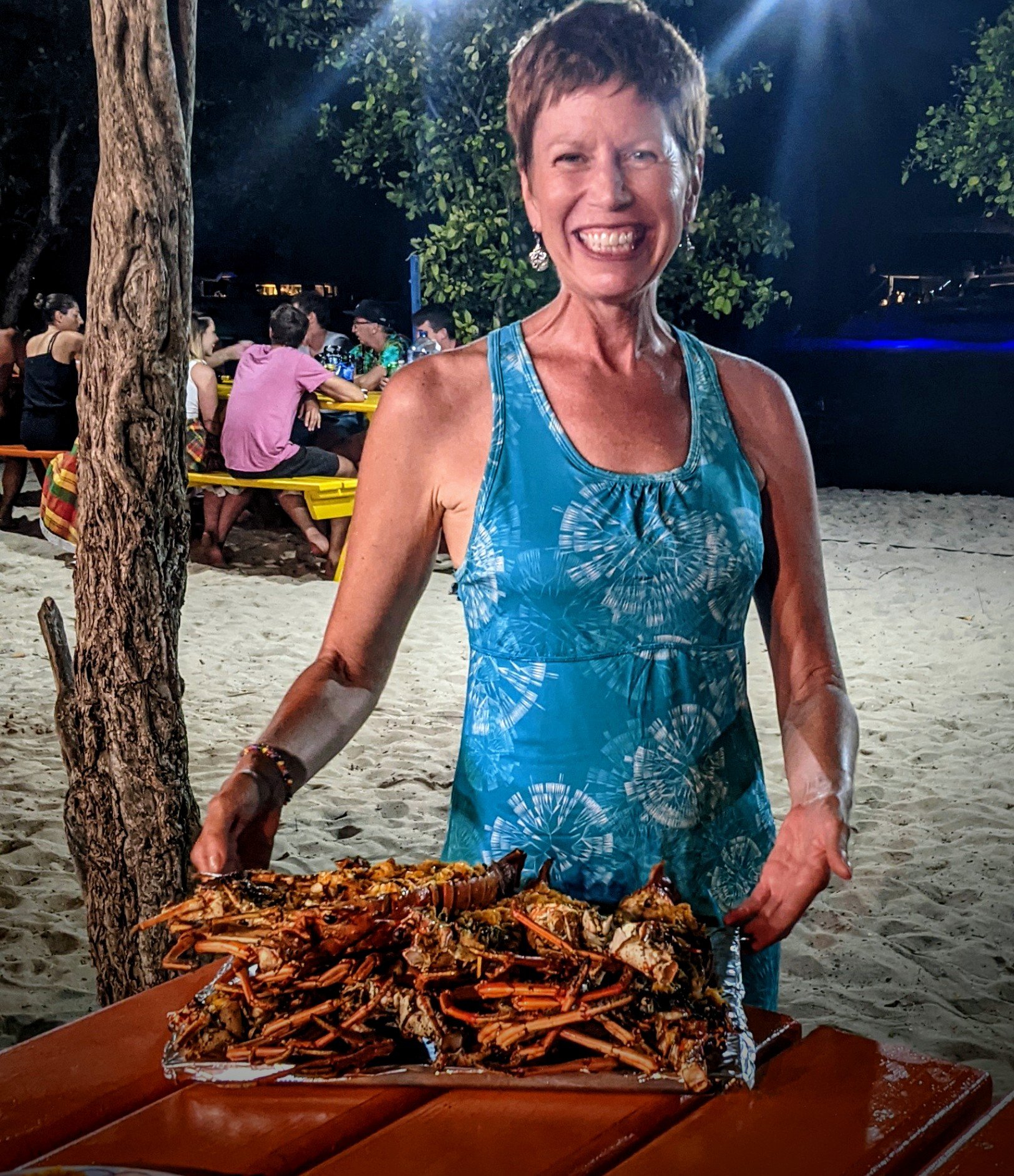
If you ever visit The Grenadines, you must, must, must visit the Tobago Cays Marine Park. It’s a little slice of paradise on earth, with a cluster of small uninhabited islands nestled within a protective coral reef. Even with our high wind conditions, we were able to squeeze Sanitas right in between the two largest islands and picked up a park mooring ball. We were snug as a bug up close to the beach, where we could swim with turtles, linger on the white sand beach, and climb to the top of the island for stunning views. Last year, we and our sailing buddies had the park almost completely to ourselves. This year, tourism has picked up slightly. The number of French charter boats has increased quite a bit, and there are definitely more huge mega yachts in the grenadine waters. On the beach where we used to cook casual beach barbecues, there are now catered lunches for wealthy clients, complete with a steel pan band! We sunned ourselves on the small beach next to passengers from a French cruise ship where champagne corks were popped and everyone received a chilled glass before tenders fought them back to the ship. Too bad my French isn’t good enough yet for me to fit right in and sneak a glass! Of course, we met back up with our favorite hustler Romeo for a delightful lobster dinner on the beach. This is one of my favorite experiences in the islands – toes in the sand, sunset over the water, fairy lights, and an absolutely delicious feast of grilled Carribean spiny lobster, seasoned rice, veggies, garlic potatoes, and fruit. If you go, tell Romeo that Mike and Jenn of Sanitas say hello!
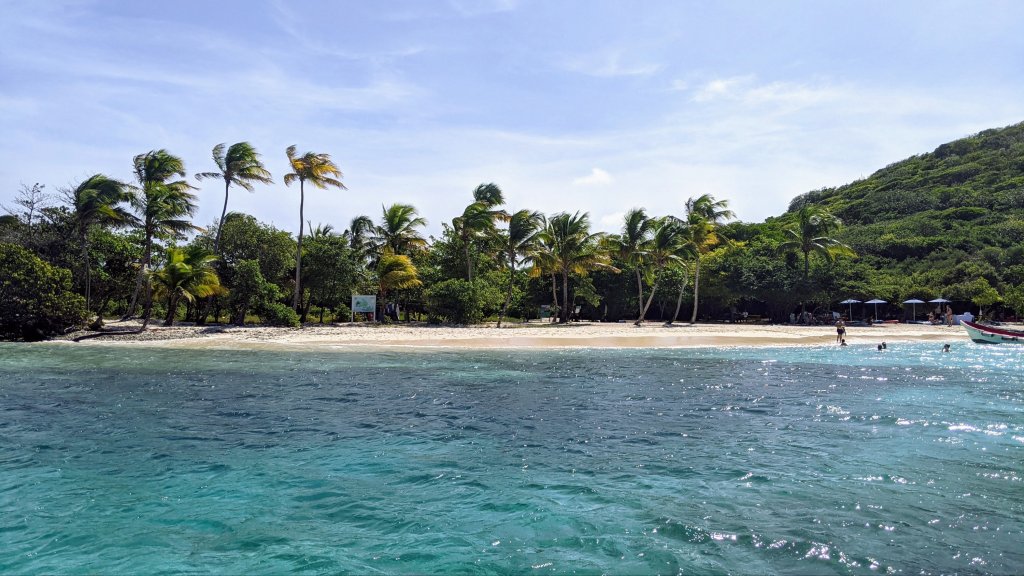
View from our cockpit
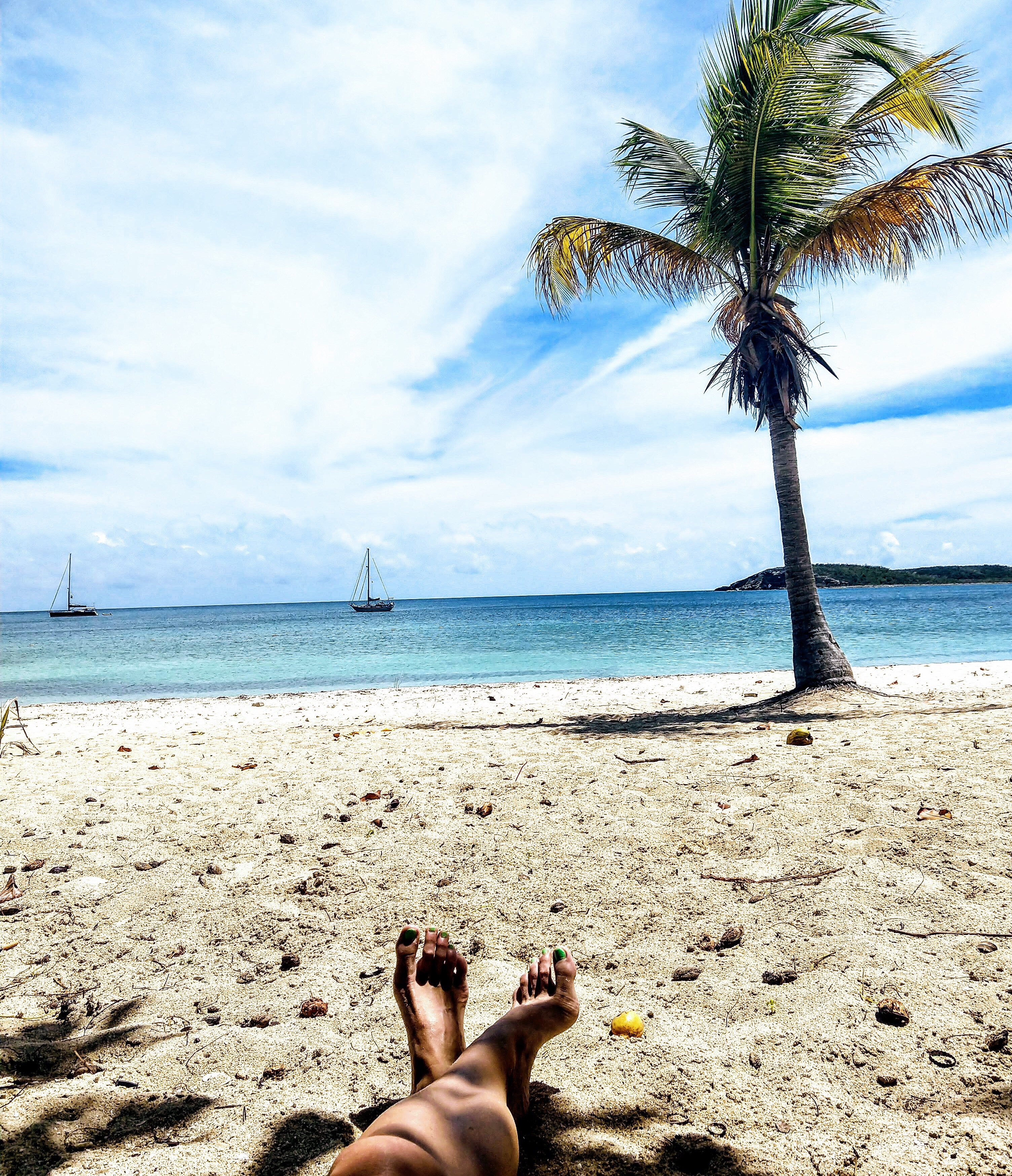
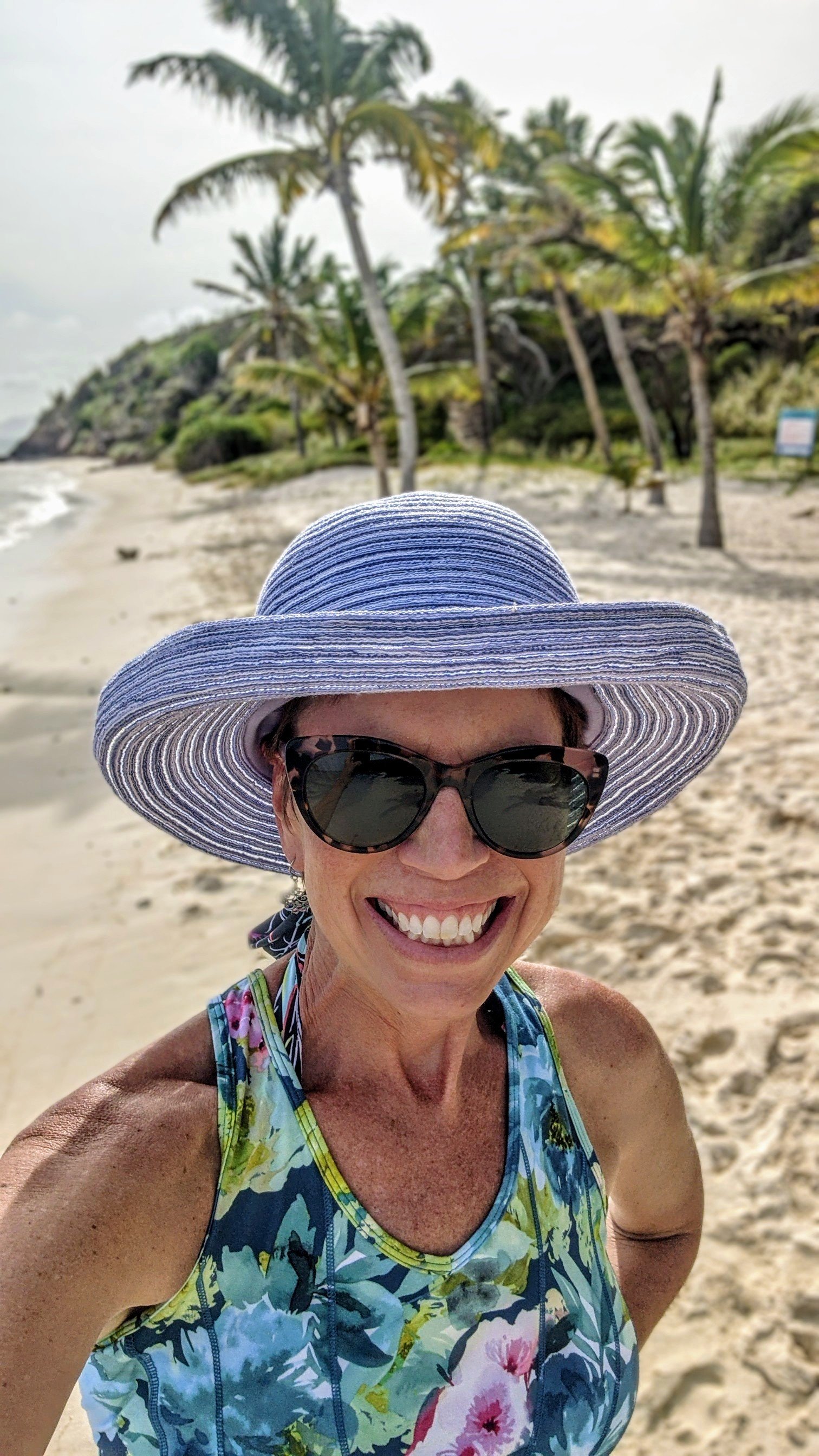
Palm beach selfie
Best lobster in the Caribbean
Turtle Sanctuary beach

All too soon, we had to leave this paradise to continue our sail north to Bequia just to make sure we’d get there in time for the holidays. Winds were still quite fresh and between 30-50 degrees from the north, and seas about two meters high, but consistent. We kept the main double-reefed, and Capt. Mike chose a sail plan that kept us in deep water and sailing as close to the wind as Sanitas can manage. It was an exhilarating salty sail, and we arrived in Bequia just before sunset, ready to settle in for a month in our favorite grenadine island.
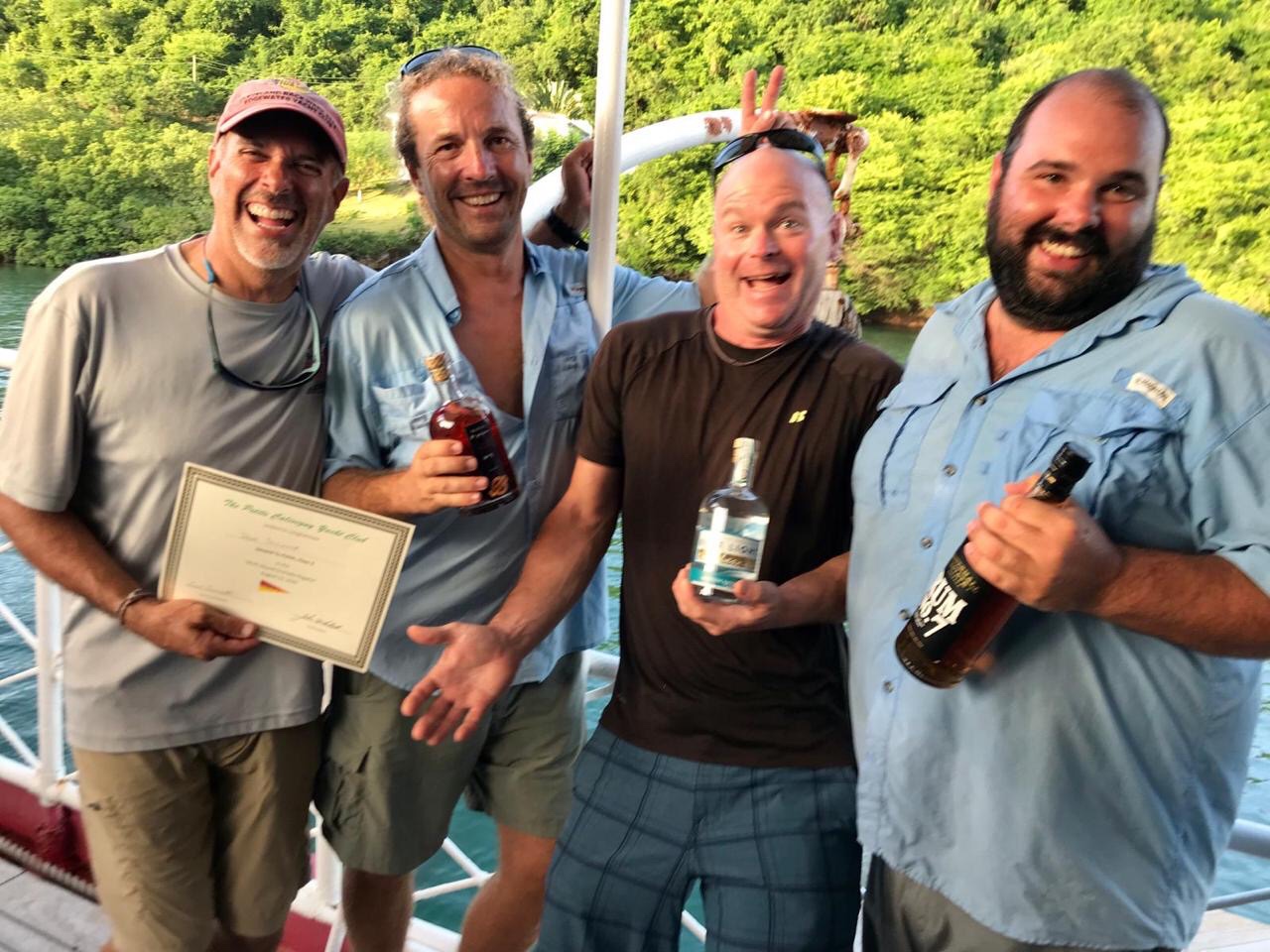
Special Treat! A Sailing Video!

For some reason, I rarely post videos…Maybe because I’m the old-fashioned writer type? Or because video editing is hard? Or just because we’re not very telegenic? 🤣 Lucky for you, we’ve got friends who are great at this stuff. For a sense of what this sailing is really like, click the link below for a 20 minute YouTube video of highlights from last week’s Race around Grenada, filmed by our good friend Zach on SV Holiday!

Fun on Holiday Race around Grenada

The Last Hurrah

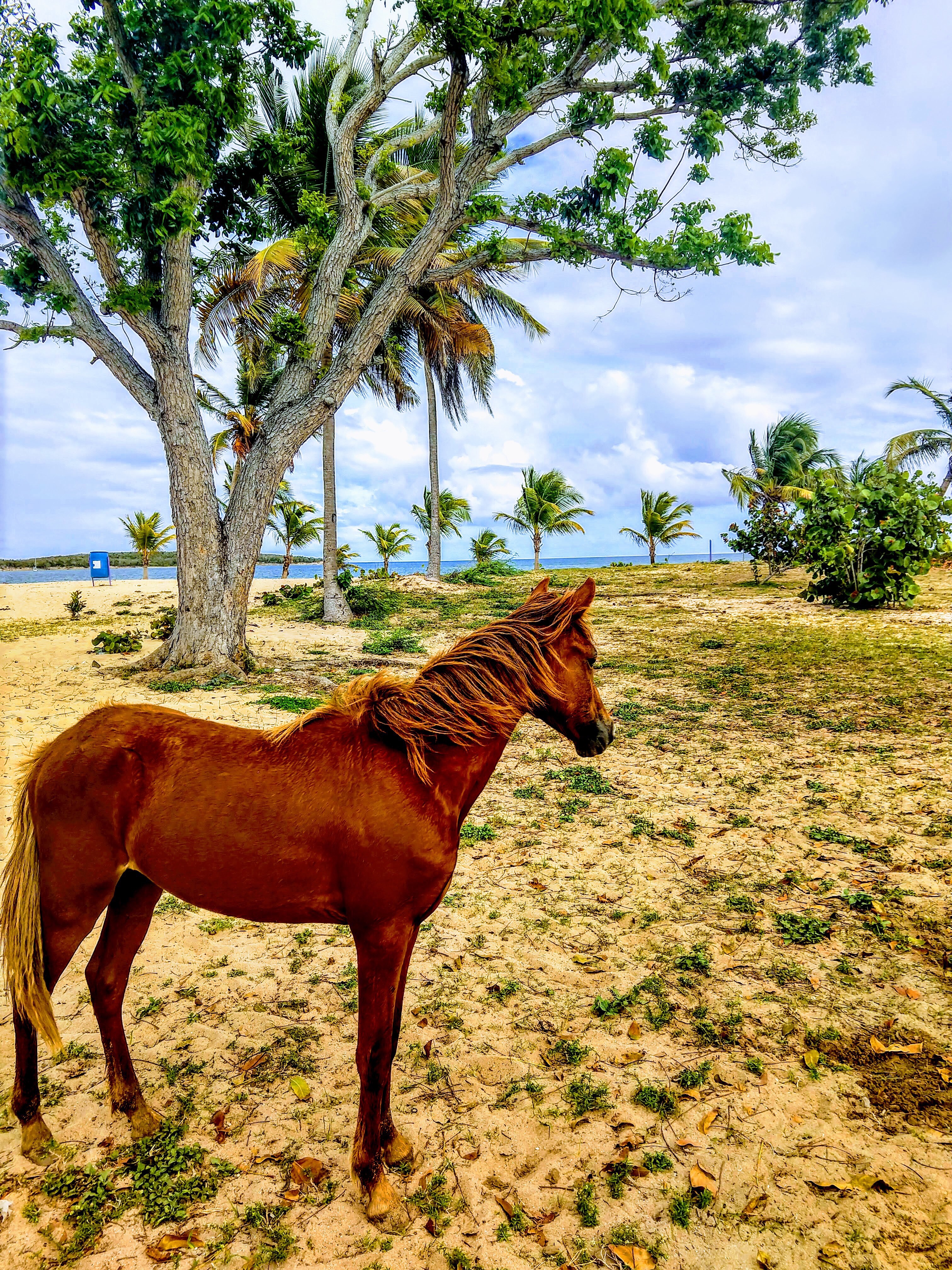
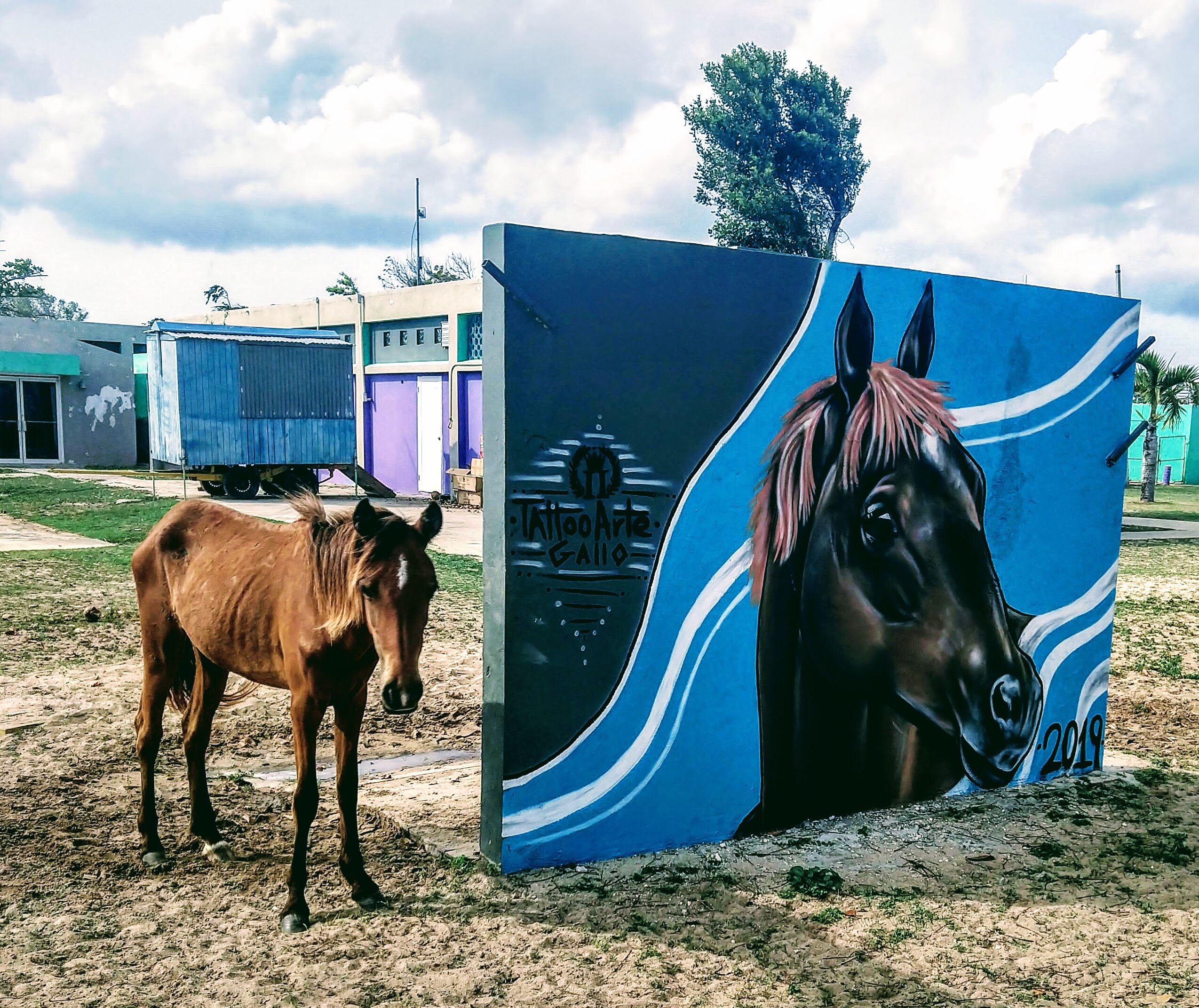
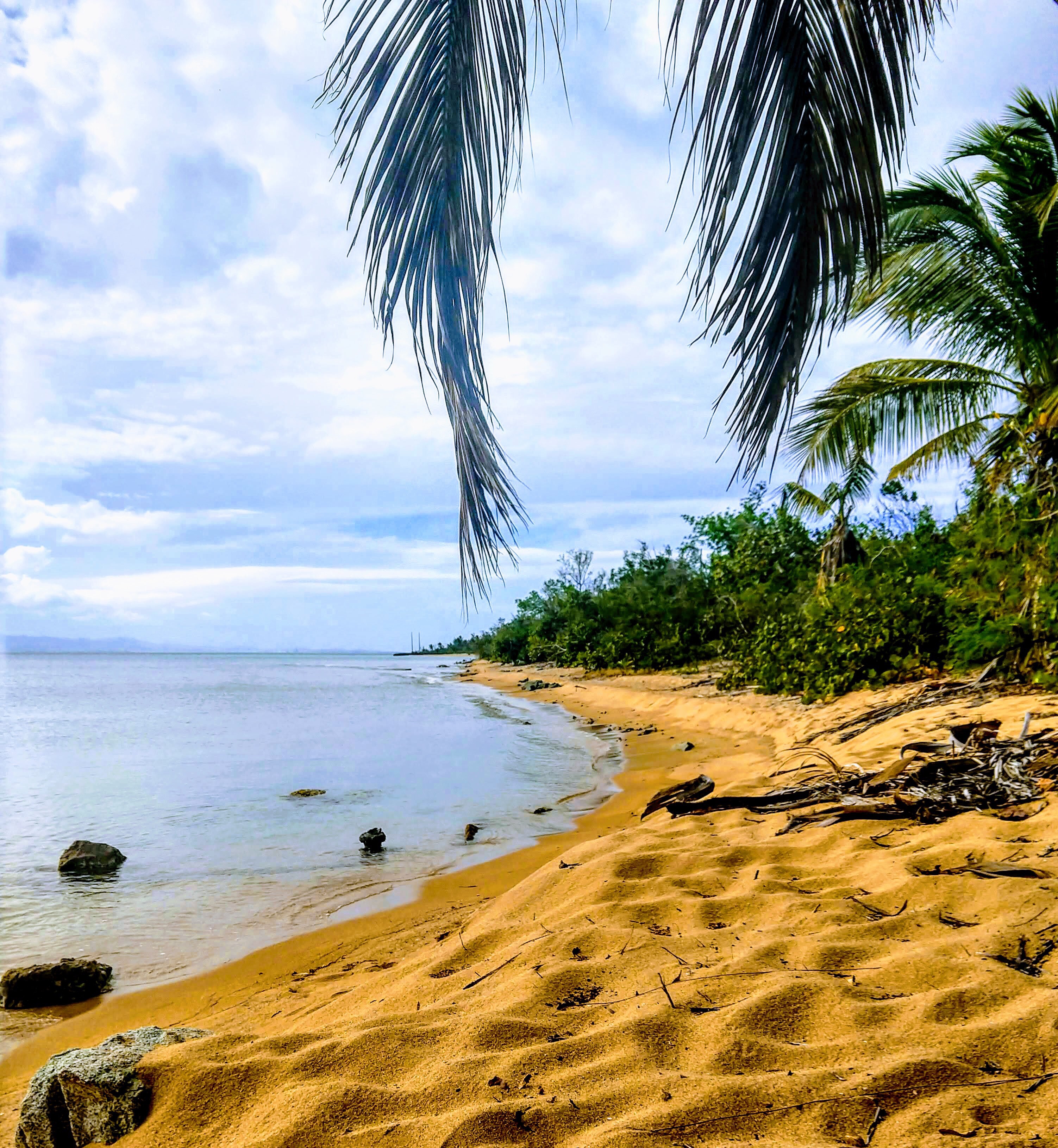
All good things must come to an end, and we were rapidly approaching the end of Sanitas’ 2019 cruising season. So Capt. Mike and I decided to end the season on a high note. While our buddy boats continued on to Culebra and then to the US Virgin Islands, we decided to spend our last few days quietly at anchor off the coast of Vieques. I’m so glad we did! The public beach at Sun Bay is the prettiest we saw in Puerto Rico – white sand stretching for over a mile, with strategically placed palm trees for shade, calm blue water, and wild horses! And only two boats anchored here!

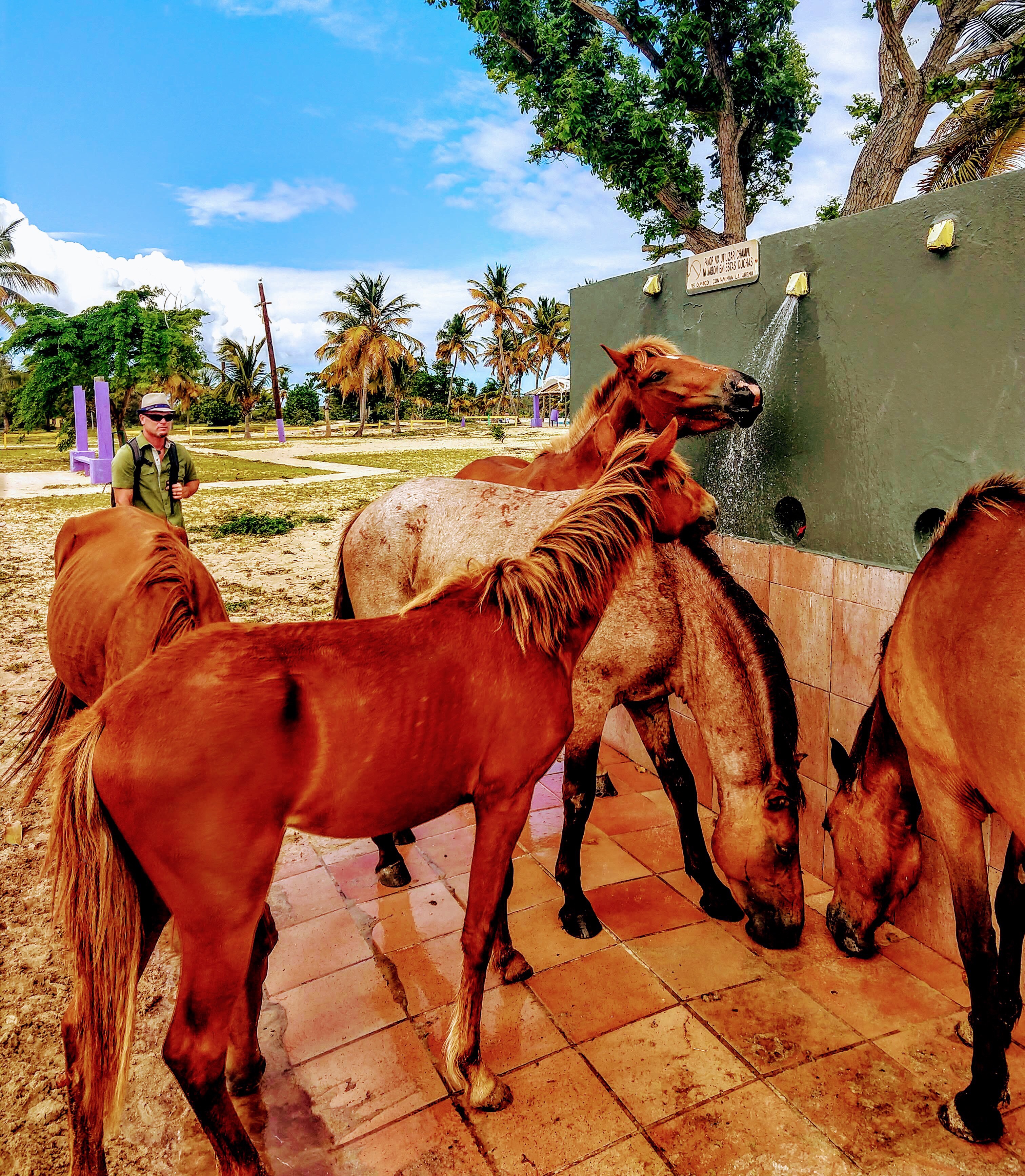
Each morning, we’d check off a couple of items on the “get Sanitas ready for hurricane season” checklist. Then we’d go ashore and walk the length of the beach (stopping by the cafe, just in case they might actually be open one day and willing to sell us a pina colada) and we’d visit our horse buddies. That cafe never actually was open. Sigh. Since it was spring, it was baby season, and I saw some of the cutest wobbly new-born foals I’d ever seen. Don’t worry! I kept my distance so mama wouldn’t get nervous. One small herd of wild horses staked out a primo spot by the outdoor beach showers, and Capt. Mike would turn the showers on for a few minutes each day to give them fresh drinking water. Watch out for those big teeth and sharp hooves, though!

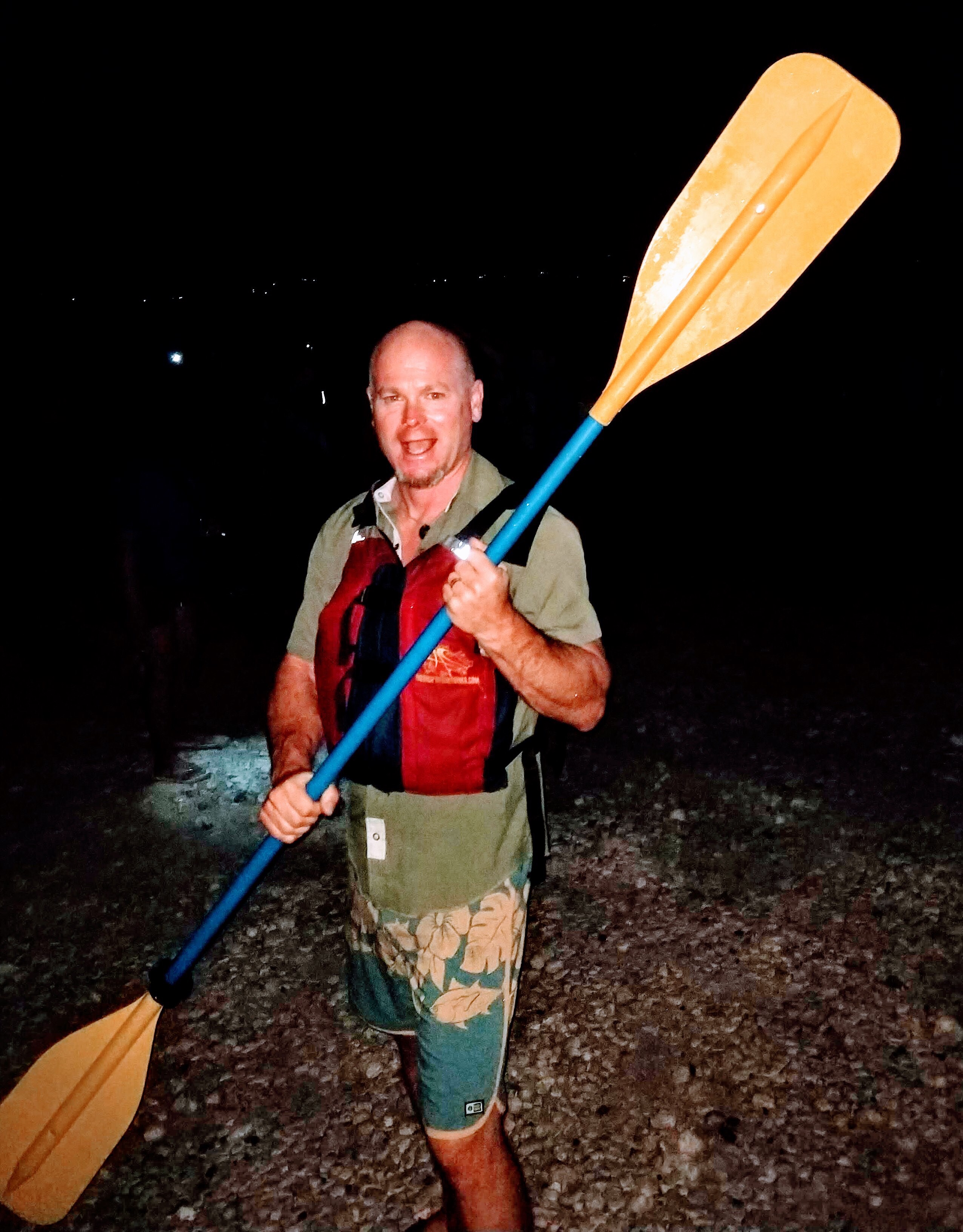
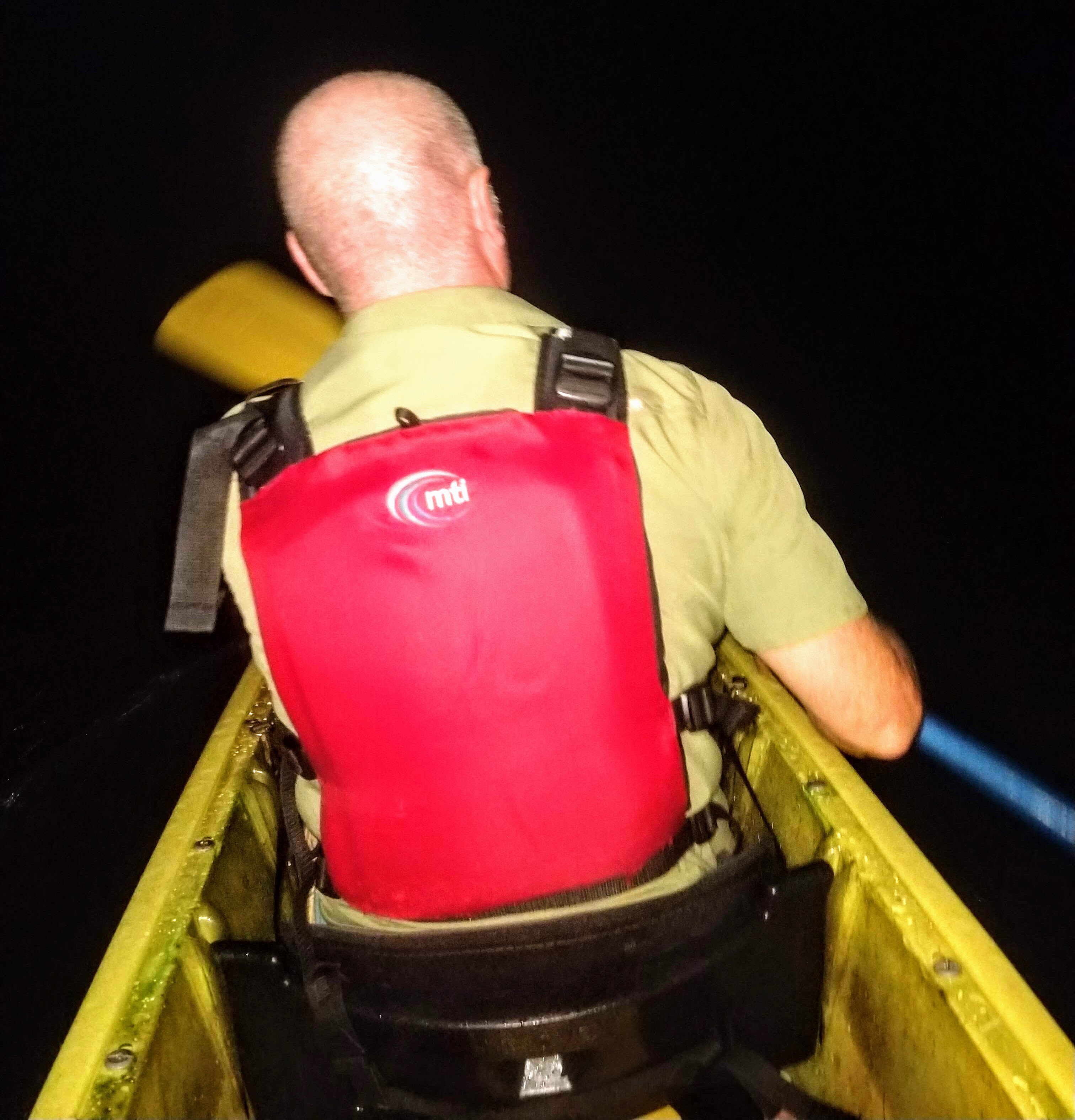
On our last full night at Sun Bay, we booked a tour with Jak Water Sports to visit the bioluminescent bay at Mosquito Bay. Remember when we visited the bioluminescent bay at La Paguara? Well, everyone told us that the bright and active bioluminescence here on Vieques would make La Paguera look like a dim has-been by comparison. We dinghied ashore around 8:30 and the tour bus picked us up at the end of the dirt road. For $50pp, they set us up with a glass-bottomed kayak, paddles, PFDs, and a super knowledgeable guide. We probably spent an hour and a half gliding across the bay, watching the bioluminescence streak like warp speed beneath the glass bottom of our boat. We were encouraged to dip our hands and feet into the water and to watch the glowing sparkles run down our arms. The only no-no was swimming in it. Apparently, prohibiting swimming and motor boats has protected the bay and its microscopic inhabitants. It really was considerably brighter than La Paguara, although being able to swim in the bioluminescence was a true highlight, so I am very glad that we had the privilege of experiencing both.

One our last day of cruising, we had a lovely short sail around to the west coast of Vieques to anchor at Green Beach. It was wonderful to sail downwind after weeks of sailing straight into the trades. We didn’t even turn on our motor on this last beautiful day! This section of the island used to be controlled by the US Navy who performed armaments testing on Vieques. But today, the few military buildings have been abandoned, and all that remains is a lovely and quiet small beach. If we hadn’t just come from beautiful Sun Bay, I might have even considered it the most beautiful beach on the island. Of course, there’s also the famous Black Beach that we didn’t visit- sounds like another trip to Vieques is in order!

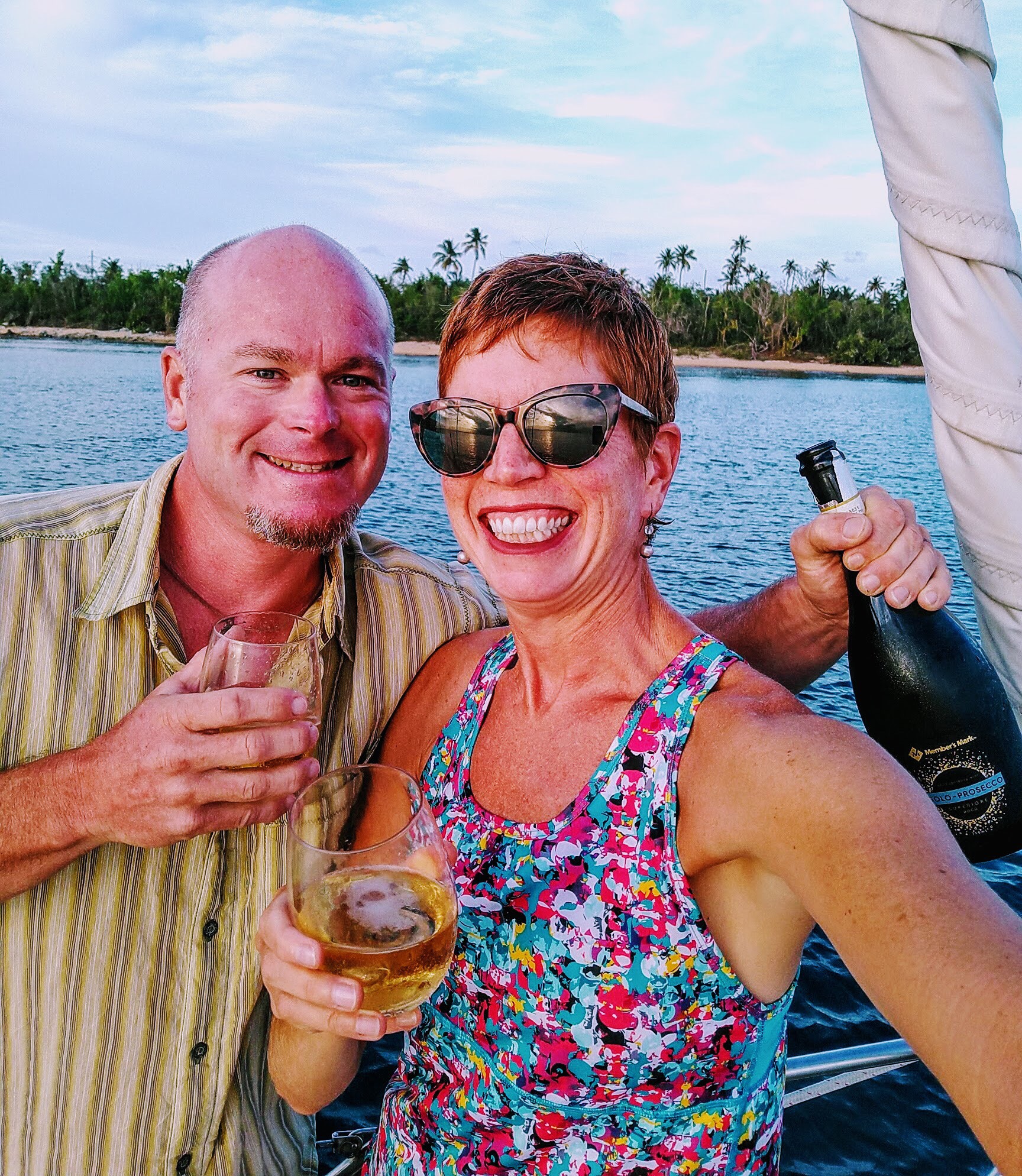
We toasted to our success in traveling all the way from St Petersburg Florida with our last bottle of Prosecco. It’s truly amazing to me that we got ourselves and our boat all this way! Capt. Mike agrees that our second cruising season has been much more relaxing and enjoyable than our first. This last quiet night was a chance review the stories, adventures, and wonderful people we met this season, and to prepare ourselves for the long list of jobs awaiting us in the marina. Cheers to a wonderful cruising season!

Crossing the Dreaded Mona Passage

After a month in the Dominican Republic, our 30 day immigration stamp expired, and it was time to move on to Puerto Rico.

When we first untied the lines in Florida to start cruising, we were stressed out by the thought of crossing the Gulf Stream. But after four crossings under our belts, looking back on it the Gulf Stream doesn’t seem that bad. You always know which direction the current will be flowing, there are apps and websites to tell you how fast the stream is running any given day, the distance is short so you can cover it in daylight, and it’s well understood what makes up a good weather window.

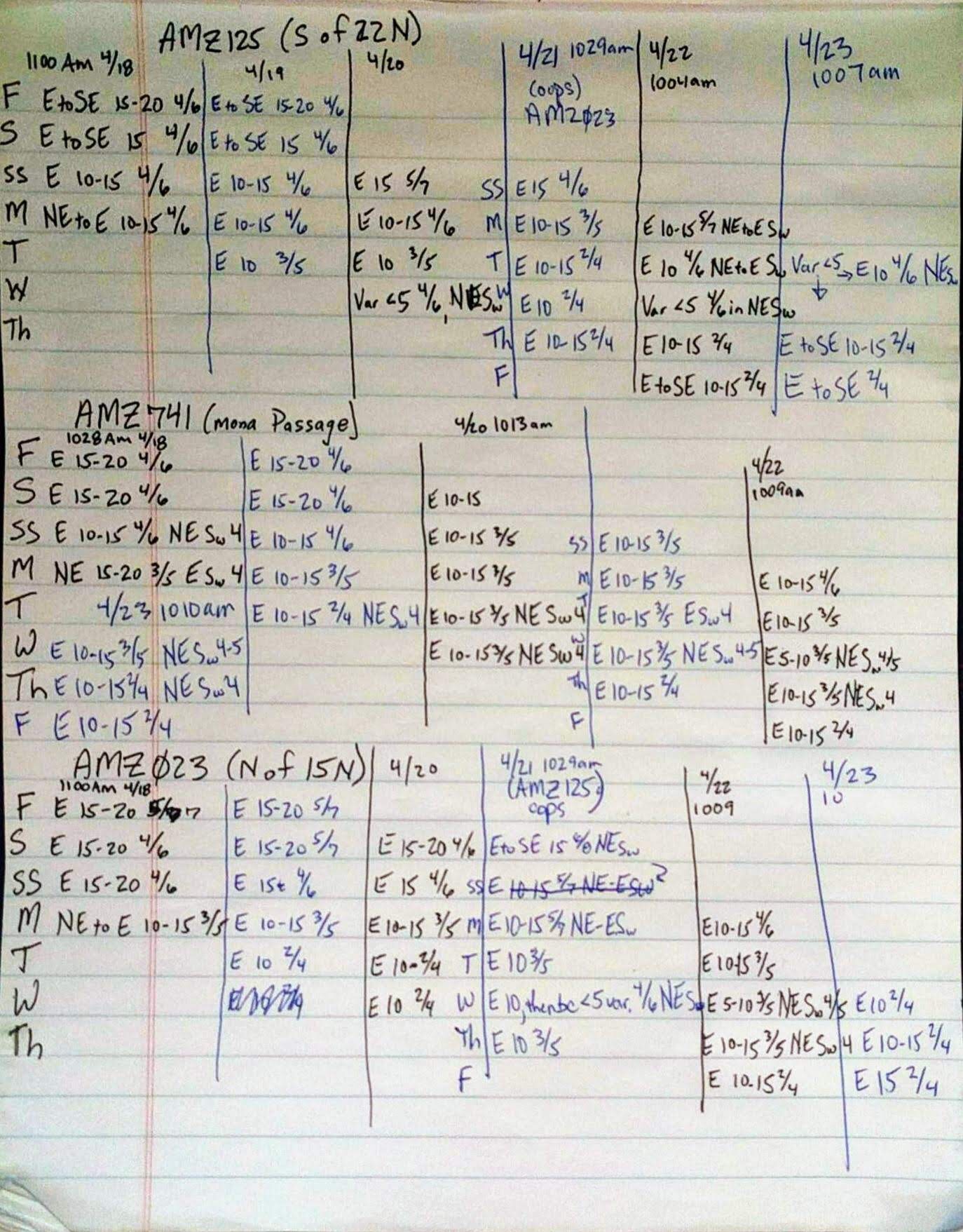
The Mona Passage between the Dominican Republic and Puerto Rico on the other hand, throws in a lot more variables. This is where the Atlantic Ocean meets the Caribbean Sea, and the currents here can vary widely with no real means to predict their strength and flow. You just figure out the currents when you experience them. Also, there are several shoals, or sandbars, which change the depth of the water from thousands of feet to a couple hundred of feet. You certainly won’t run aground in that, but the change in depth really messes with the water and kicks up confused waves far from shore. Although the passage itself is only 80 miles, the distance from the anchorage in Samana to the first safe port in Puerto Rico is more like 150 miles. We planned for over 30 hours of travel. Cooling land masses often kick up thunderstorms that won’t appear in any weather report. So we were particularly cautious when choosing a weather window to cross. Capt. Mike listened to the offshore weather reports for three distinct regions: north, in the passage, and south of the Mona for about a week, watching for the right conditions before making our Go / No-Go decision.

Finally, we were pretty confident we’d have a window we could safely motor across the Mona Passage, although it was unlikely we’d have enough wind to truly sail. We said our goodbyes to Marcie and Damon the night before, so we were all set to raise anchor and head out at first light. The Bay of Samana is gigantic – hours later, we could still see the finger of land to our north. But eventually, we broke free of the bay, and motor-sailed down the southeastern coast of the DR, encountering one of those crazy currents streaming about 1.5 knots against us along the way. Winds were pretty calm (Capt. Mike had done his research well) so we considered ignoring the hourglass shoal all together and just choosing a heading that lined up straight with our destination in Puerto Rico. Glad we didn’t do that! Even doing everything right, and picking a longer course to the north of the shoal, we still encountered pretty rough seas on the edge of it.
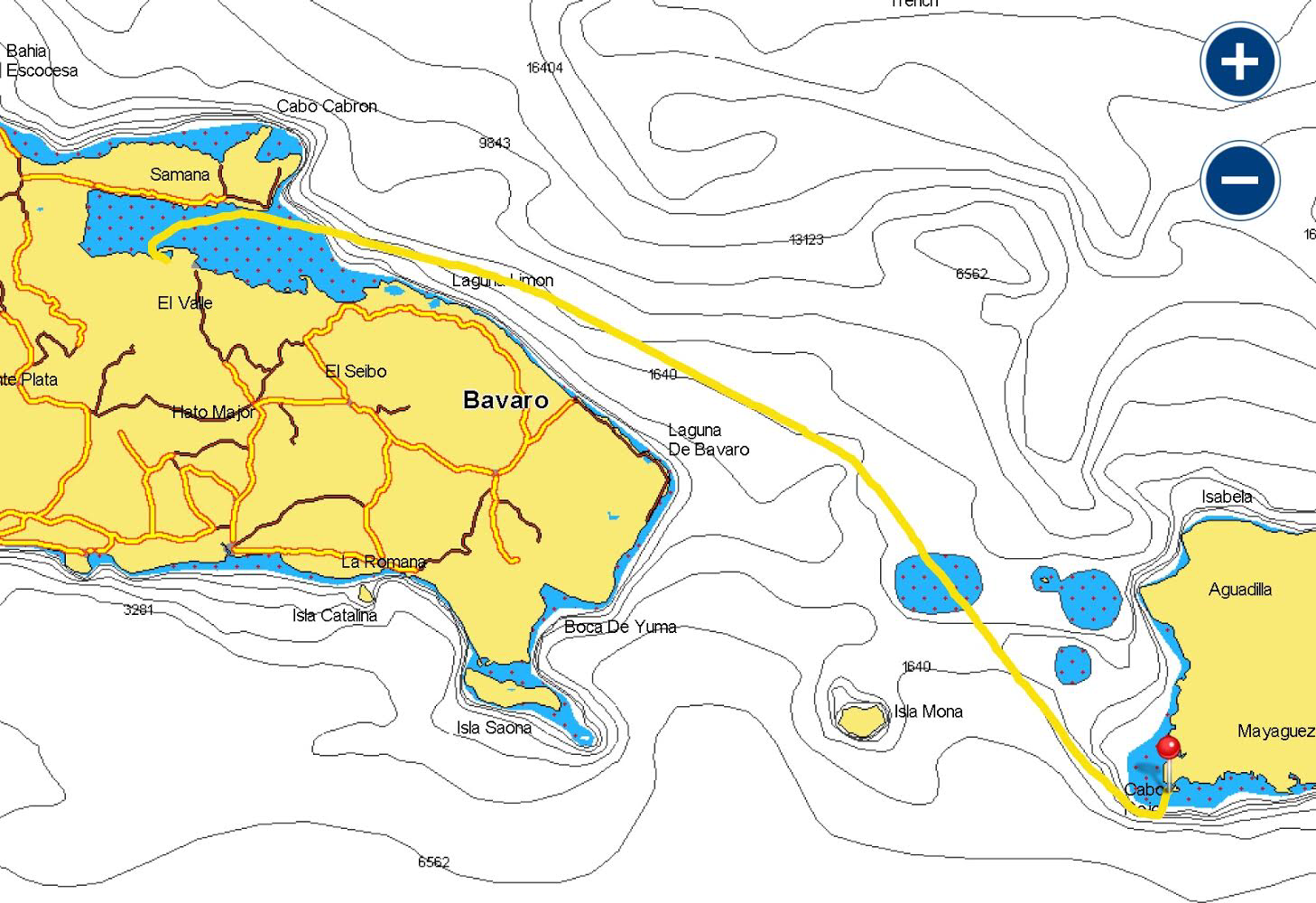
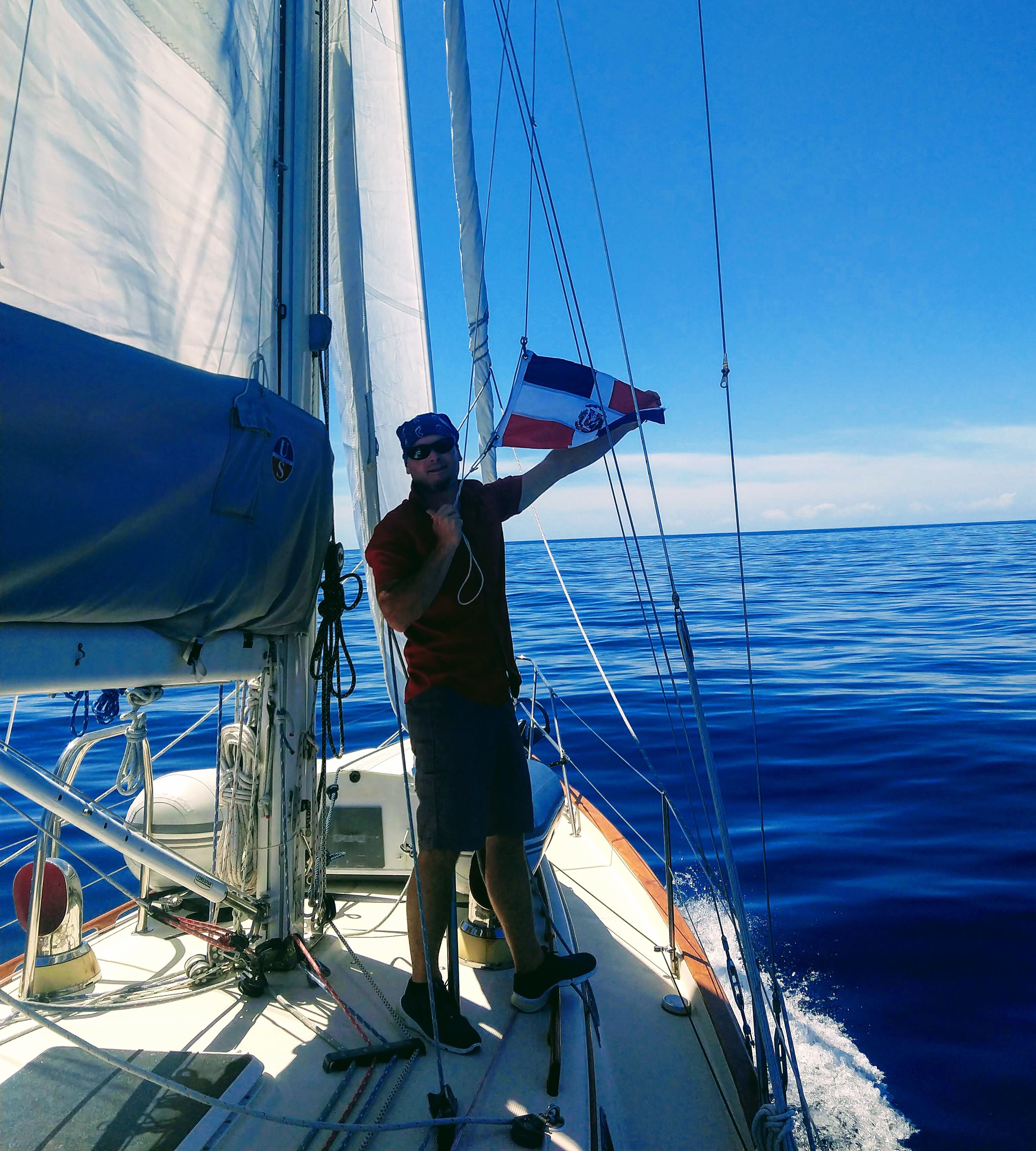
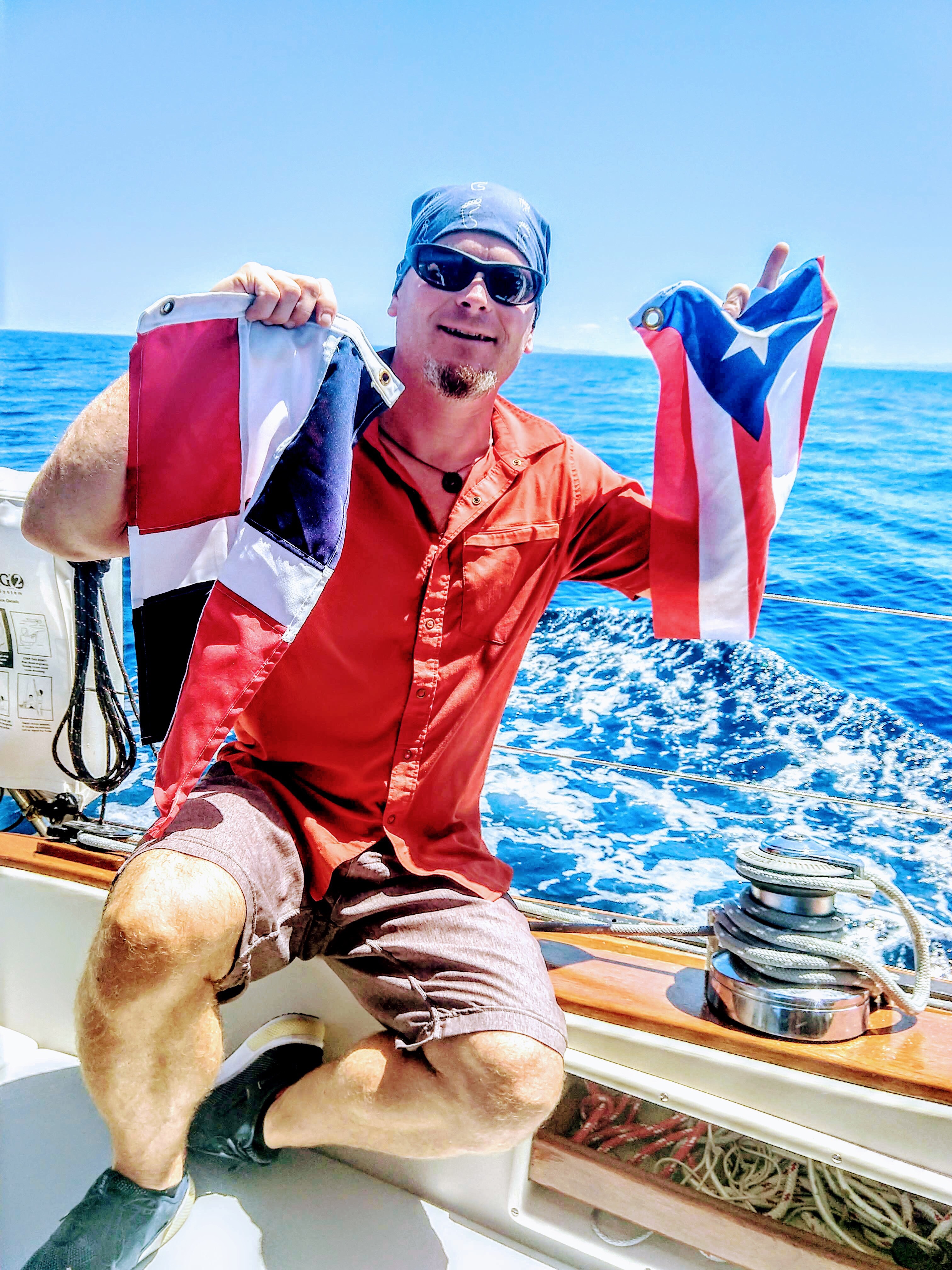
Otherwise, the trip was smooth and uneventful – but long! Out of 33 hours, we were only able to turn the motors off and sail for about 3.5 hours. After about 28 hours, we got just close enough to land that my Google Fi phone picked up a signal and started dinging. So, apparently we were back in US waters for the first time since January 8th! Time to clear back in! Well the US government has finally managed a web site that works. We put my phone up the halyard to get a strong signal, and Capt. Mike called up the CBP Roam app, let ’em know we were back in the US, and twelve minutes later we were successfully cleared in. That even included a quick phone call with Officer Felice. How cool is that? The best part is, we didn’t even need to go ashore in Puerto Real. We could just continue east, taking advantage of the calm winds. Instead, we lowered the Dominican Republic flag and raised the Puerto Rico flag while we were still barely in sight of land.

We had the best of intentions of sailing around the southwest corner of Puerto Rico and making it as far as La Parguara. But as we rounded the cape at Cabo Rojo, the true force of the easterly trade winds and the sea swells they bring hit us. SV Sanitas slowed down to about two knots. And she was getting tossed around like crazy. Maybe it was because we were tired after 33 hours, or maybe it was because we were attempting to travel east too late in the afternoon when the winds had had time to build. But we called an audible and turned sharp to port and found ourselves a safe anchorage underneath the lighthouse.

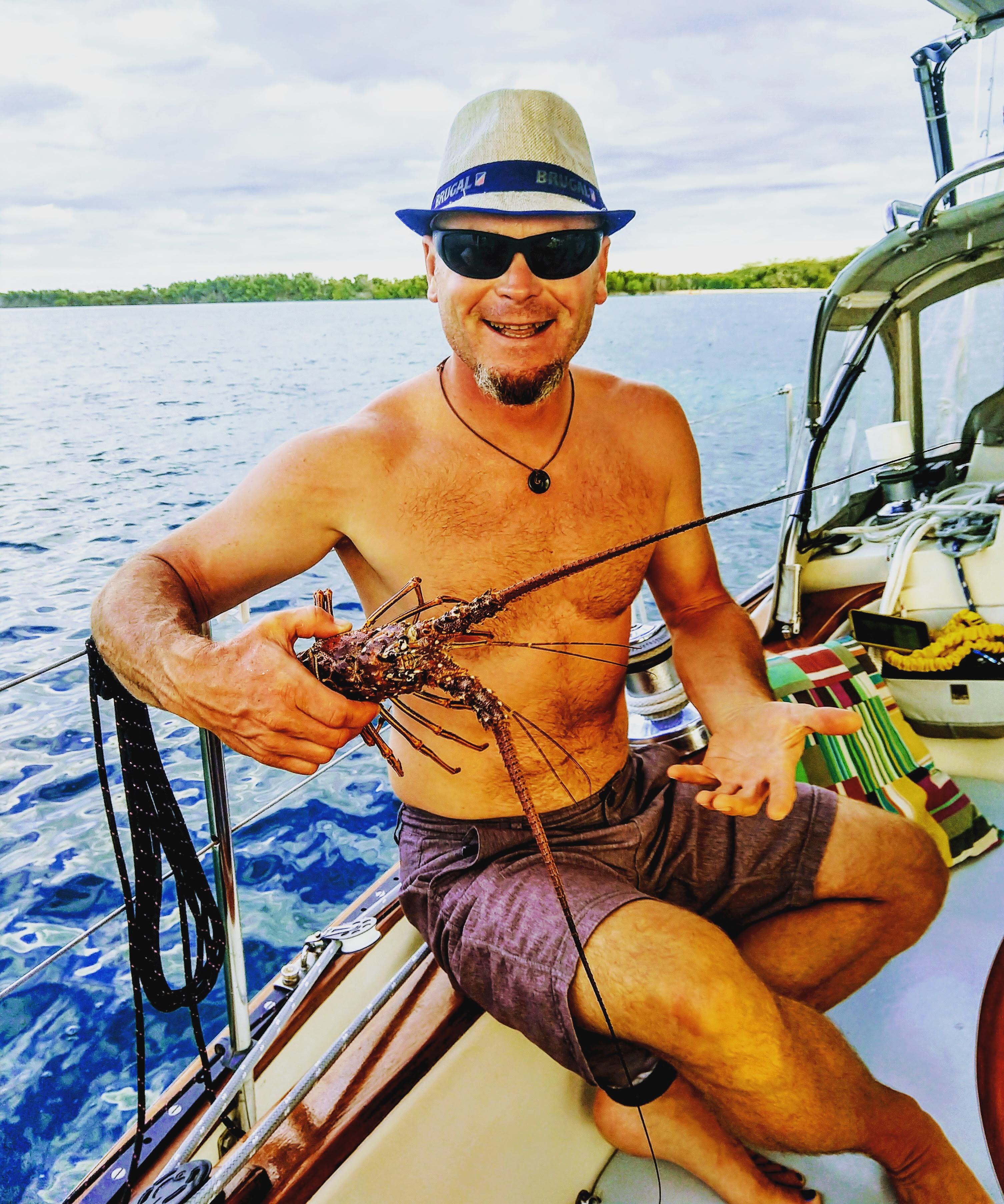
While we were resting and recovering from our long journey, a fishing boat pulled up. Now, I get kind of defensive when a strange boat pulls up to Sanitas. My first instinct is to say “No gracias! I don’t want it. How much?” But in this case, one of the guys simply handed Mike a live lobster, waved, and zoomed off. Well alrighty then! Welcome to Puerto Rico!

We’re on the Thorny Path Now!

After two and a half weeks in Luperon, we finally had to drag ourselves away from the cruiser-friendly, super-fun community. After clearing out and getting our despacho paperwork from the naval commandant, we had an early night because we planned to leave the harbor before daybreak. This would become a theme for the rest of our sailing season. Why? Because we are far enough south now to be affected by the trade winds – the prevailing easterlies that blow 15-20 knots pretty much constantly, unless they are disrupted by a storm or other natural force. For the rest of this season we will always be trying to travel east, and sailboats cannot sail directly into the wind. We have the option to tack back and forth in a zig zag pattern to make progress eastward, at least doubling the distance we need to travel, or we wait for weather windows of light winds and calm seas and motor like heck as far as we can until that window closes. Also, we’ll start most of our travel days in the dark, because land creates a night lee of calm wind close to shore, disrupting the flow of the trade winds until the sun heats up the land and wind and waves return in the afternoon. If this sounds complicated, it is! Most of us sailboat cruisers have been poring over the same guide book, treating it like the bible for sailing in these waters; “The Gentleman’s Guide to Passages South– The Thornless Path to Windward” by Bruce Van Sant. We’re all, “Van Sant says this” and “Van Sant says that” as if we are members of the same cult. If you’ve read this far, you may have drunk the kool-aid 🤣

So anyway…. five boats left Luperon harbor around 5:00am, all heading east toward Samaná, more or less using the Van Sant method. The weather report predicted light winds, but we were seeing 15 knots directly from the east. We motored straight into it until the beautiful town of Sosua, where we picked up a mooring ball, ate lunch and took a good nap, planning to head out again after dark. Around 4:00, a dive boat pulled up and made us leave. (This sounds simple, but it actually required many hand gestures, the use of Google Translate, and futile attempts to negotiate to let us stay just a little bit longer) We picked up another ball nearby, only to have the same thing happen about 45 minutes later. Our buddy boats were getting kicked out as well, and several of them said “Forget it!” and just started out a few hours earlier than planned. However, as soon as they left the protection of Sosua harbor, we heard them on the VHF radio complaining of high winds and rough seas. One boat actually turned around and came back! Capt. Mike and I decided to slow roll our departure, so we hove-to and basically drifted very….slowly…. toward the mouth of the harbor then turned around and drifted very….slowly…..back. This got old, so at 9:00pm we headed out.

Outside the protection of the harbor, winds were still strong, and waves were big. Not dangerous, but because they were working against us they slowed our forward progress so much that we were only making 3 knots. Yep. We could have walked faster. We decided we couldn’t make it to Samaná at this rate, so we made a Plan B chose a closer anchorage instead and settled in for our night watches. On the positive side, after two years we finally figured out how to use our radar system! So we used the radar to stay about half a mile off-shore, or in 120 feet of water. Steering to those parameters kept us each busy and entertained during the night – almost like playing a video game.

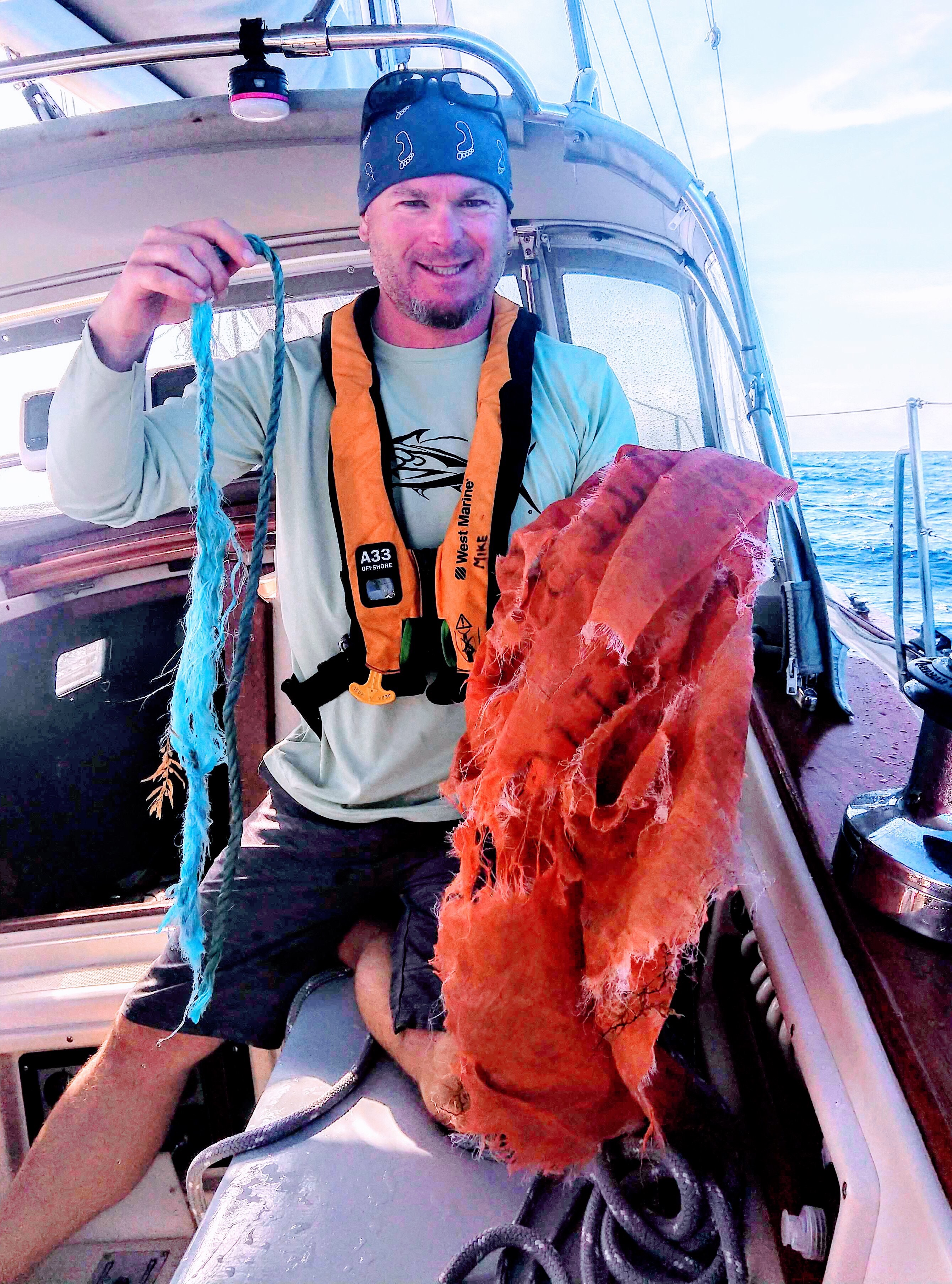
Around 2:00am the seas finally laid down and Sanitas picked up speed. Hooray! On our next change of watch we came up with a Plan C to split the difference and travel to the harbor of El Valle. Decision made, I went below to try to sleep. When I woke up at sunrise, Capt. Mike was in a bit of a frenzy. He’d noticed a vibration in the steering wheel and a laboring noise from the motor and was attempting to troubleshoot. After checking the belts, the motor mounts, and the rudder shaft and finding nothing wrong, it was time to get serious. Capt. Mike was going into the water (in the middle of nowhere, in infinite depth) to check it out. We dropped all sails and turned off the motor, but we were still drifting at almost 1 knot. We pulled out a spare line to tie around his waist, dug out snorkel fins and mask, and put out the swim ladder. I told him I loved him, and he jumped in. After a deep breath and two exploratory dives, Capt. Mike surfaced yelling, “Hand me the knife on the steering pedestal!” I had it to him in a flash. Another couple of breaths and he grabbed the side of the boat and tossed a big mess of orange canvas and blue rope aboard. This pile of abandoned fishing junk had been wrapped around the prop, preventing it from turning and messing with our ability to steer. Scary as it was to get into the water while at sea, at least Capt. Mike had quickly found the smoking gun and fixed it. Ten minutes after we stopped, we were back underway.

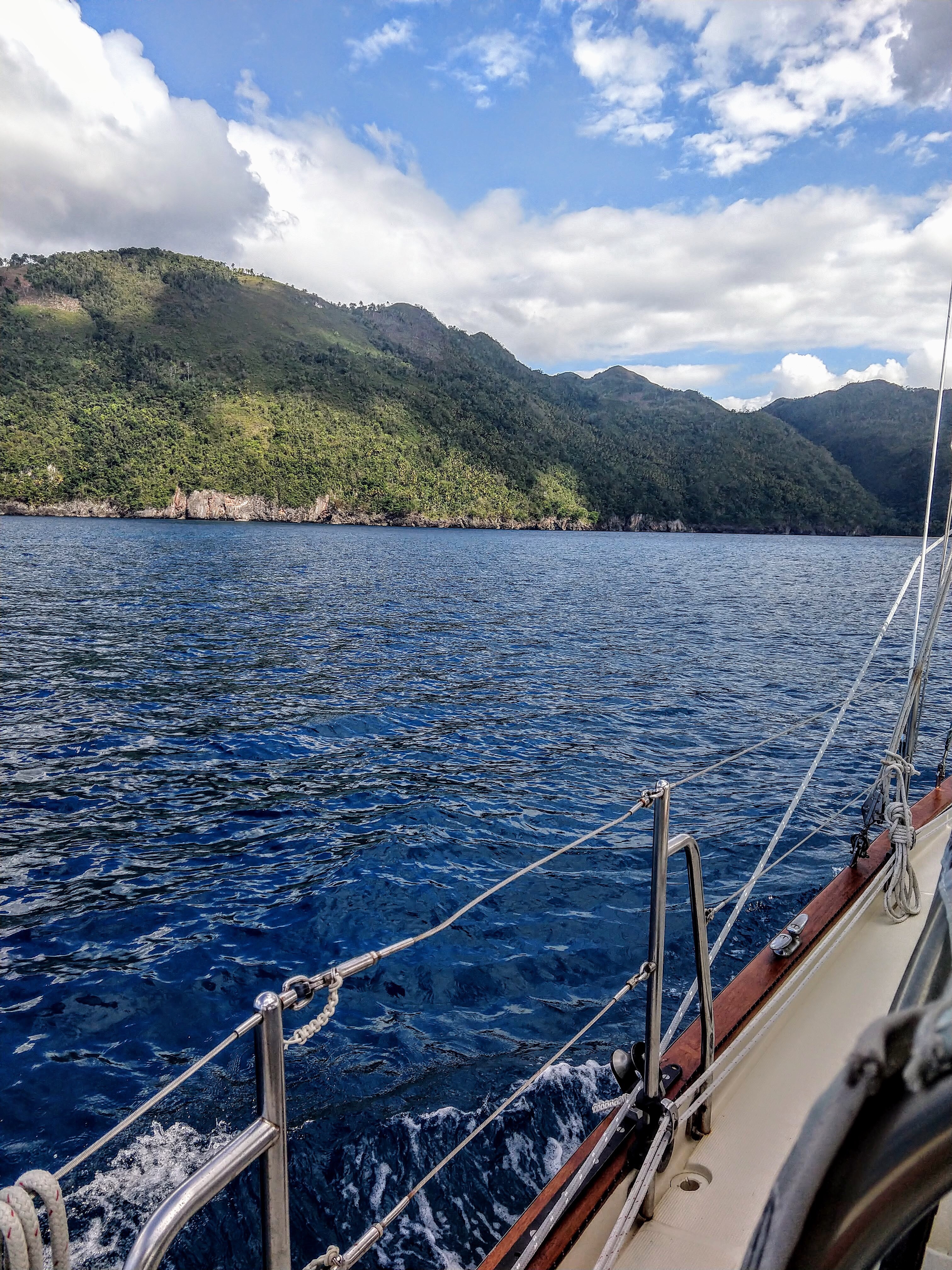
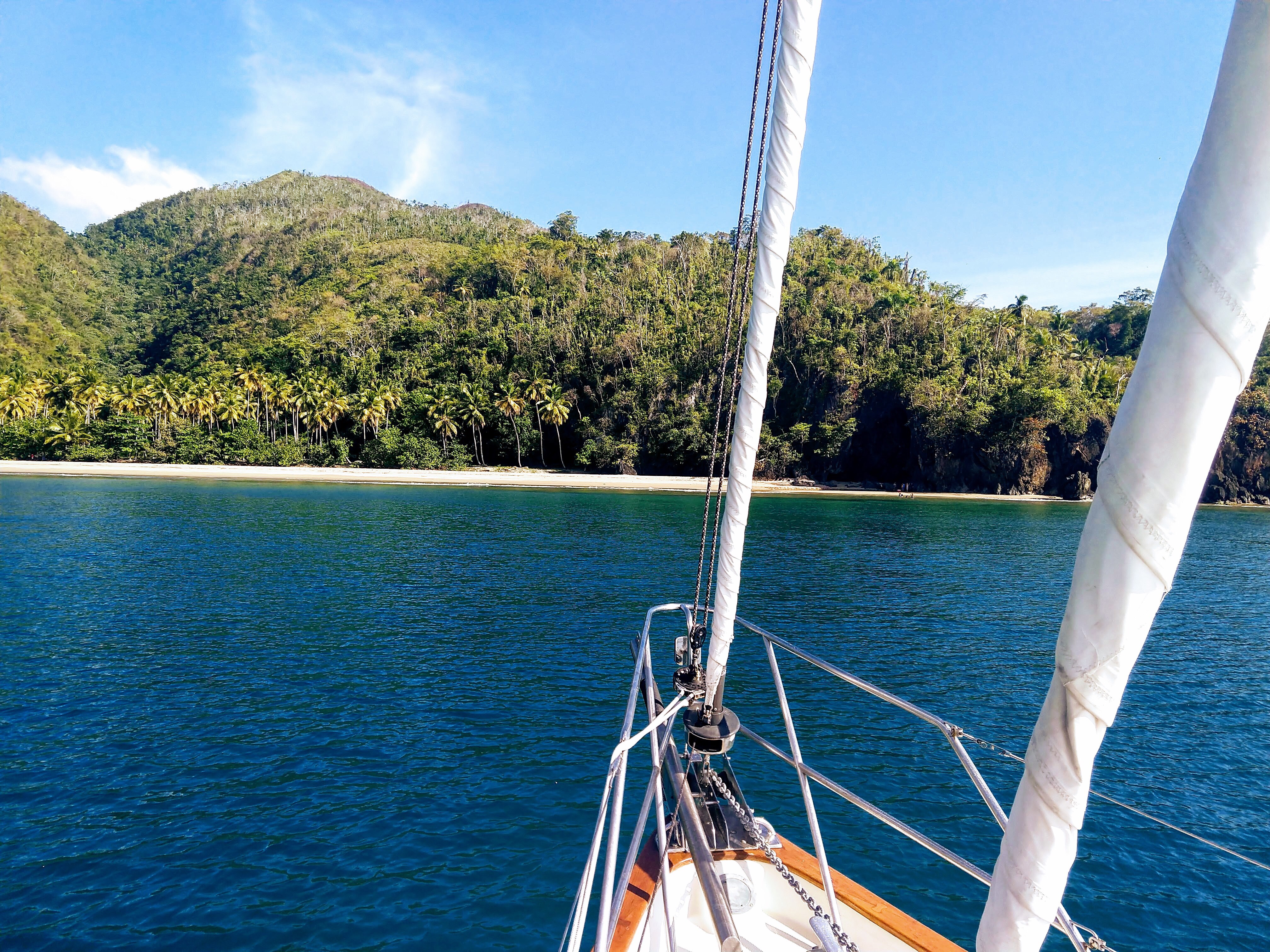
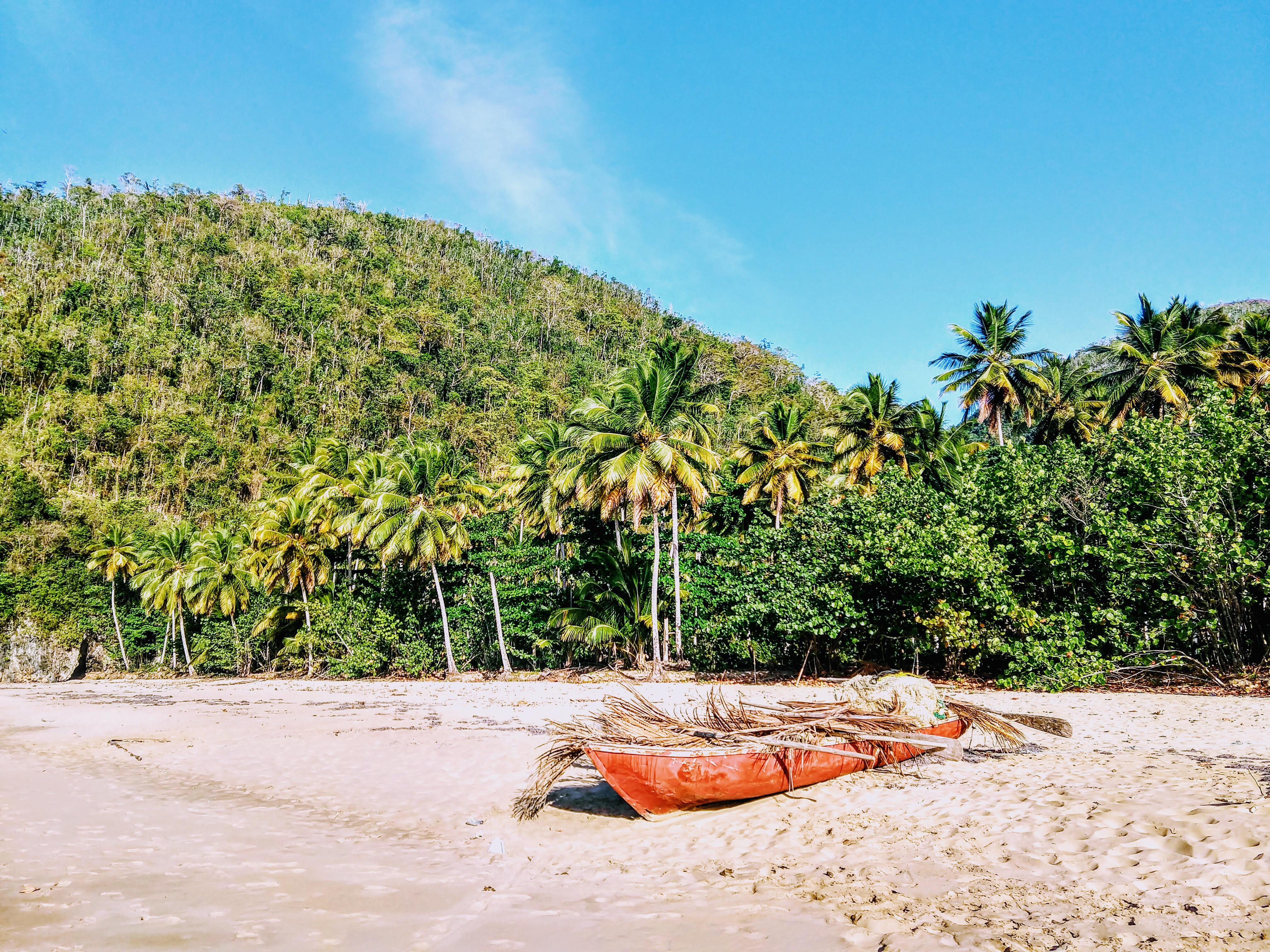
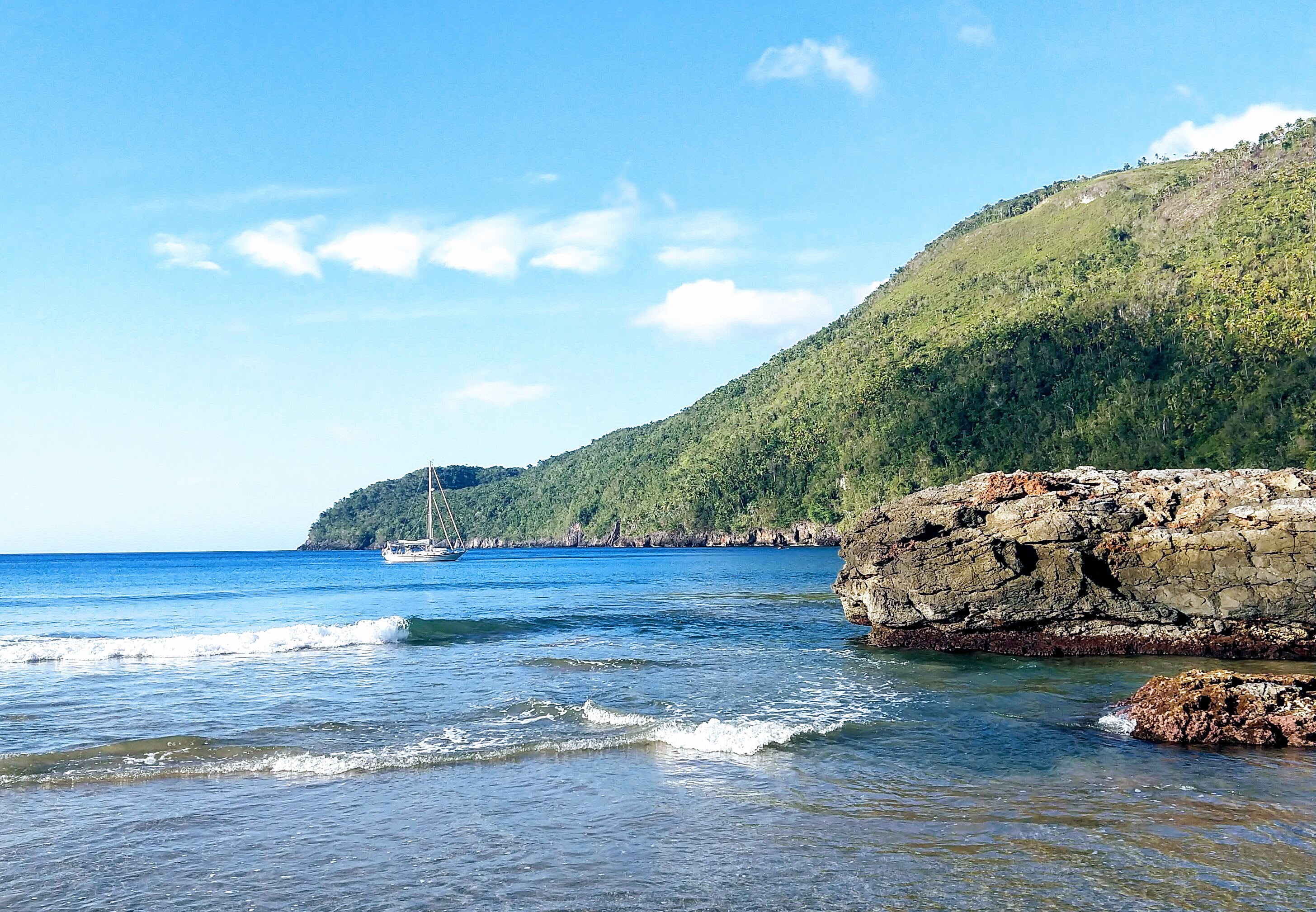
Finally, around mid-afternoon we approached the harbor of El Valle. It had been a long couple of days, and we were ready for a rest. As we approached the anchorage I couldn’t help but exclaim over and over again, “This place is gorgeous. Oh my gosh, this is so beautiful!” The vibrant green mountains were steep as fjords, and we were headed straight for a sandy beach rimmed with palm trees. We had found a perfect tropical paradise for the night as the reward for all of our efforts!

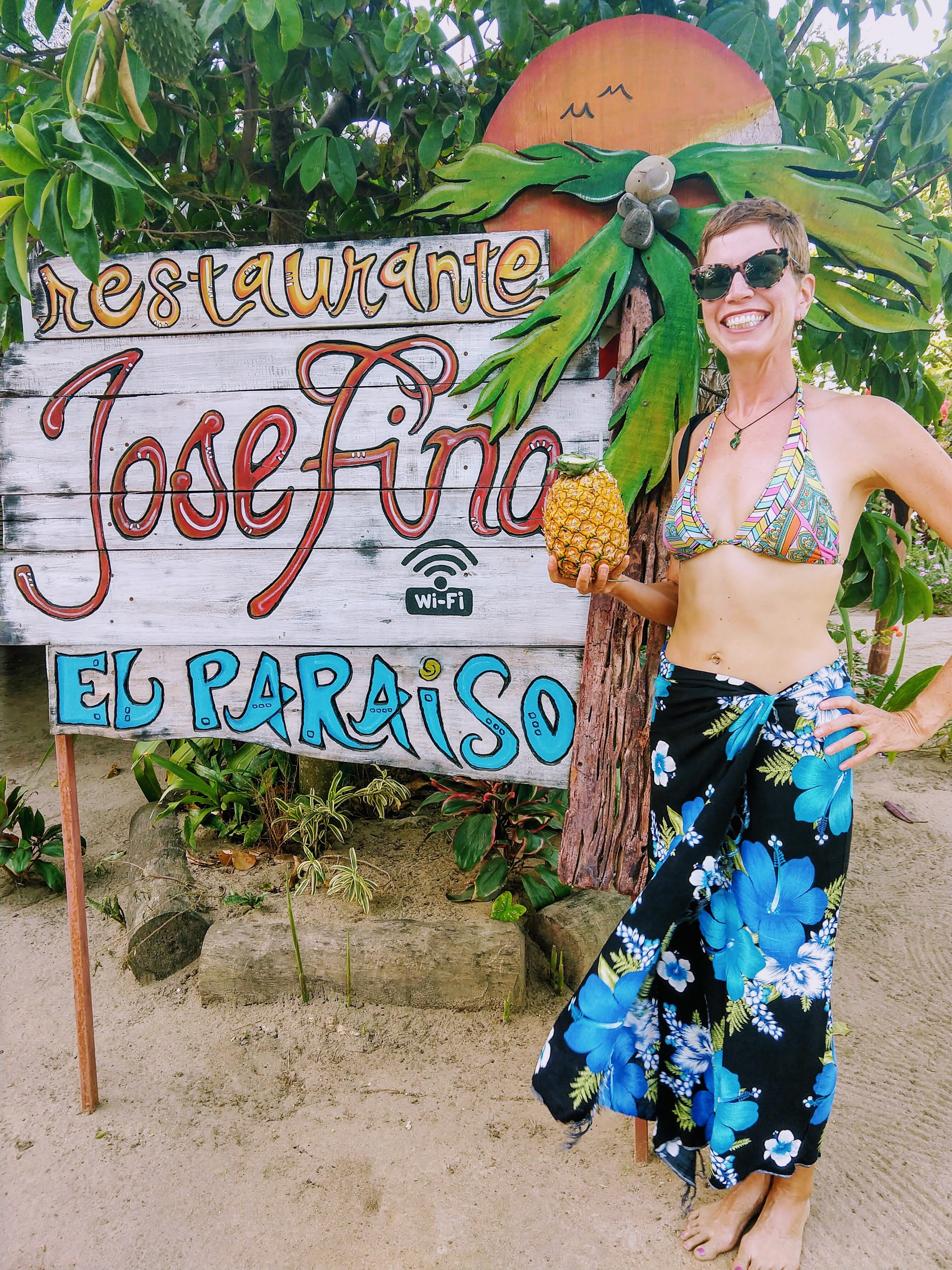
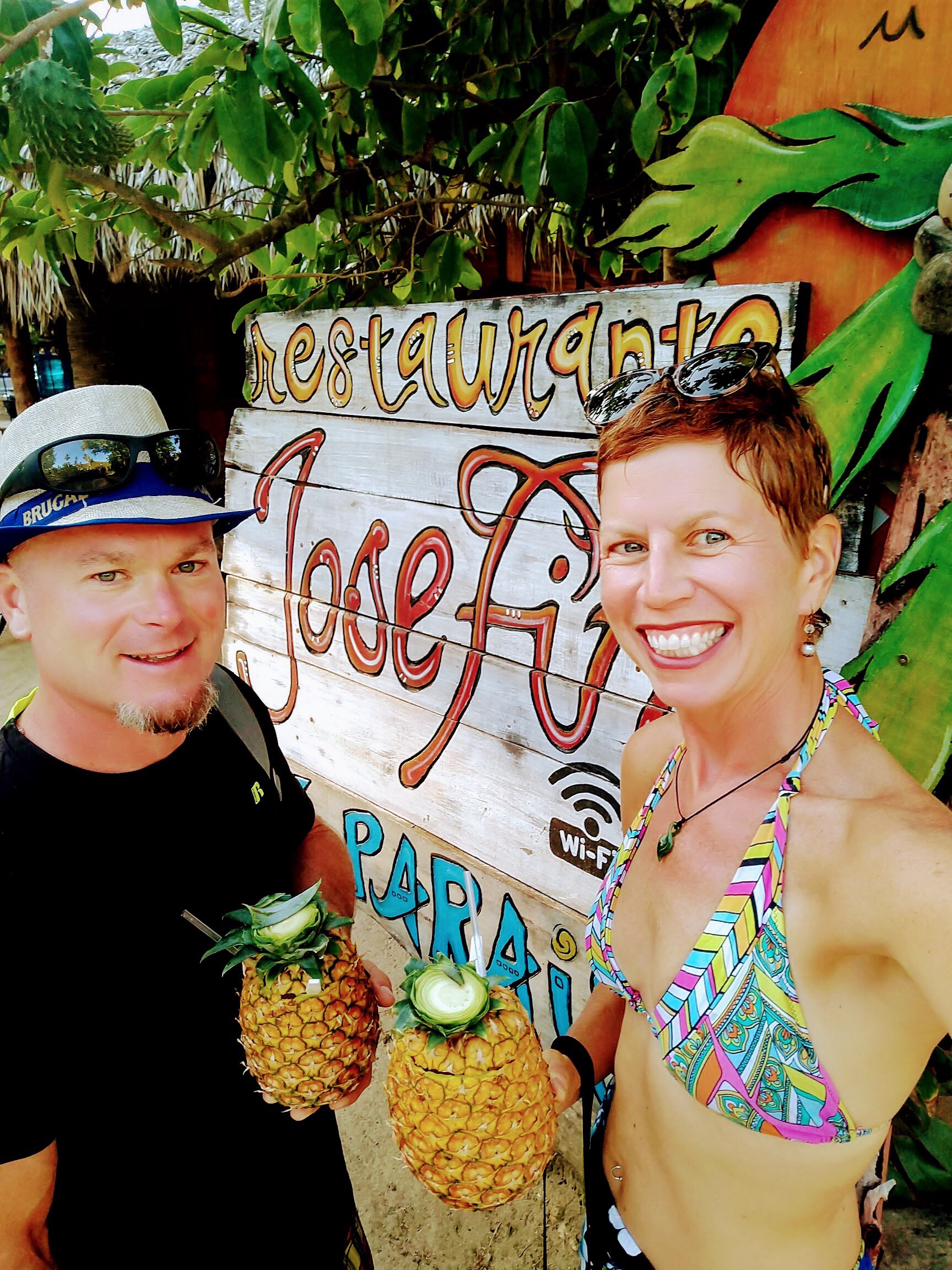
From a distance, our paradise looked deserted. But as we got closer, I noticed a small thatched roof shack. And couldn’t help but hear the loud music. Although we’d been awake all night, I couldn’t just cook dinner and go to sleep without exploring! So I convinced Capt. Mike to swim ashore with me to avoid the trouble of putting the dinghy in the water. Great decision! It felt wonderful to stretch our legs on the sandy beach, and to climb and play on the rocks. And then! We rewarded ourselves for our successful long sail with fresh pina coladas. Served right in the pineapple! Yum, yum, yum! Did I mention how much I love the Dominican Republic? ♥️🇩🇴