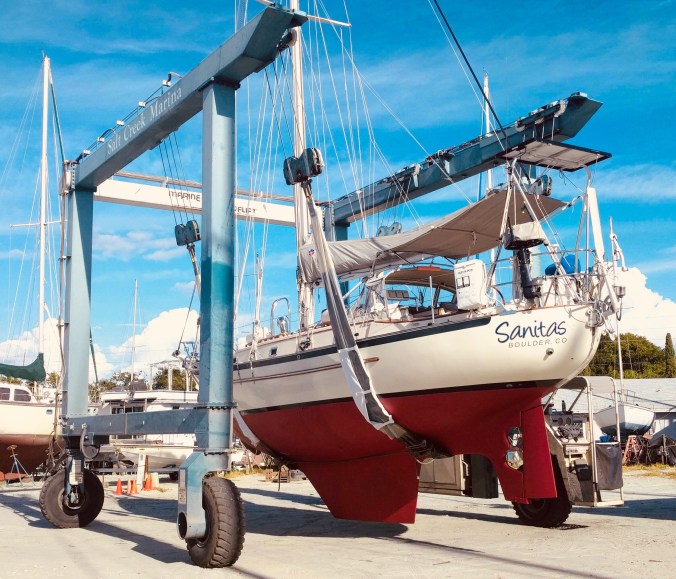
Sanitas is back in the water!

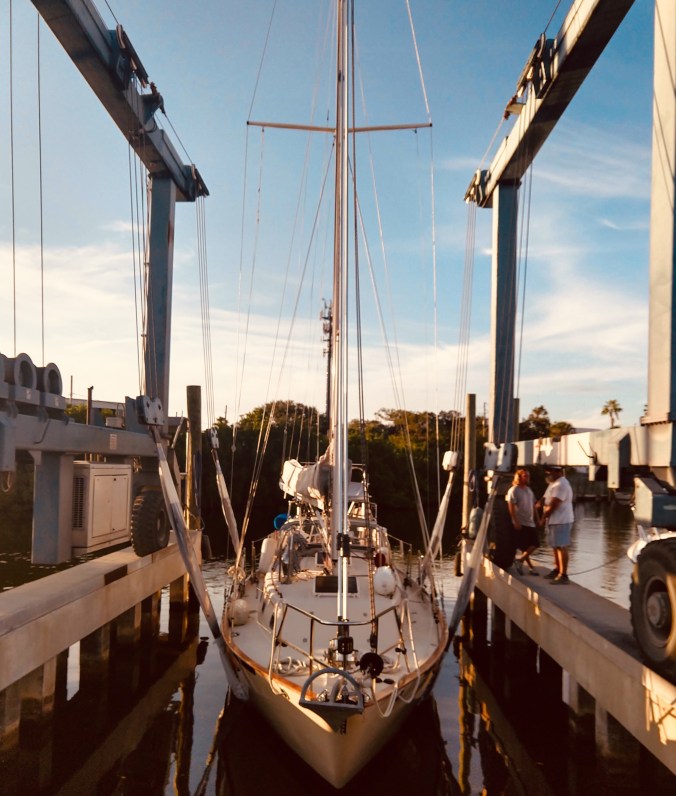
After spending hurricane season safely tucked away in Salt Creek Marina in St Petersburg, Florida…. SV Sanitas is back in the water where she belongs!

We left Sanitas stored in St Pete while Capt. Mike and I visited friends and family in New York and Colorado in July and August. Then we returned to hot and humid Florida and spent two months working six days a week in the dirty boat yard to repair and maintain our boat, and to get her ready for another cruising season. She was in pretty good condition when we returned, however we found a few leaks admitting water and slimy mold, and we had a list three pages long of things we identified last year of “Must Dos” before we ventured forth on our 2nd season of cruising.
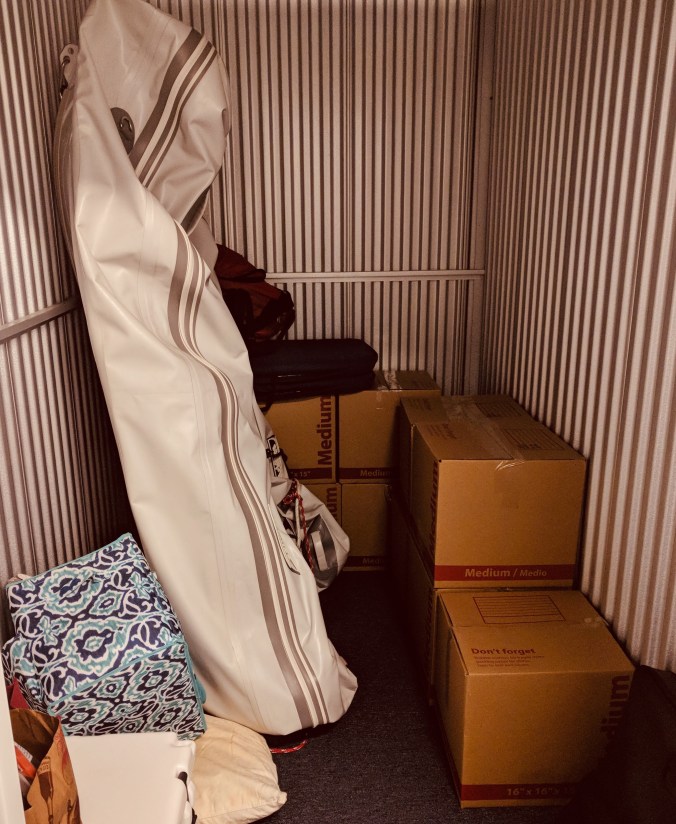
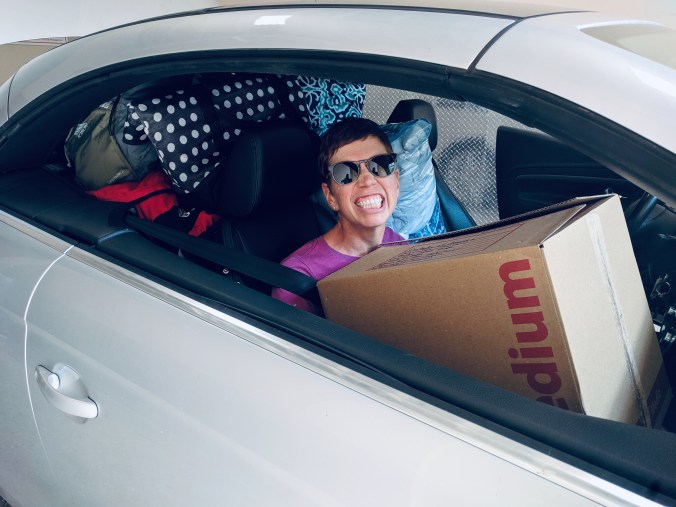
I admit, I’m a little nervous. I may have gotten soft over the summer – too used to long hot showers, comfy beds, and cooking in a kitchen. In the next 24 hours, we’ll be moving aboard again, somehow trying to fit everything that’s currently in our storage unit, and everything that’s in our rental apartment into a 37-foot monohull sailboat. (Spoiler alert: its not going to fit. We have several trips to Goodwill in our future).
We need to start paying attention to weather and battery charges again, and go back to small, simple living. But … we also get out of the boatyard, and are able to start looking forward to winter in The Bahamas. We’re off the Salt Creek for the last time; to install a new battery bank, inspect our mainsail, and to move to the St Pete Municipal Marina. Wish us luck!
Tool of the Day …. Pump Diaphragm

After the rough passage from The Abacos to Eleuthera all three boats in our little flotilla were bruised and battered. On Sanitas, the propane sensor was alarming and cutting off propane to the stove. This first occurred after the ingredients for dinner were chopped but before they were actually cooked. Doh! And more importantly, the bilge pump failed. Yes, that bilge pump. The one that drove Mike to stay up late every night in Marathon to ensure it was installed and working before we left Florida.

After pumping a 5-gallon bucket of dirty water out of the bilge by hand using a tiny portable pump (and dousing me with bilge water in the process) Mike started trouble shooting.

  • Sea grass clogging the input strainer? Nope.
  • Intake hoses clogged? Nope.
  • Output hoses clogged? Nope.
  • Thumb over the pump intake. Any suction? No suction.

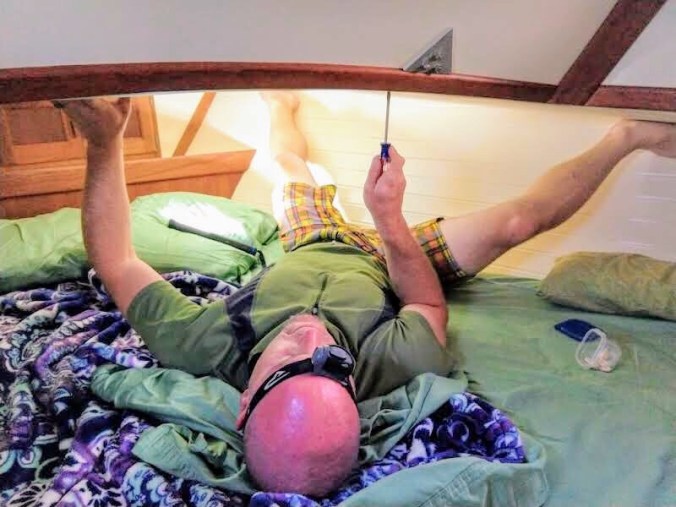
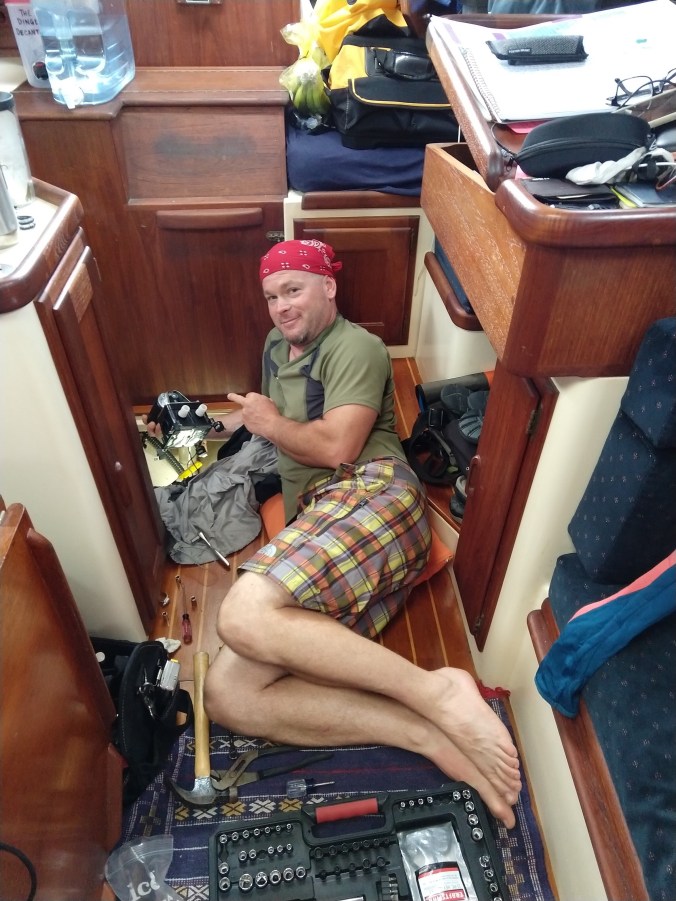
So we took the whole darn thing apart. I have a lot of photos from boat projects so far of Mike lying on the floor in this same place and in a similar measure of contortion.

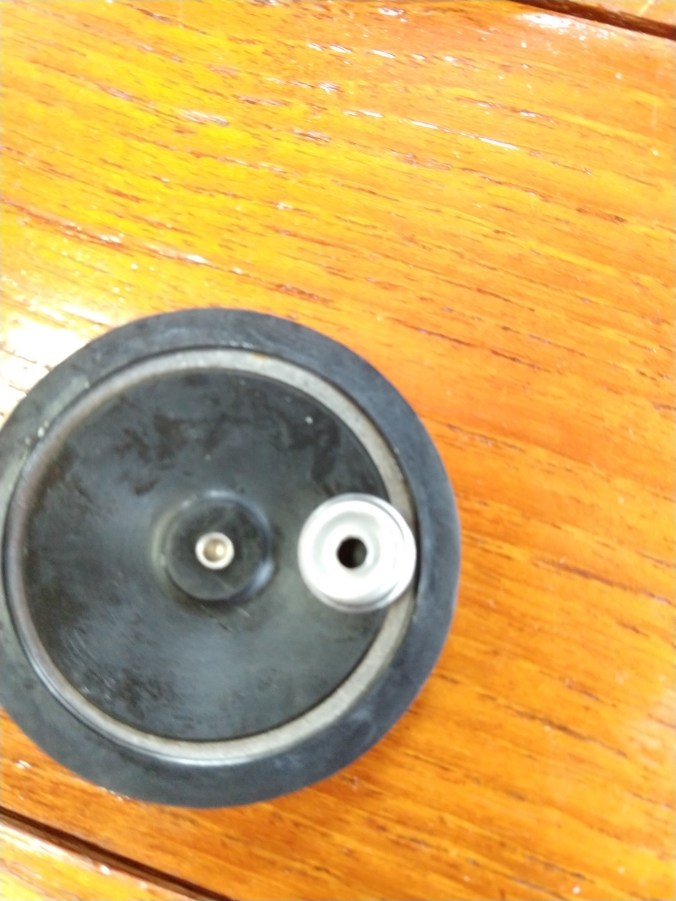
I am so impressed that Mike was able to find the source of the problem and to fix it! The diaphragm that performs the physical pumping is supposed to be held in place by a small metal cap. That cap had failed. Essentially this cap had bent in such a way that it no longer did its job of holding the diaphragm in place. But it was miraculously still sitting next to the diaphragm, instead of being lost somewhere in the dark corners of the bilge.

We jury-rigged a solution that should work until we can replace this specialized part. Mike re-flared the pin that holds the cap in place, using a #2 phillips head screwdriver bit. He pounded down on the head on the pin using a hammer onto the screwdriver bit until it was shaped more or less correctly and resumed its job of holding the diaphragm in place.

So far, so good! Of course while executing this project, we discovered that our back-up manual bilge pump doesn’t work. But rebuilding that pump will be another whole project for a later date.

Tool of the Day … Life Calk

In the latest episode of the quest to PLUG ALL THE LEAKS …. we had a carpenter / captain take a look at Sanitas in White Sound at Green Turtle Cay. He pointed out some small cracks in the teak toe rail on the bow, and suggested that they could be the source of the water intrusion into our forward cabin. You remember that “water intrusion”, aka leak, right? I now admit that we’ve been fighting this leak since the boat yard. So far we’ve:

  • Re-set the deck fitting for the head pump-out
  • Re-set the deck fitting for the foreword water tank input
  • Replaced the mattress and bought three different mattress pads
  • Side-tripped to Miami and re-glassed the anchor locker

Now we are trying again to get to the root cause and fix this dang leak once and for all by repairing the connection between the wooden toe rail and the fiberglass deck.

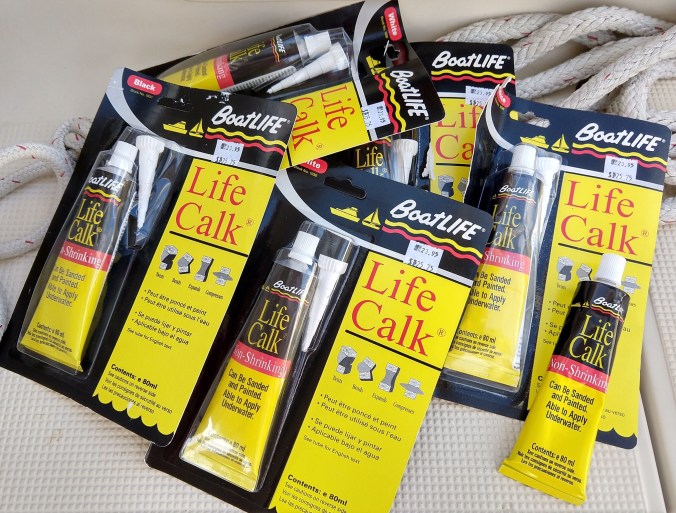
We grabbed a slip at the Conch Inn Marina in Marsh Harbour so that we’d have a safe and secure place to work, protected by wind and waves. Then I made the trip the Island Boy’s Tackle and bought them out of Life Calk tubes.

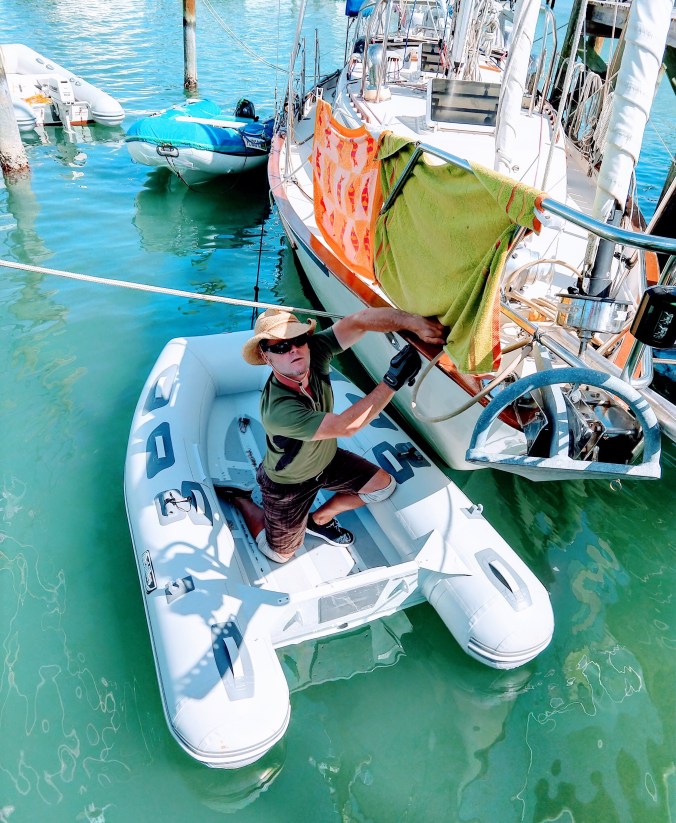
The material supposedly stays slightly flexible when dry, so it should work for the necessary flexing of the bow when we sail into waves. But it should also be well waterproof, and fill any existing cracks in the decking. Mike spent one entire day standing in the dinghy, tied to Sanitas, scraping old adhesive from beneath the toe rail, all the way from the bow to the beam. He did find several spots where the old adhesive was black and rotten – a good sign that this could be the culprit in our leaks. The black spots did roughly correspond with the places we see water trickle down the walls of the cabin too. Another good sign!

The second day, Mike spent back in that dinghy (core and balance workout?) filling the seam with a new bead of Life Caulk. We let her dry for 48 hours in the sun, and hoped for the best.

I really hope this does the trick. It would be great to be able to leave the mattress in the cabin while we sail. Lately, we’ve been folding the mattress in half, pulling out all of the pillow and blankets, stuffing chamois into the “ceiling” when the water comes in, and laying beach towels along the hull. Oh, and the headliner has been sitting in the salon on the floor leaning against the settee, so that it does not continue to get wet. It will be great to get back to normal, and clear up some of the chaos on Little Sanitas!

Here’s Mike putting the headliner back in place …

Tool of the Day … Prop Anode

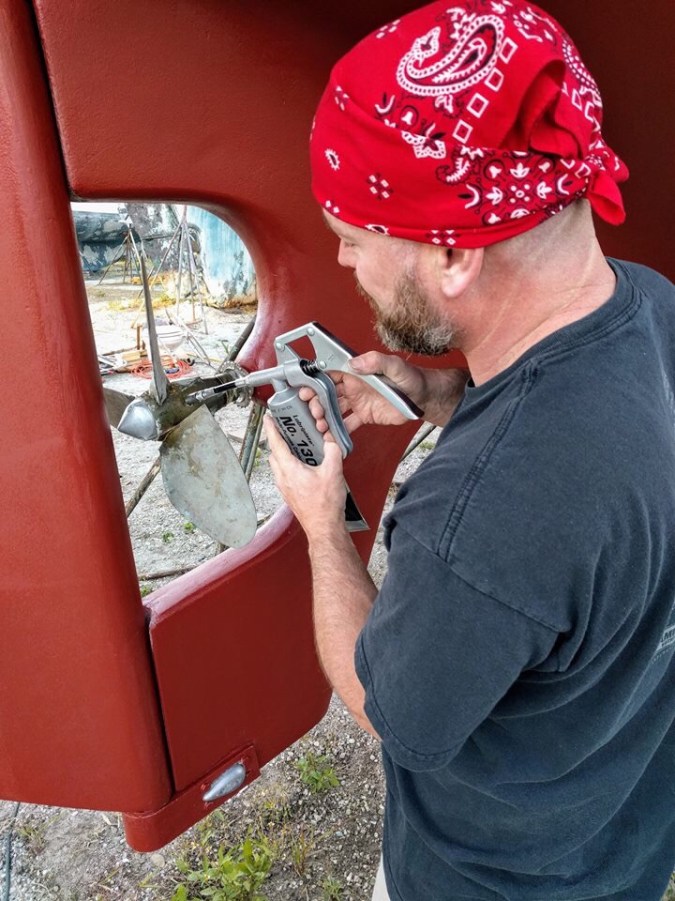
When metals are placed in a conductive liquid, such as salt water, they create a battery. Current flows between the metals in the process of electrolysis and essentially eats away at one of the metals. The goal is to set things up so that electrolysis eats away at a piece of metal that we don’t really need, and doesn’t destroy the prop or the hull or the motor. So sailboats have small pieces of zinc on the hull and on the prop that are designed to crumble and fall apart over time keeping the important bits intact. One of the last things we did before putting our boat back in the water was to replace these zincs or sacrificial anodes. While we were at it, we greased the prop as well.

See how crumbly the old zincs are?

And a nice clean new one!

Mike loves his grease gun.

More than you ever wanted to know about our toilet

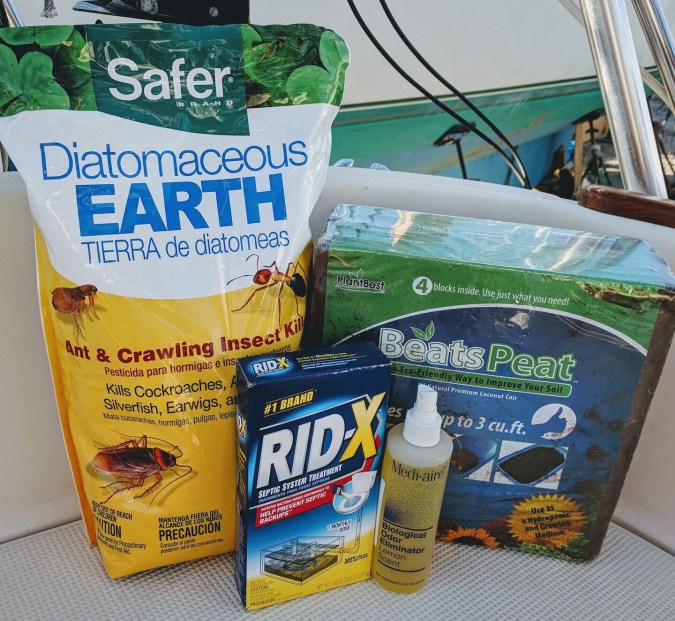
Ok, remember that decision to install a composting head? Well our Nature’s Head composting toilet finally arrived and is installed. We decided to use coconut coir as the composting material because it is very renewable, and is less likely to harbor bugs than the peat moss alternative. Following advice from Carolyn of The Boat Galley, we choose Planter’s Pride Beats Peat coconut coir. It took almost a week of allowing the coconut to sit in the sun, with one cup of water to achieve a big zip lock bag of dry and crumbly coconut husk. I just kept thinking of pina coladas! Then we filled the composting compartment of the toilet, and we’re good to go!

They say we should never experience odors or other unpleasantness, as long as the liquids and solids are stored separately. But just in case, I am well armed with every possible odor deterrent, insect fighter, and wetness absorber. Take that, nasty smells and gnats!

Of course, installing this toilet sounds simple, but….

  • We had to address the boat wiring to hook up a ventilation fan
  • Found a leak in the pump out deck fitting with rotten deck core that needed to be resolved,
  • Had lots of pipes and holes and sea cocks to fill,
  • And had to build a platform to support the toilet so that it would actually fit in our teeny, tiny bathroom (head)

Just another example of how one project begets another project and another project and another …..