I hereby name you…

It can take a lot of money and effort to rename a boat. You need to re-register her with the Coast Guard under the new name, reprogram the AIS and VFH, buy and install new name decals. It’s enough to make me swear I’ll never rename a boat again! But, having a floating home with a name that feels right to us and feels like part of the family? Priceless!

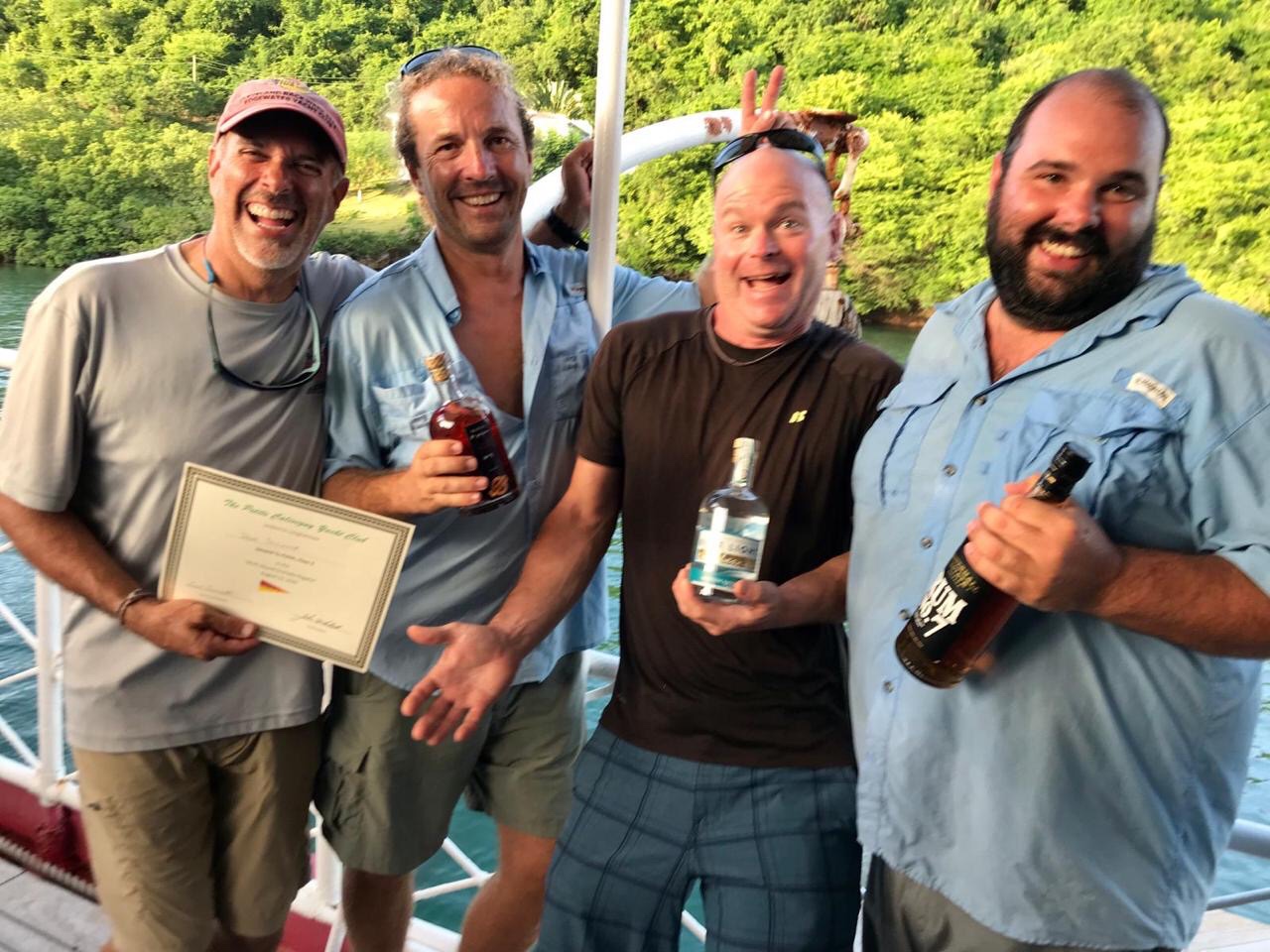
Legend has it that when you do decide to rename a seafaring vessel, you need to hold a formal ceremony to protect the vessel and her crew from bad luck. You must make offerings to Poseidon and beg for his favor and protection. We held this ceremony and celebrated with several dozen of our friends and fellow sailors at Brunswick Landing Marina! We even had friends Shawn and Chantal from SV Camino drive down from Savannah to join us for the celebration!

In preparation, we stocked up on red wine, bubbly, beer, and snacks. We cleaned from bow to stern both above decks and below so we’d be free to offer tours. And we dug out our stash of courtesy flags and strung them up on a halyard to make her look colorful and festive. We removed all traces of the original name from our boat (on documents, decorative items, safety equipment and books) and prepared a metal ingot with the original name. With our friends gathered on the dock, beverages for toasting in hand, Capt. Mike and I walked forward to the bow and began the purging ceremony of the original name….

“Oh Poseidon, mighty and great ruler of the seas and oceans, to whom all ships and we who venture upon your vast domain are required to pay homage, I implore you in your graciousness to expunge for all time from your records and recollection the name “Hallelujah” which has ceased to be an entity in your kingdom. As proof thereof, we submit this ingot bearing her name, to be corrupted through your powers and forever be purged from the sea.”

I flung the metal tag over the bow into the water, then recited,

“In grateful acknowledgement of your munificence and dispensation, we offer these libations to your majesty and your court.”

I poured at least half a glass of champagne into the water, from east to west, then took a sip myself. This concluded the Purging Ceremony.

Now for the naming ceremony itself….

“Oh Poseidon, mighty and great ruler of the seas and oceans, to whom all ships and we who venture upon your vast domain are required to pay homage, I implore you in your graciousness to take unto your records and recollection this worthy vessel hereafter and for all time known as “Happy” guarding her with your mighty arm and trident and ensuring her of safe and rapid passage throughout her journeys within your realm. In appreciation of your munificence, dispensation, and in honor of your greatness, we offer these libations to your majesty and your court.”

I poured another glass of champagne into the water, this time from west to east.

Next, I attempted to appease the four wind gods, Boreas, Zephyrus, Eurus, Notus.

“Oh mighty rulers of the winds, through whose power our frail vessels traverse the wild and faceless deep, we implore you to grant this worthy vessel “Happy” the benefits and pleasures of your bounty, ensuring us of your gentle ministration according to our needs.”

Facing north, I tossed some champagne from my flute to the north as I said:

Great Boreas, exalted ruler of the North Wind, grant us permission to use your mighty powers in the pursuit of our lawful endeavors, ever sparing us the overwhelming scourge of your frigid breath.”

Facing West, I repeated the champagne pour and toss while saying:

“Great Zephyrus, exalted ruler of the West Wind, grant us permission to use your mighty powers in the pursuit of our lawful endeavors, ever sparing us the overwhelming scourge of your wild breath.”

Facing East, I repeated the champagne pour and toss while saying:

“Great Eurus, exalted ruler of the East Wind, grant us permission to use your mighty powers in the pursuit of our lawful endeavors, ever sparing us the overwhelming scourge of your mighty breath.”

Facing South, I poured the champagne and tossed it one last time while reciting:

“Great Notus, exalted ruler of the South Wind, grant us permission to use your mighty powers in the pursuit of our lawful endeavors, ever sparing us the overwhelming scourge of your scalding breath

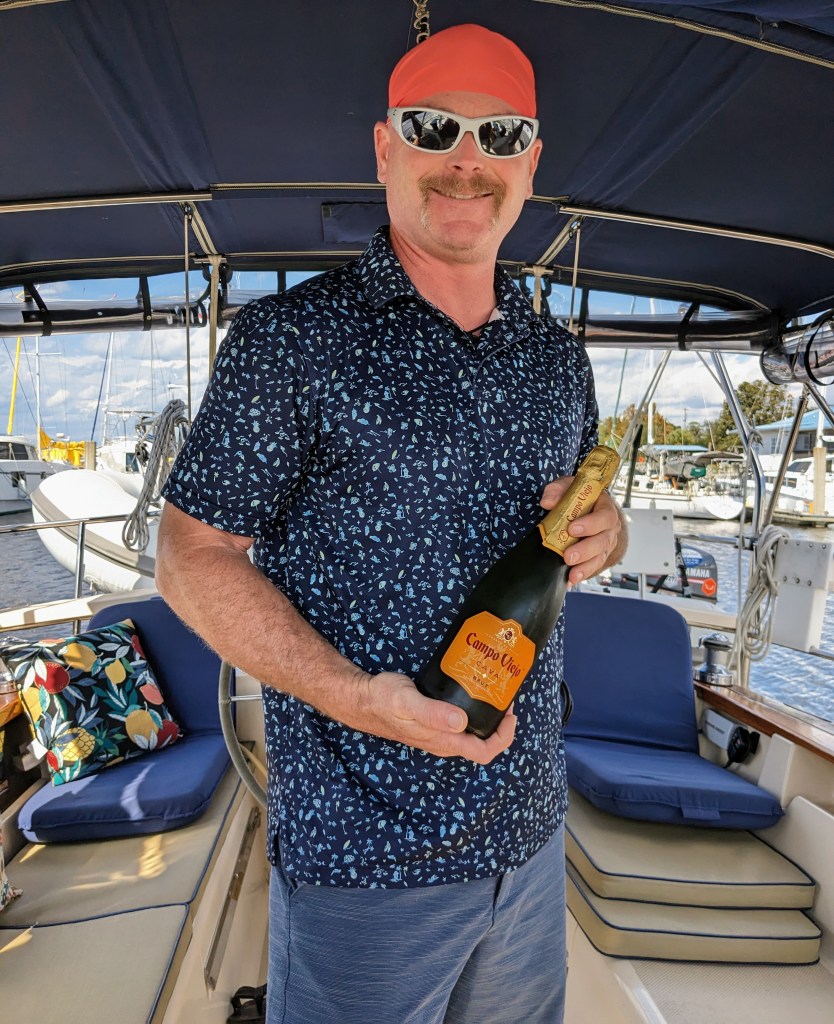
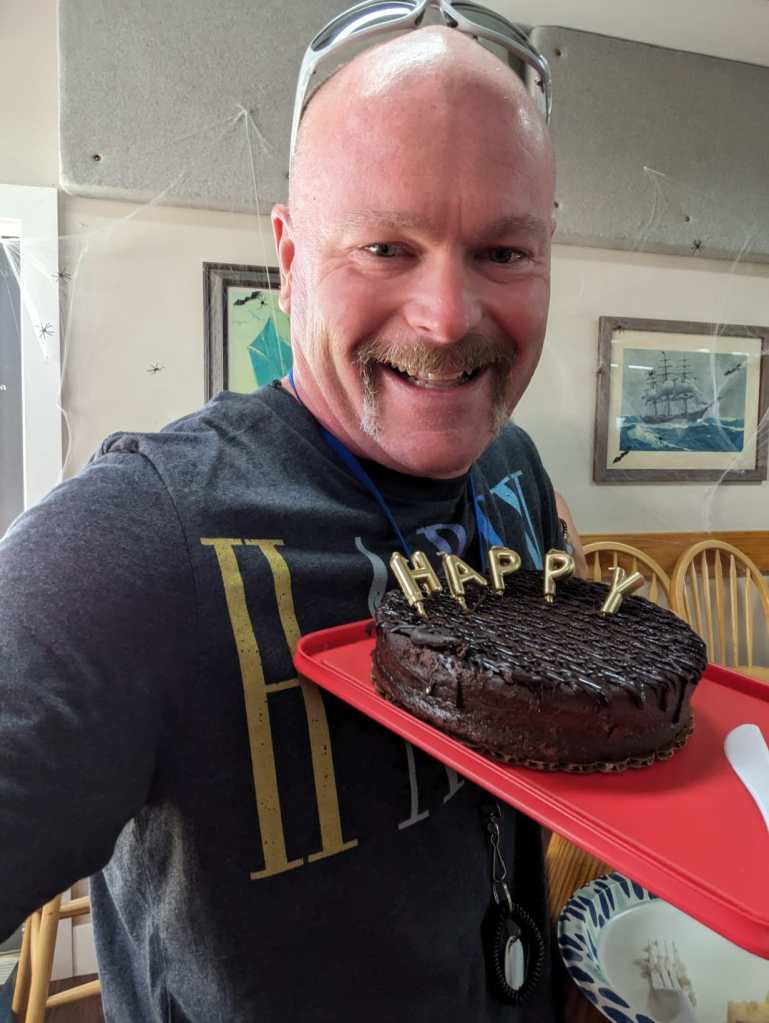
Our marina friends gave three cheers to the newly christened “Happy” as Mike and I donned t-shirts with the name Happy on them, and tore off the brown paper to reveal Happy’s new name on the transom and the boom.

Everything after that was a bit of a celebratory blur 😀 We gave tours of our beautiful floating home, accepted good wishes from friends and neighbors, and eventually brought bottles of bubbly and snacks up to the yacht club to continue the celebrations into happy hour. It felt great not only to celebrate the new name, but also the accomplishment of all the hard work and many boat projects we’ve completed since we moved aboard in March. Happy is almost ready to untie the lines and start sailing! If you see us in an anchorage, come say hi – we just might have a bottle of bubbly left over to share 😉
Our First Hurricane

Capt. Mike and I returned to Brunswick, Georgia after a delightful summer vacation in Colorado. Less than two weeks back into boat life and boat projects, the National Hurricane Center forecast projected that Hurricane Idalia could pass right over us. Yikes! Time to test the claim that Brunswick Landing Marina is a safe hurricane hole!

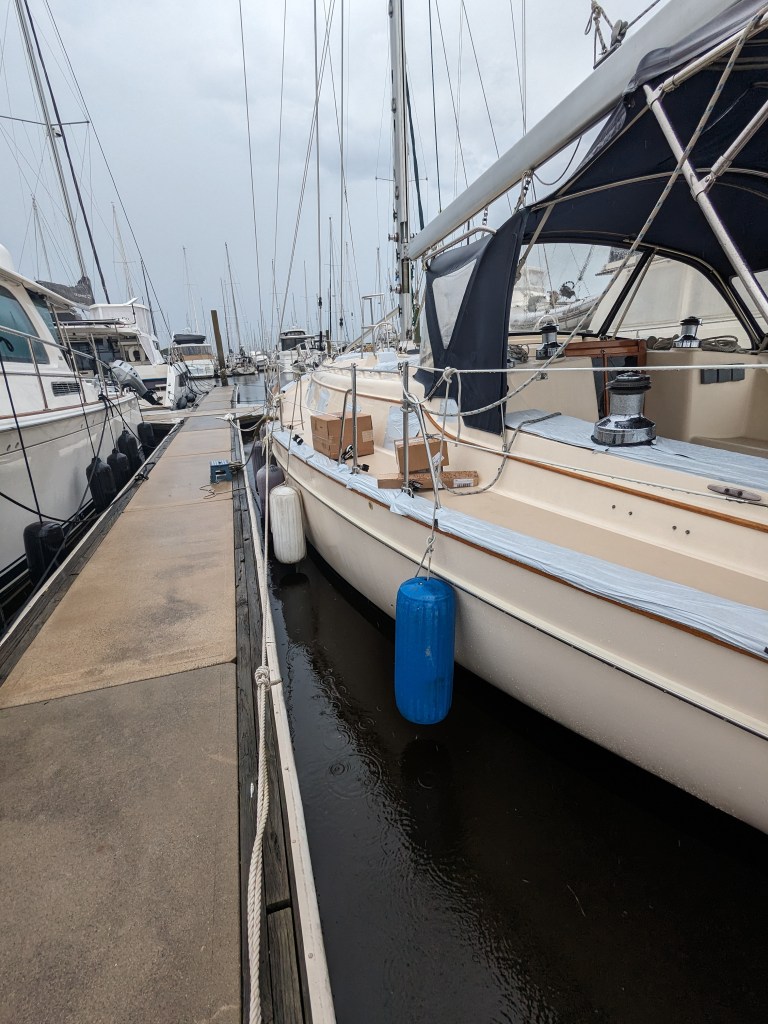
Hurricane season in the Atlantic officially runs from 1 June to 30 November every year and historically the risk of dangerously strong storms is the highest in September and October. But because “you never know” we prepped our floating home for hurricanes when we left her back at the end of May. We removed her jib and staysail, replaced the running rigging with thinner messenger lines, covered the portlights with plastic, and secured the dinghy very tightly in the davits on the stern. We’re glad we did all that, because the marina experienced some very strong storms while we were gone – even to the point of bending the stainless tubing that supports our solar panels. And doing all that work in May meant we had a head start on prepping for Idalia.

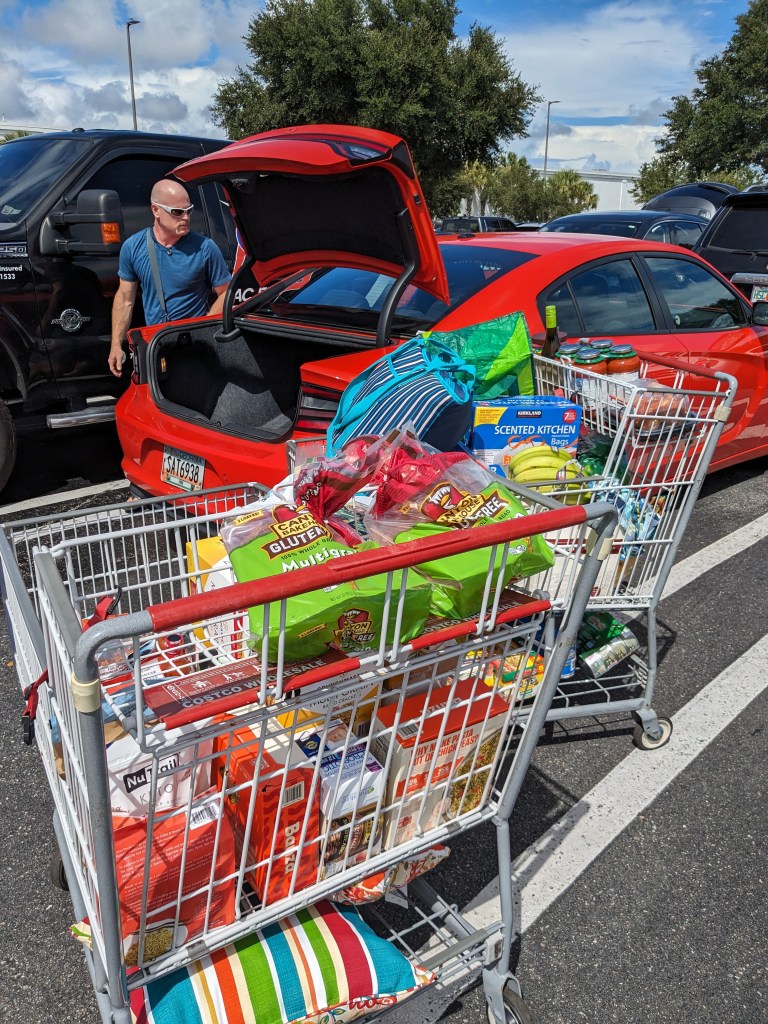
Two days before the hurricane, we rented a car and drove to St Augustine to bring all three of our sails to a sail loft for inspection and repairs. On the way home, we stopped at Costco in Jacksonville to start provisioning non-perishables for the upcoming cruising season. Just our luck to do that on a day when all of Florida was buying bottled water, toilet paper, and canned goods. I was tempted to joke with the check-out clerk, “This is my first hurricane. Do you think I’ve got enough food?” 🤣

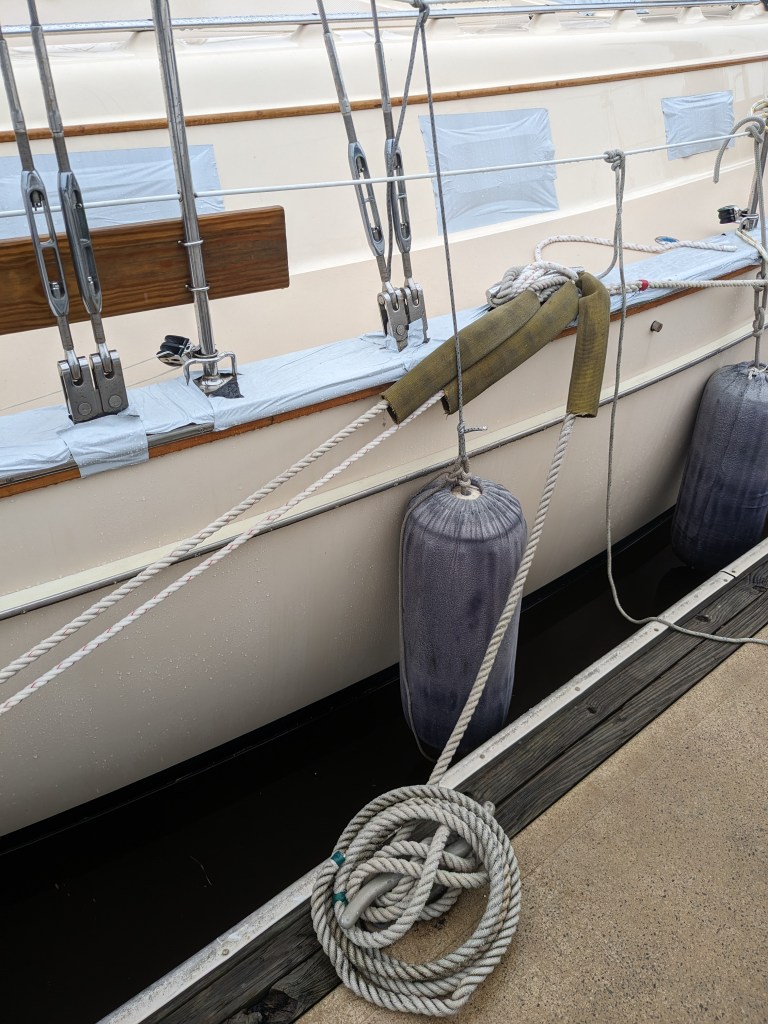
The day before the storm, everyone in the marina worked all day to prepare, helping each other out as needed. We doubled all our dock lines and applied new chafe gear, lashed down the bimini and solar panels, filled the water tanks, tested the radio and wind instruments, and packed go bags. We adjusted the lines on the abandoned boat in the slip next to ours and removed or secured anything in the marina that could fly around and cause damage in high winds. We checked on a few boats belonging to friends who were still out of town. And of course we checked every new storm forecast – studying the smallest details: What’s the latest storm track? Will Brunswick be under a Tropical Storm Warning, or a Hurricane Watch? How much storm surge should we expect? What’s the earliest time we can expect tropical storm force winds? What’s the probability we could see hurricane force winds? Finally, we collapsed into bed, fairly confident we’d done as much as we could possibly do to prepare.

I woke up the next morning around 5:30 to the sound of rain. Went back to sleep and woke again around 7:00 to the first howling winds. We nervously waited for the NHC to release their 8am products so we could evaluate what we were in for and what had changed overnight, and whether we should stay in the marina or catch an Uber to a hotel. Luckily, Idalia had tracked west overnight, now forecast to hit land in a lightly populated region of Florida’s Big Bend, and meaning we wouldn’t get hit with the full strength of the storm. So we decided to stay, knowing we might be uncomfortable, but we wouldn’t be unsafe.

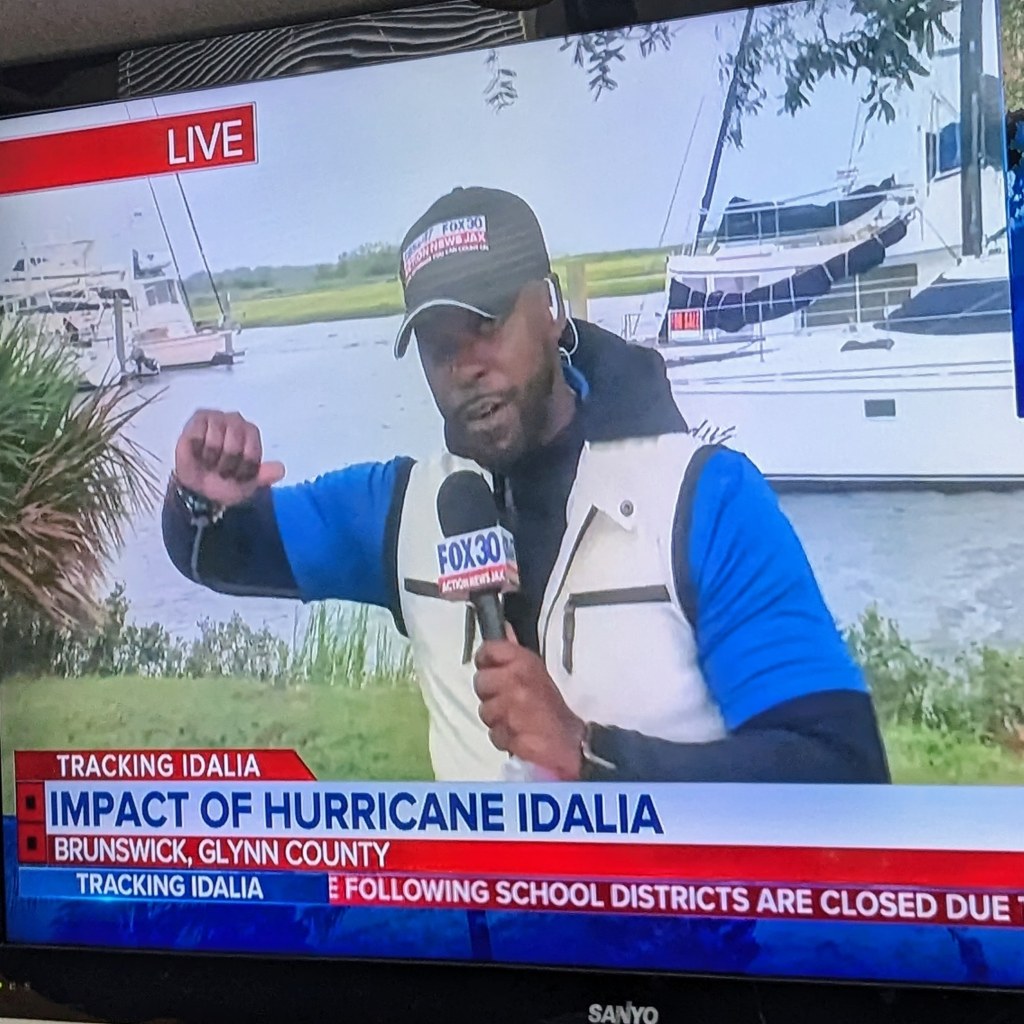
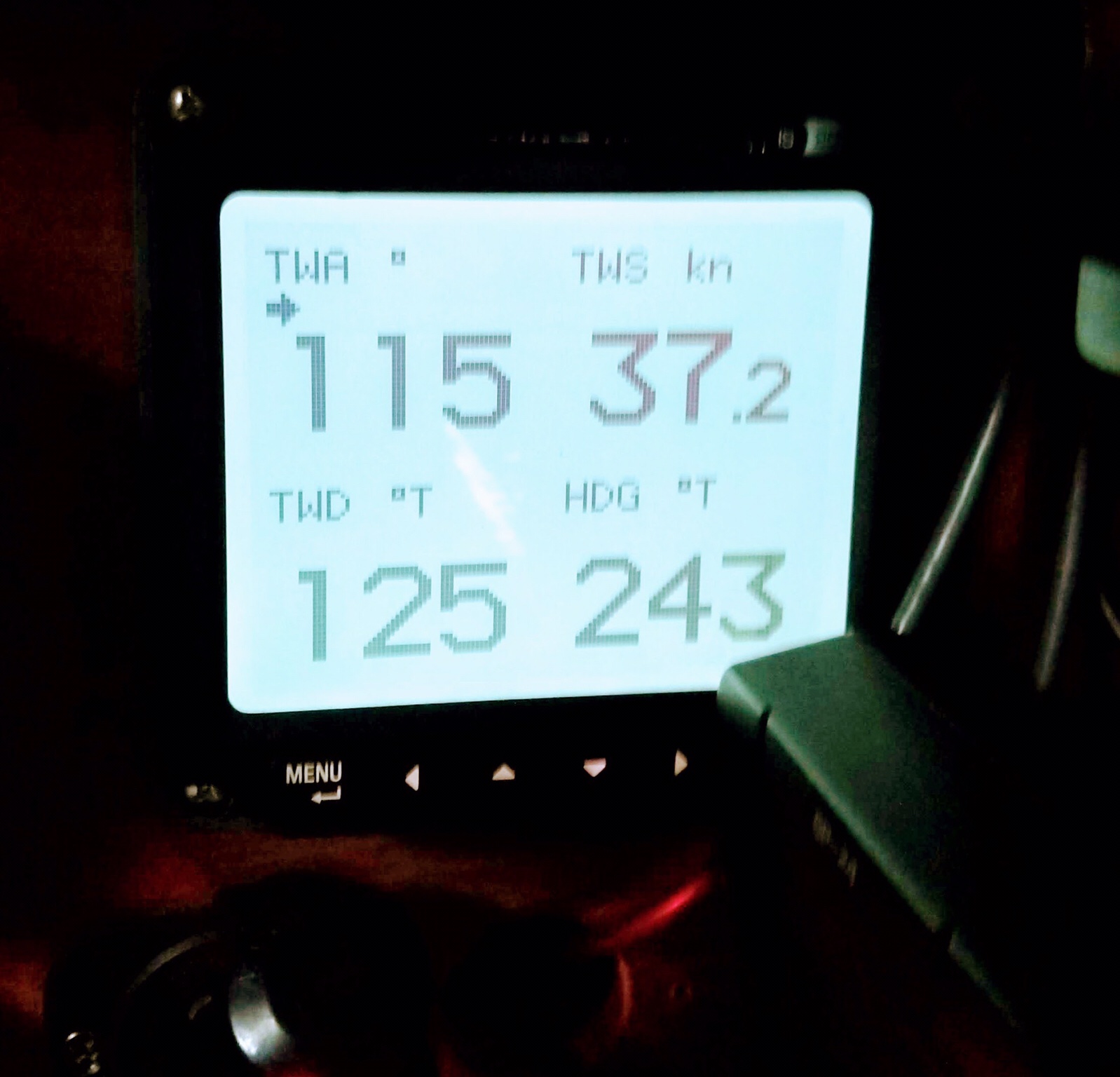
I stuck it out on the boat until 11:30 am when we really started bouncing in the slip and when our wind instruments showed sustained winds of 25-35 and gusts of 52 knots 😲 I brought valuables, electronics, rain gear, and snacks up to the marina Yacht Club to wait it out. I’m not sure which was scarier – listening to the wind howl on the boat, or listening to TV News anchors trying to terrify us. The local news was filming from Dock 4 of our marina!

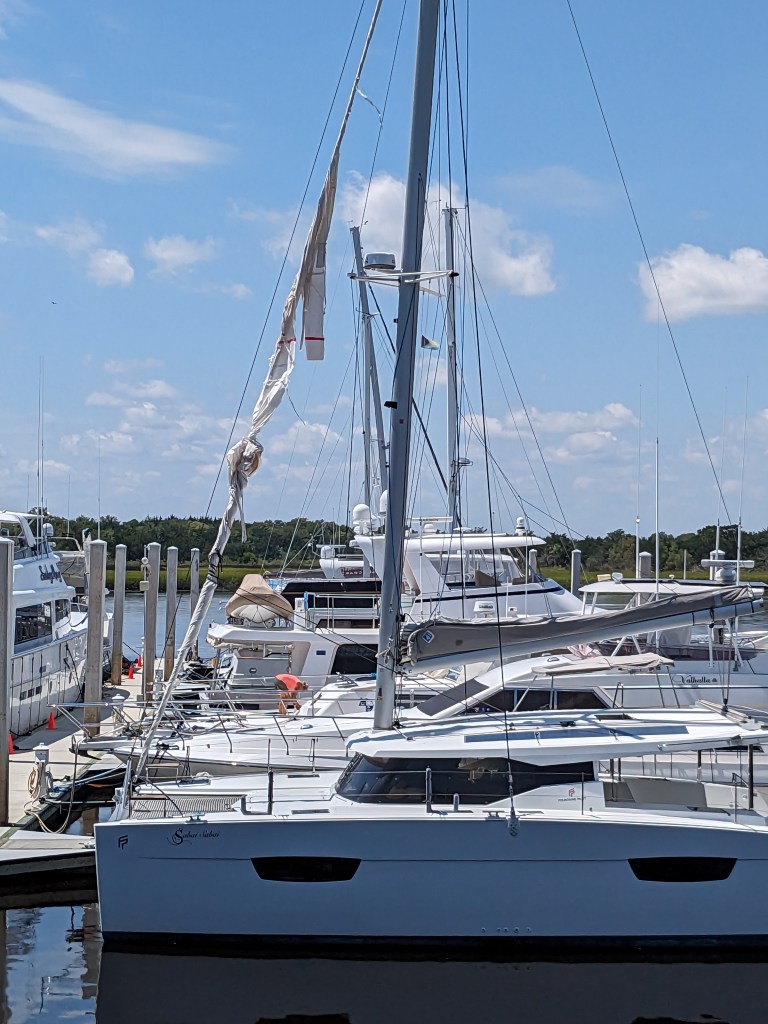
Capt. Mike joined me on land about 15 minutes before the power went out. No more scary tv broadcasts, but no more AC or phone chargers either. One transient visitor to the marina made me laugh because every time he walked into the yacht club he was wearing a bright red life vest and carrying a boat hook with a radio clipped to his belt – prepared for battle! We could keep an eye on Happy from the patio of the yacht club and kept track of how the rest of the marina was handling the winds by listening to the VHF radio. A water fixture broke on Dock 9, sending a geyser skyward until the water was shut off. Dock 4 lost some bolts and started to slowly break apart until the marina could hold it together temporarily with ratchet straps. But the worst effects of the storm were on Dock 0, the closest to the ocean, which experienced the brunt of the wind and the most fetch and waves. Three big motor yachts tied crosswise to the wind were repeatedly pushed onto the concrete dock, experiencing quite a bit of hull damage before the dock was evacuated, but not a single boat sank. A catamaran on that same dock hadn’t prepped for the storm and their jib was shredded by the high winds. Another improperly prepped boat on the hard in the boatyard had the wind unfurl their jib, giving it something for the wind to grab onto, eventually knocking the boat off its stands and knocking over the next two boats in the row. 😢

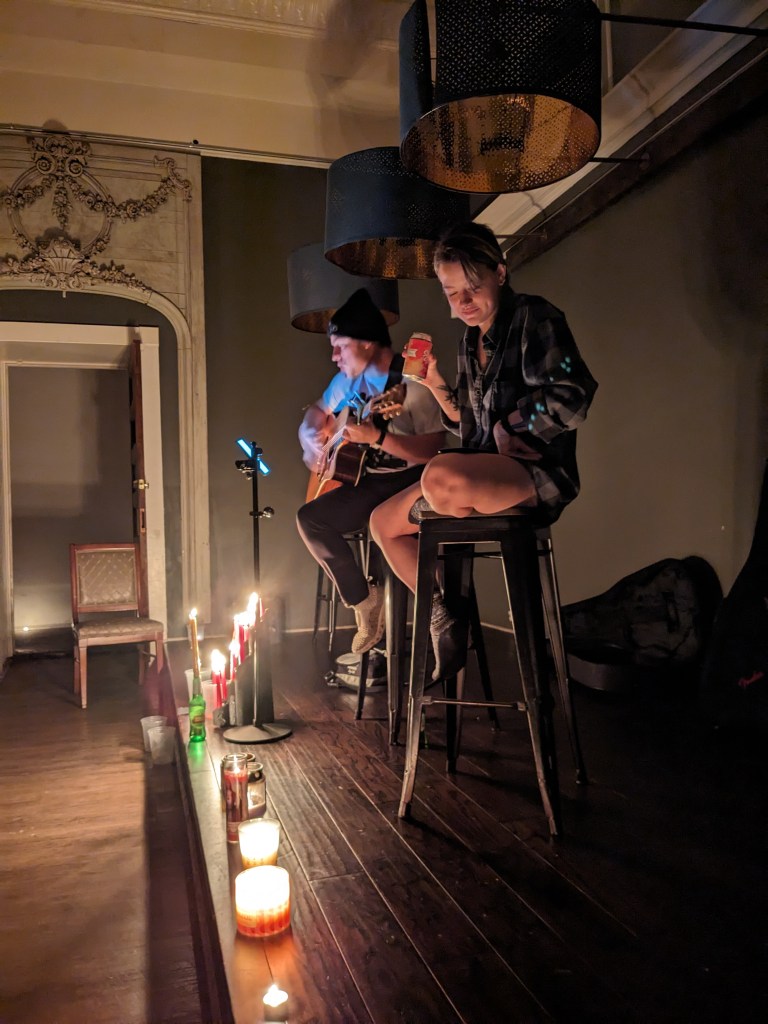
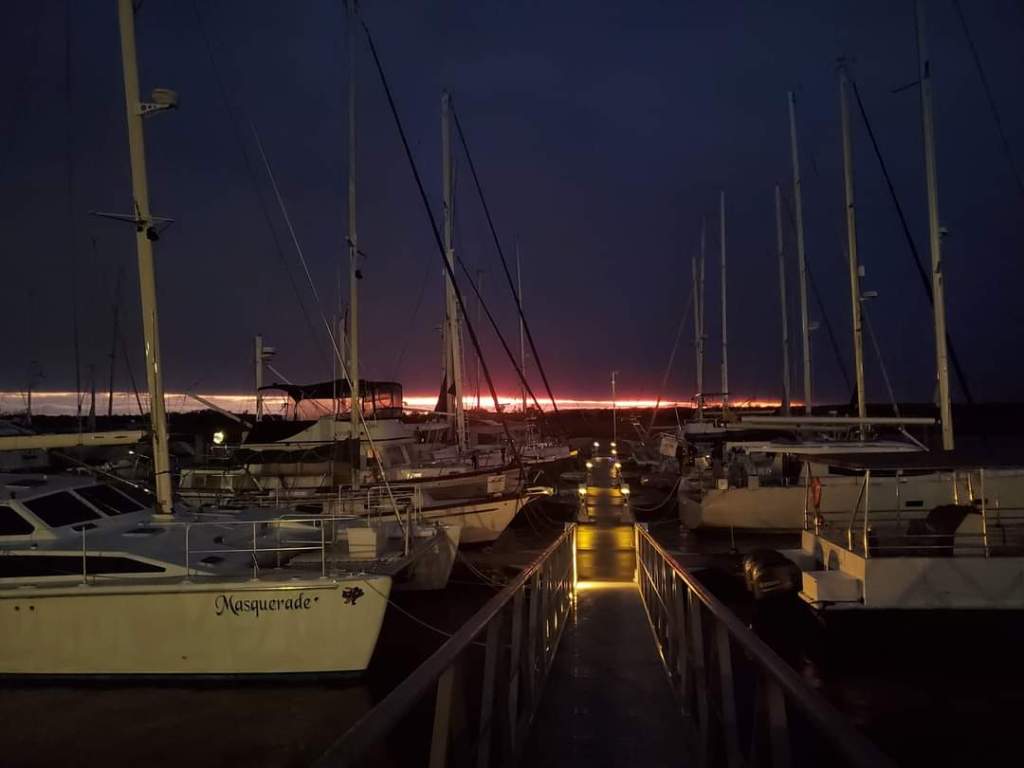
Finally, around 5:00, the winds shifted to the west indicating Idalia had passed north and the storm was fading. The yacht club filled with lots of relieved sailors, comparing stories and photos and breaking out a beer or a dram of rum to celebrate our good fortune. We all agreed we were very lucky in the westerly track the storm took, as well as the fact that it passed us at low tide. We’d been concerned that a tropical storm during full moon king tides could lead to crazy high tides and flooding but we lucked out. We appreciated the dramatic stripe of sunset beneath the heavy lingering clouds because “red sky at night means sailor’s delight” on our way to a secret candle-lit post-hurricane party in town. Happy lived to sail another day!

Special Treat! A Sailing Video!

For some reason, I rarely post videos…Maybe because I’m the old-fashioned writer type? Or because video editing is hard? Or just because we’re not very telegenic? 🤣 Lucky for you, we’ve got friends who are great at this stuff. For a sense of what this sailing is really like, click the link below for a 20 minute YouTube video of highlights from last week’s Race around Grenada, filmed by our good friend Zach on SV Holiday!

Fun on Holiday Race around Grenada

We’re on the Thorny Path Now!

After two and a half weeks in Luperon, we finally had to drag ourselves away from the cruiser-friendly, super-fun community. After clearing out and getting our despacho paperwork from the naval commandant, we had an early night because we planned to leave the harbor before daybreak. This would become a theme for the rest of our sailing season. Why? Because we are far enough south now to be affected by the trade winds – the prevailing easterlies that blow 15-20 knots pretty much constantly, unless they are disrupted by a storm or other natural force. For the rest of this season we will always be trying to travel east, and sailboats cannot sail directly into the wind. We have the option to tack back and forth in a zig zag pattern to make progress eastward, at least doubling the distance we need to travel, or we wait for weather windows of light winds and calm seas and motor like heck as far as we can until that window closes. Also, we’ll start most of our travel days in the dark, because land creates a night lee of calm wind close to shore, disrupting the flow of the trade winds until the sun heats up the land and wind and waves return in the afternoon. If this sounds complicated, it is! Most of us sailboat cruisers have been poring over the same guide book, treating it like the bible for sailing in these waters; “The Gentleman’s Guide to Passages South– The Thornless Path to Windward” by Bruce Van Sant. We’re all, “Van Sant says this” and “Van Sant says that” as if we are members of the same cult. If you’ve read this far, you may have drunk the kool-aid 🤣

So anyway…. five boats left Luperon harbor around 5:00am, all heading east toward Samaná, more or less using the Van Sant method. The weather report predicted light winds, but we were seeing 15 knots directly from the east. We motored straight into it until the beautiful town of Sosua, where we picked up a mooring ball, ate lunch and took a good nap, planning to head out again after dark. Around 4:00, a dive boat pulled up and made us leave. (This sounds simple, but it actually required many hand gestures, the use of Google Translate, and futile attempts to negotiate to let us stay just a little bit longer) We picked up another ball nearby, only to have the same thing happen about 45 minutes later. Our buddy boats were getting kicked out as well, and several of them said “Forget it!” and just started out a few hours earlier than planned. However, as soon as they left the protection of Sosua harbor, we heard them on the VHF radio complaining of high winds and rough seas. One boat actually turned around and came back! Capt. Mike and I decided to slow roll our departure, so we hove-to and basically drifted very….slowly…. toward the mouth of the harbor then turned around and drifted very….slowly…..back. This got old, so at 9:00pm we headed out.

Outside the protection of the harbor, winds were still strong, and waves were big. Not dangerous, but because they were working against us they slowed our forward progress so much that we were only making 3 knots. Yep. We could have walked faster. We decided we couldn’t make it to Samaná at this rate, so we made a Plan B chose a closer anchorage instead and settled in for our night watches. On the positive side, after two years we finally figured out how to use our radar system! So we used the radar to stay about half a mile off-shore, or in 120 feet of water. Steering to those parameters kept us each busy and entertained during the night – almost like playing a video game.

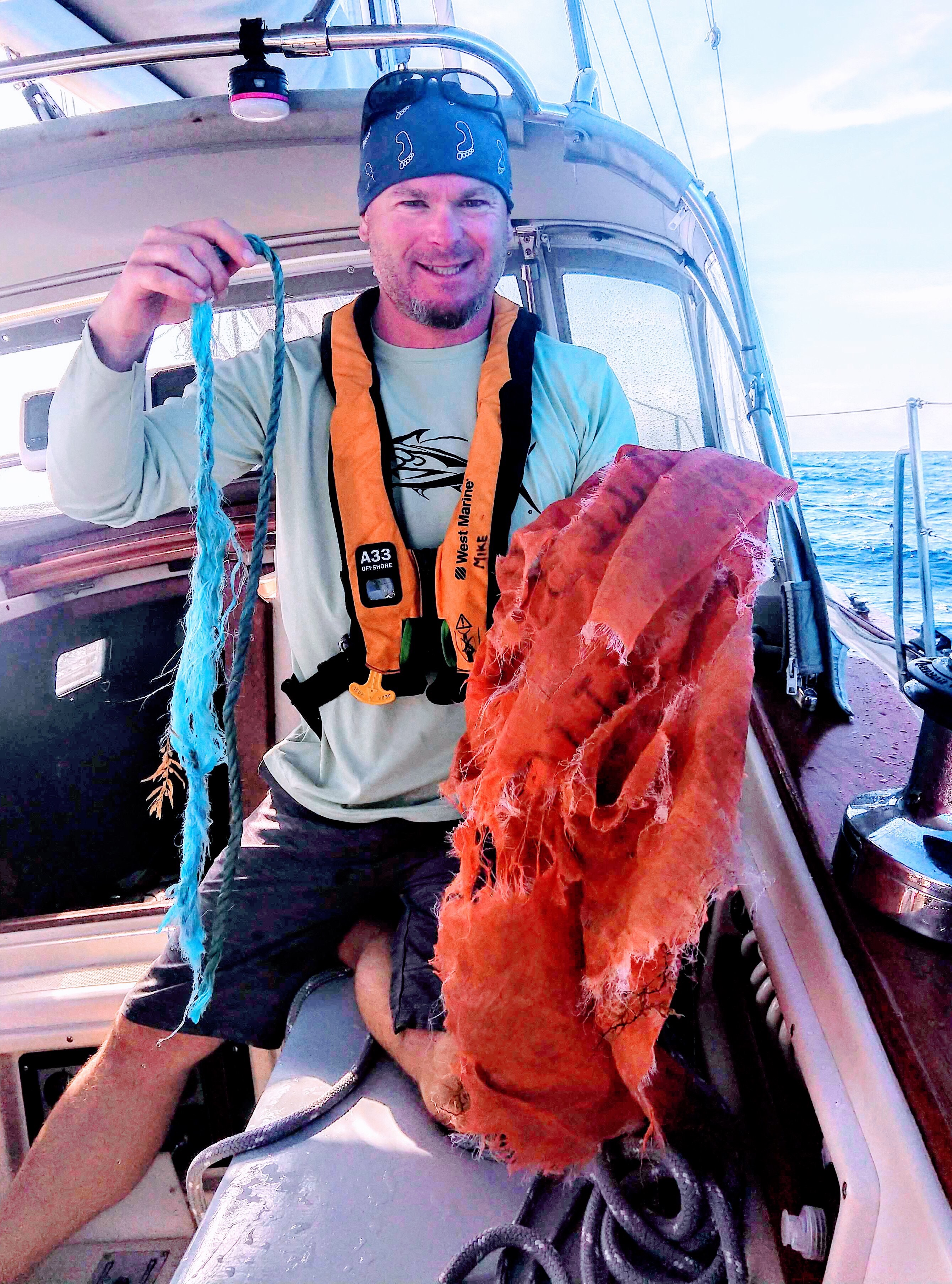
Around 2:00am the seas finally laid down and Sanitas picked up speed. Hooray! On our next change of watch we came up with a Plan C to split the difference and travel to the harbor of El Valle. Decision made, I went below to try to sleep. When I woke up at sunrise, Capt. Mike was in a bit of a frenzy. He’d noticed a vibration in the steering wheel and a laboring noise from the motor and was attempting to troubleshoot. After checking the belts, the motor mounts, and the rudder shaft and finding nothing wrong, it was time to get serious. Capt. Mike was going into the water (in the middle of nowhere, in infinite depth) to check it out. We dropped all sails and turned off the motor, but we were still drifting at almost 1 knot. We pulled out a spare line to tie around his waist, dug out snorkel fins and mask, and put out the swim ladder. I told him I loved him, and he jumped in. After a deep breath and two exploratory dives, Capt. Mike surfaced yelling, “Hand me the knife on the steering pedestal!” I had it to him in a flash. Another couple of breaths and he grabbed the side of the boat and tossed a big mess of orange canvas and blue rope aboard. This pile of abandoned fishing junk had been wrapped around the prop, preventing it from turning and messing with our ability to steer. Scary as it was to get into the water while at sea, at least Capt. Mike had quickly found the smoking gun and fixed it. Ten minutes after we stopped, we were back underway.

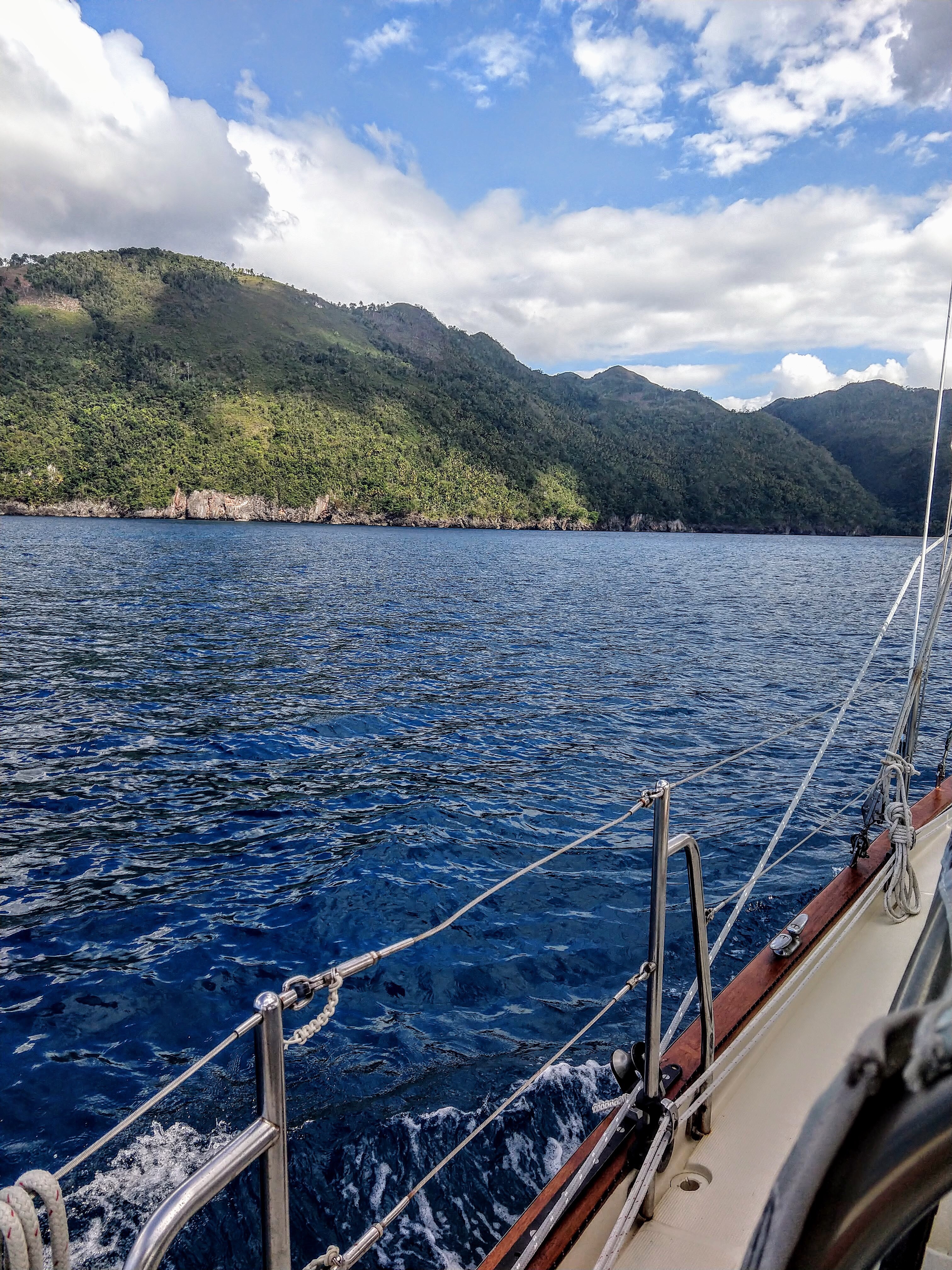
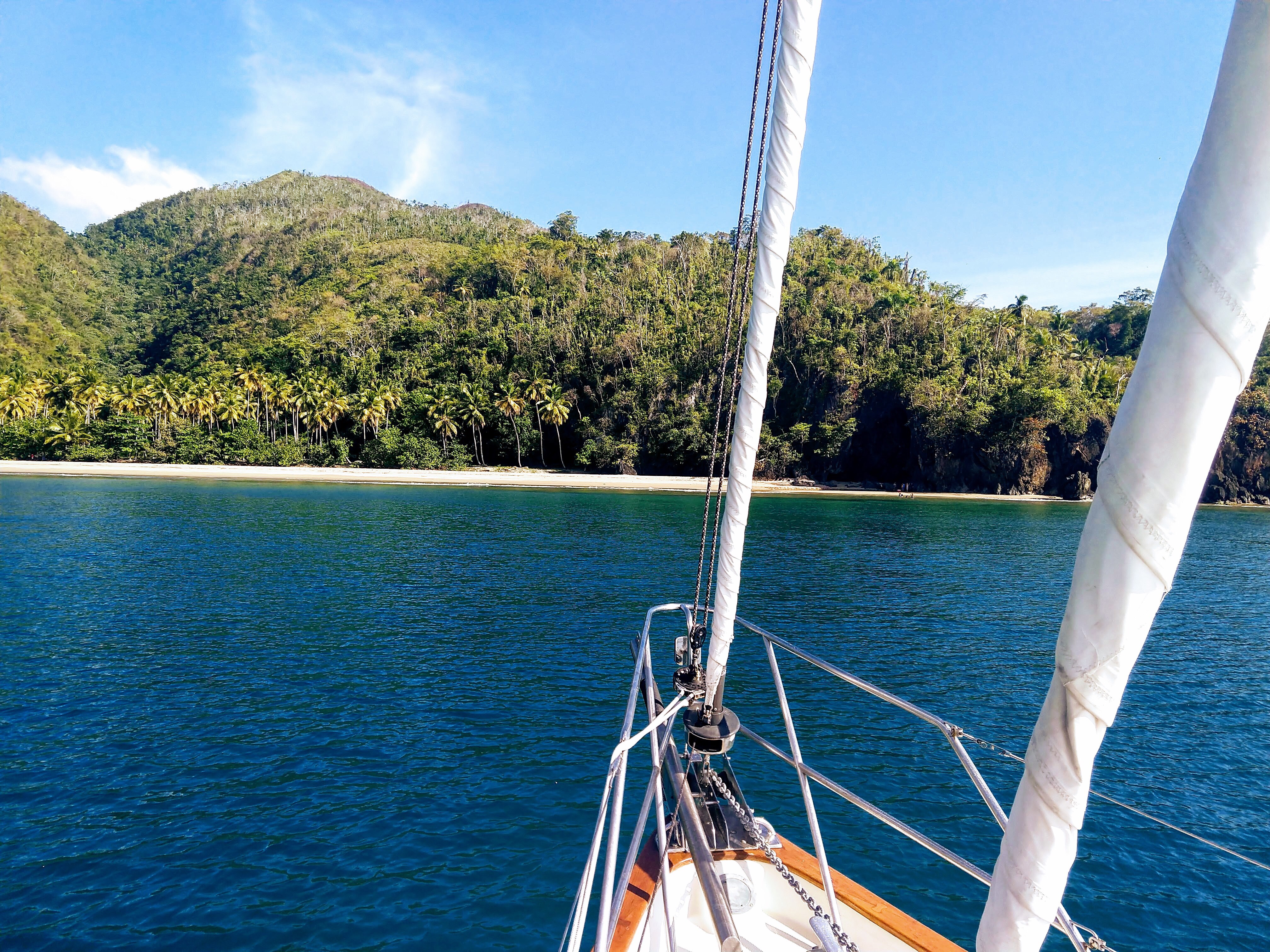
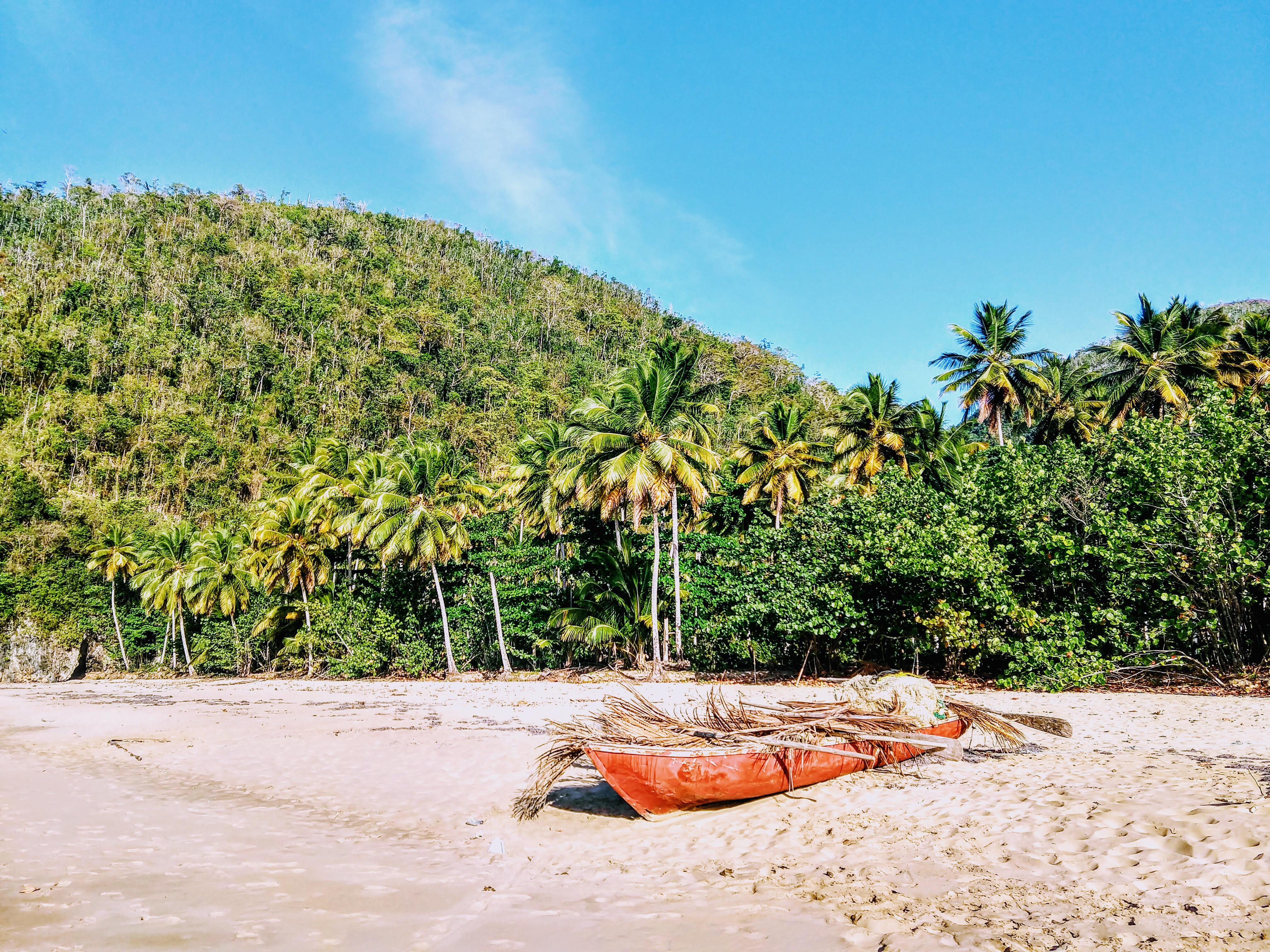
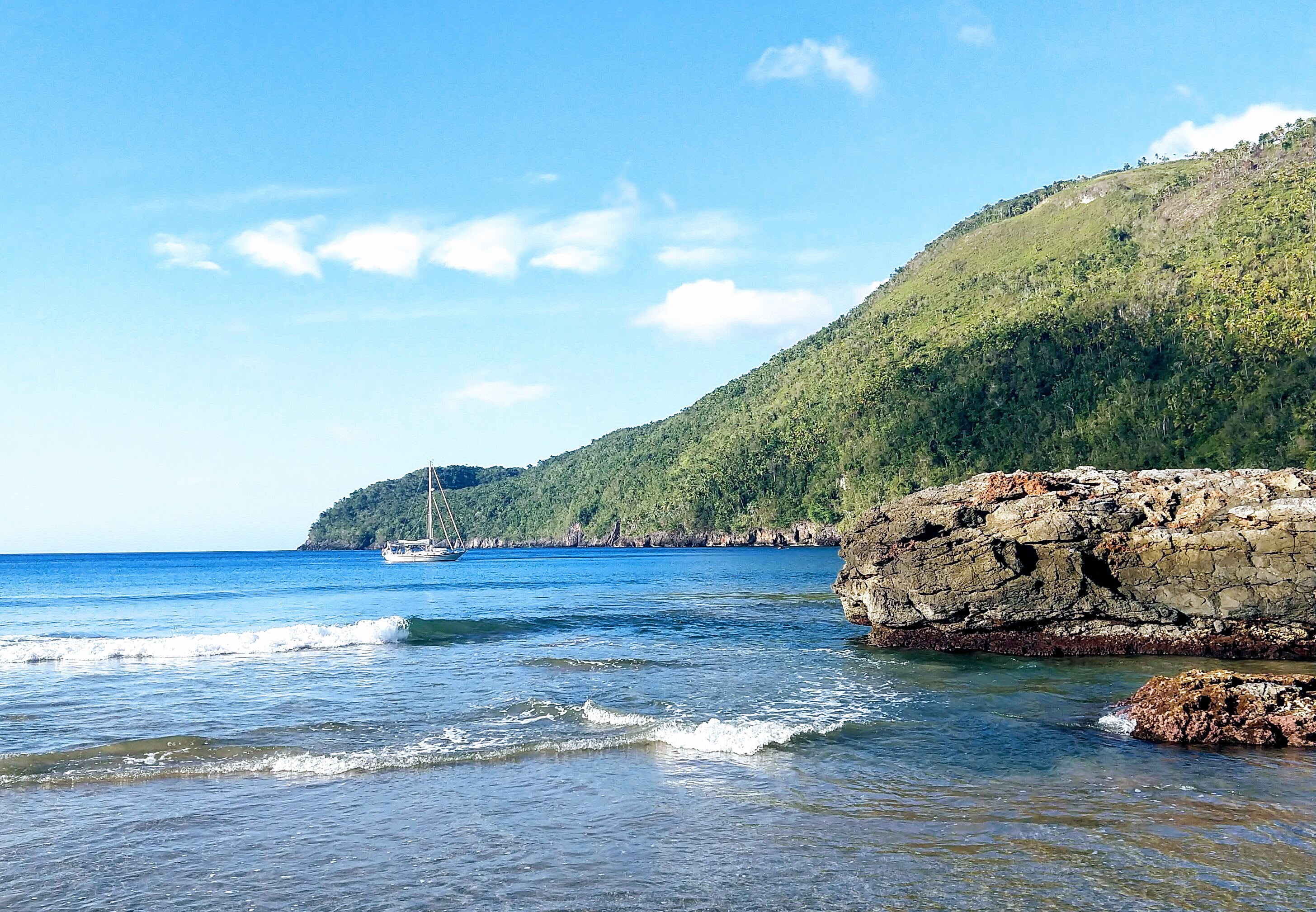
Finally, around mid-afternoon we approached the harbor of El Valle. It had been a long couple of days, and we were ready for a rest. As we approached the anchorage I couldn’t help but exclaim over and over again, “This place is gorgeous. Oh my gosh, this is so beautiful!” The vibrant green mountains were steep as fjords, and we were headed straight for a sandy beach rimmed with palm trees. We had found a perfect tropical paradise for the night as the reward for all of our efforts!

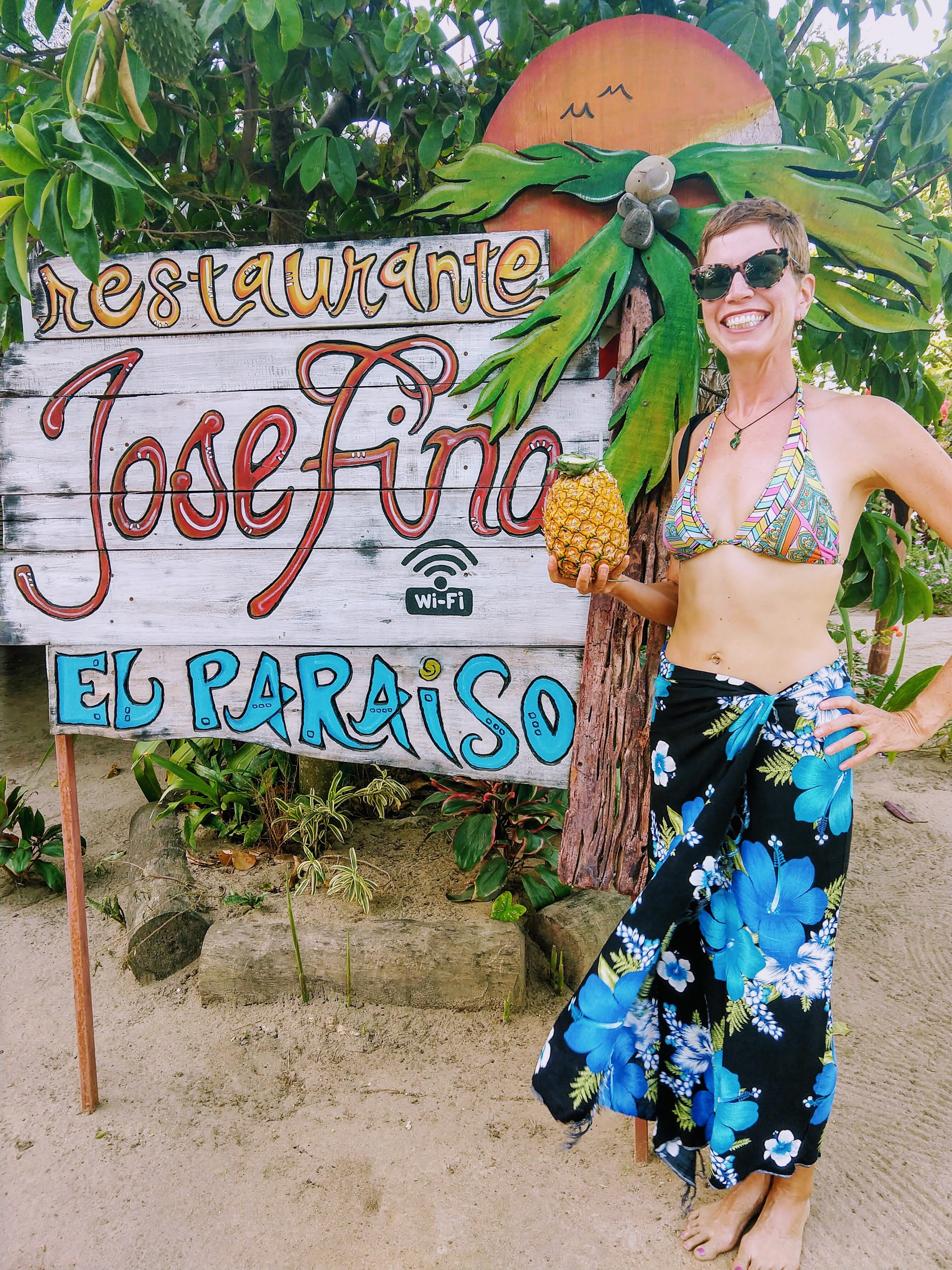
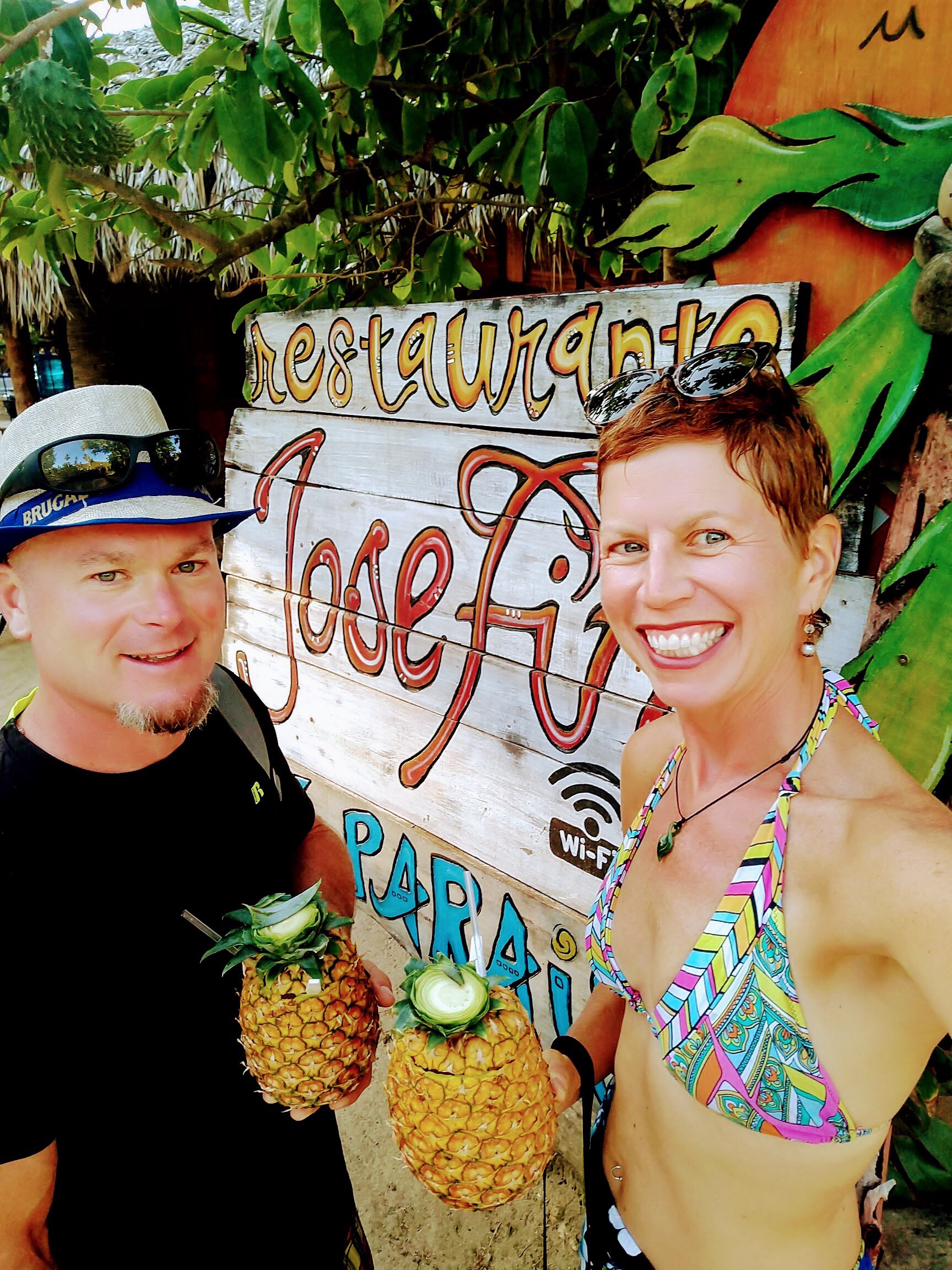
From a distance, our paradise looked deserted. But as we got closer, I noticed a small thatched roof shack. And couldn’t help but hear the loud music. Although we’d been awake all night, I couldn’t just cook dinner and go to sleep without exploring! So I convinced Capt. Mike to swim ashore with me to avoid the trouble of putting the dinghy in the water. Great decision! It felt wonderful to stretch our legs on the sandy beach, and to climb and play on the rocks. And then! We rewarded ourselves for our successful long sail with fresh pina coladas. Served right in the pineapple! Yum, yum, yum! Did I mention how much I love the Dominican Republic? ♥️🇩🇴

Operation Homeward Bound (Part2) – The Gulf Stream

Here’s a link to Part 1: Starting our sail from Nassau in The Bahamas back to Florida.

Two days into our journey from Nassau back to the States, we were once again prepping to cross the Gulf Stream. I complained to Capt. Mike that I couldn’t find any information on the internet about crossing the Gulf Stream in this East to West direction. He said “That’s because you’ve already crossed it once, so you know how!” I guess that’s true. But I’m a planner, and I want details, charts, pictures, more details! We were complicating things a bit by attempting to make it to Boot Key Harbor in Marathon in the Florida Keys before Subtropical Storm Alberto hit. So we’d be fighting against the northward flow of the Gulf Stream rather than benefitting from its power and speed. So when in doubt, I turn to my favorite blog The Boat Galley, and learned from Carolyn’s approach of researching all of the cuts through the Florida reef, aiming for the southernmost cut until the Stream pushed us north of that destination, then adjusting for the next cut north, etc. Our realistic goal was to enter the reef at the northern end of Key Largo right at sunset.

The Boat Galley

Day #3: 68.9 miles, 12.5 hours

After a horrible night’s sleep at South Riding Rock, we raised anchor at first light. The uncomfortable anchorage would hopefully be worth it, because it allowed us to start our westbound crossing 30 miles south of Bimini. Our motto for the day was “Get our southing in early” before the power of the Gulf Stream pushed us north. Winds were extremely light all day so we motored to ensure we’d reach the coast before dark. Good thing the days are getting longer!

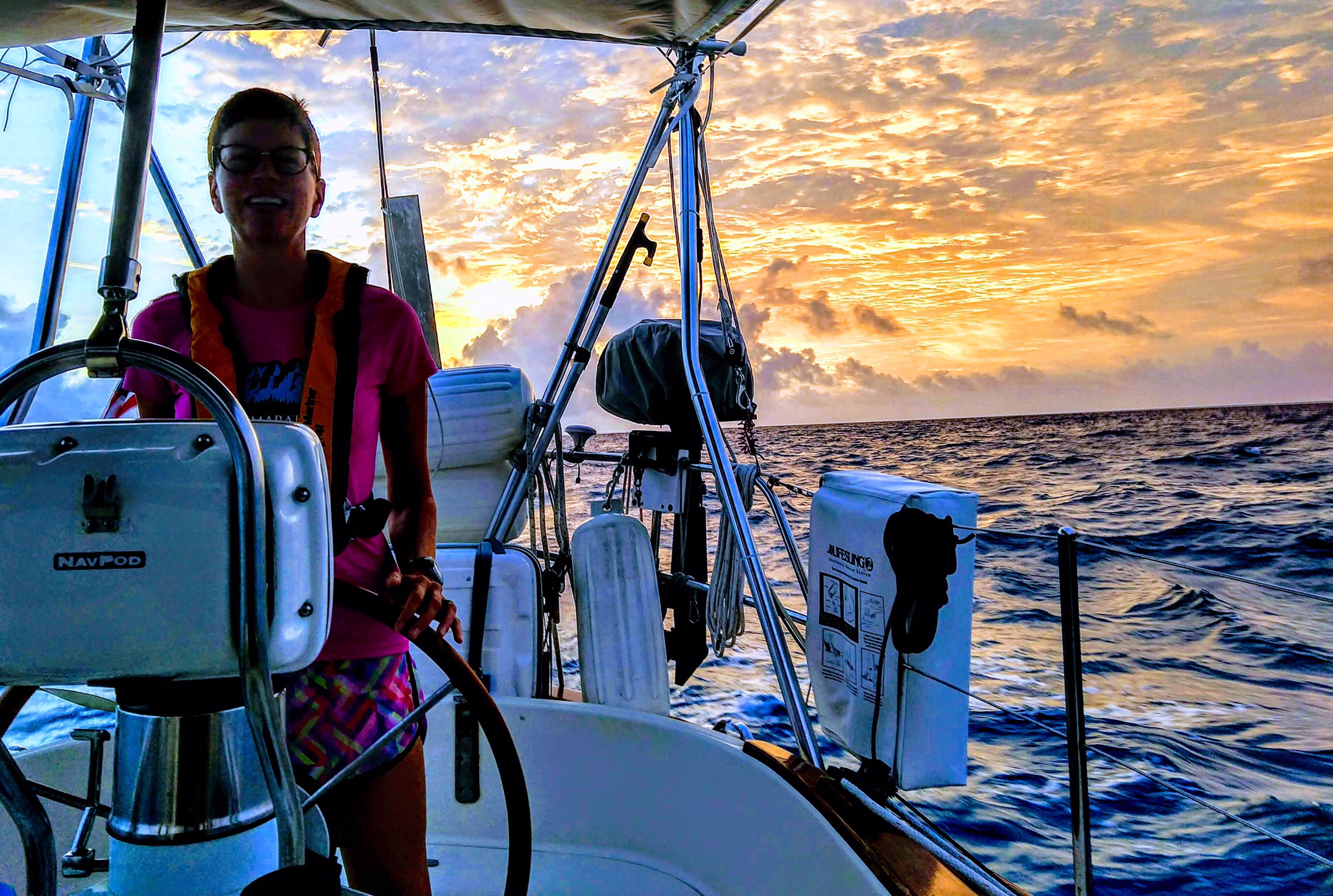
We started off heading southwest at a COG (course over ground) of 260 degrees in less than 10 knots of wind. Capt. Mike created a table to track our course, distance covered, and speed each hour so that we could see our progress. We compared to our GPS data on the chart plotter for a visual indicator of when the Gulf Stream current started pushing us sideways and slowing our southbound progress. Each time that our COG varied significantly from the heading we had set in the auto pilot, we knew that the Gulf Stream was having more effect on Sanitas’ forward progress than our Yanmar engine was, and we needed to point ourselves a few degrees further north. The bonus benefit of the table was that it kept Capt. Mike entertained with data gathering and math on an otherwise long and uneventful day.

Our navigation and course planning was spot on! But it was still a ridiculously long day, especially on top of the previous two, and we were completely spent by the time we spotted the coast of Key Largo. We slipped inside the Florida Reef (the third largest barrier reef in the world!) right at sunset, and dropped the hook about a half a mile off an uninhabited shore – basically as close to the middle of nowhere as you can be in the Florida Keys. A couple of cans of soup and a small celebratory glass of wine, and we were asleep before 9:00 pm.

Back in the United States after three and a half months in The Bahamas!

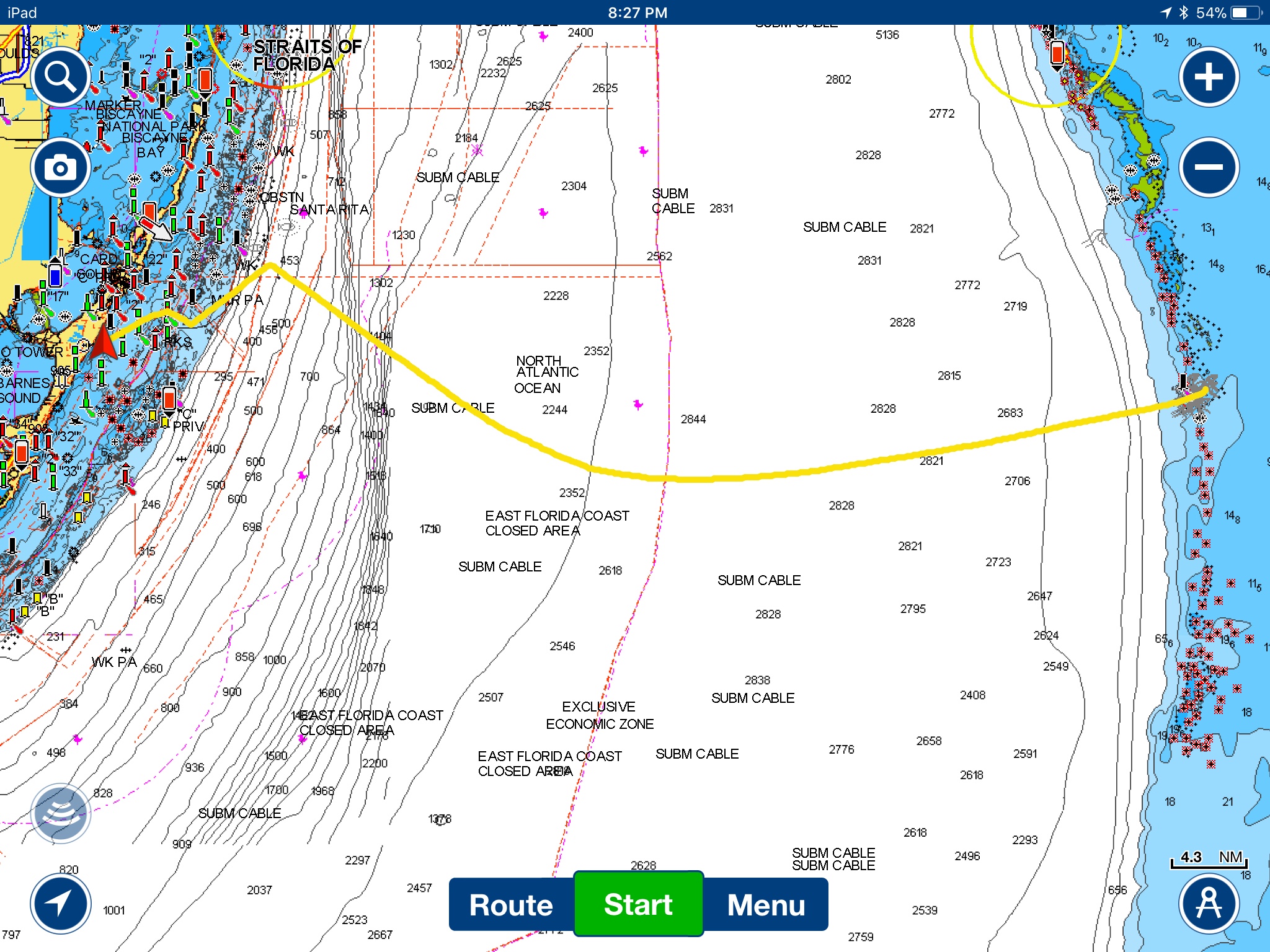
Looking at our course on the chart plotter, we really did manage to cross the Gulf Stream using the classic S-Curve pattern. I guess we knew what we were doing all along!

Day #4: 66 miles, 11.5 hours – Boot Key Harbor, Marathon

The last day of our journey home was supposed to be uneventful, if a little bit annoying. Something along the lines of, “I haven’t touched land for 4 days, and Florida is right over there, but we have to wait another 12 hours to touch it” kind of annoying. But it ended up being the most challenging day of our crossing.

Our goal was to make it safely to a mooring ball in Boot Key Harbor where we could wait out the high winds of Sub Tropical Storm Alberto. But the leading edge of the storm brought band after band of squalls with it. So even though we were traveling inside the Florida Reef and within sight of the Keys, we spent another sunrise to sunset day reacting to storms and going from motoring along with no wind to suddenly dealing with 30+ knots of wind. On the positive side, we got lots of practice reefing the main!

By the fourth mini storm of the day, Capt. Mike had the helm, and he sent me below to stay out of the cold driving rain. I sat at the bottom of the companionway, watching him like a hawk to make sure he wasn’t swept overboard. And shouting up every few minutes, “Are you ok? Do you need anything?”

We finally made it to Boot Key Harbor in Marathon just about half an hour after the marina closed for the night. Since we couldn’t reach anyone in the office to ask for a mooring ball, we took matters into our own hands! The last time we’d stayed in Boot Key before The Bahamas, we had moored on ball Romeo 5. We knew the way there, and knew the water was deep enough, so we just helped ourselves to the same ball four months later and settled in.

After four days we were finally home!