Boatyard Blues

You know when you reach the point in a home improvement project where you have to go to Home Depot at least once a day? Well that’s where we are with boat projects. But instead of a Home Depot, it’s West Marine. And because it’s boat repair stuff, everything costs at least five times what seems reasonable.
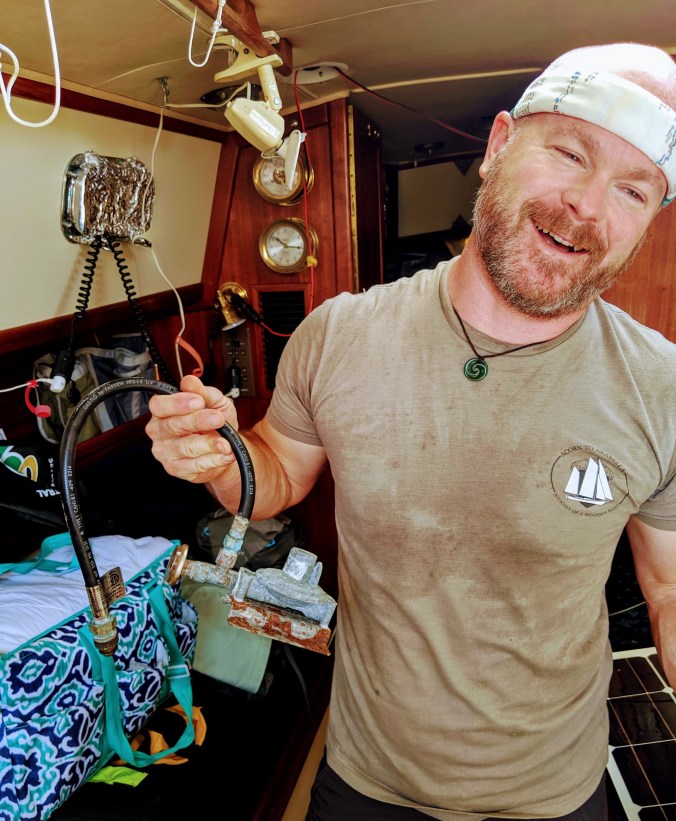
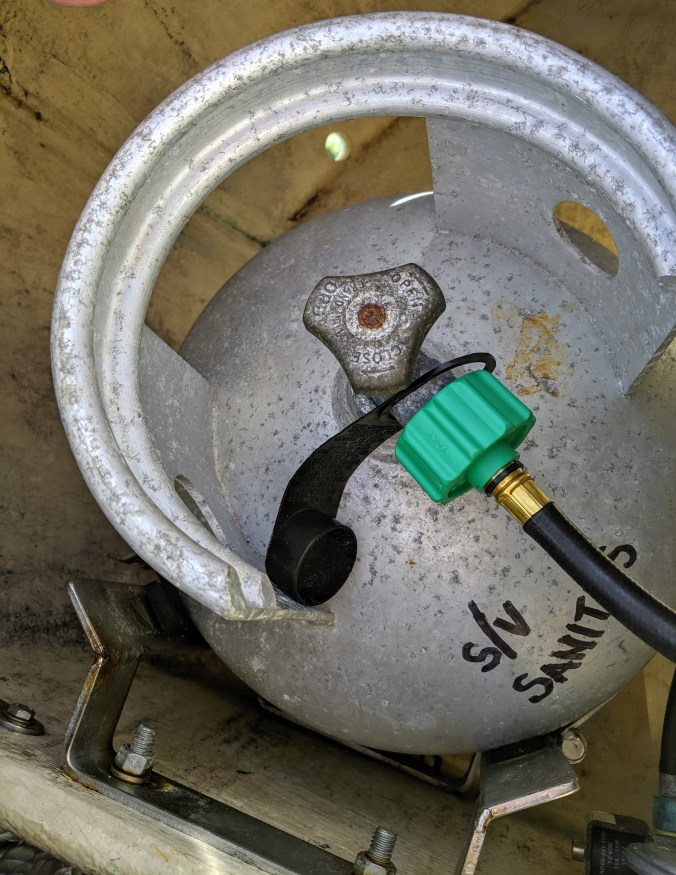
But first, for those of you who were wondering, we fixed our propane leak! After sleeping on it and returning fresh to the troubleshooting, Capt. Mike tracked the leak down to a faulty regulator as many of our boating friends successfully guessed. However, we couldn’t find a replacement locally – not at either of the Skipper Shops, West Marine, the propane store…. so thank goodness for the internet and companies that ship to Puerto Rico. In less than a week, we received a new regulator from Defender, and it was a pretty straightforward fix. We should be good to go to cook once we move aboard, and no more fire hazard. Hooray!
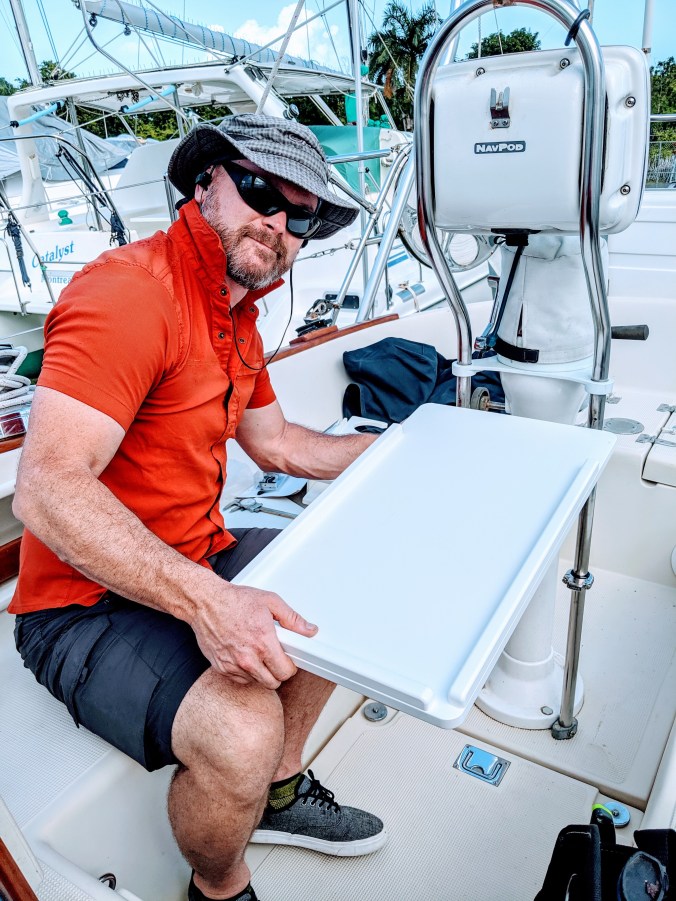
We didn’t sit idle while waiting for our part to be delivered. We’ve installed a new cockpit table, which will greatly improve our sundowner experience:
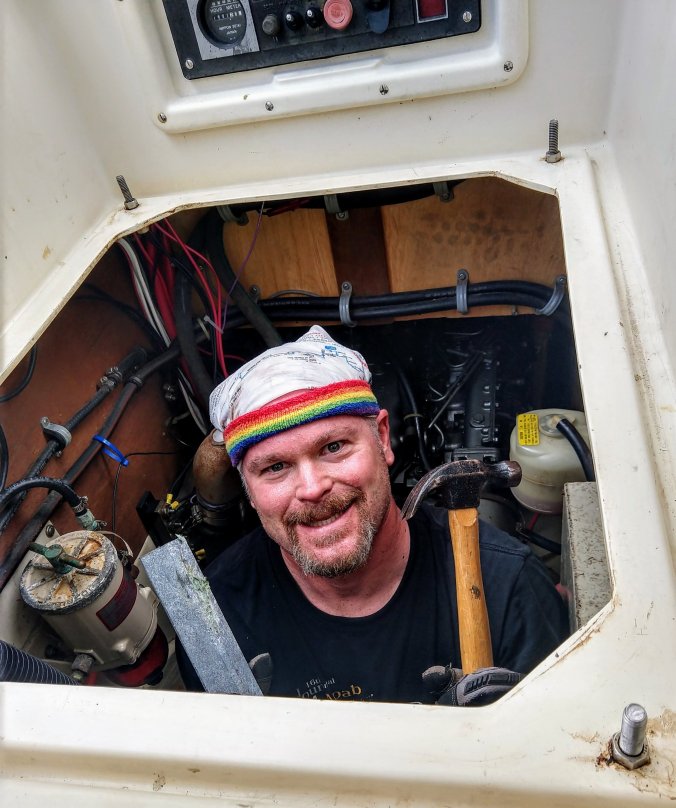
Changed the impeller on our diesel motor and found that unbeknownst to us, it had already started to fail:
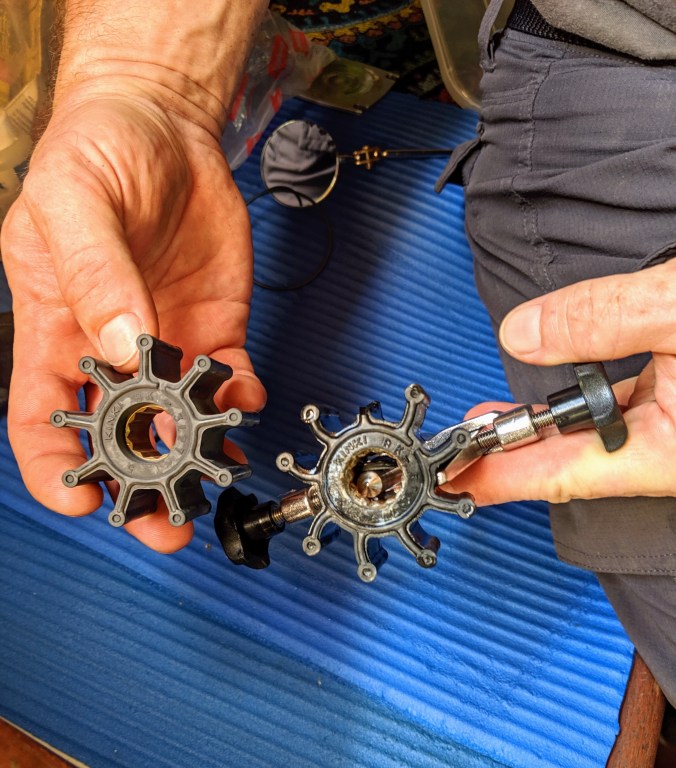
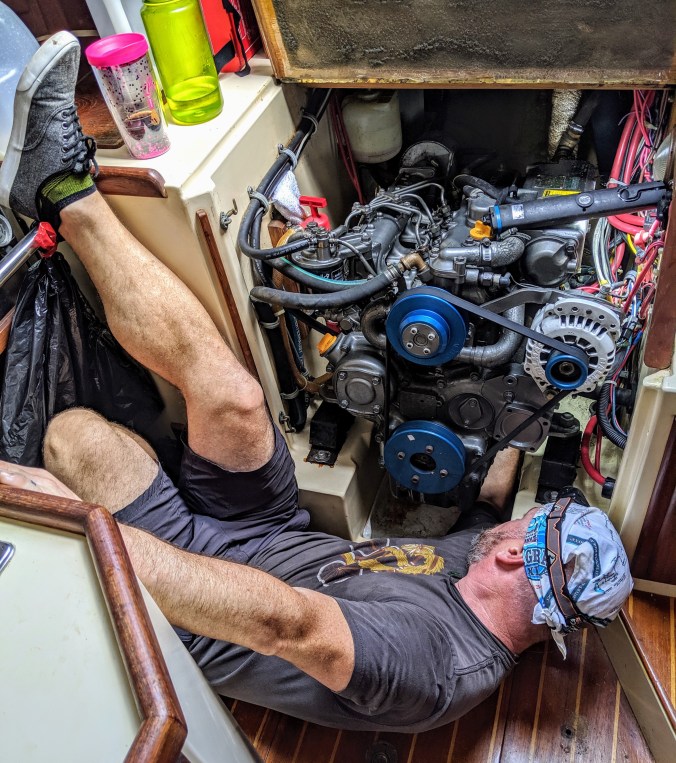
And did our first big grocery shopping trip of the season, stocking up on canned goods and snacks at Sam’s Club, so that we won’t have to pay island grocery store prices for pantry staples. I have a new method for tracking an inventory on provisions on my iPad. Not only do I track how many of each item we have aboard, but the trickiest part is tracking which hard-to-access hold it’s in, so that I can find it when I want it four months from now.
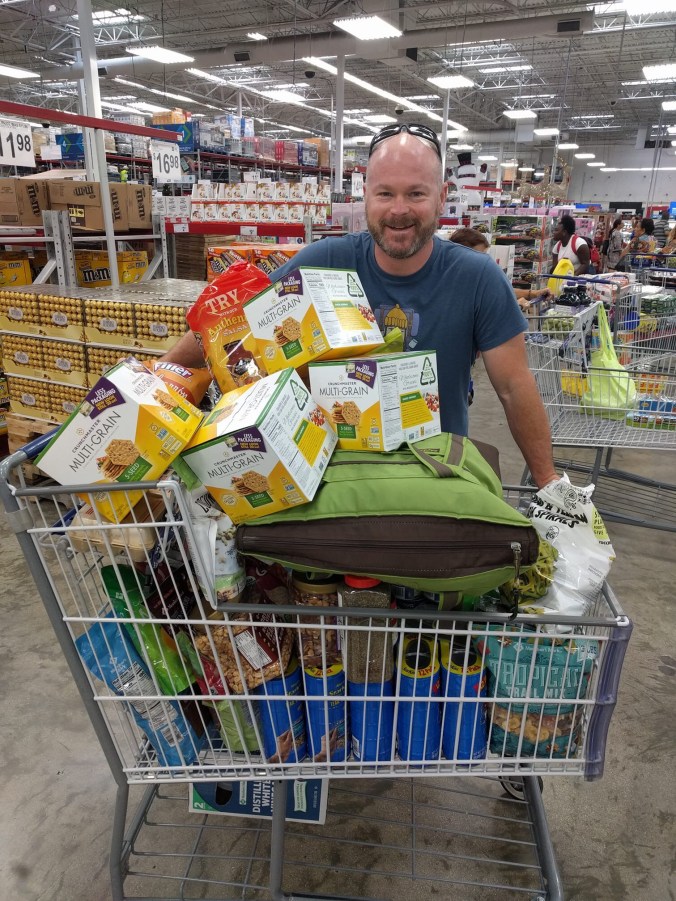
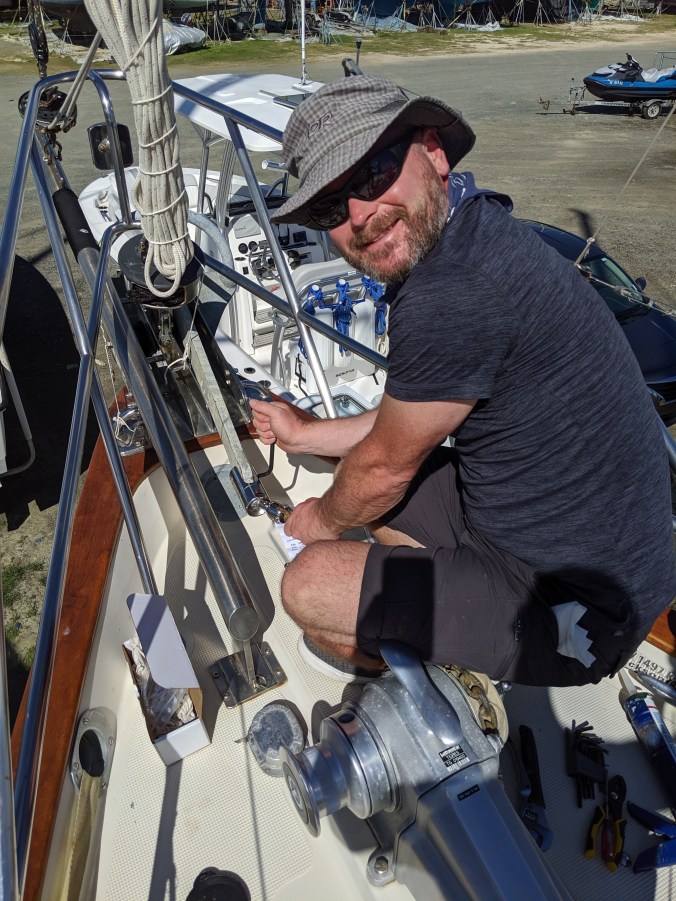
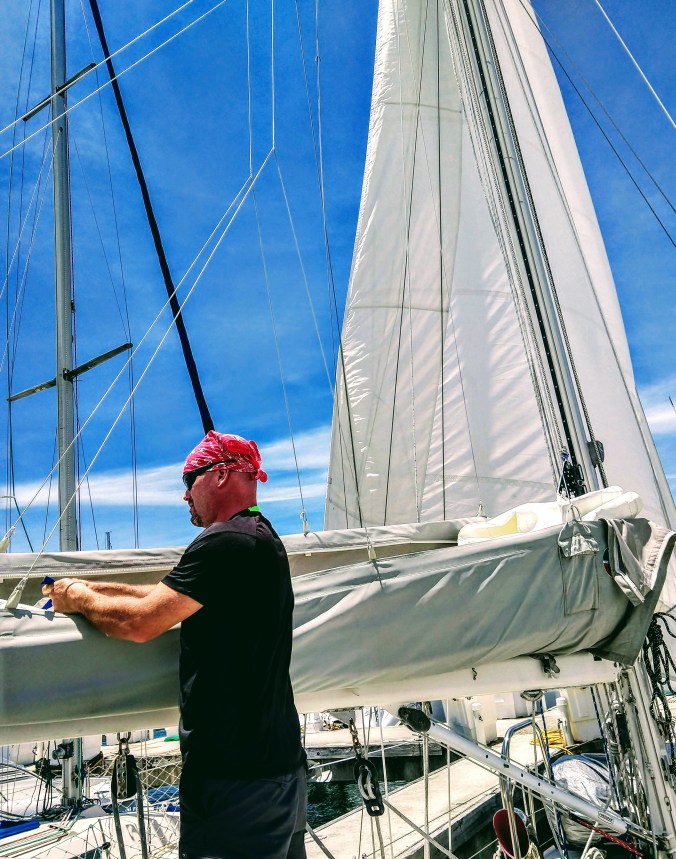
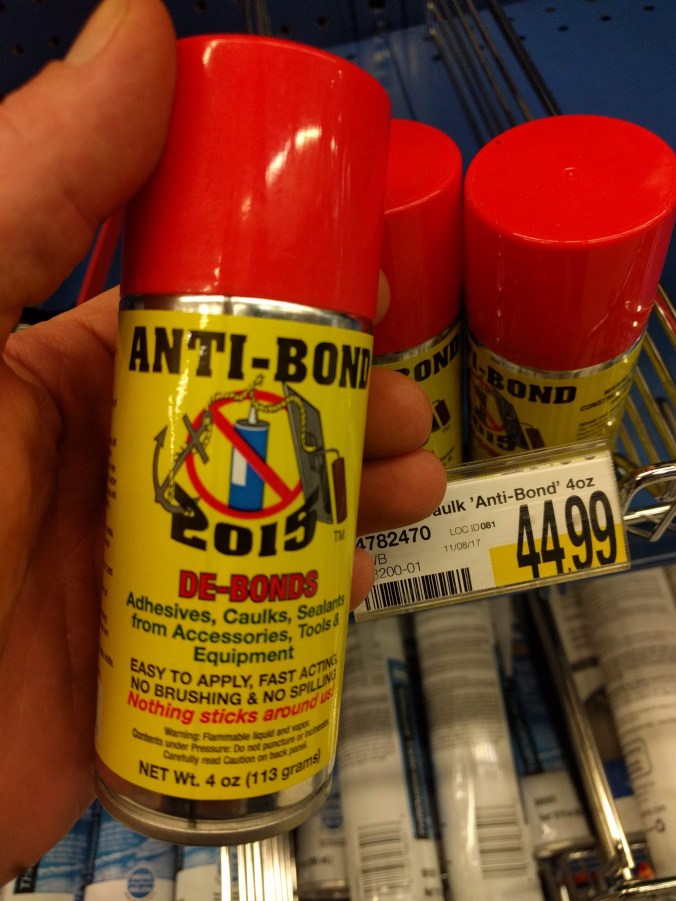
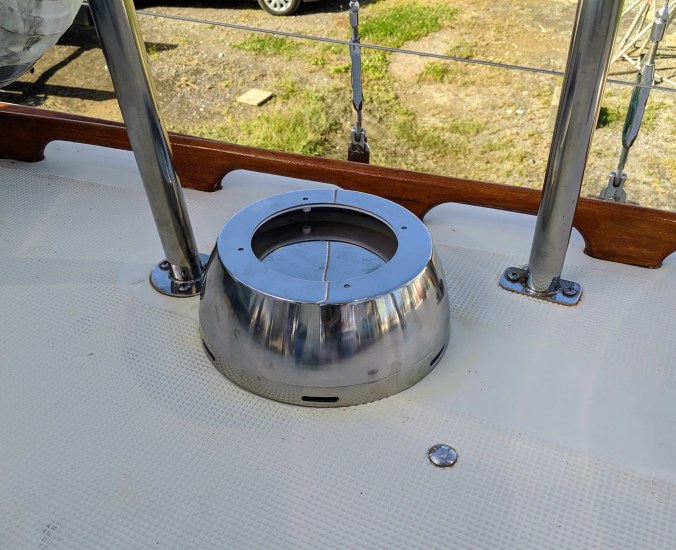
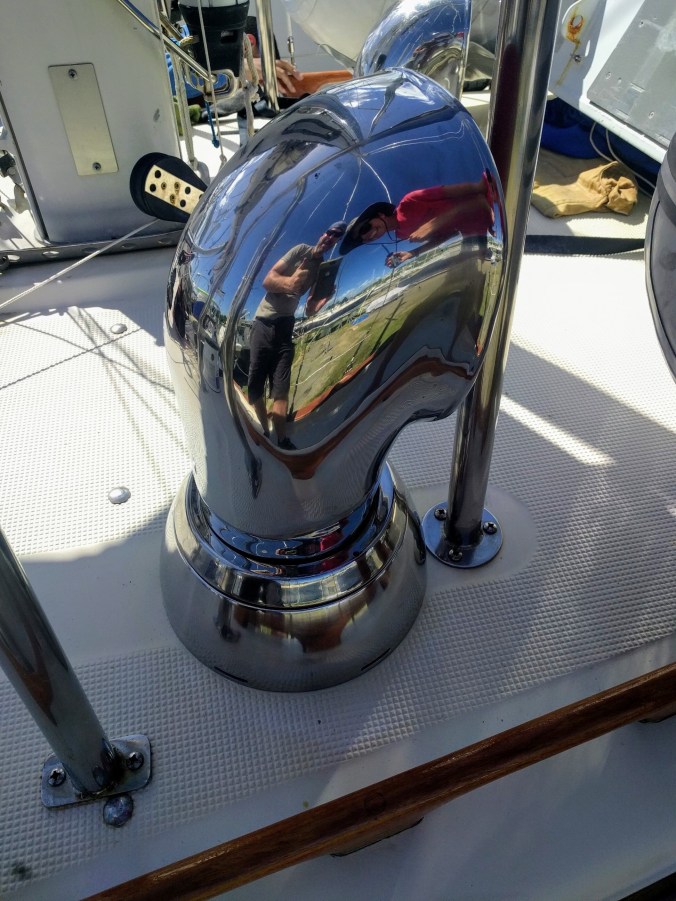
But back to that overpriced can of anti-bond in the first photo in this blog post … this was an unexpectedly difficult project to replace the dorade boxes (low profile round thingies) for our cowl vents (shiny stainless steel curved thingies) These vents let fresh air into the boat while keeping sea water out. Because yes, we get waves and spray all the way up onto the top deck while we’re underway. The dorade boxes contain a mushroom vent that you can turn to open, letting air in, or close, tightening things down in high seas. But ours were made of plastic and who knows how old. So they had cracked, leaked, and oozed rust. Finally, toward the very end of last season, a jib sheet under pressure caught the starboard cowl vent and popped it right off! Capt. Mike thought fast and dashed forward to grab it before it was swept overboard, saving us at least $1500 in replacement parts. At the time, he slathered a thick layer of epoxy on it, and hoped for the best during our last few weeks of the cruising season. Here are some photos of the damage:

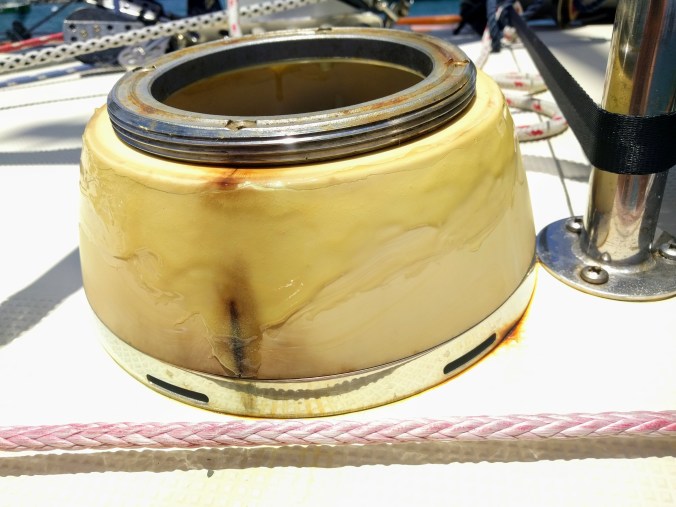
We did not expect this to turn into such a difficult project. It turns out the old plastic dorade boxes were attached to the deck with some sort of permanent adhesive. Yes, I said permanent. Mike made yet another trip to the marine supply store and bought every utility knife and blade they had in stock and spent one whole day scraping away one millimeter at a time.

Six hours and eight utility knives later, Johnny from Ancla Marine asked “What are you trying to do?” and when Capt. Mike explained, Johnny sent us back to West Marine for a miraculous spray can that supposedly dissolves all adhesives. We were skeptical, so to improve our odds of success, we also stopped at Pep Boys and bought all of the utility knives they had in stock, plus a set of pry bars as an impulse buy. We sprayed around the base of dorade #1 and let it sit over night.

The next day was nothing short of miraculous. We both worked together; I put all my weight on a pry bar so that Mike could get a fraction of an inch of access beneath the dorade. Then he’d spray a little miracle juice and return to scraping. I’d move the pry bar into the space he just created and we’d start the spray-and-scrape process all over again. In about an hour, we’d accomplished what we couldn’t the day before. With a sucking noise and one last strong push on the pry bar, the dorade popped right off. And now that we had our system down, dorade #2 went much faster. By midday, we have both boxes off, and could move up to cleanup and prep for the reinstall. Thanks to Johnny and one $10/ounce bottle of miracle juice.

Here’s before and after on the inside of the boat:
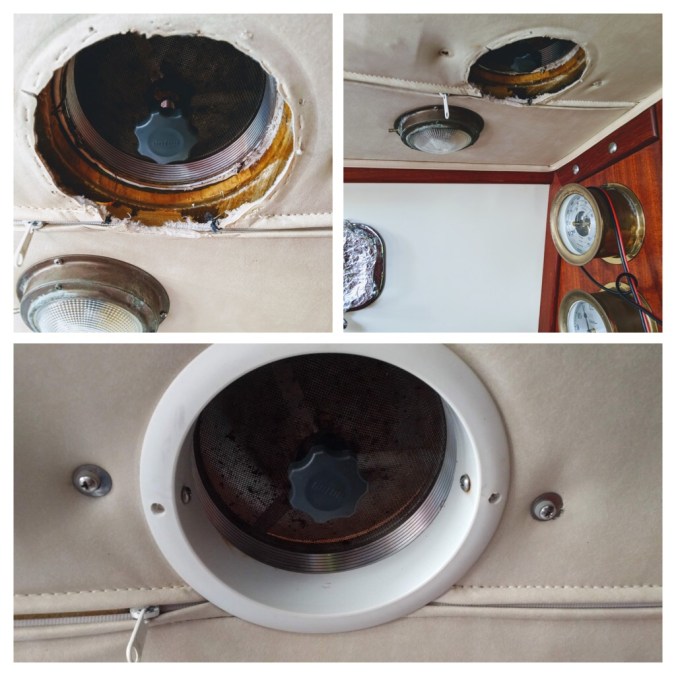
After scraping off the remaining adhesive and cleaning the surface with acetone, it was a pretty straightforward job to install the new dorades. AND we only had big open holes on the top of our boat during one tropical downpour! Don’t they look all nice and shiny now? I can see my face in it!
We’re Back!

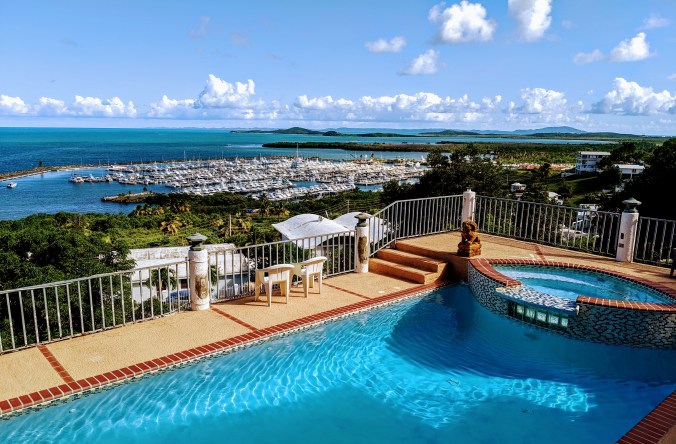
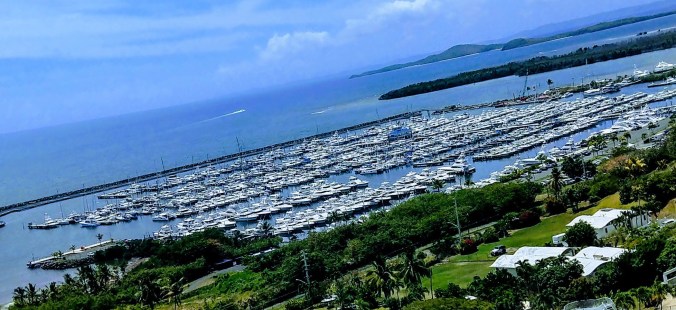
After 5 months, 4 countries, 3 states, 1400 km of hiking, and visits with countless friends and family members, summer vacation is over and we are back in Marina Puerto del Rey in Fajardo, Puerto Rico! We’re not allowed to live aboard in this boatyard, so we’ve rented an Airbnb just up the hill with a lovely view of the marina.

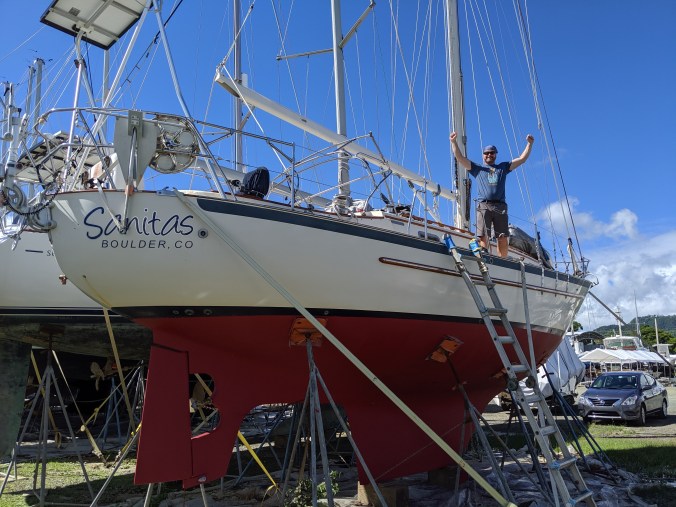
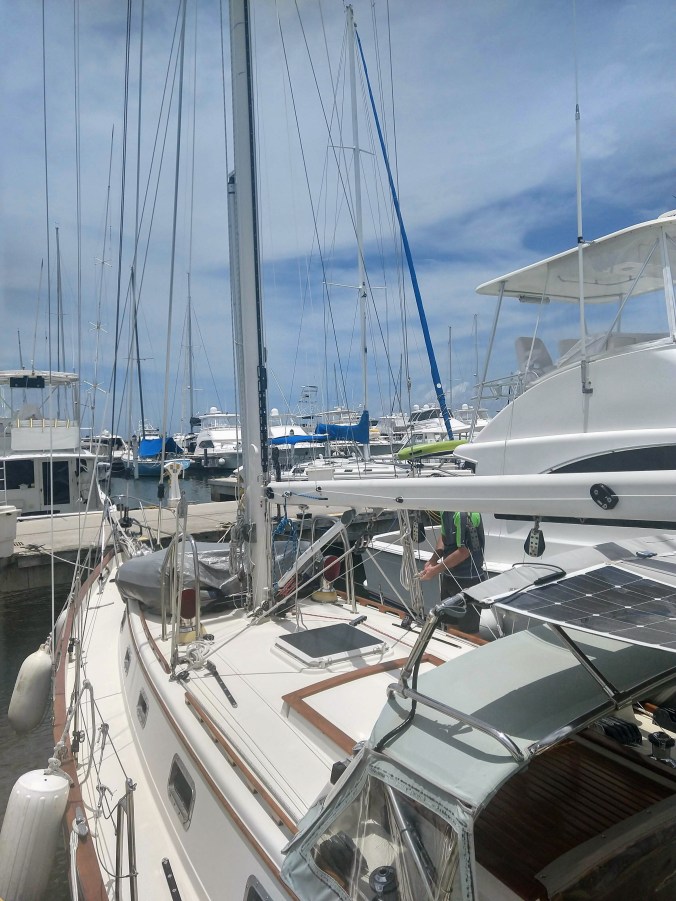
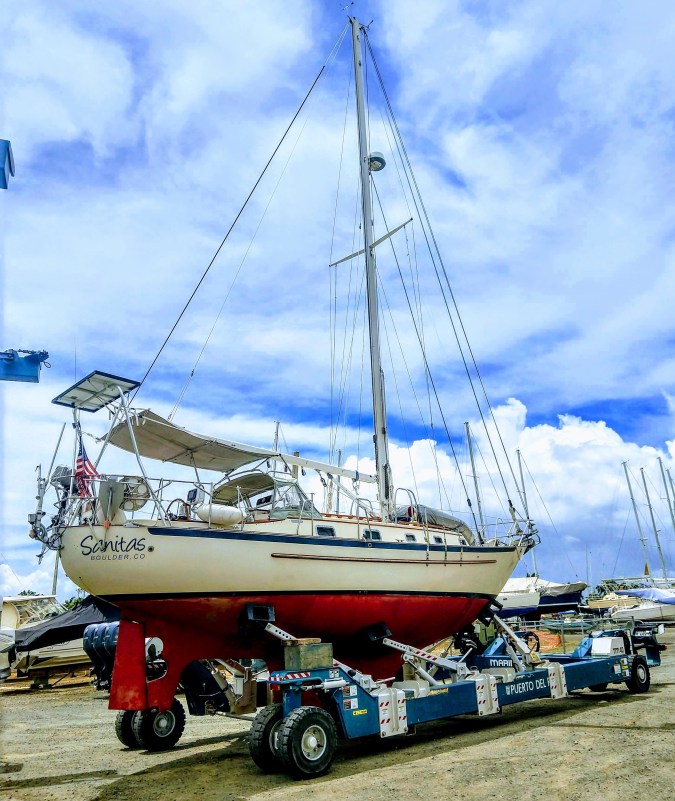
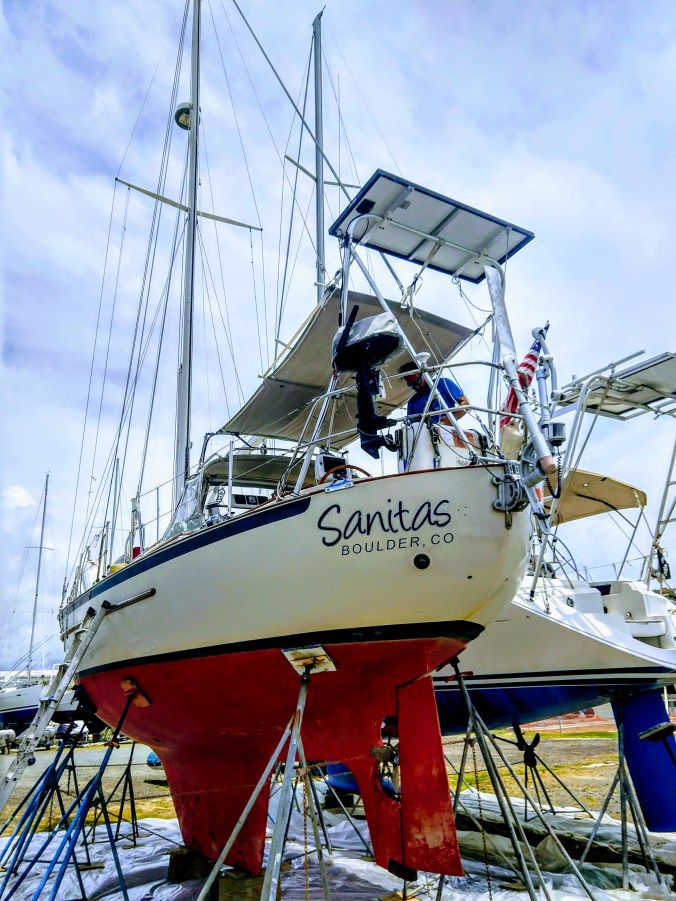
Sailing Vessel Sanitas is still on the hard in the boatyard where she has weathered hurricane season quite nicely. That’s partially thanks to our boat caretakers, Bianca and Johnny, who checked on her twice a month and performed extra storm prep during tropical storms Dorian and Karen. It’s also definitely due to the hard work Capt. Mike and I did in May to make sure everything aboard was as storm-ready as possible. We’ve done a thorough visual inspection and so far, so good – no mold or mildew, no bugs, no water in the bilge, nothing obviously broken. We’re keeping our fingers crossed that we continue to have no big surprises as we start up the systems and as we move into the water.

This month of preparation for the cruising season is the most expensive month of our year. We’re still paying boatyard fees for Sanitas and rental fees for a storage unit on land, as well as renting an apartment and car for daily use. We’re stocking up on spare parts, boat maintenance supplies, and canned and dry goods for six months. We’re paying for the only boat maintenance we don’t do ourselves; sanding and repairing the hull, applying a new coat of bottom paint, and polishing the hull. And we’re placing a new Amazon order practically every other day (did you know Amazon Prime free shipping works in Puerto Rico? Instead of 2-day shipping, it takes about 4 days, but who cares? It’s fantastic!) It makes me super anxious as we spend all this money, but I know we’ll be living at anchor and eating through those canned goods soon enough, spending practically nothing, so I try not to freak out.

This is our third time preparing for a winter in the Carribean. In fall of 2017 we had just bought Sanitas. She’d been out of the water for months while she was up for sale, so we found lots of surprises when we arrived at the boatyard in St Petersburg and set to work. The biggest, costliest project that first year was replacing the failed diesel fuel tank. In 2018, after surviving our first year of boat life, we returned to the boatyard with a massive to-do list of projects and things we needed to change to making living aboard a small sailboat more comfortable and our lives a bit happier. Each time, we spent much longer in the boatyard than we’d anticipated. But the investment of time and money up front made our cruising season go more smoothly. I’m hoping that third time’s a charm and that we know our boat well enough by now (and we’ve maintained her well enough as we go) that we can break free of the boatyard faster this time. I’d like to put in the work, and then hit the water! Let’s get to the the rewarding and fun part of cruising faster this time, ok?

Knock on wood because anyone who has ever owned a boat knows that there WILL be surprises – it’s just a matter of how serious and how costly… Ok, now back to work!

So here’s a funny story…

Two pilgrims walk into a bar. First pilgrim says to the second pilgrim….

Ok. I don’t really know any pilgrim jokes. I need to work on that! But the day before we walked to León, we walked 21 miles from Sahagún to Reliegos and ended the day by walking into Bar Gil around 3:00 pm. Now a bar in Spain isn’t the same as a bar in the USA. Yes, they serve beer and wine, but also coffee, sandwiches, and the ubiquitous tortilla. Basically a bar is a casual place to eat and drink that’s open all day instead of a fancy white table cloth restaurant that’s only open at Spanish (late!) dinner time.

And in this case, Bar Gil also hosted a few bunk rooms for pilgrims. So we went through the albergue routine: put our hiking poles in a container just inside the door, left our muddy boots on the shelf, showed our passports and credentials, paid our 8€, and chose a bunk.

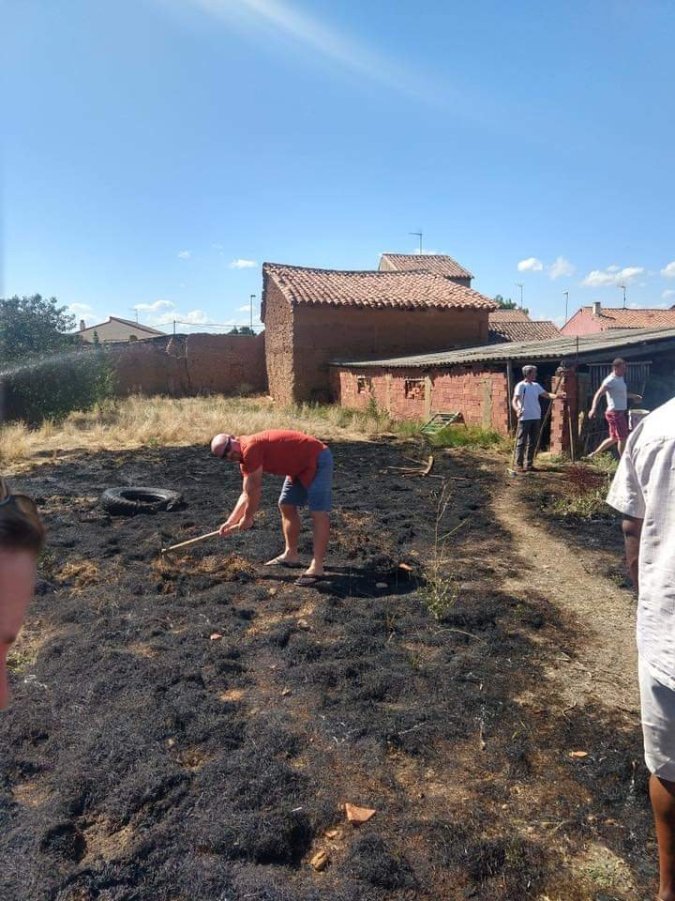
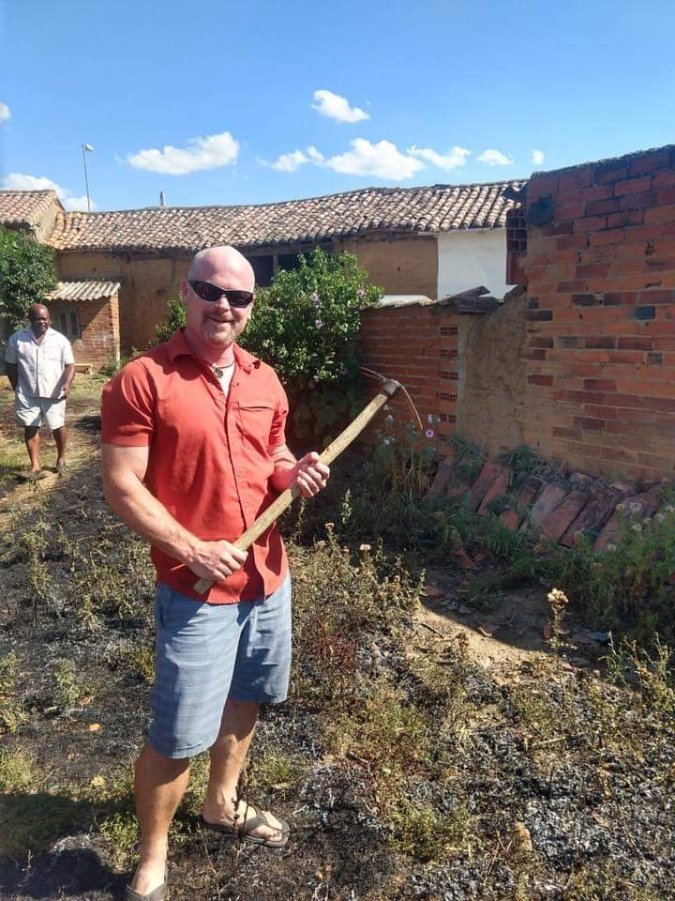
After a shower, Mike and I were sitting at a table in front of the albergue with a snack chatting with other pilgrims when a cloud of grey smoke rolled up the narrow street. Locals sitting at the adjoining tables jumped up and hurried in the direction of the smoke. So we followed. It turns out that all of the dry grasses and vegetation in a 500 sq ft courtyard had caught fire, with a spark rapidly spreading across the entire space. If the shed or house caught fire, the entire street of connected but brick and wood buildings could be lost. With no firefighters in sight, the villagers (and a few pilgrims) grabbed rakes and shovels and tarps and beat the flames out. When the worst of the fire was contained, we all took turns pouring buckets of water on the embers and stamping on the sparks. I eventually decided it wasn’t the smartest idea to do so wearing sandals! I didn’t take photos during the fire (it seemed ghoulish) but here’s Mike in full Bombero (Spanish firefighter) mode as things were calming down. When we returned to our table in front of the bar, two of the local men thanked us for helping.

The next morning, we stayed out of the way while our French roommates packed up and got an early start. As soon as they were gone, we took over the bathroom and the floor space and did the same. As we were leaving up our boots to hit the trail I told Mike, “Um…I think we have a problem.” We had left our hiking poles in the bar which was now firmly locked and abandoned at 6:00 am. Drat!

We tried every door… Locked. I was getting ready to start knocking on the private doors to wake someone up to open the bar. Although I had no idea how is explain what I needed – in Spanish. We found an open window, moved several pots of plants and climbed through… Only gave us access to the restrooms. We found a back door with a key in the lock… Only accessed a back dining room with a few tables. But wait! Tossed in a corner of that dining room were our poles! Nowhere near where we left them. And not in any part of the building where pilgrims normally have access. Hmmmm…. Seems suspicious. But better not to think about it too hard. We had all of our gear, and we could go on our merry way. Just 45 minutes late and after quite a bit of breaking and entering.
Back in the Boatyard, Baby!

Sanitas finished the 2019 cruising season at the Puerto del Rey marina in Fajardo Puerto Rico. This marina is massive – it holds over 1000 boats in wet slips, and several hundred “on the hard” for hurricane season storage. It’s so huge, they employ a fleet of golf carts to drive you from a slip to the parking lot or the main office building because the walk can be nearly a mile! I’d often choose to walk, and I could get my daily 10,000 steps just doing laundry!

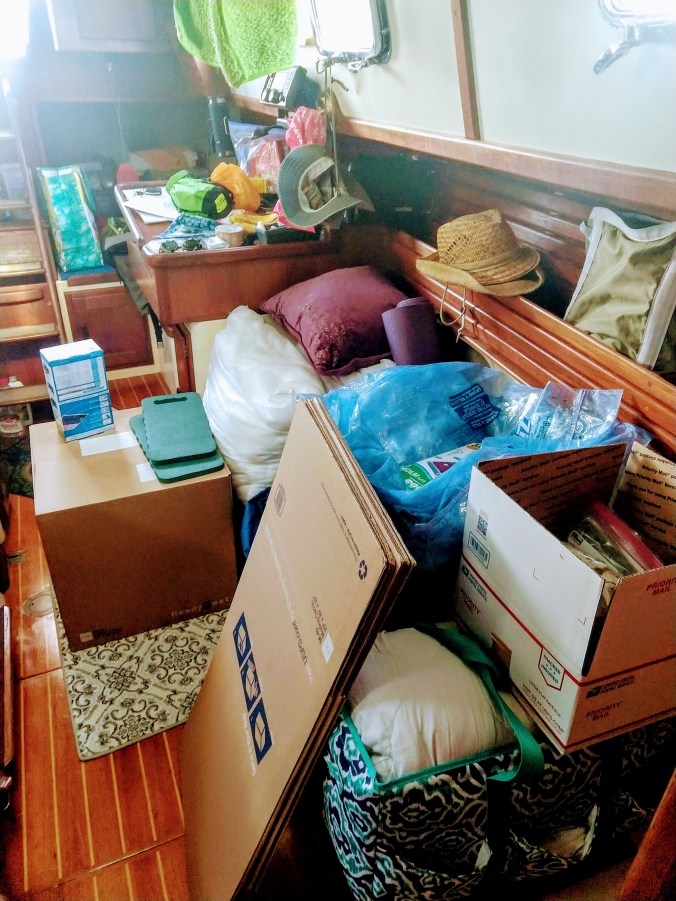
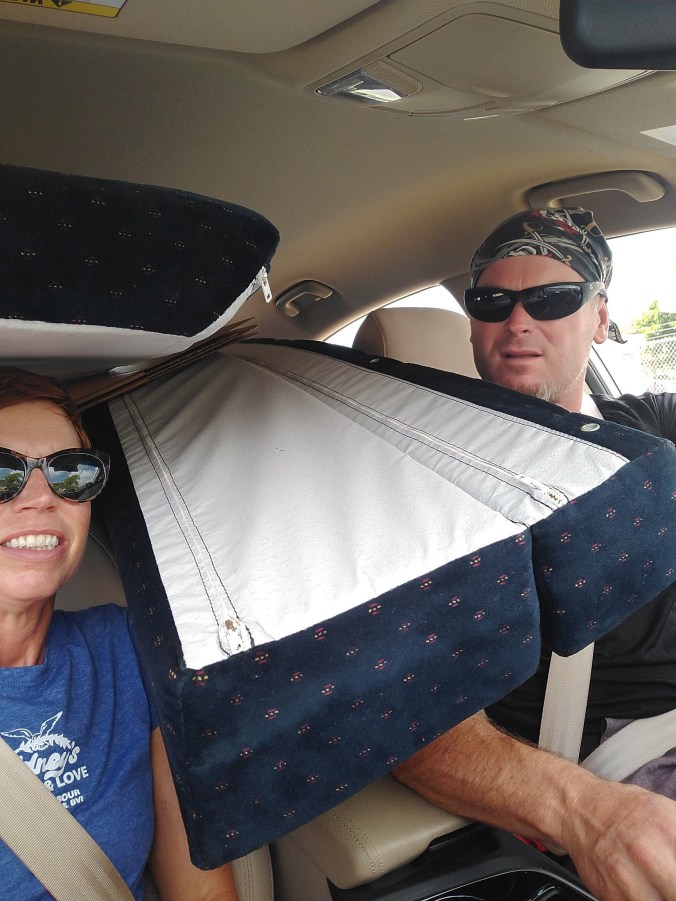
Once we pulled into our slip at PdR, the vacation was over! Now the hurricane season preparation spreadsheet comes out, and we get to work cleaning Sanitas from bow to stern and making her as safe as possible from tropical storms while we travel for the summer. Capt. Mike and I rented a storage unit on land so that we could remove as much as possible from the boat, giving us the chance to clean very thoroughly and allowing ventilation so that we don’t return to mold or mildew. But remember how far our slip is from the parking lot? Getting everything off the boat is a challenge, even with a rental car.

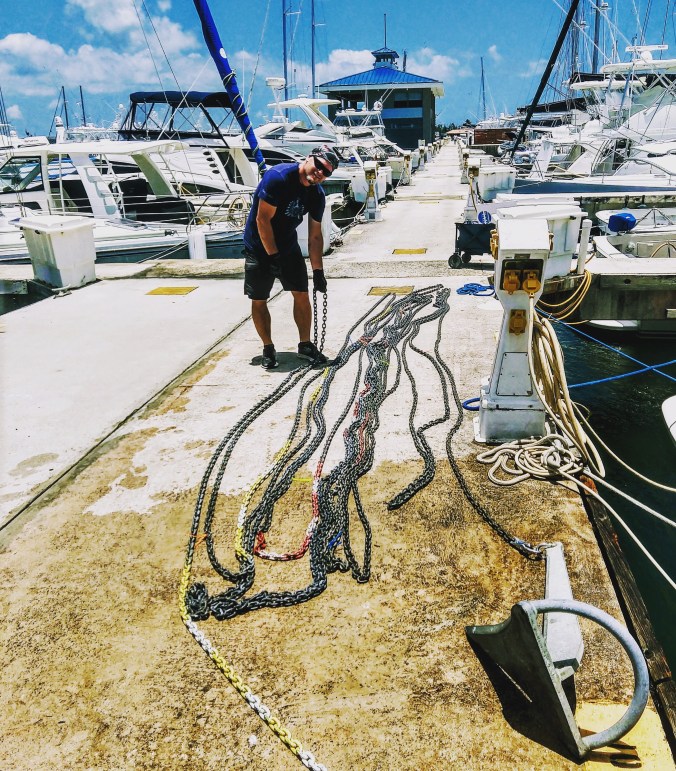
Once she’s mostly empty, we could get down to business and do some once-a-season jobs like cleaning and marking the anchor chain….

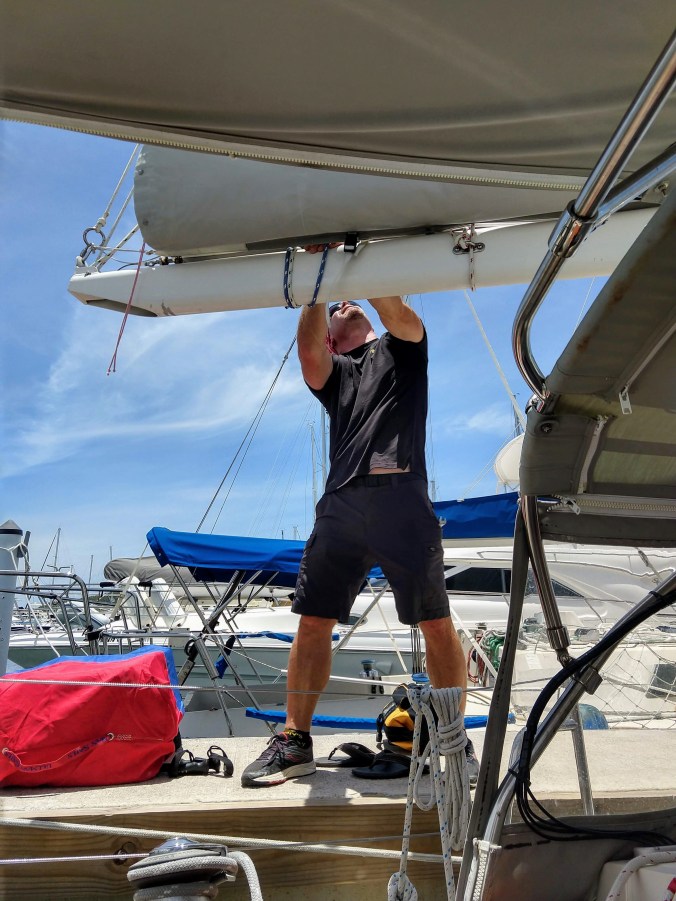
….And inspecting, cleaning, and removing the sails.

Knowing that we are inside the hurricane box, we took special care to remove anything that could be grabbed by the wind. For the first time, we removed all of the running rigging, replacing the thicker braided nylon lines with thin parachute cord “messenger lines”. I almost don’t recognize Sanitas with no canvas and no lines!

While we were in a wet slip, we had access to fresh water so that we could spray a season’s worth of dirt and salt water off everything. We also had access to electricity, which means air conditioning – hooray! We set the thermostat at 72 deg, and I think it actually got the temperature inside the boat down to around 80. Unfortunately, being in a slip so close to land and to other boats also meant LOTS of tiny little flies. I hung up fly paper and by the time of our haul-out, we’d captured hundreds.

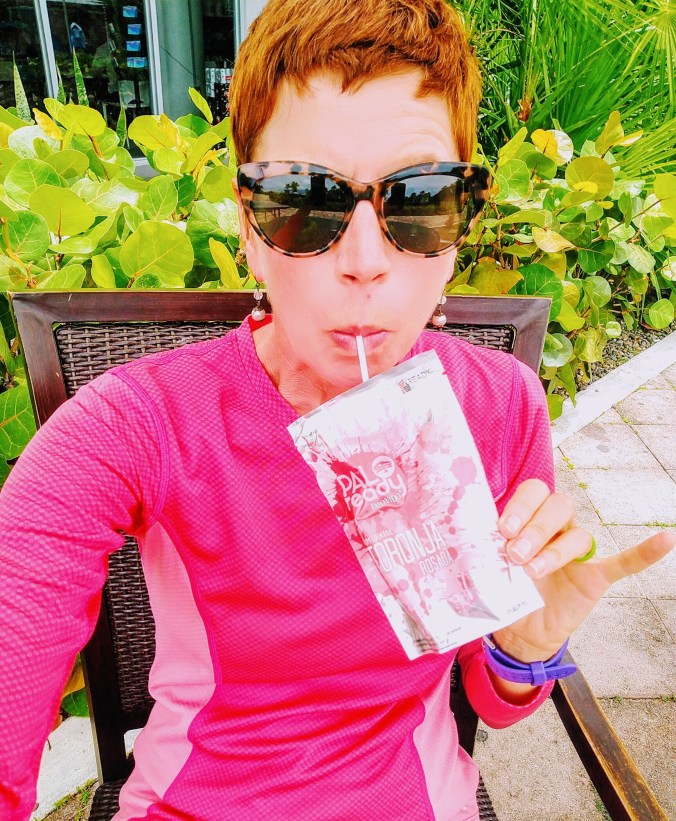
One thing that made all the heat and dirt and flies tolerable was the $1.50 rum punch pouches sold in the marina cafe. In all kinds of tropical flavors, and ice cold, it was tough to walk by without stopping for a treat.

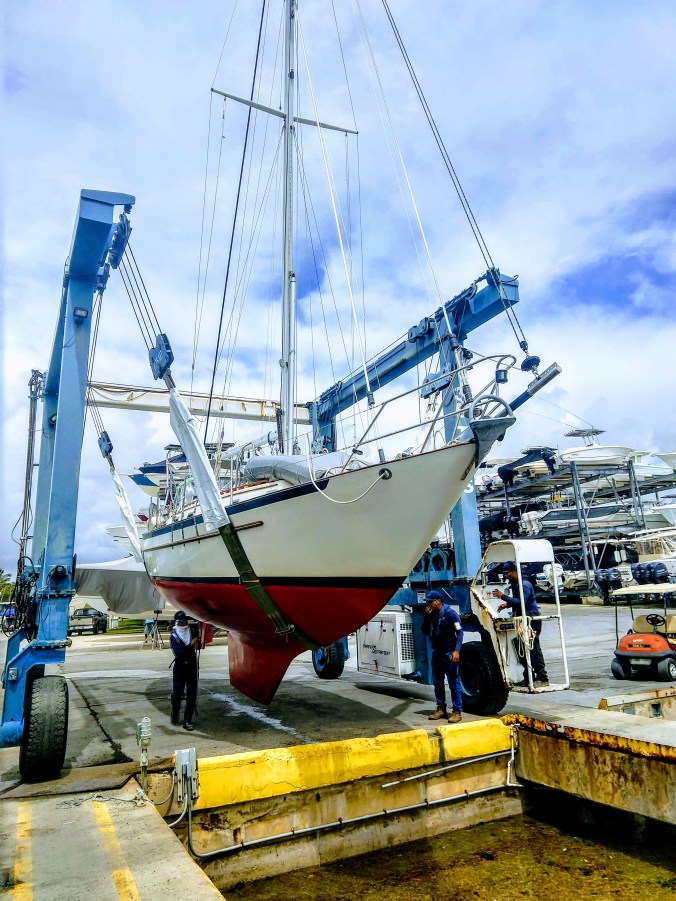
Finally, the big haul-out day arrived, and Sanitas got to go for a little ride! Capt. Mike did an excellent job backing her into the teeny little haul-out slip, and the very professional boat yard crew drove her across the parking lot, transferred her to a small hydraulic trailer, and slid her into place in the dry storage yard.

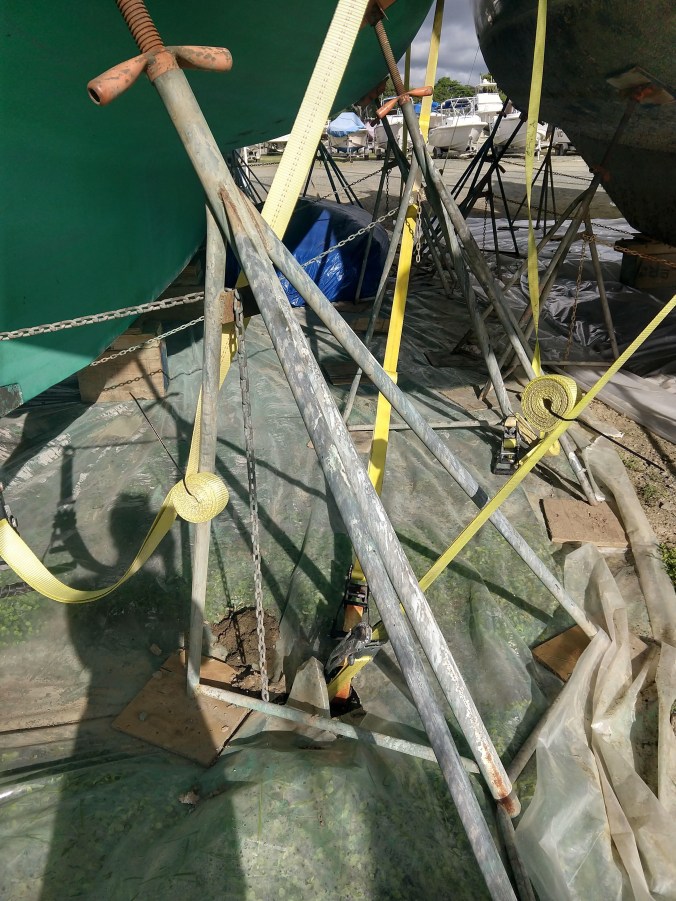
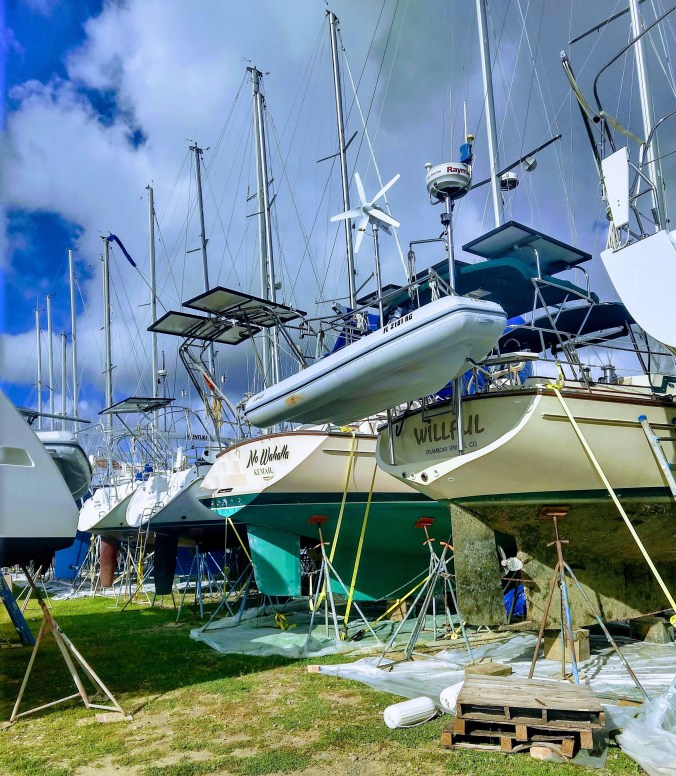
We chose Puerto del Rey for a reason – it supposedly has the most secure hurricane storage in all of the Caribbean. In the boatyard, concrete footings reinforced with rebar provide strong tie-down points. We used ratcheting tie-down straps rated at 10,000 pounds to secure Sanitas to the ground. In theory, all of the boats lined up and tied down together provide additional strength. We have our fingers crossed that it’s true, and that we’ll have no problems during the storm season! To further reduce risk, we hired a caretaker to visit and inspect Sanitas periodically, and to double check that she’s secured before every big storm.

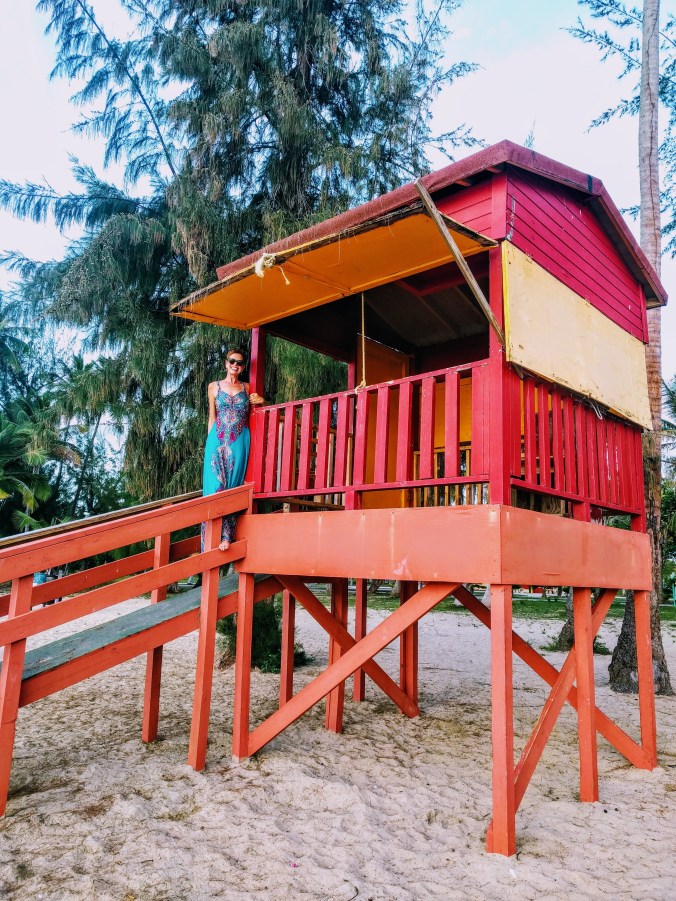
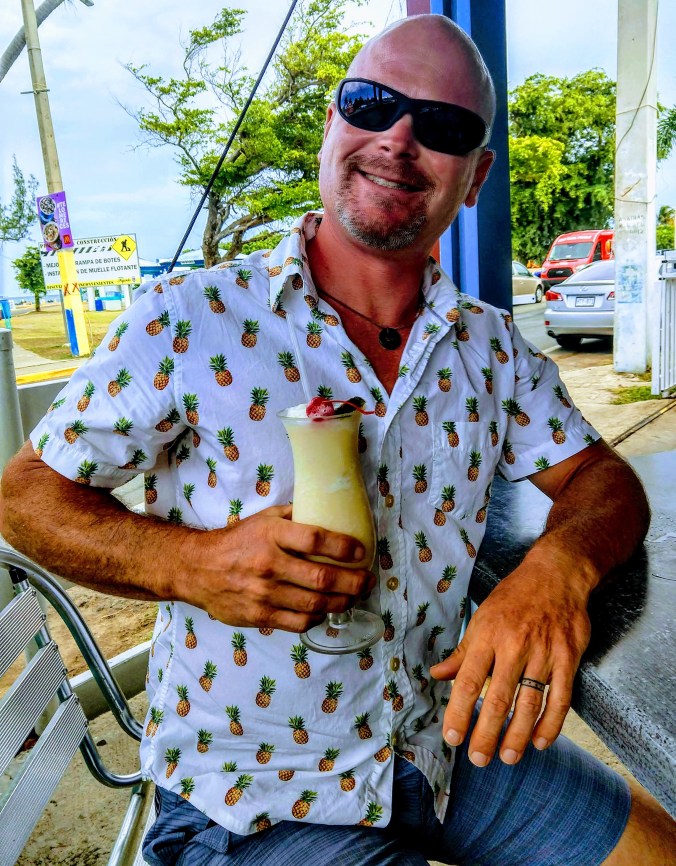
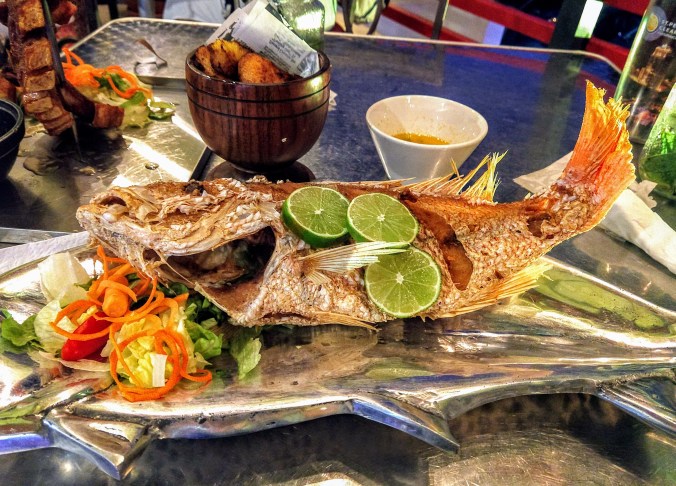
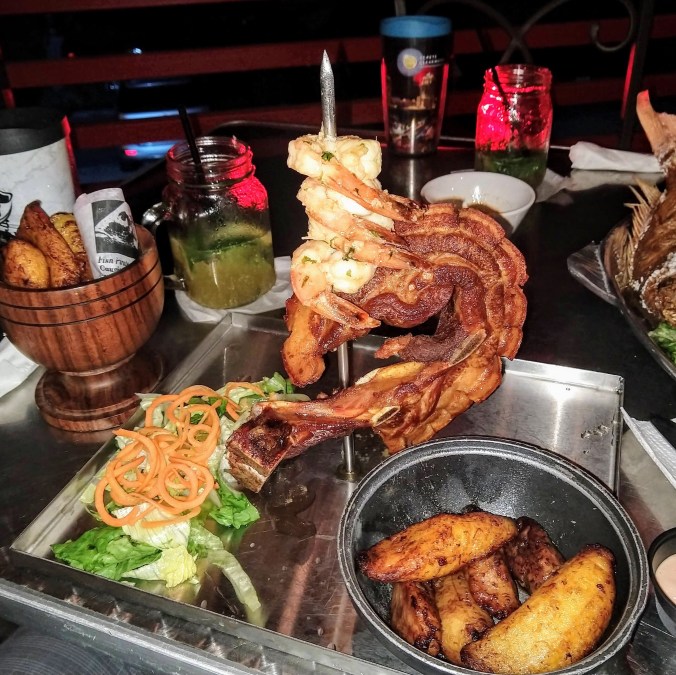
After two weeks of hard work, Sanitas was safe and secure and Capt. Mike and I could have a little fun. We explored Luquillo Beach and the kiosks that serve the tastiest food and drink we had in Puerto Rico.

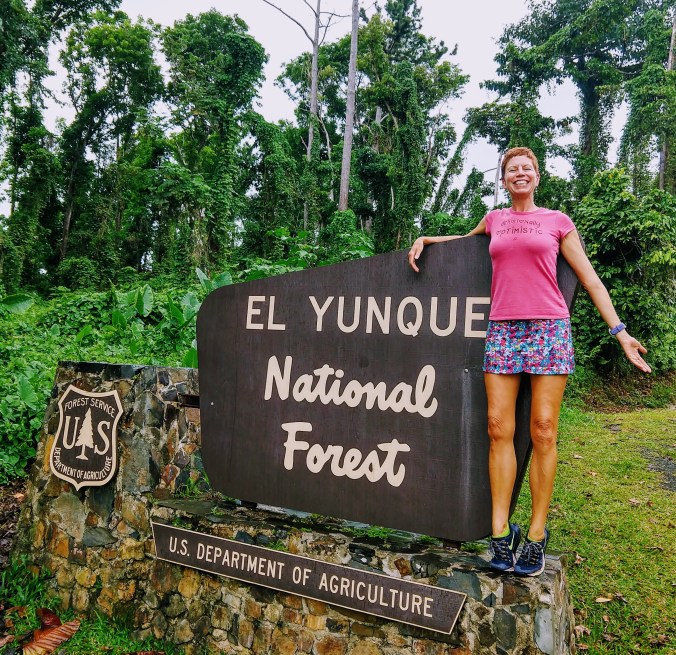
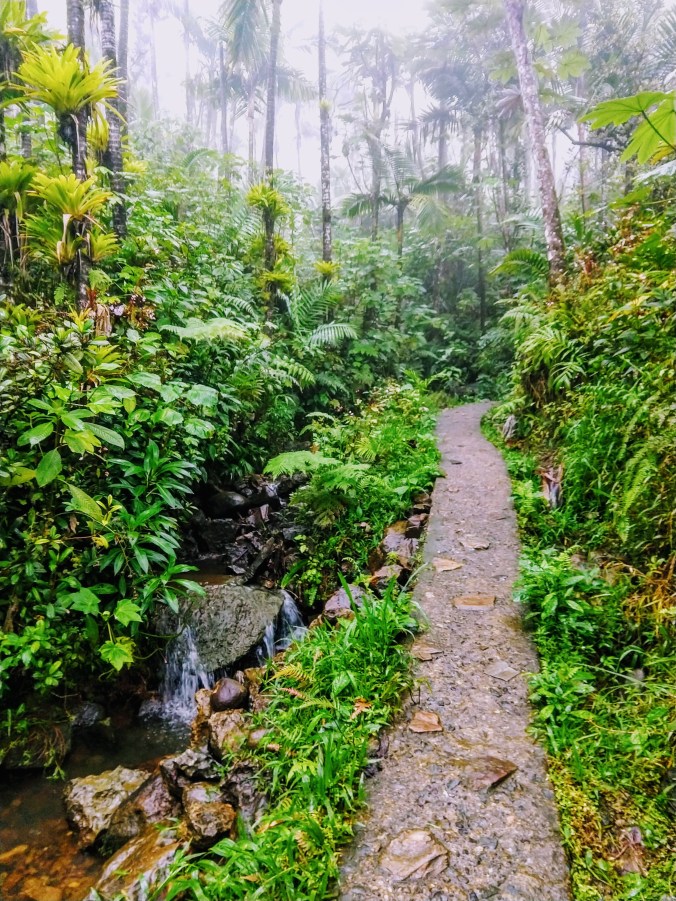
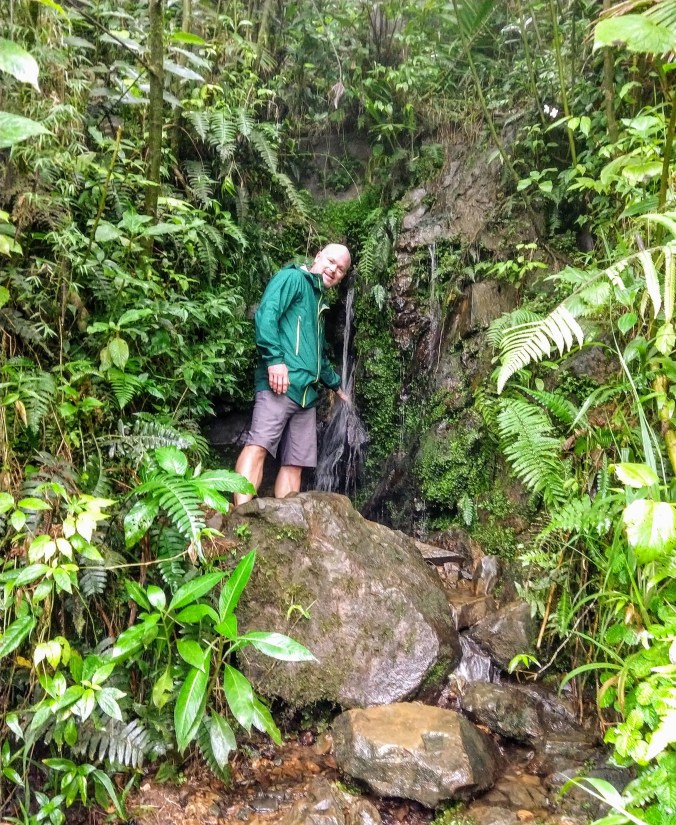
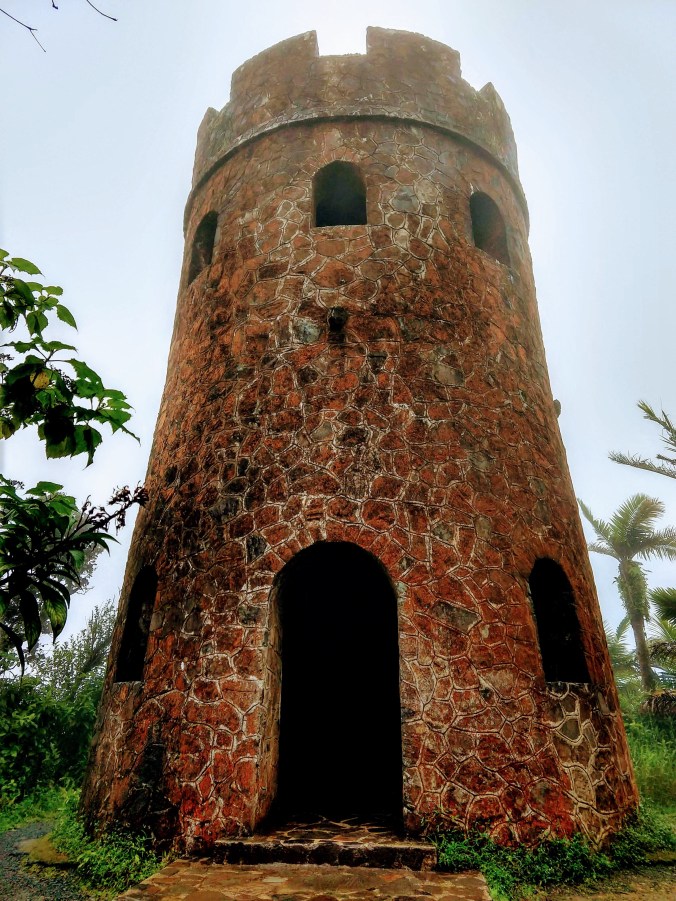
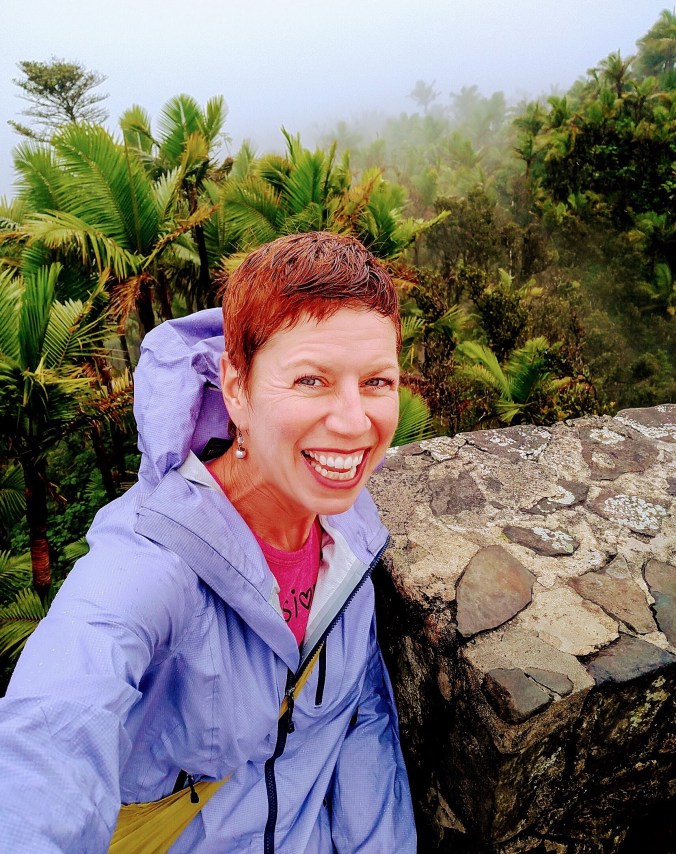
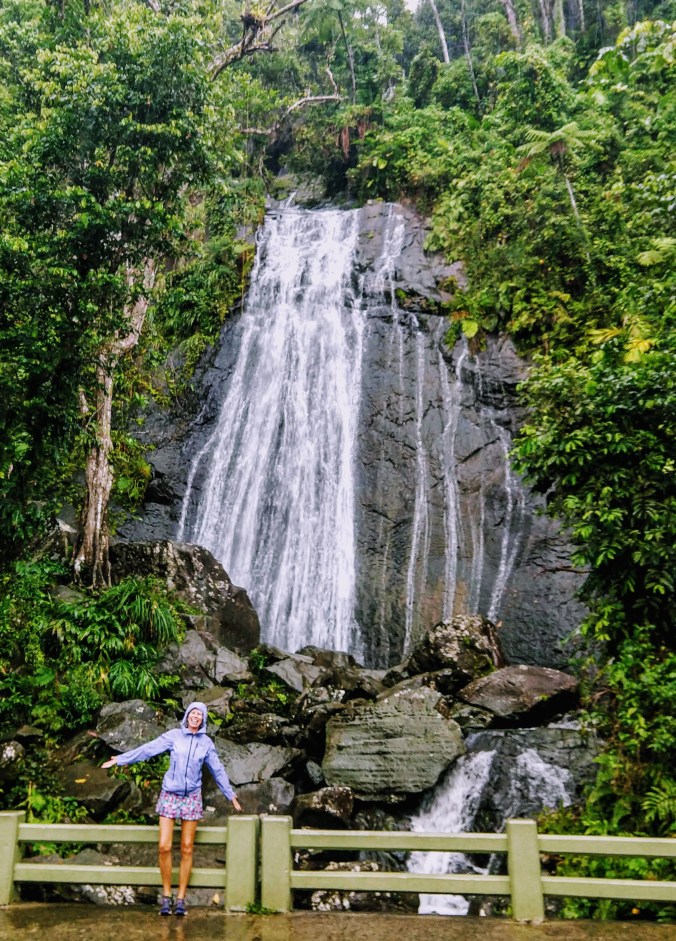
And we took a day to explore El Yunque National Forest – the only tropical rain forest in our national parks system. True to its name, it rained the whole time we hiked, so we didn’t have great views…but the vegetation and scenery and waterfalls were amazing! We worth the trip and the soggy hiking shoes!

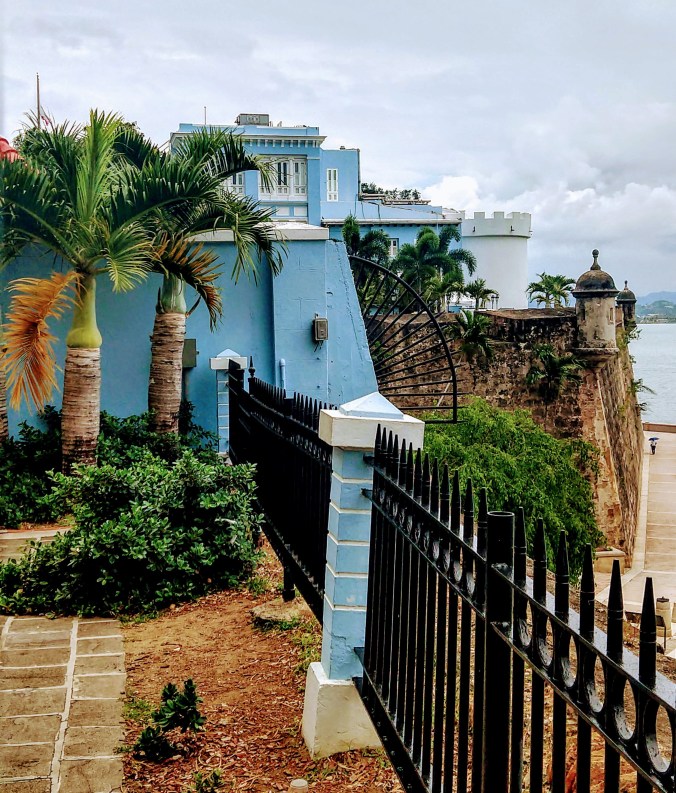
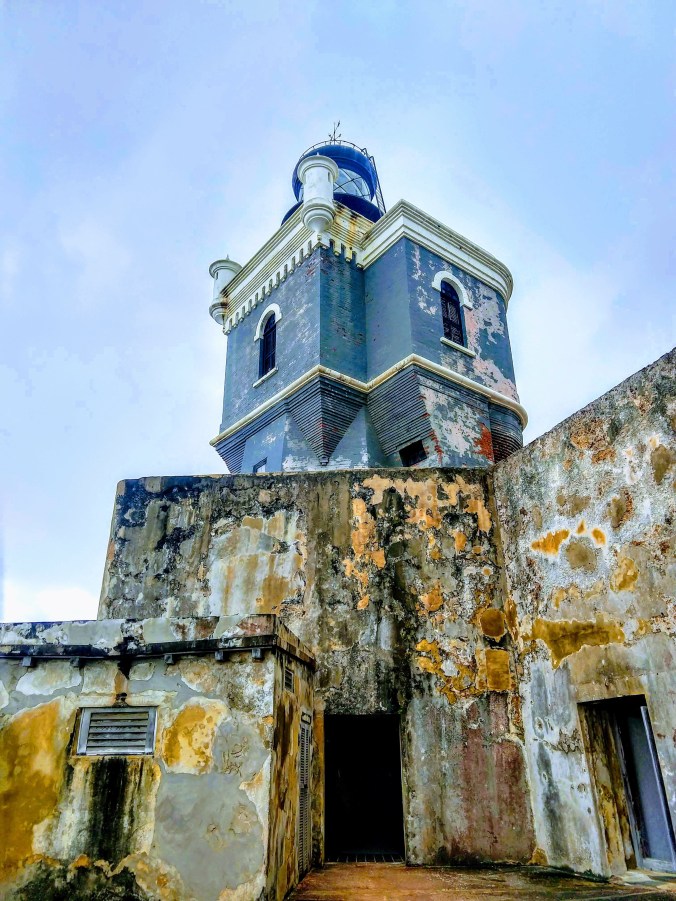
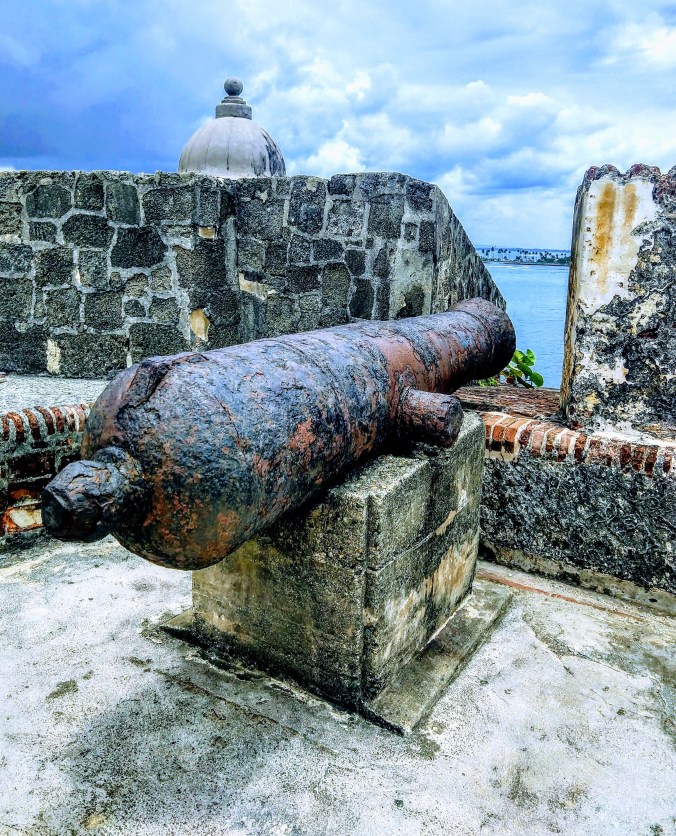
Finally, a little drama to close out our season…. on the day we were scheduled to fly from Puerto Rico to Colorado, Southwest canceled all flights to Denver because of weather. (Although how they knew at 5am east coast time there would be bad weather in Denver at 8pm mountain time, I have no idea 😡) So we were left to reschedule our flights, find a new place to stay in Puerto Rico, extend our rental car, and cancel our hotel in Denver. On the positive side, we had a day to explore Old San Juan. So we made the best of it, hiking through the Castillo San Felipe del Morro fort, and touring the governor’s residence at the Fortaleza.

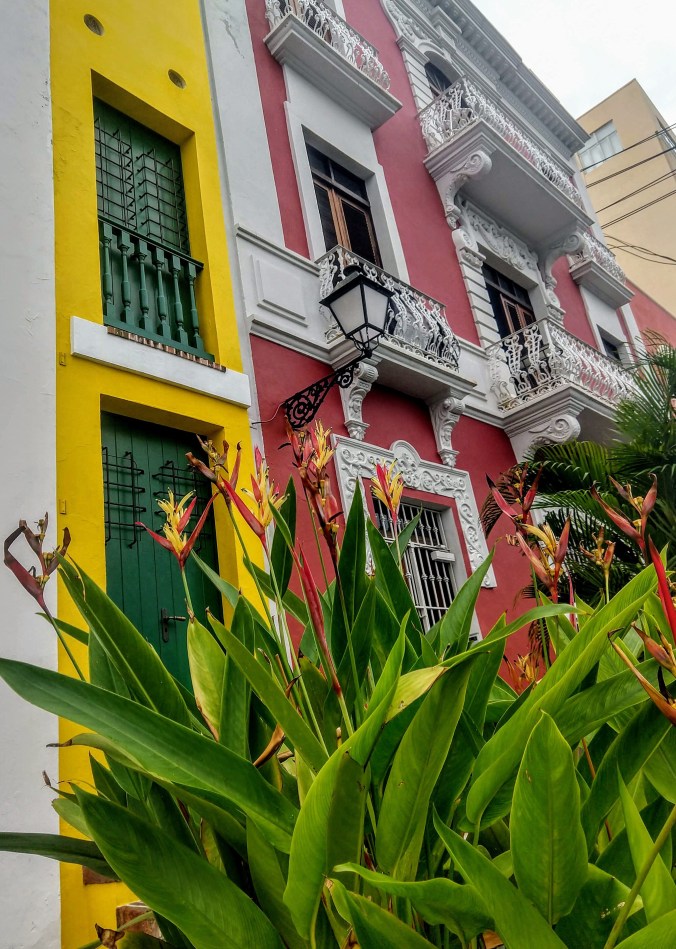
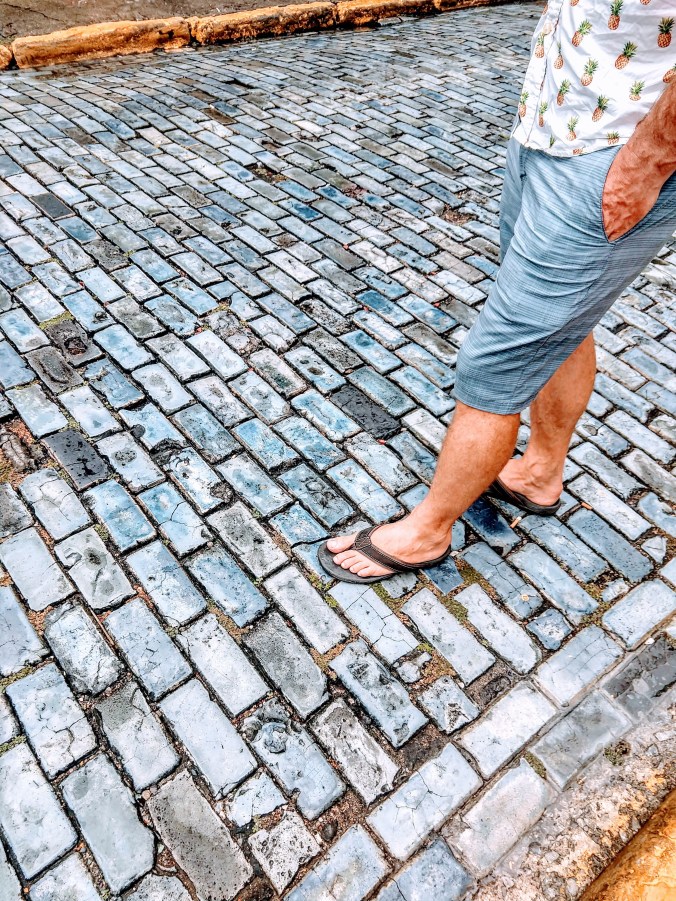
I could have spent several days just wandering the streets of Old San Juan, enjoying the people watching and sampling the tasty food! It’s the only city I’ve ever visited where the historic streets are paved with blue bricks – due to the iron content of the ingredients.

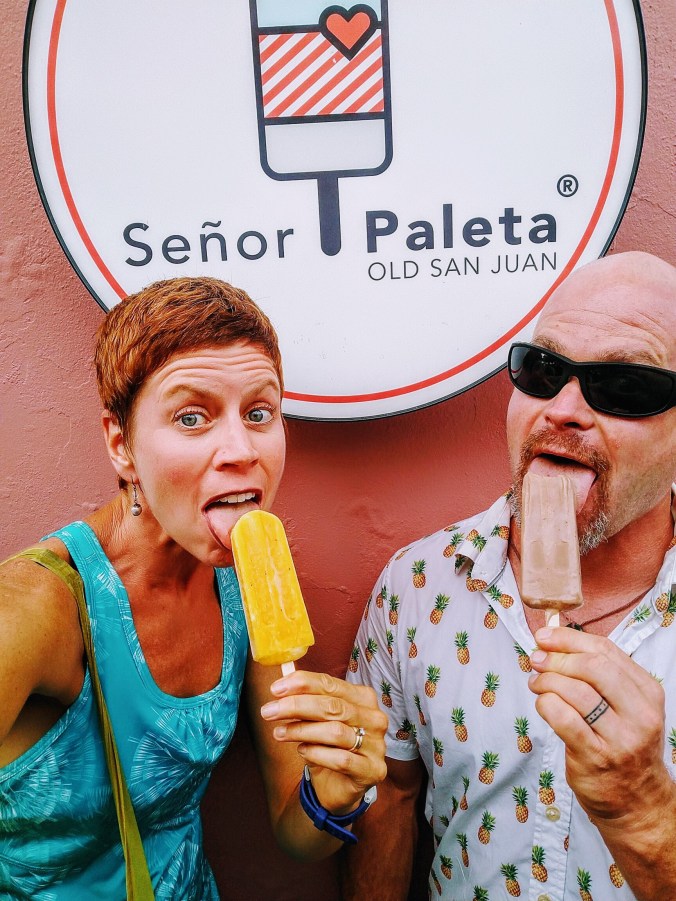
I realized that we’d been in Puerto Rico almost a month and we had yet to try paletas – the local version of popsicles, made with fresh fruit and all kinds of gourmet ingredients. Well, we certainly remedied that error on our last day!

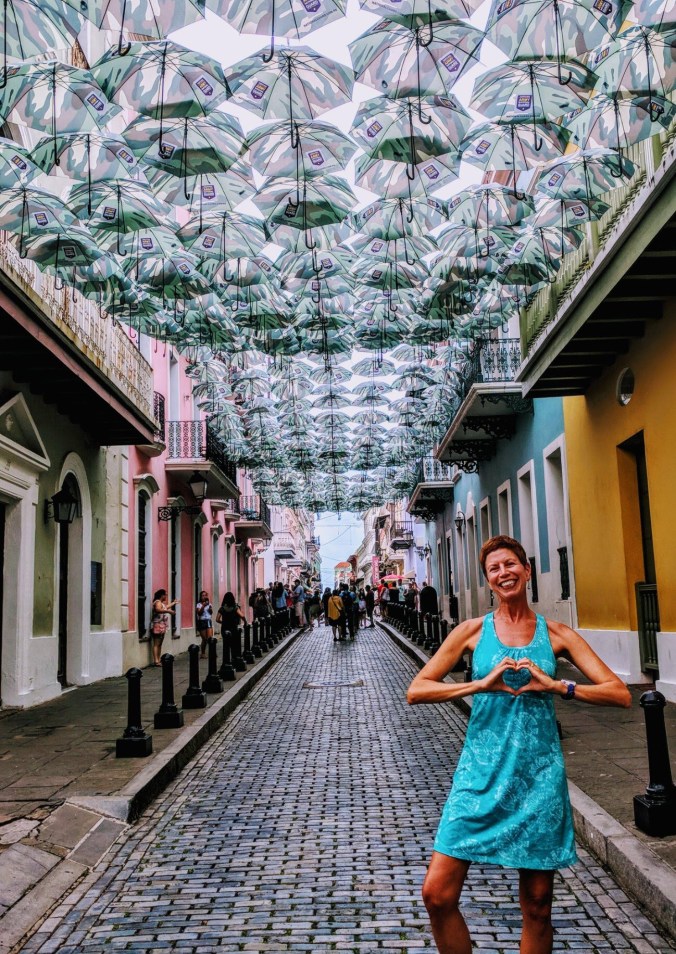
And of course, we visited the iconic Passeo de Sombrellas or the Umbrella Passage and joined the rest of the selfie-mad tourists. Instead of rainbow colored umbrellas, they were camouflage print during our visit in honor of Memorial Day and in support of the Army National Guard. I can’t wait to do more exploring when we return to Puerto Rico in the fall!