The full boat project list – summer 2023

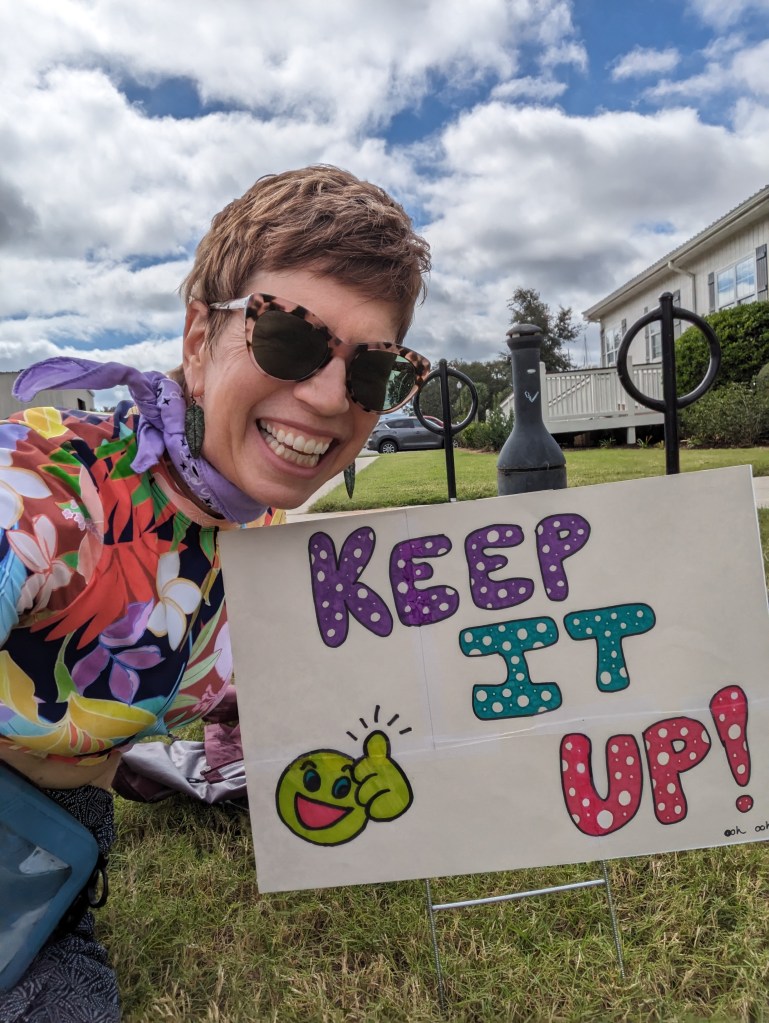
I haven’t been posting many “Keeping it real – life in the boat yard” blog posts recently. Let’s face it, they are kind of a downer. Plus, you don’t really want to see my sweaty, shiny face beaming at you, covered in yard dirt and anti-foul paint, do you? 🥵 But that doesn’t mean we haven’t been hard at work getting SV Happy ready to hit the high seas this winter! Her previous owners took excellent care of her, but she wasn’t outfitted for life on the hook so we had lots to do there, and just to turn her into a comfortable floating home 🏡
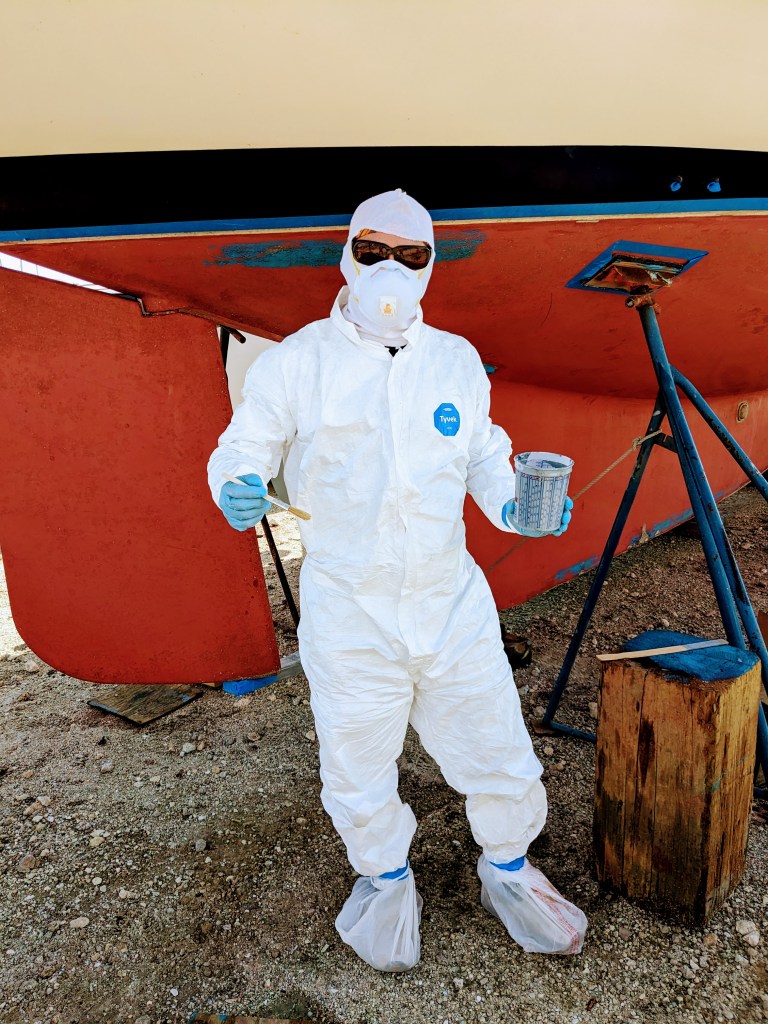
Capt. Mike kicked butt in the spring and got a ton of projects finished between when we moved aboard Happy in late March to when we left Stuart, FL in late April:

  • Installed 600 watts of solar panels
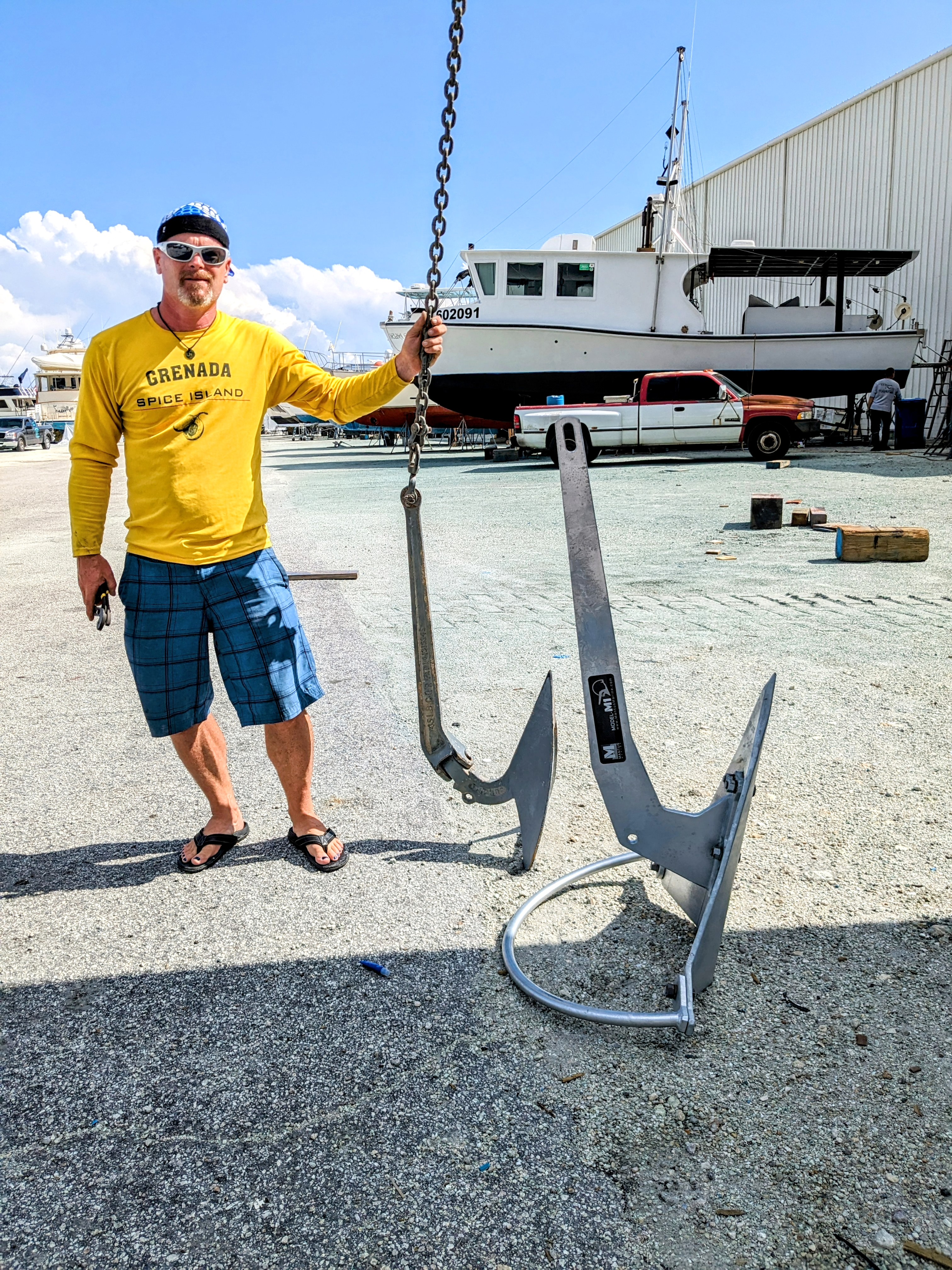
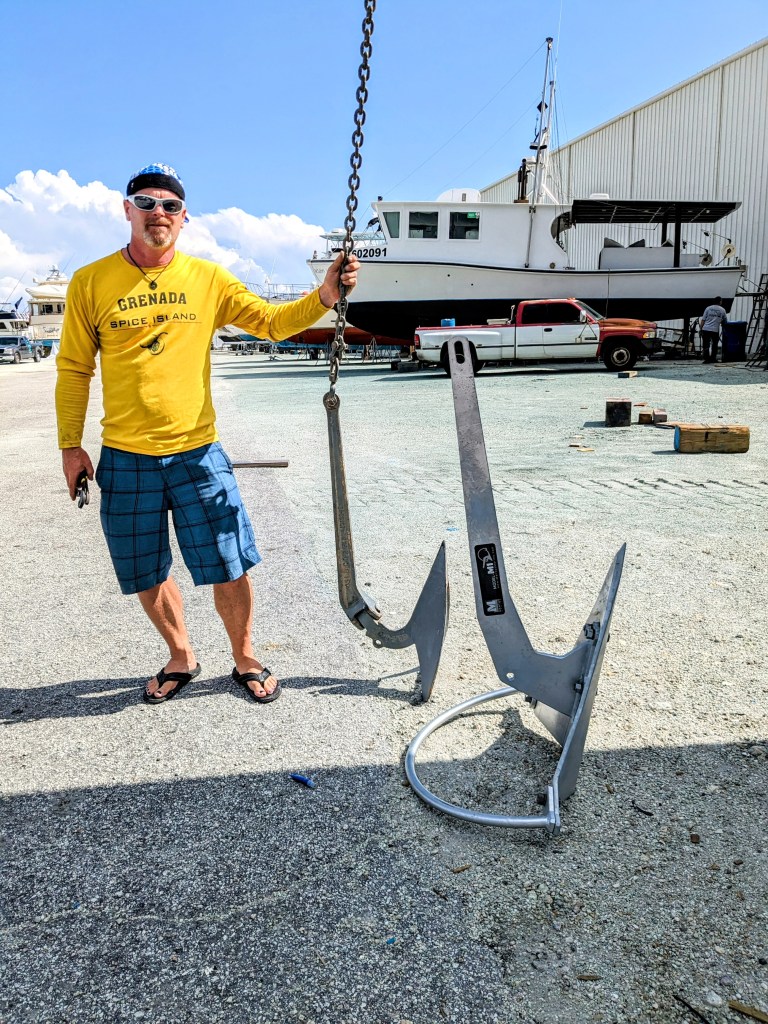
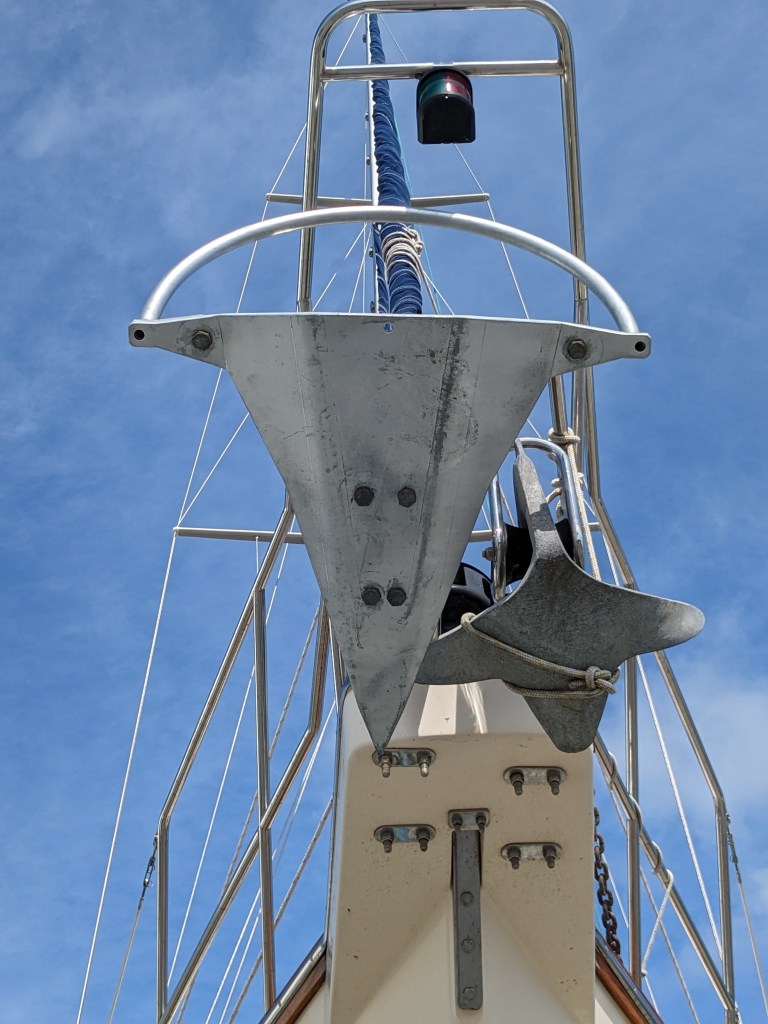
  • New 85 pound Mantus anchor
  • New dinghy davits
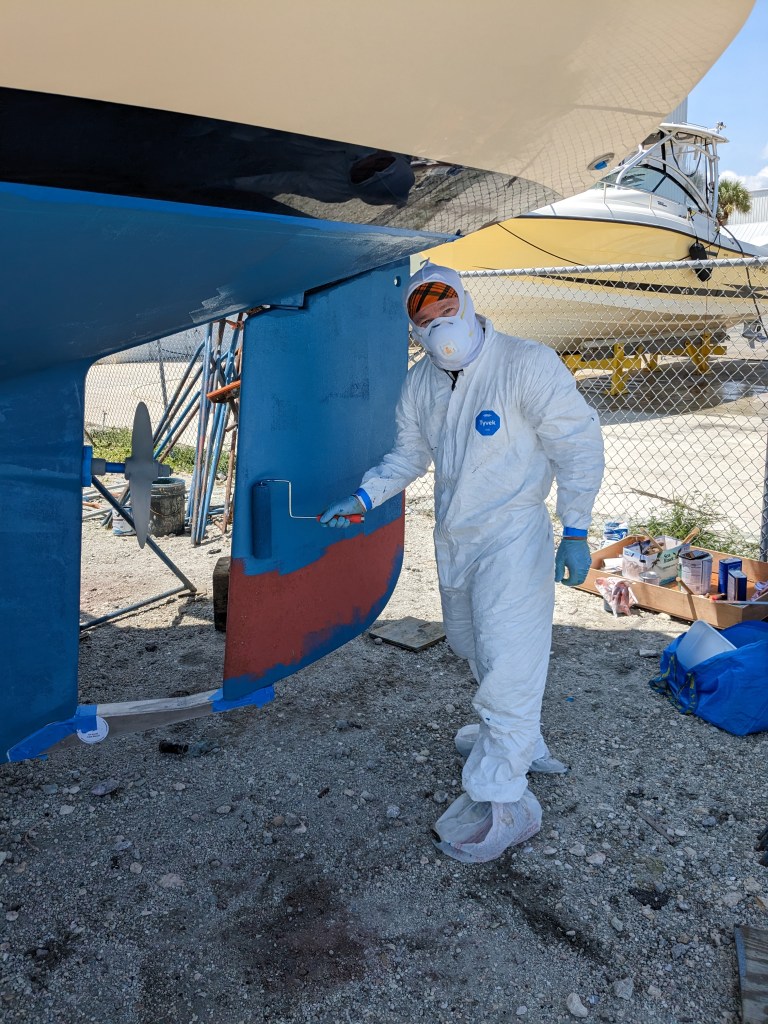
  • Antifoul paint on the hull and prop, with new zincs
  • Rebuilt the propane system: lines, regulator, solenoid
  • Applied mast boot tape to address a water leak
  • Fixed water leak in propane locker
  • Waterproofed the Bimini and dodger
  • New led light in the galley
  • New filters for the drinking water filtration system
  • Troubleshooting the wind instruments
  • Fixed drawer latches
  • New shower head
  • Started fixing the portlight leaks… More to follow!

We were feeling pretty good about our progress when we left Happy at Brunswick Landing Marina for a couple months this summer. But after our mountain and cycling summer vacation, we had to go back to work – and in crazy Georgia heat and humidity 🔥 We definitely didn’t feel like we were having as much fun as other residents of the marina.

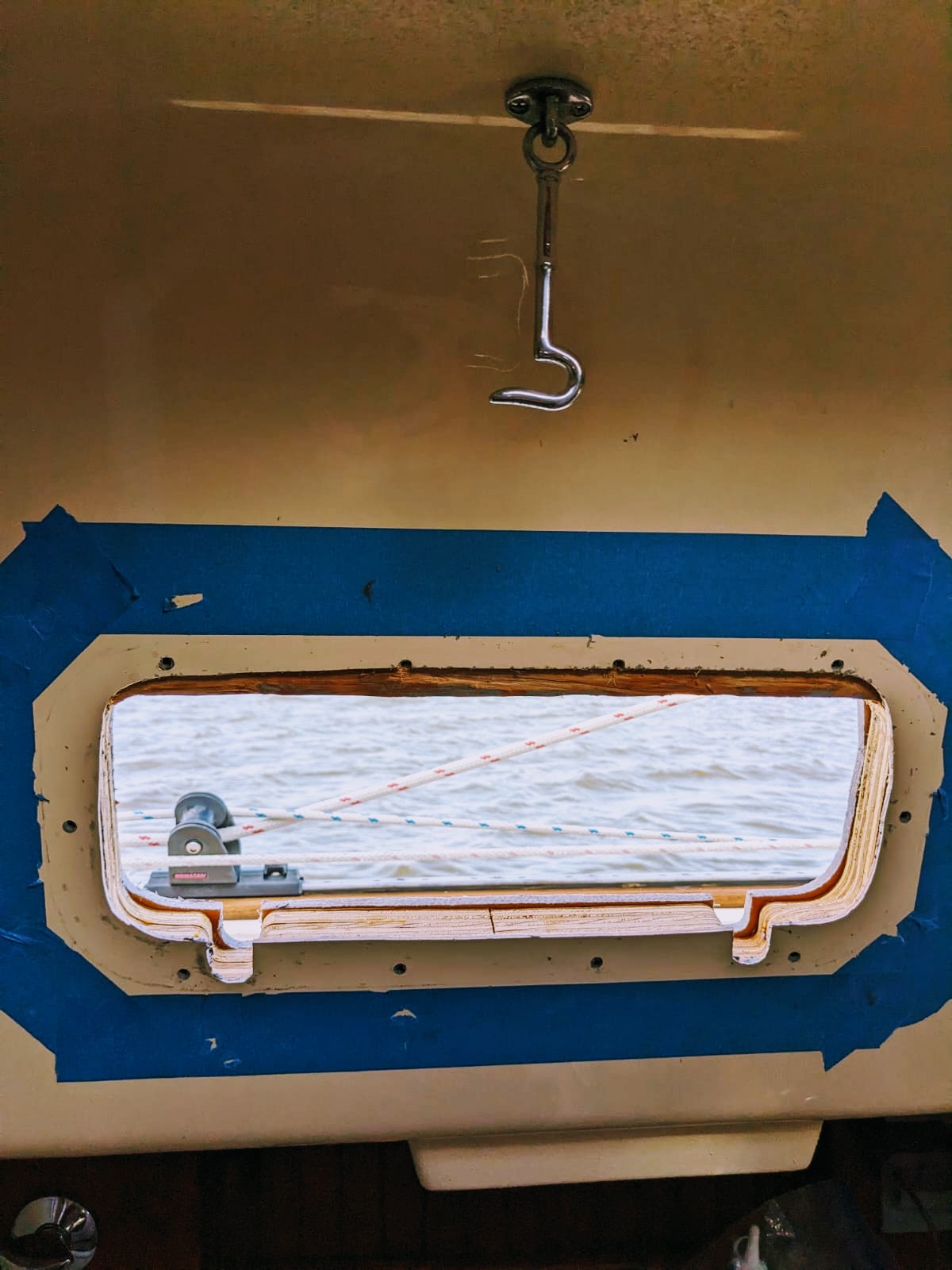
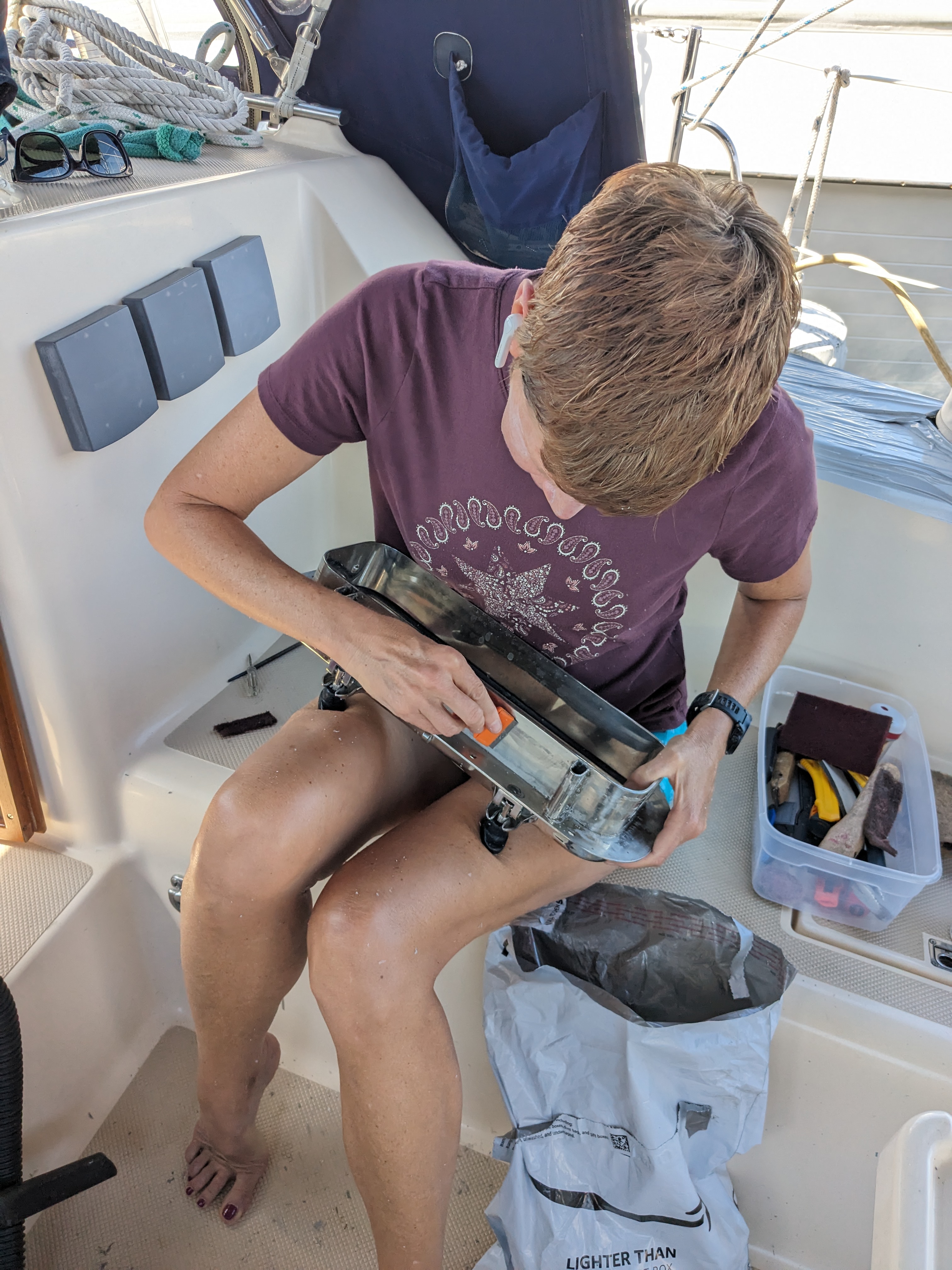
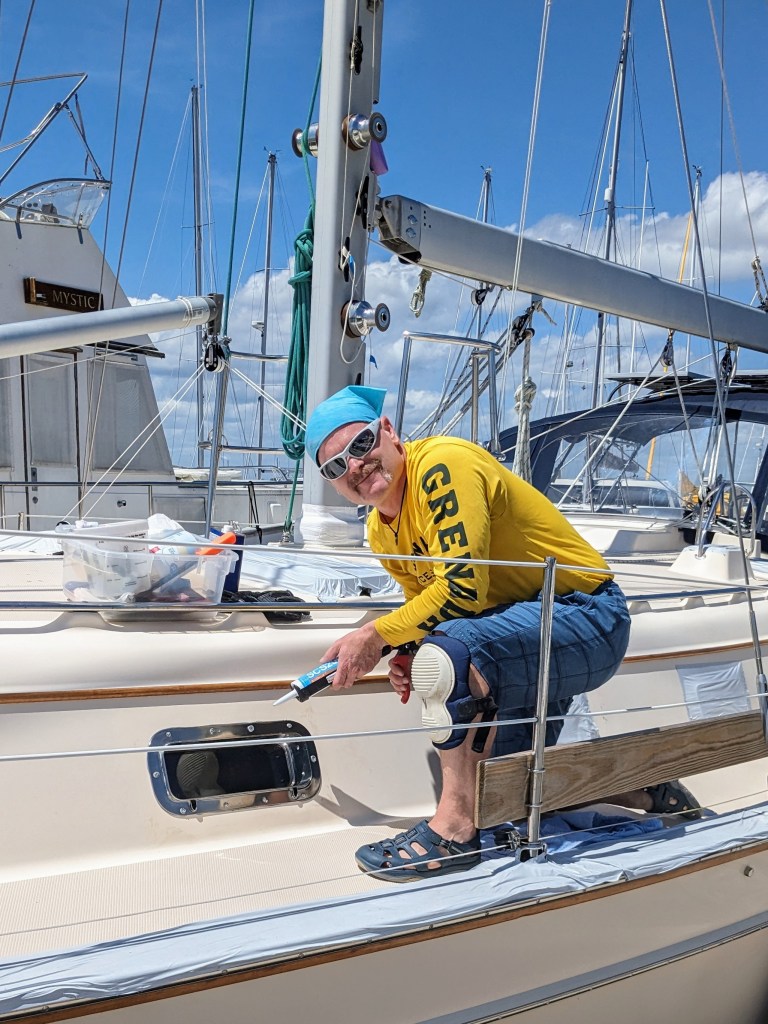
One of our biggest projects was removing all of the portlights (aka boat windows), scraping and cleaning them, and rebedding. In Florida spring thunderstorms, we had water running down the inside of the salon “walls” and collecting inches of water in our drip cups. We decided to repair all the portlights, even the ones without visible leaks, after Capt. Mike installed a light in the galley and water streamed out of the screw holes, implying that some of the leaks were occurring between the hull and the lining. Each portlight took about 8 hours to address – removing with razor blades and pry bars, scraping old caulk and silicon off the stainless, cleaning, rebedding with new caulk, and cleaning the excess that squirted out during the process.  
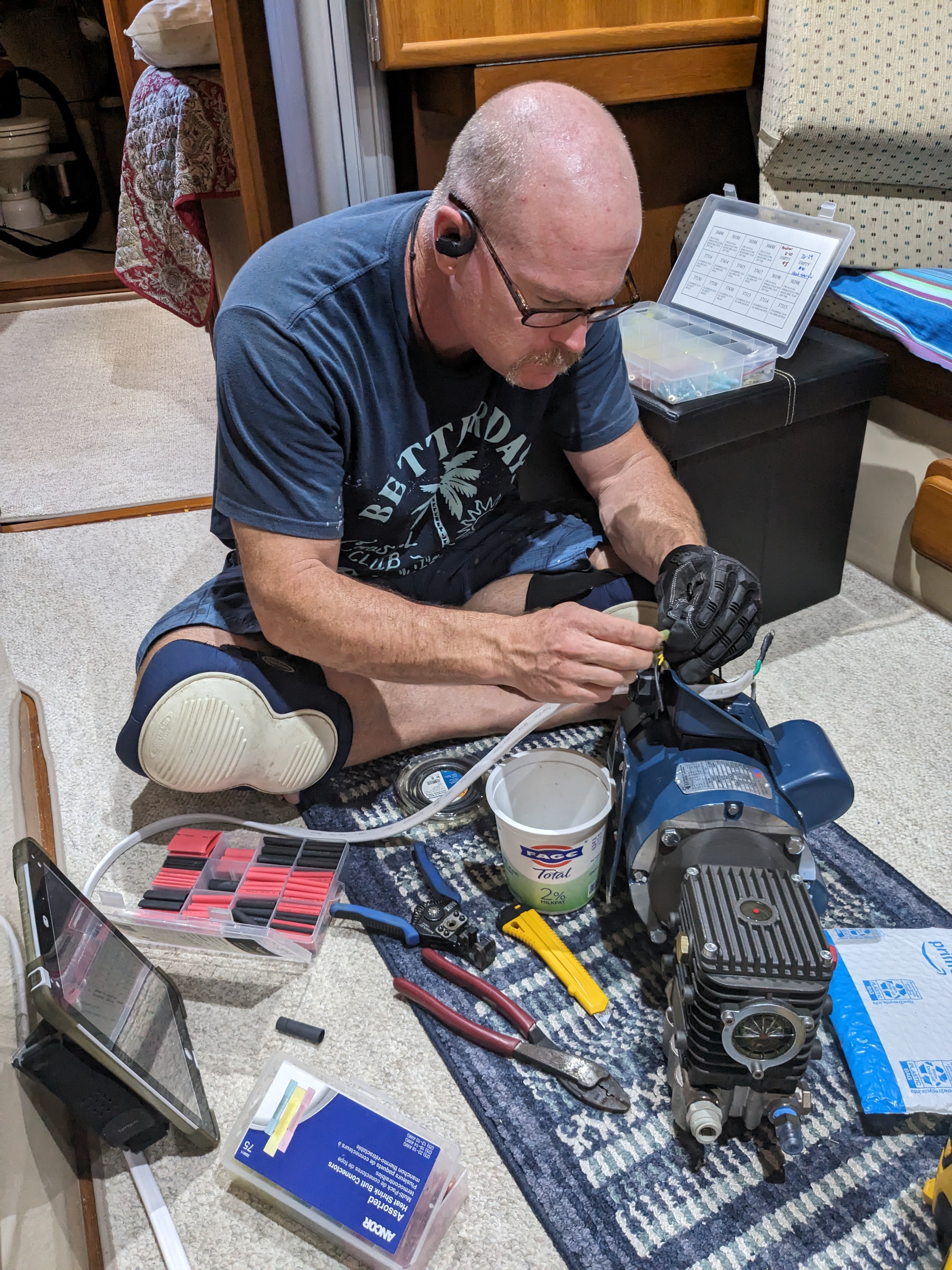
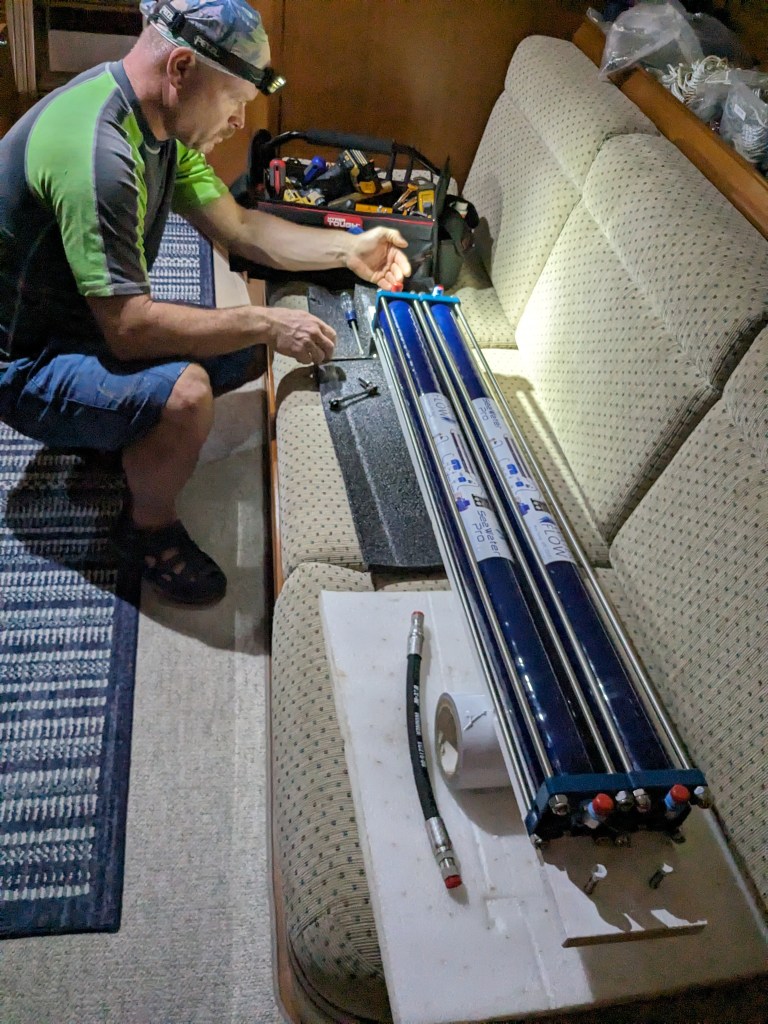
Then the biggest boat project we’ve ever taken on ourselves – installing a high volume water maker / desalinator. A bigger boat means more room for systems and having a virtually unlimited supply of fresh water will be a game changer for our cruising life. But first – we’ve got to get the thing to work! We ordered a Seawater Pro 40 gallons-per-hour system, and it was delivered as a big heavy box of parts and a link to a bunch of You Tube videos. Gulp.

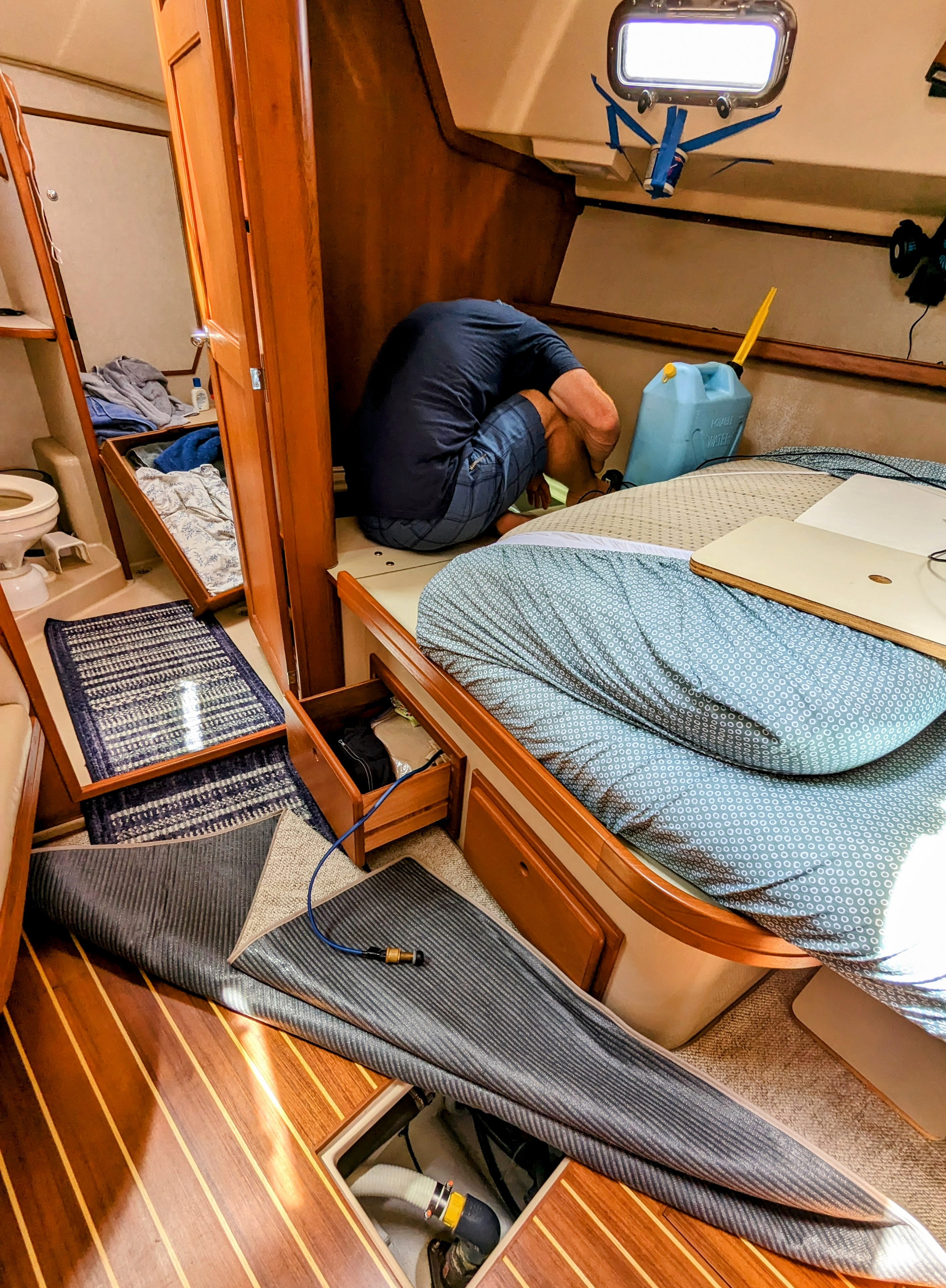
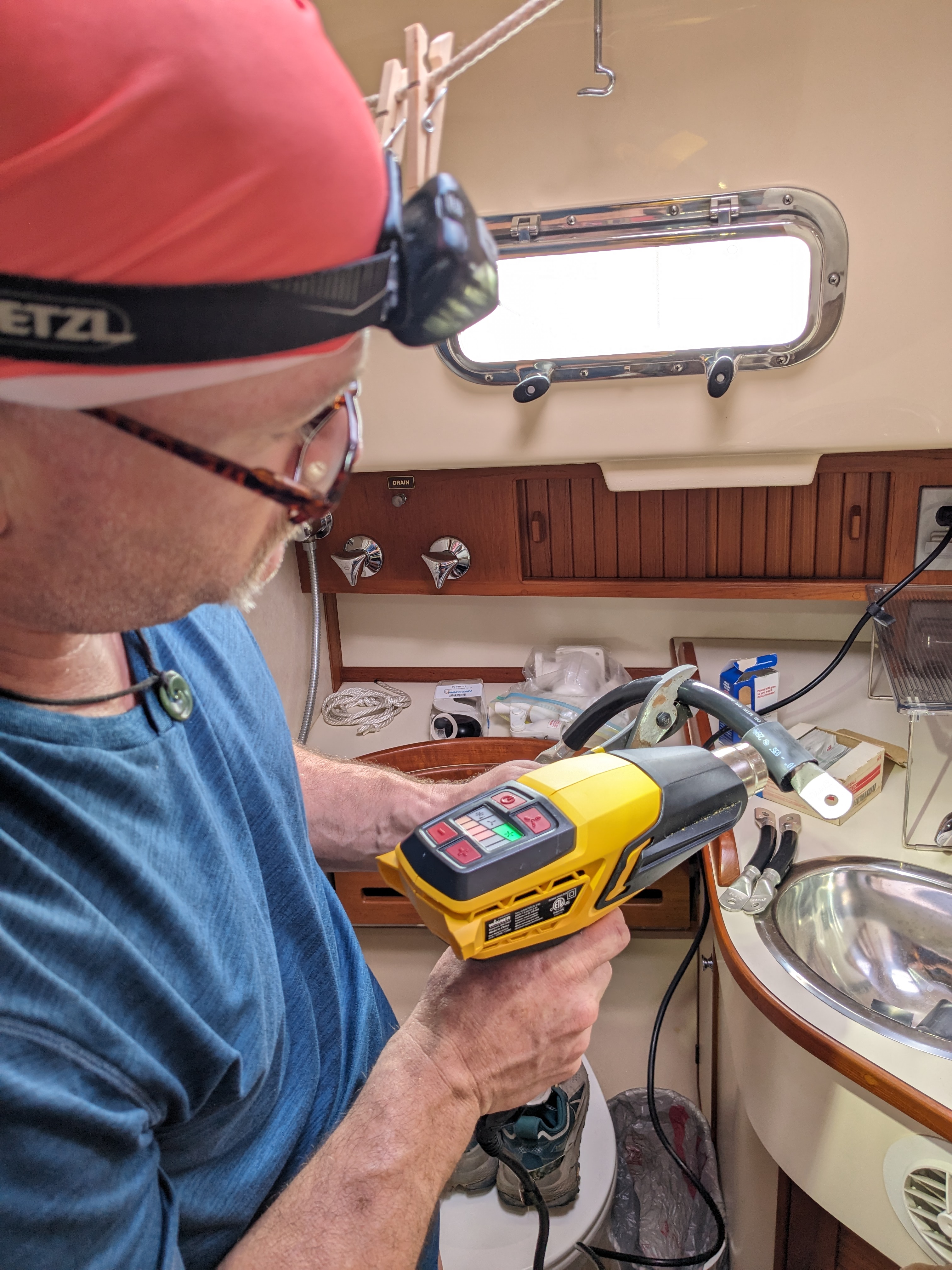
Capt Mike had to figure out where to locate the components of the system (long membranes, water filters, high pressure pump, boost pump, and control panel), and how to connect to the plumbing and electrical systems. At one point, he got frustrated and told me to watch the videos and help him figure out the electrical. I watched each video three times, took pages of notes, and finally announced my findings “They don’t tell you how to connect to the generator and to the boost pump!” Capt. Mike confirmed “That’s exactly my point” 🤦‍♀️ Luckily, they have excellent customer service and tech support and a couple of phone calls gave us enough info to move forward. It took about a month in total to complete this install, with Capt. Mike contorting his body into every tight hold on the boat. We think he’s got it done! Now to anchor in a place with clean ocean water to test it all out! 
Here’s the rest of the project list completed between August and November 2023:

  • Rebed 14 portlights
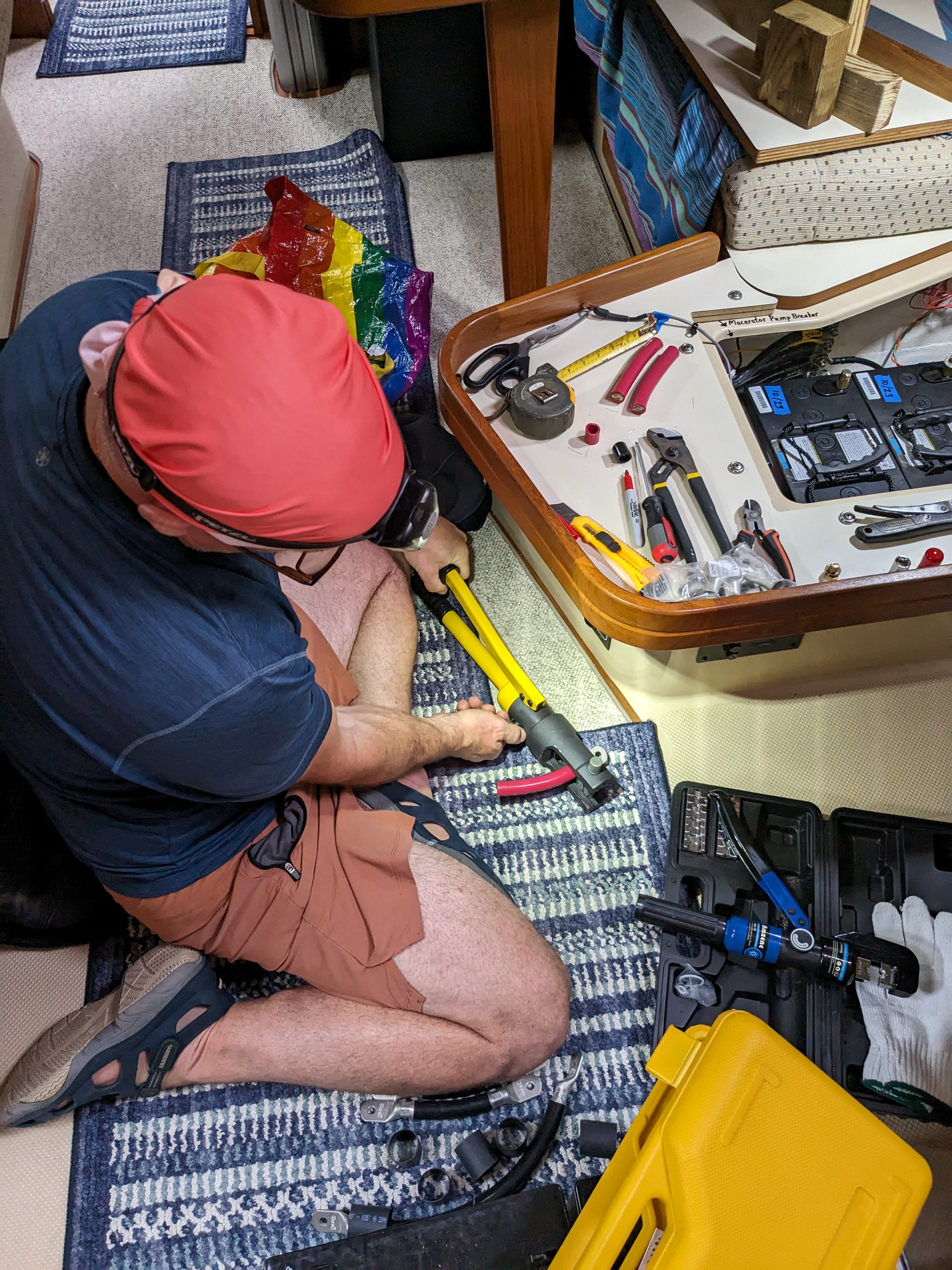
  • Install watermaker
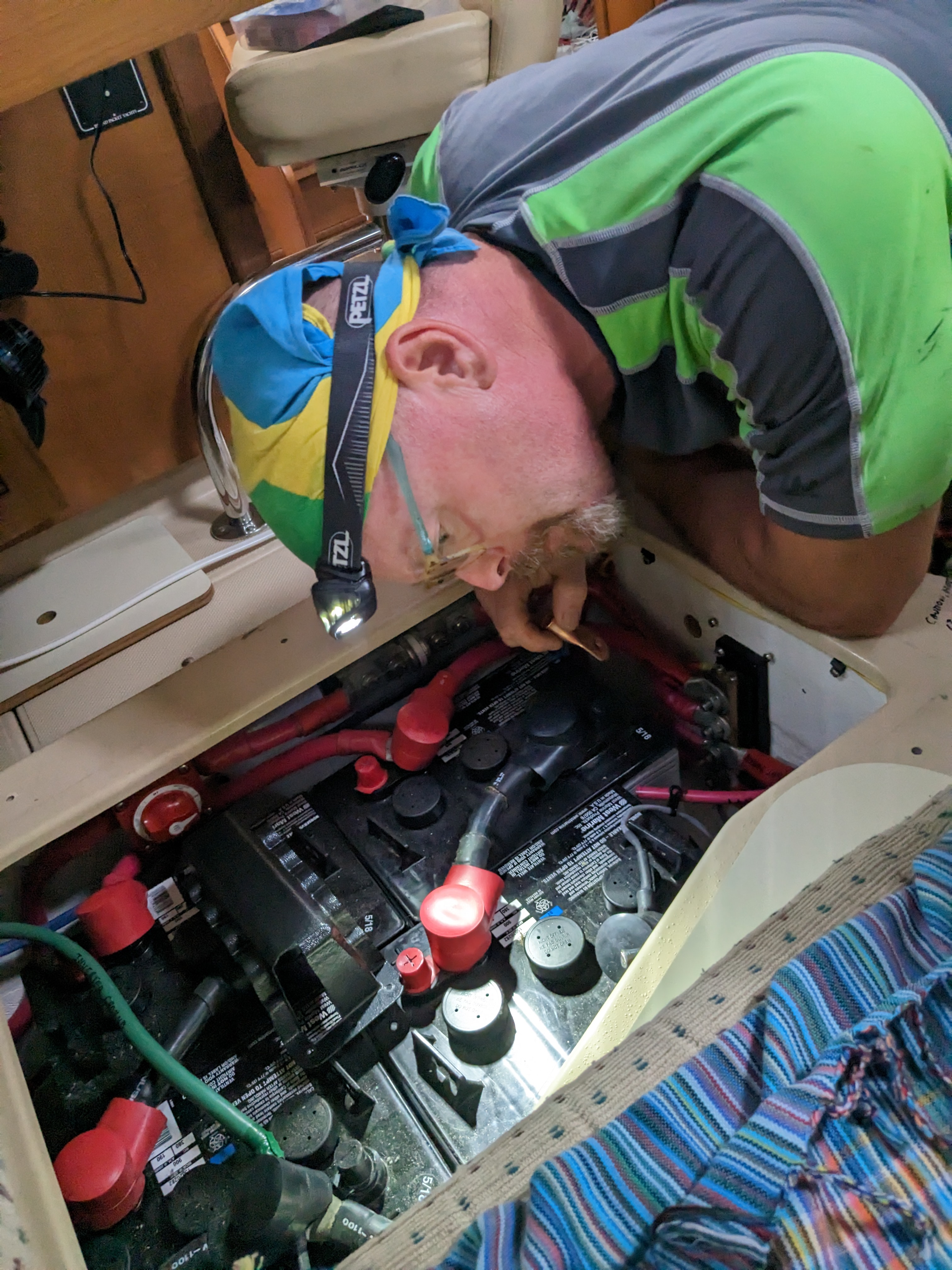
  • New batteries (house battery bank, starter battery, and bow thruster battery)
  • Rebuilt aft head (toilet) pump, replace aft head sink hose
  • Added a macerator pump to the aft holding tank
  • New running rigging, with new eye splices
  • New dock lines, anchor snubber, anchor bridle, and splices
  • Install Victron Bluetooth battery monitor
  • Brought all three sails to a sail loft for inspection and repairs
  • Recaulked both heads and the galley
  • Caulked a leak in the forward head fan
  • Installed lights in the anchor locker, main cabin closet, and fixed existing light switches

We’re exhausted and our bank accounts are a bit lighter, but we’re ready to get out there and start cruising!
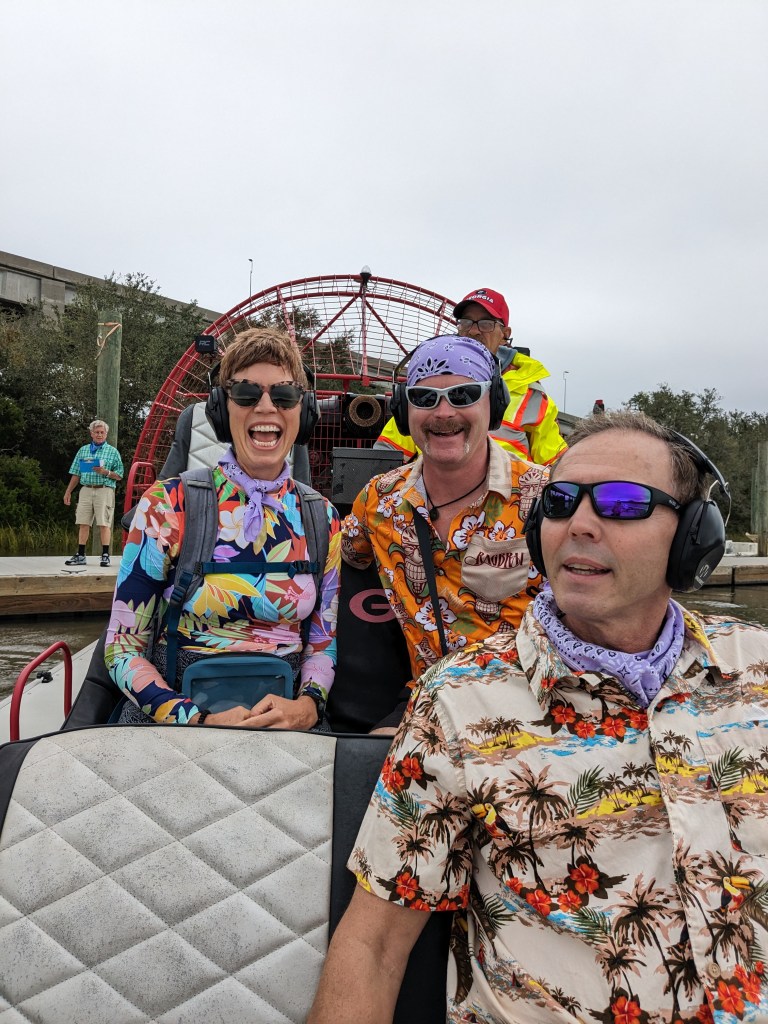
Fun Times at Brunswick Landing Marina

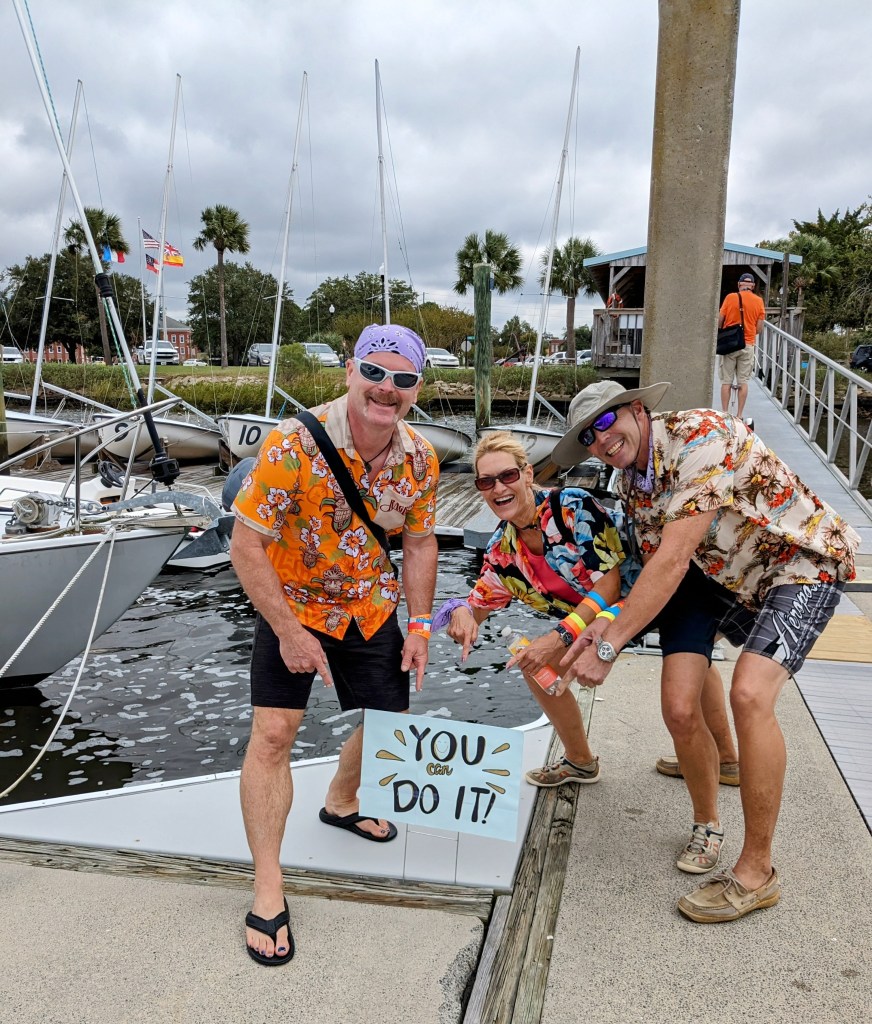
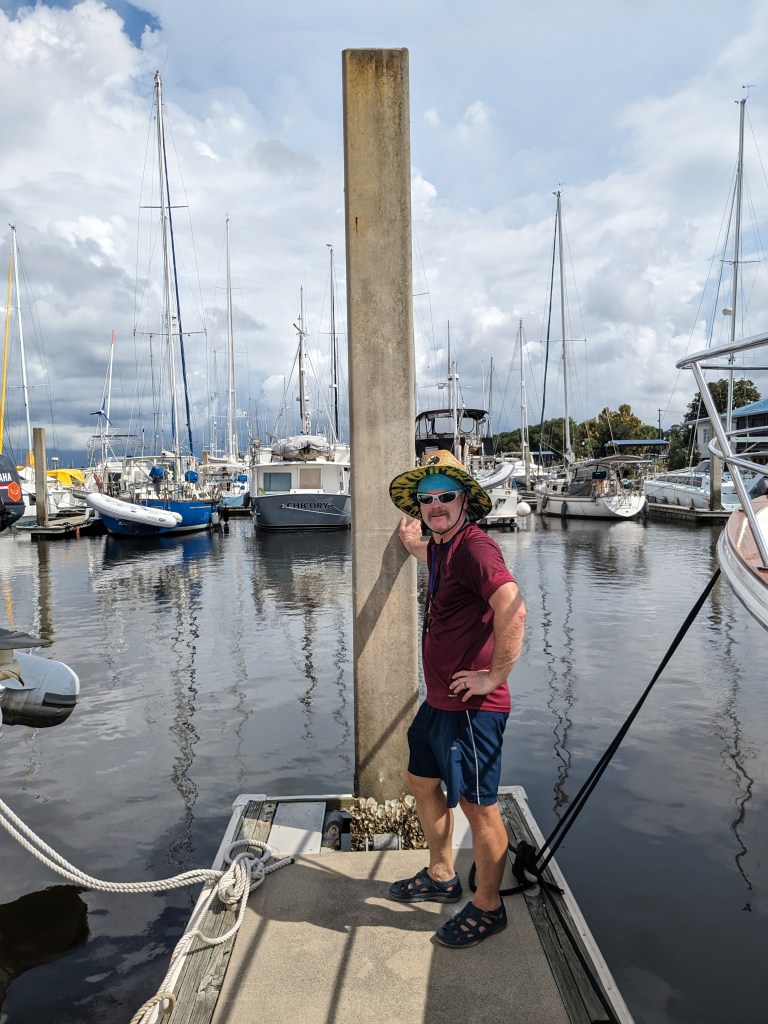
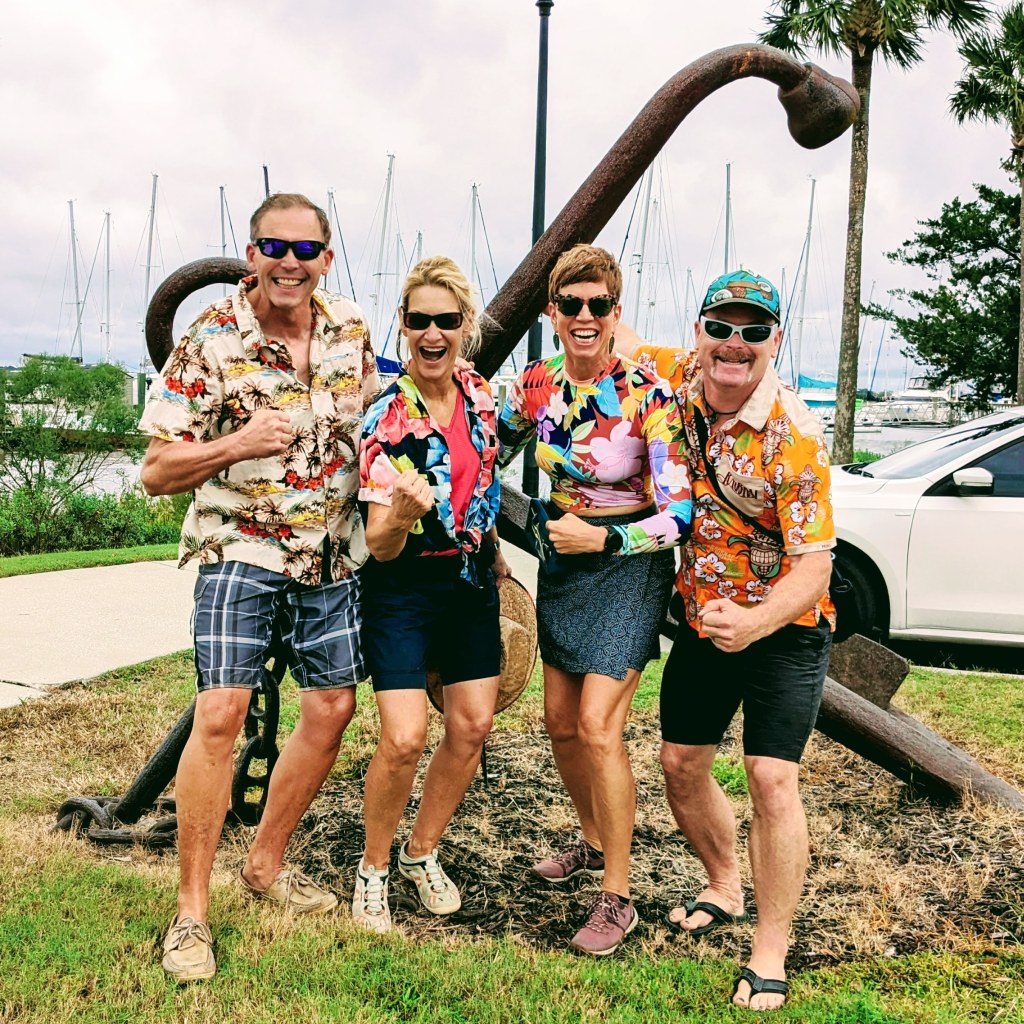
Have I mentioned how much we love staying at Brunswick Landing Marina in Georgia? Free laundry, frequent happy hours, friendly staff – what’s not to like? This Saturday we took a day off from neverending boat projects and really had a blast participating in the first annual Cruisers’ Challenge – an Amazing Race style scavenger hunt on land and water around the marina.

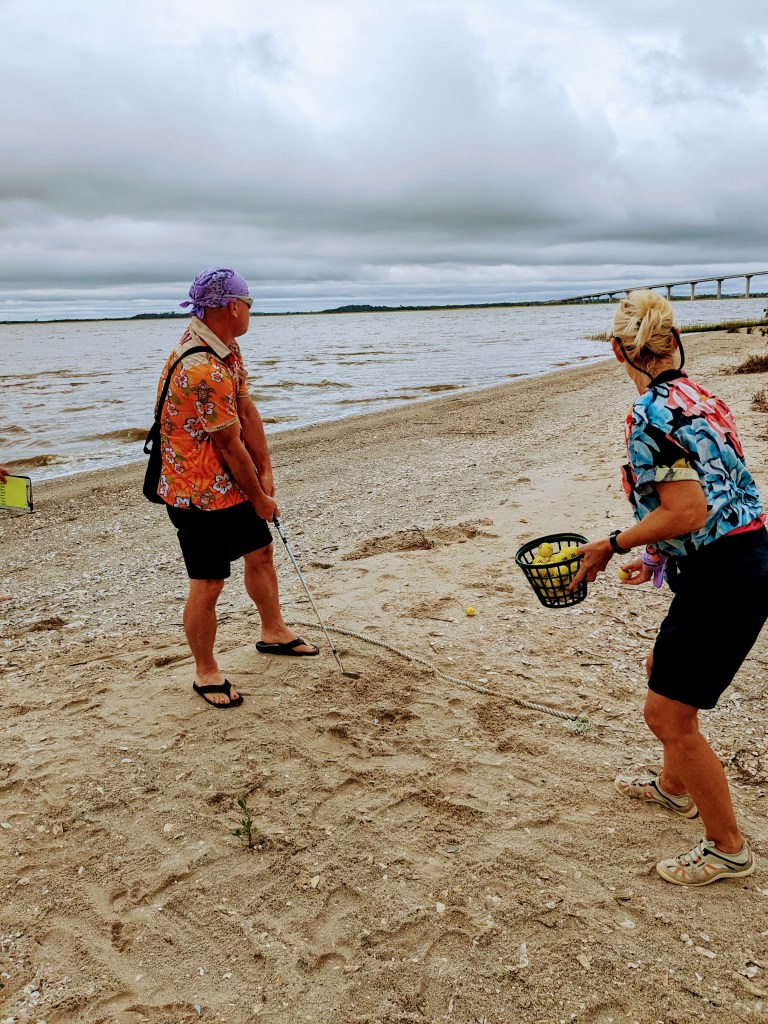
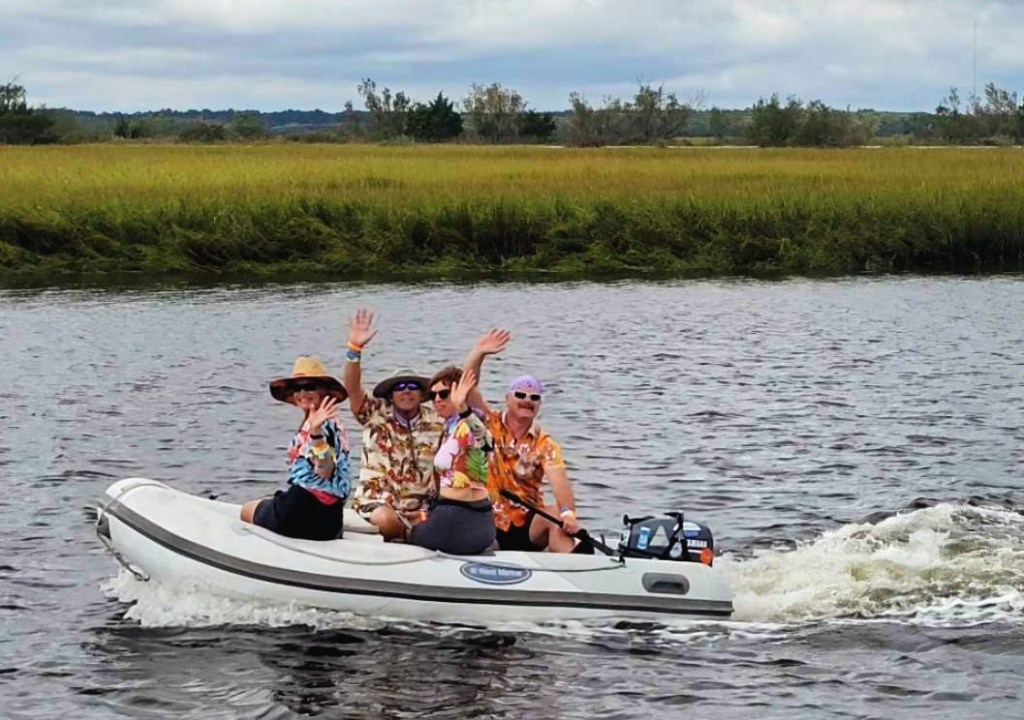
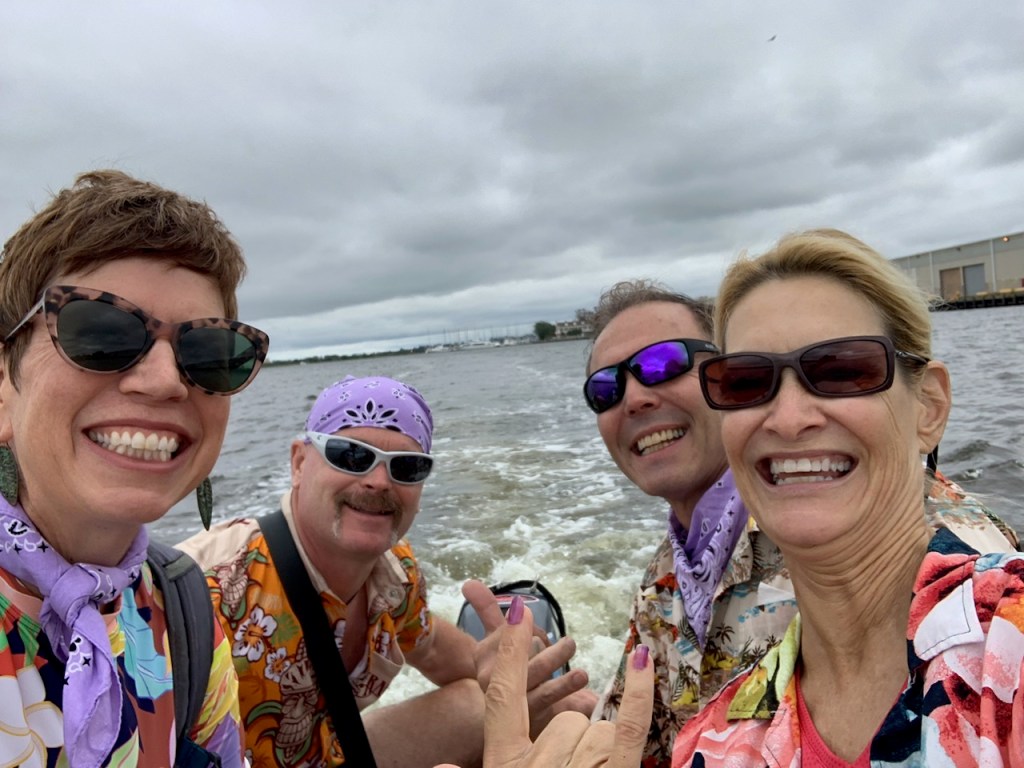
Capt. Mike and I joined our dock neighbors Ann and Frank as team Happy Dreamers 😁 We donned our matching team bandanas and hopped into our dinghy at 10am to tackle our first challenge. We’ve been in one place for so long, it felt strange to be getting splashed in the dinghy once again! We drove to the gps coordinates of our first clue and got really excited when we saw a huge airboat tied up to the dock at our destination. Yep! It was waiting for us! We hopped in, and zoomed off into the bay, traveling much faster (and much louder) than we had in our dinghy! The airboat captain dropped us off at a nearby island where we were given our challenge – each team member had to chip a golf ball into a target. We crushed it! Two minutes and 30 seconds and we were done and back in the boat.

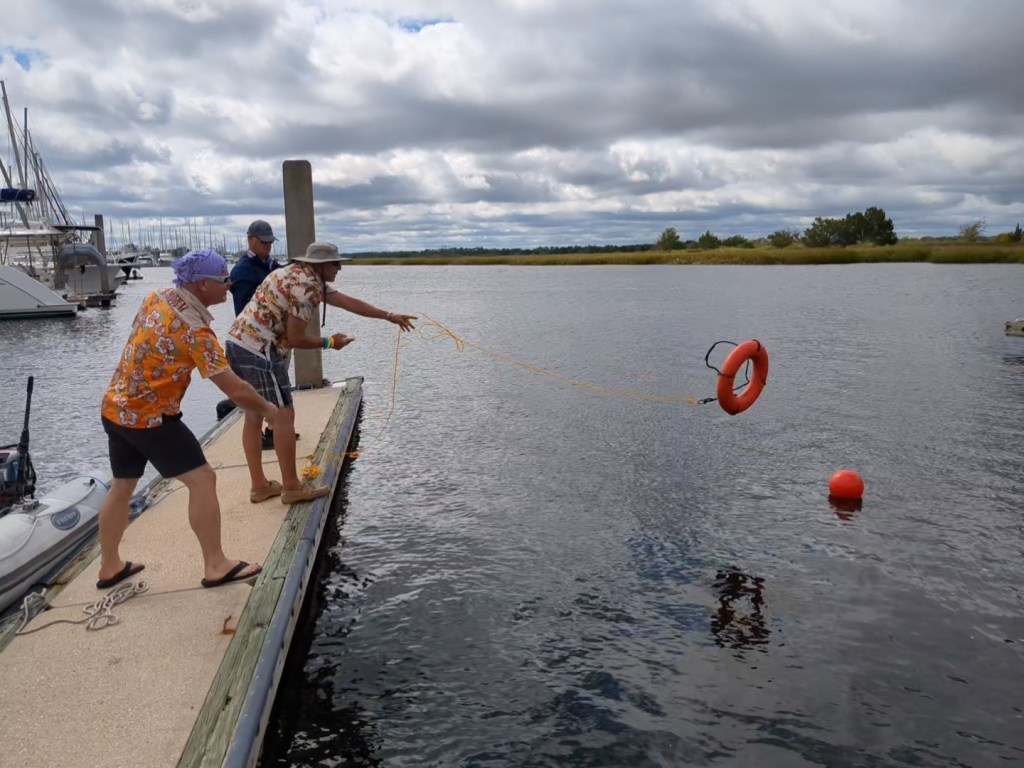
Other teams were lining up on the dock waiting their turn for the airboat as we scanned a QR code for our next clue. Back in the dinghy and back to the marina! Challenge #2 required us to throw a life ring around a floating buoy, again all 4 of us had to successfully ring it, and we were timed as we tried. This is not easy!

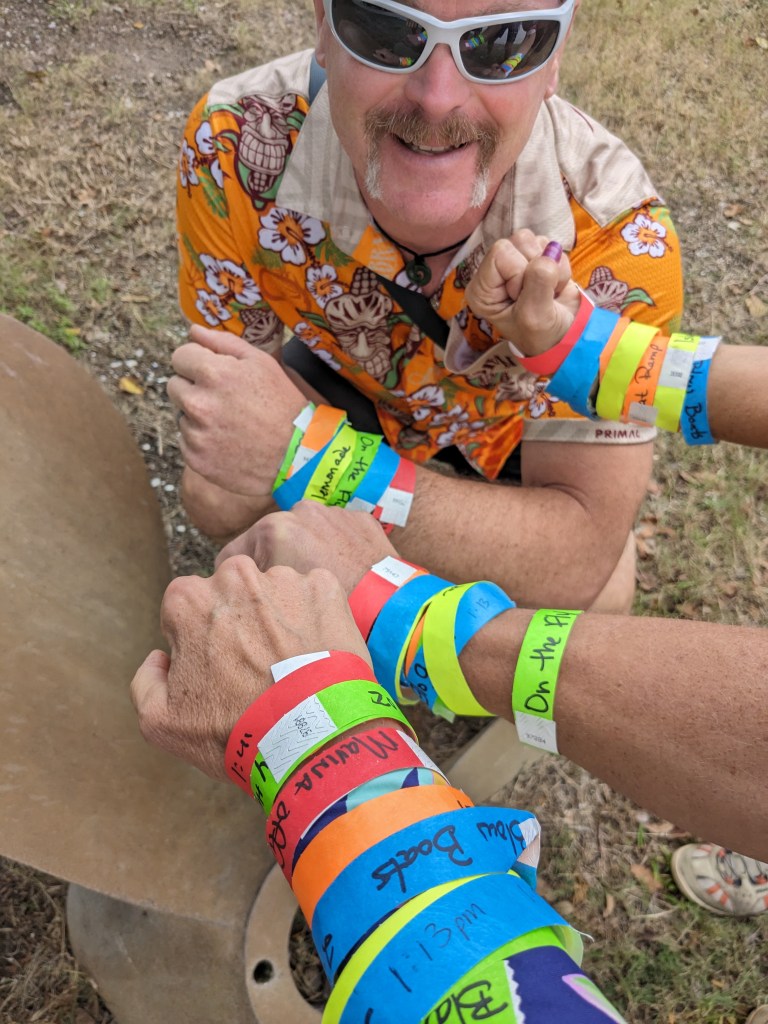
And so our scavenger hunt continued. Each time we completed a challenge successfully, we’d get a colorful wristband to prove we’d finished that station. Then we’d scan a QR code to get the coordinates of our next stop, and off we’d go! Or challenges included:

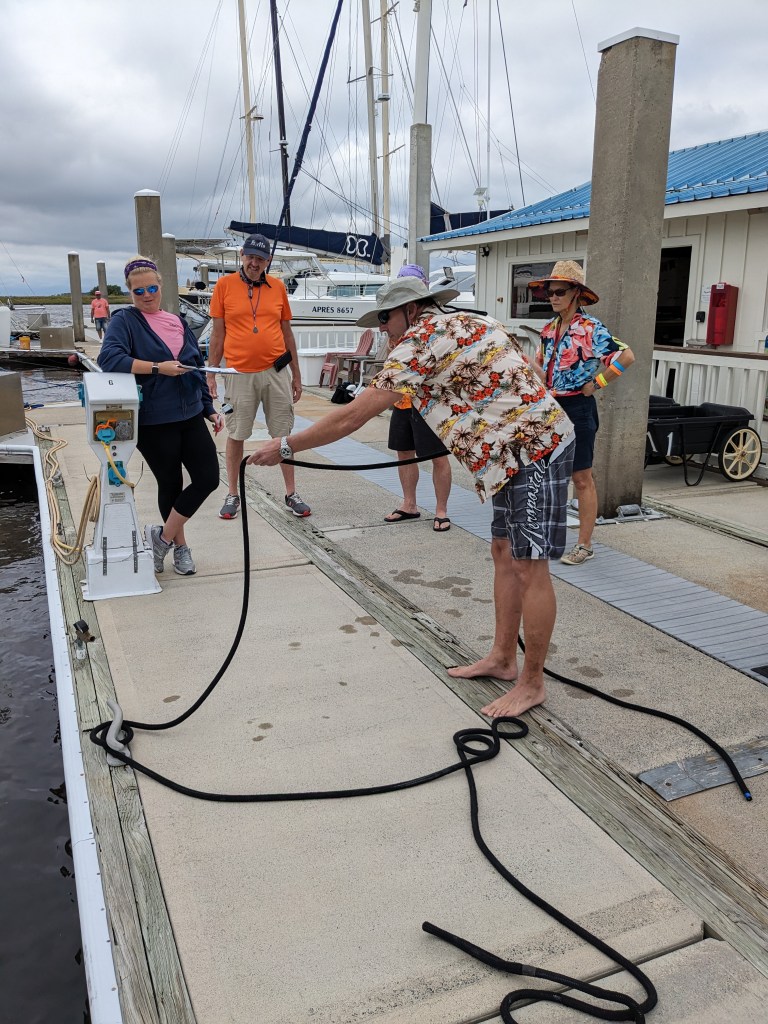
  • Using a dock line like a lasso to tie a cleat hitch from a distance
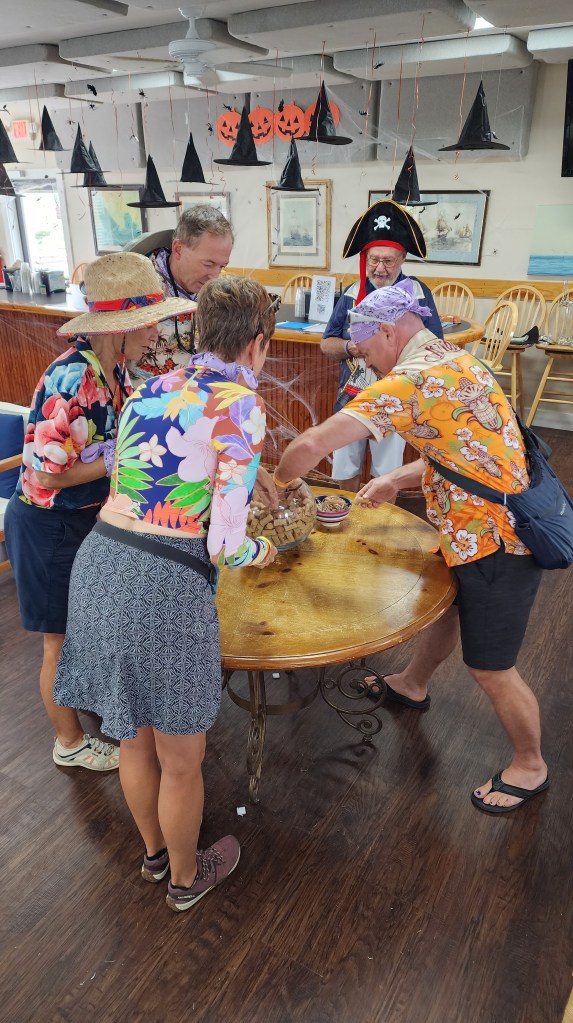
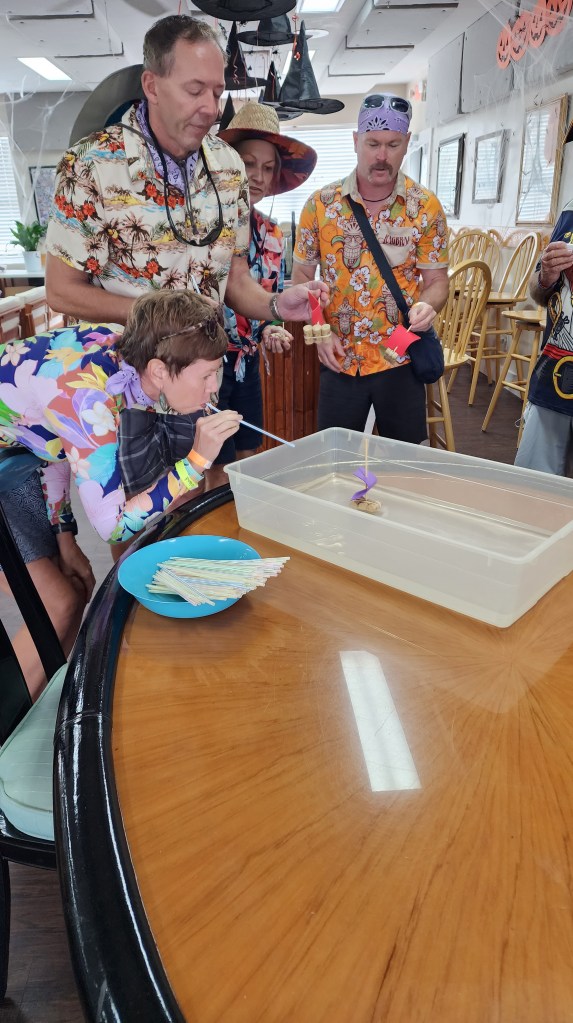
  • Building wine cork sailboats and racing them across a “pond”
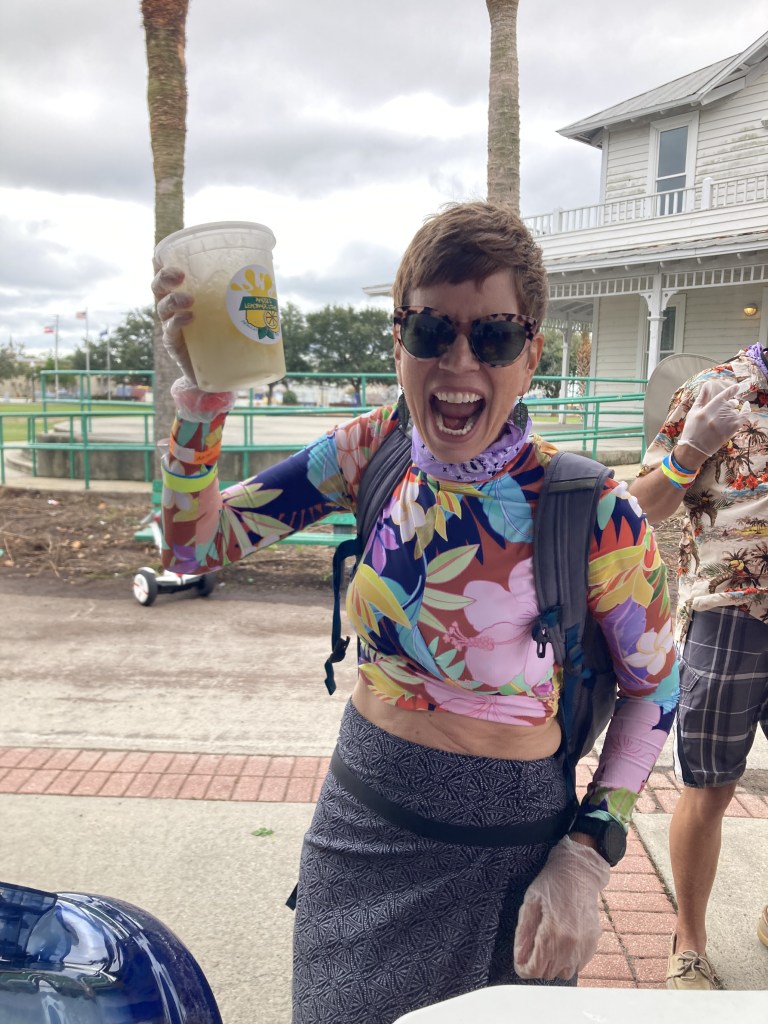
  • Making state fair style lemonade
  • Learning to cast a fly fishing rod
  • Singing a round of Row Your Boat
  • Solving puzzles and riddles
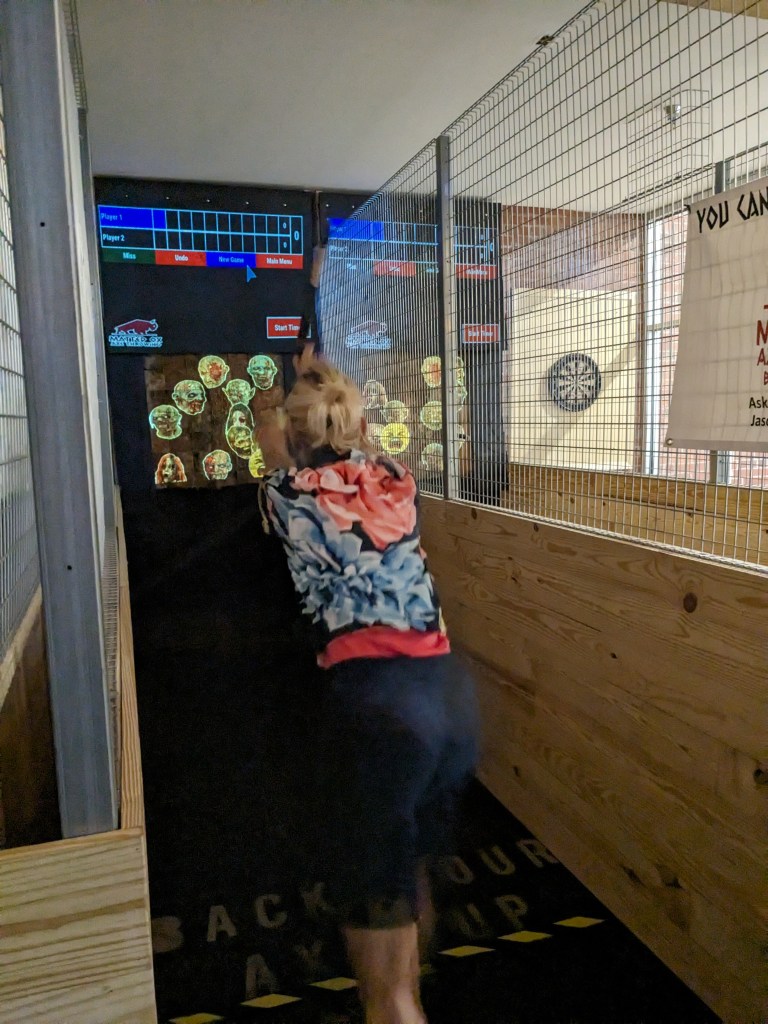
  • And even throwing an axe at zombies!

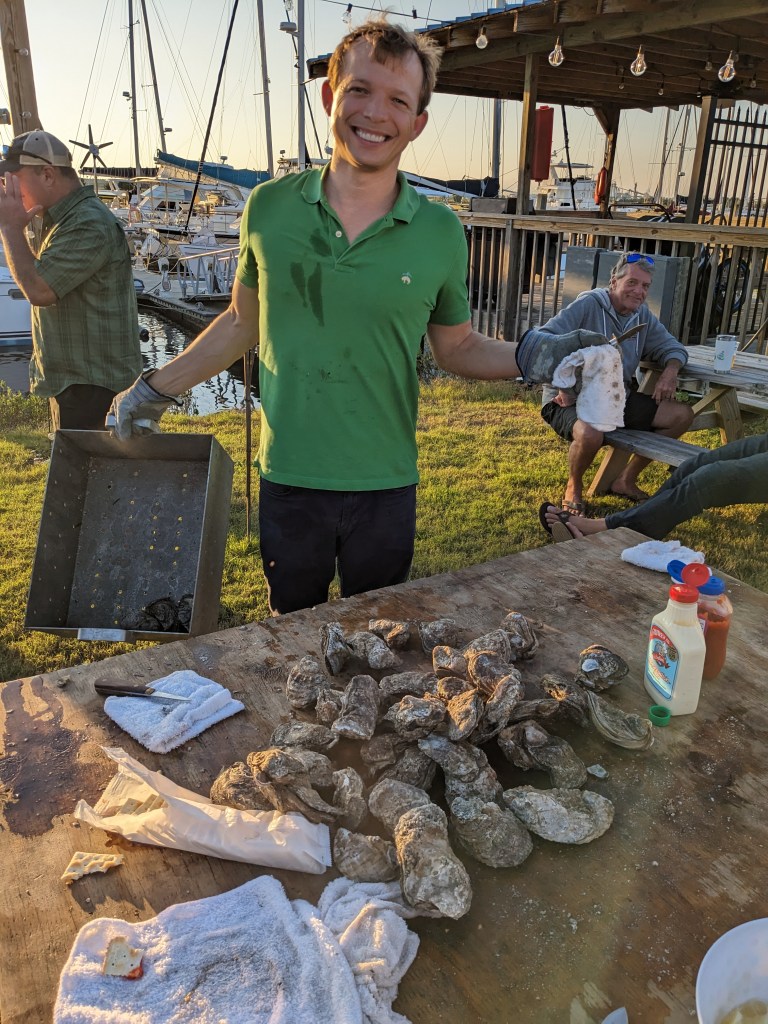
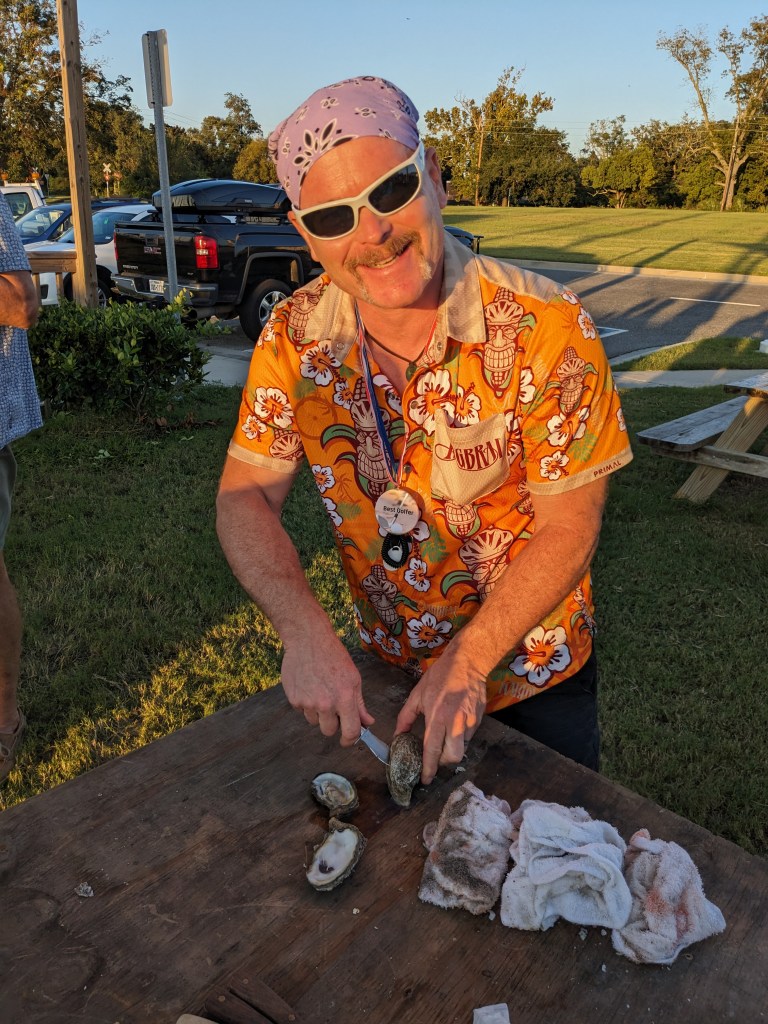
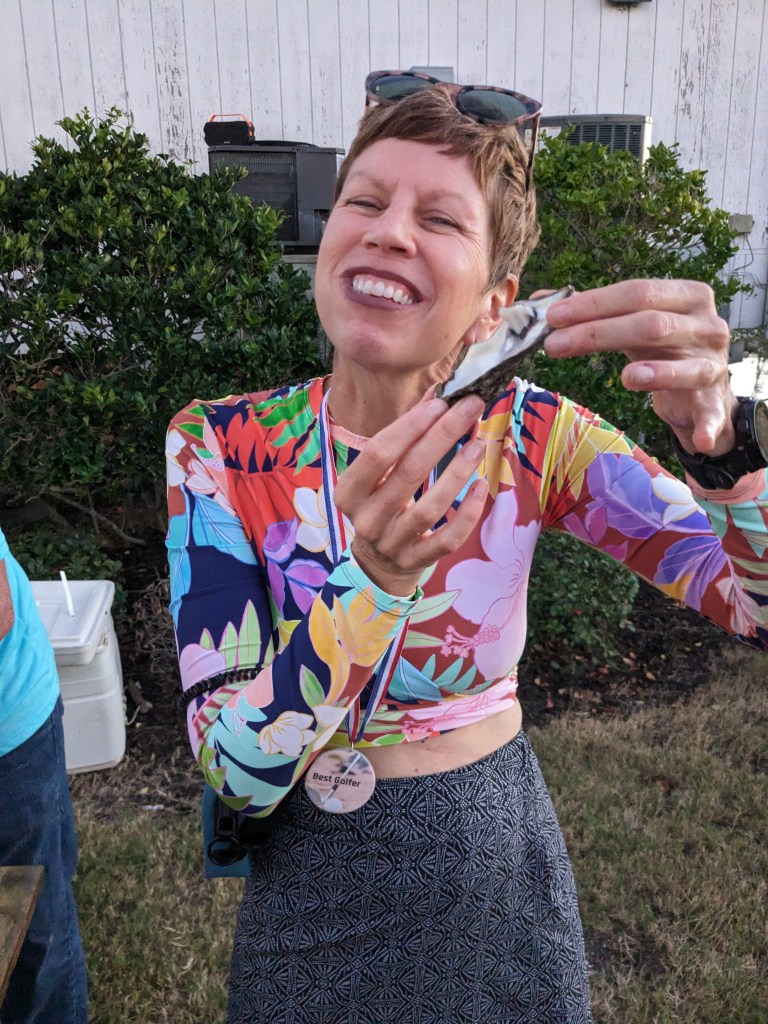
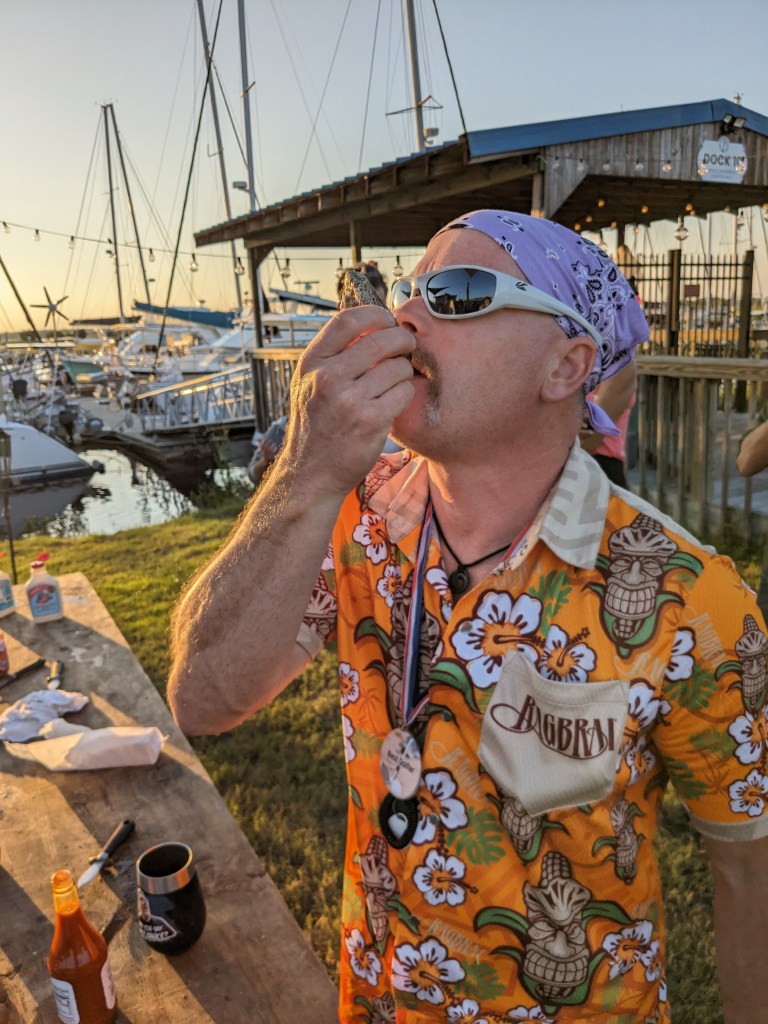
We didn’t win the race, but we sure had a great time! And the fun just kept on going! The marina held a customer appreciation oyster roast yesterday evening with three massive coolers full of oysters, a potluck of side dishes, and free wine and beer. I don’t think I’ve ever shucked an oyster before, so it was fun to learn! Mike says he doesn’t like oysters, but he sure ate a lot of them 🤣 Were very grateful to Brunswick Landing Marina for hosting such a fantastic event.

Our First Hurricane

Capt. Mike and I returned to Brunswick, Georgia after a delightful summer vacation in Colorado. Less than two weeks back into boat life and boat projects, the National Hurricane Center forecast projected that Hurricane Idalia could pass right over us. Yikes! Time to test the claim that Brunswick Landing Marina is a safe hurricane hole!

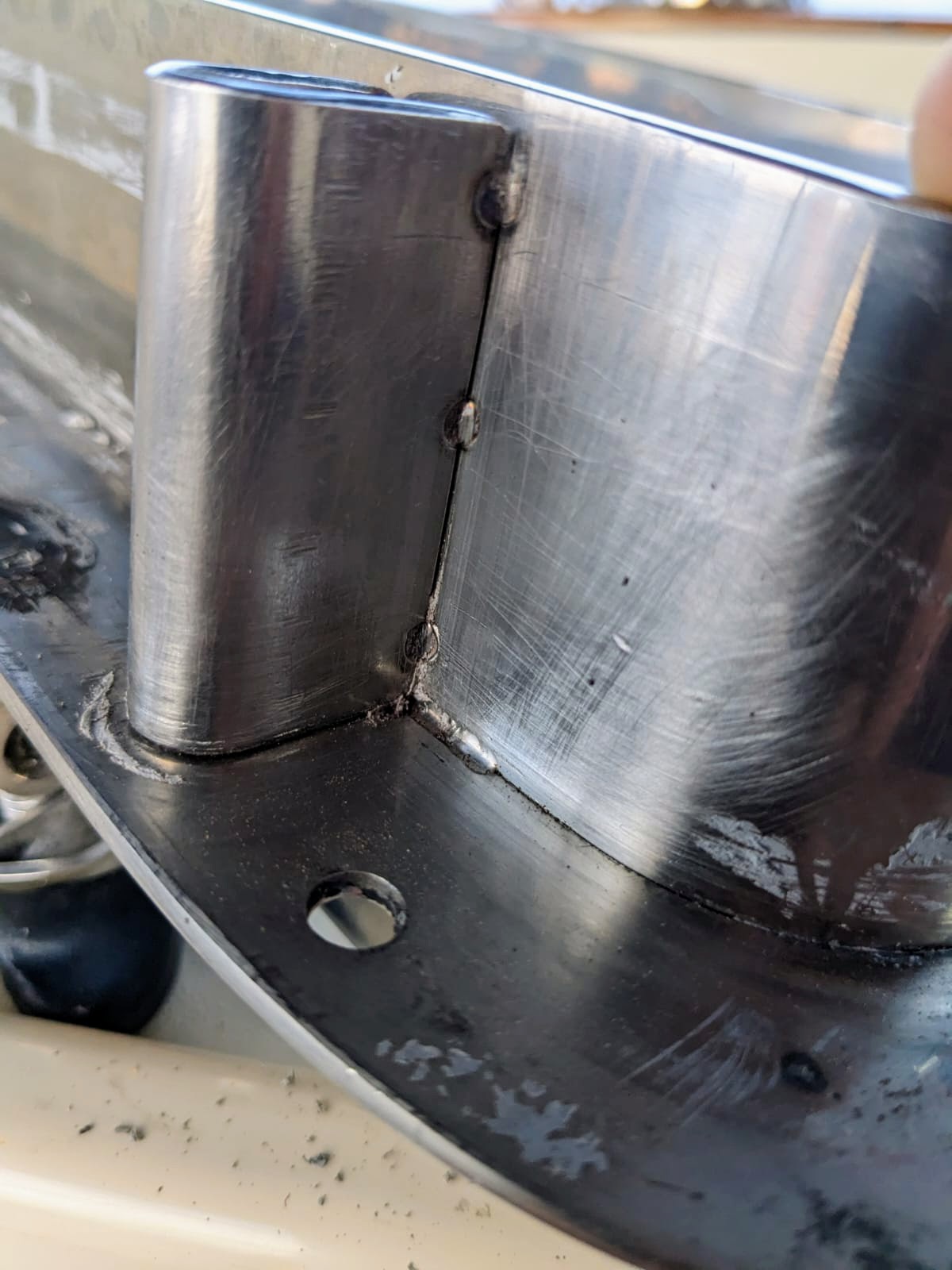
Hurricane season in the Atlantic officially runs from 1 June to 30 November every year and historically the risk of dangerously strong storms is the highest in September and October. But because “you never know” we prepped our floating home for hurricanes when we left her back at the end of May. We removed her jib and staysail, replaced the running rigging with thinner messenger lines, covered the portlights with plastic, and secured the dinghy very tightly in the davits on the stern. We’re glad we did all that, because the marina experienced some very strong storms while we were gone – even to the point of bending the stainless tubing that supports our solar panels. And doing all that work in May meant we had a head start on prepping for Idalia.

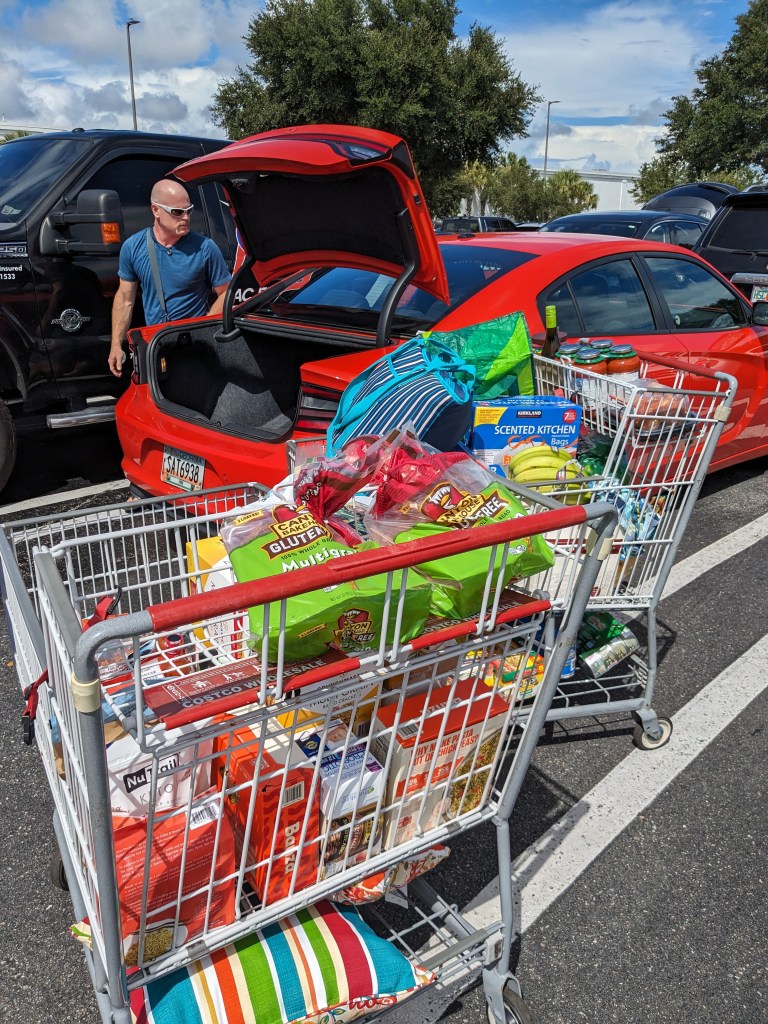
Two days before the hurricane, we rented a car and drove to St Augustine to bring all three of our sails to a sail loft for inspection and repairs. On the way home, we stopped at Costco in Jacksonville to start provisioning non-perishables for the upcoming cruising season. Just our luck to do that on a day when all of Florida was buying bottled water, toilet paper, and canned goods. I was tempted to joke with the check-out clerk, “This is my first hurricane. Do you think I’ve got enough food?” 🤣

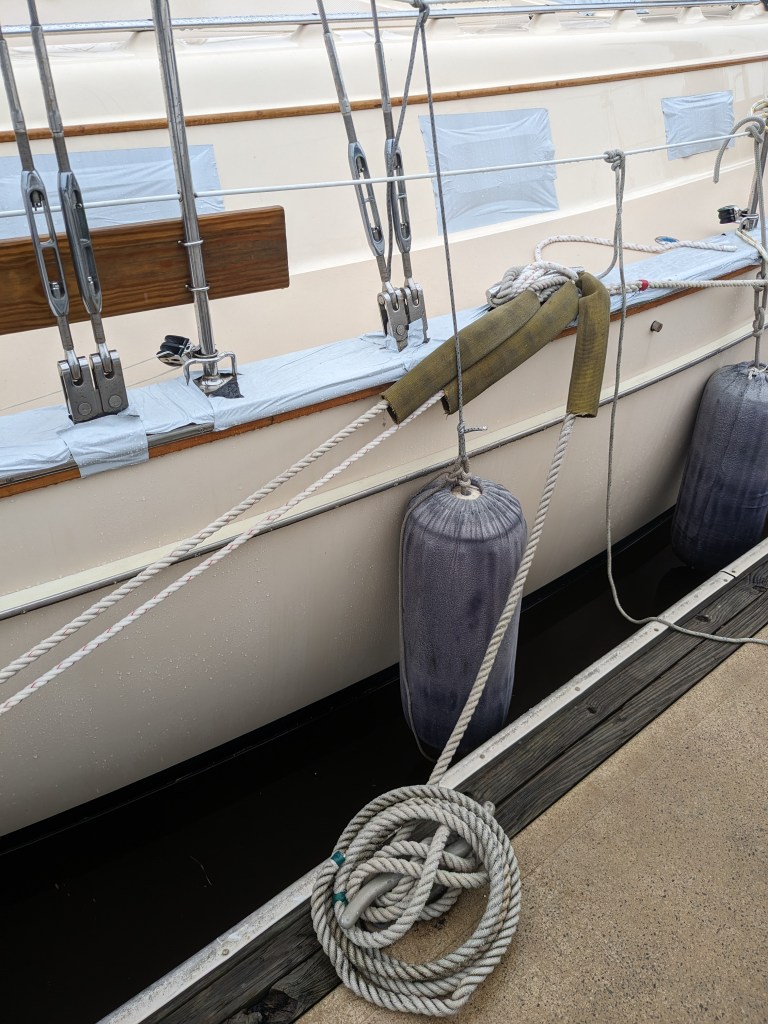
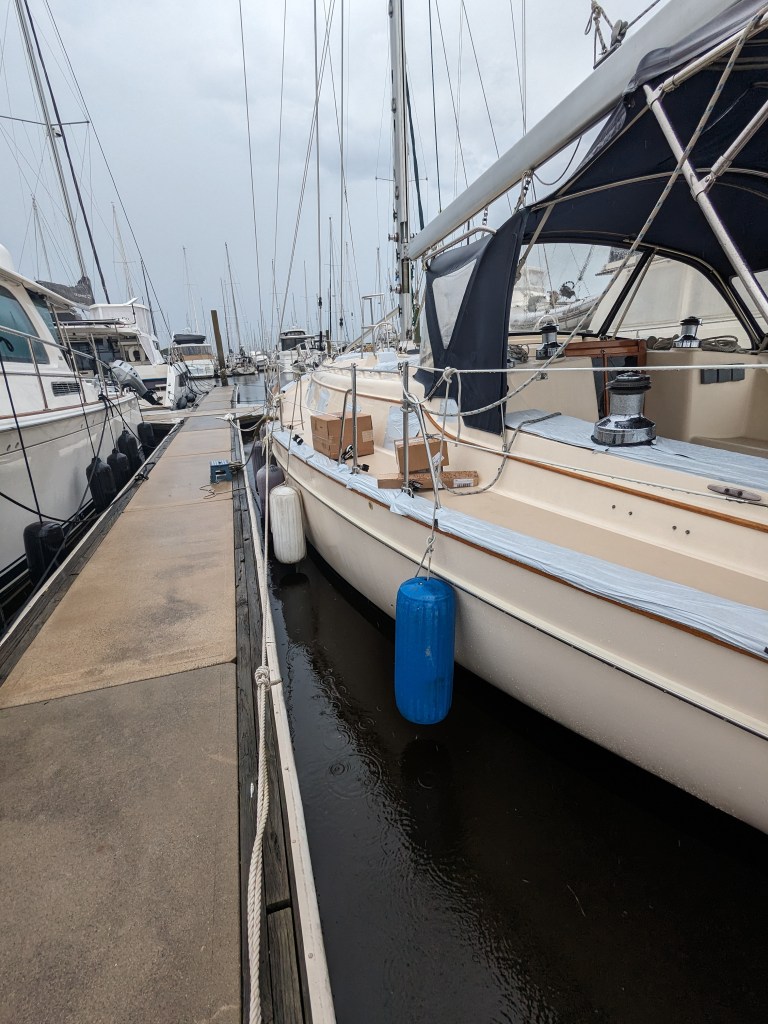
The day before the storm, everyone in the marina worked all day to prepare, helping each other out as needed. We doubled all our dock lines and applied new chafe gear, lashed down the bimini and solar panels, filled the water tanks, tested the radio and wind instruments, and packed go bags. We adjusted the lines on the abandoned boat in the slip next to ours and removed or secured anything in the marina that could fly around and cause damage in high winds. We checked on a few boats belonging to friends who were still out of town. And of course we checked every new storm forecast – studying the smallest details: What’s the latest storm track? Will Brunswick be under a Tropical Storm Warning, or a Hurricane Watch? How much storm surge should we expect? What’s the earliest time we can expect tropical storm force winds? What’s the probability we could see hurricane force winds? Finally, we collapsed into bed, fairly confident we’d done as much as we could possibly do to prepare.

I woke up the next morning around 5:30 to the sound of rain. Went back to sleep and woke again around 7:00 to the first howling winds. We nervously waited for the NHC to release their 8am products so we could evaluate what we were in for and what had changed overnight, and whether we should stay in the marina or catch an Uber to a hotel. Luckily, Idalia had tracked west overnight, now forecast to hit land in a lightly populated region of Florida’s Big Bend, and meaning we wouldn’t get hit with the full strength of the storm. So we decided to stay, knowing we might be uncomfortable, but we wouldn’t be unsafe.

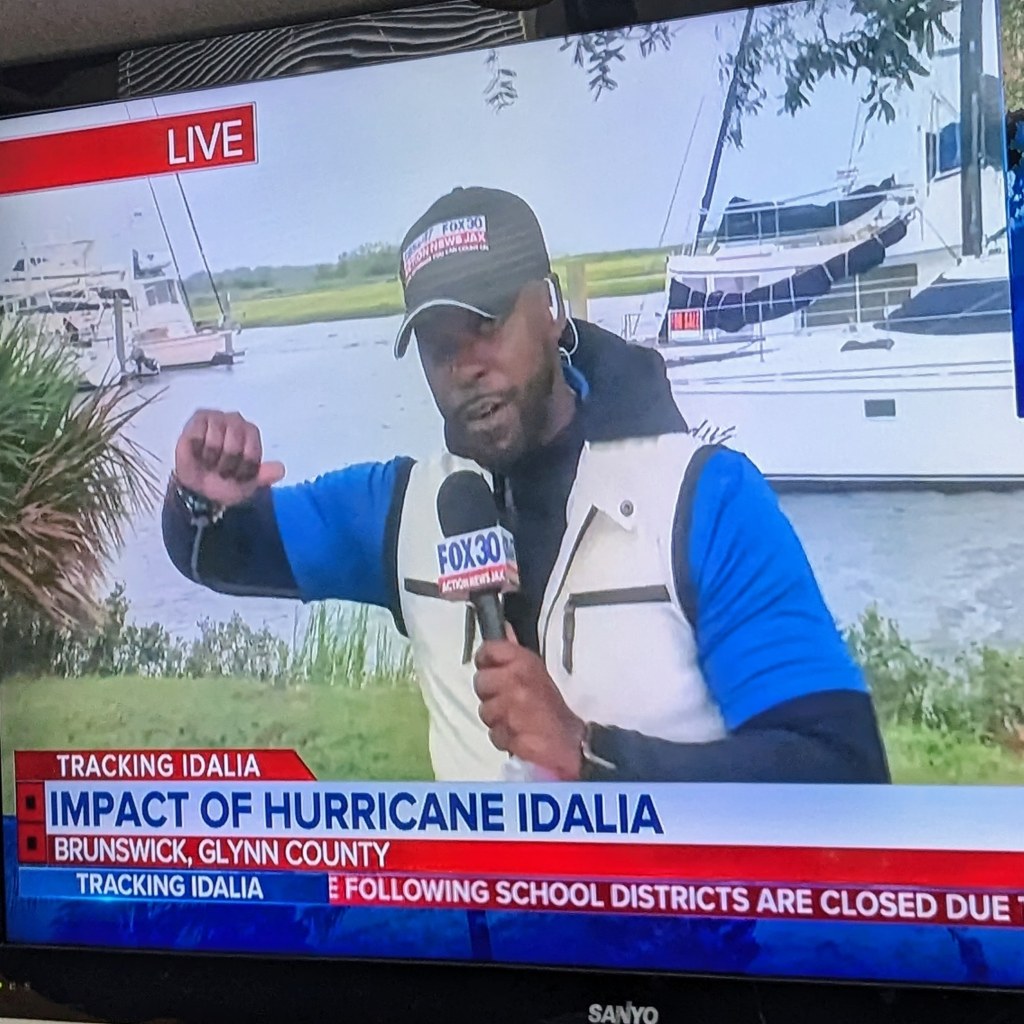
I stuck it out on the boat until 11:30 am when we really started bouncing in the slip and when our wind instruments showed sustained winds of 25-35 and gusts of 52 knots 😲 I brought valuables, electronics, rain gear, and snacks up to the marina Yacht Club to wait it out. I’m not sure which was scarier – listening to the wind howl on the boat, or listening to TV News anchors trying to terrify us. The local news was filming from Dock 4 of our marina!

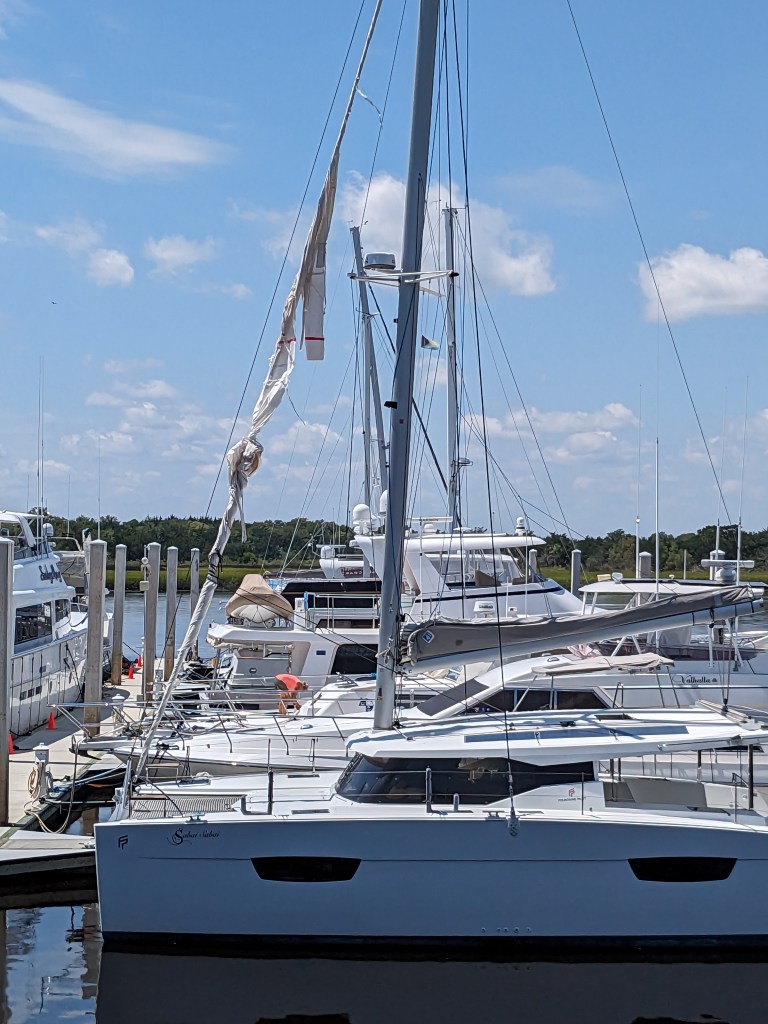
Capt. Mike joined me on land about 15 minutes before the power went out. No more scary tv broadcasts, but no more AC or phone chargers either. One transient visitor to the marina made me laugh because every time he walked into the yacht club he was wearing a bright red life vest and carrying a boat hook with a radio clipped to his belt – prepared for battle! We could keep an eye on Happy from the patio of the yacht club and kept track of how the rest of the marina was handling the winds by listening to the VHF radio. A water fixture broke on Dock 9, sending a geyser skyward until the water was shut off. Dock 4 lost some bolts and started to slowly break apart until the marina could hold it together temporarily with ratchet straps. But the worst effects of the storm were on Dock 0, the closest to the ocean, which experienced the brunt of the wind and the most fetch and waves. Three big motor yachts tied crosswise to the wind were repeatedly pushed onto the concrete dock, experiencing quite a bit of hull damage before the dock was evacuated, but not a single boat sank. A catamaran on that same dock hadn’t prepped for the storm and their jib was shredded by the high winds. Another improperly prepped boat on the hard in the boatyard had the wind unfurl their jib, giving it something for the wind to grab onto, eventually knocking the boat off its stands and knocking over the next two boats in the row. 😢

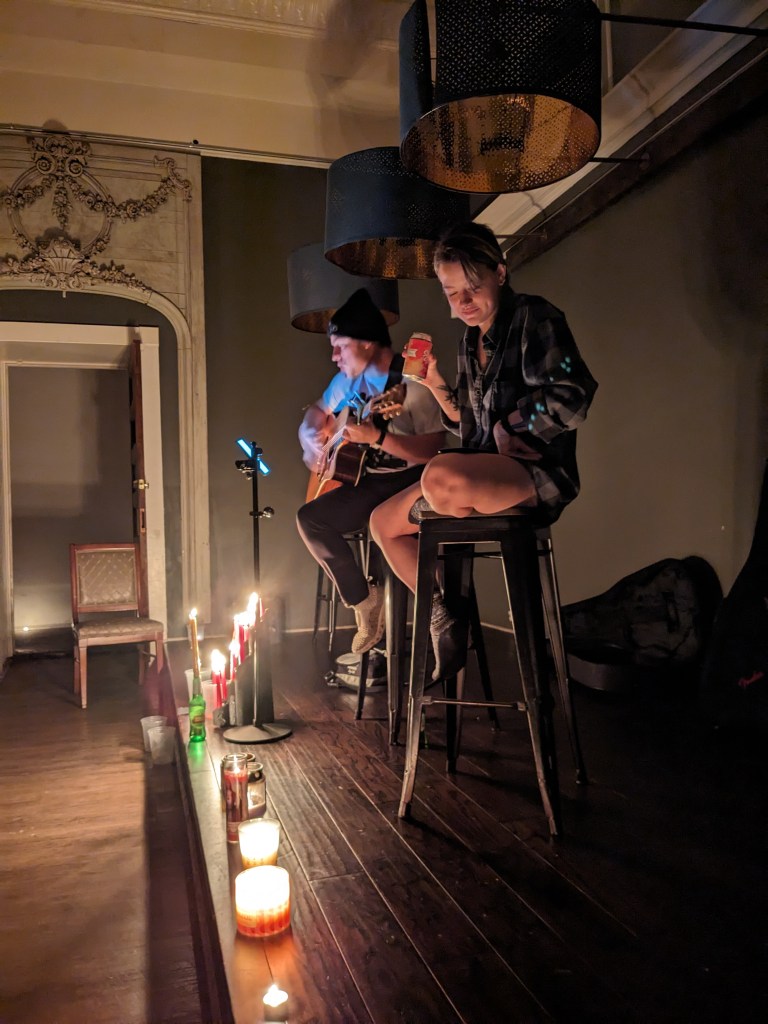
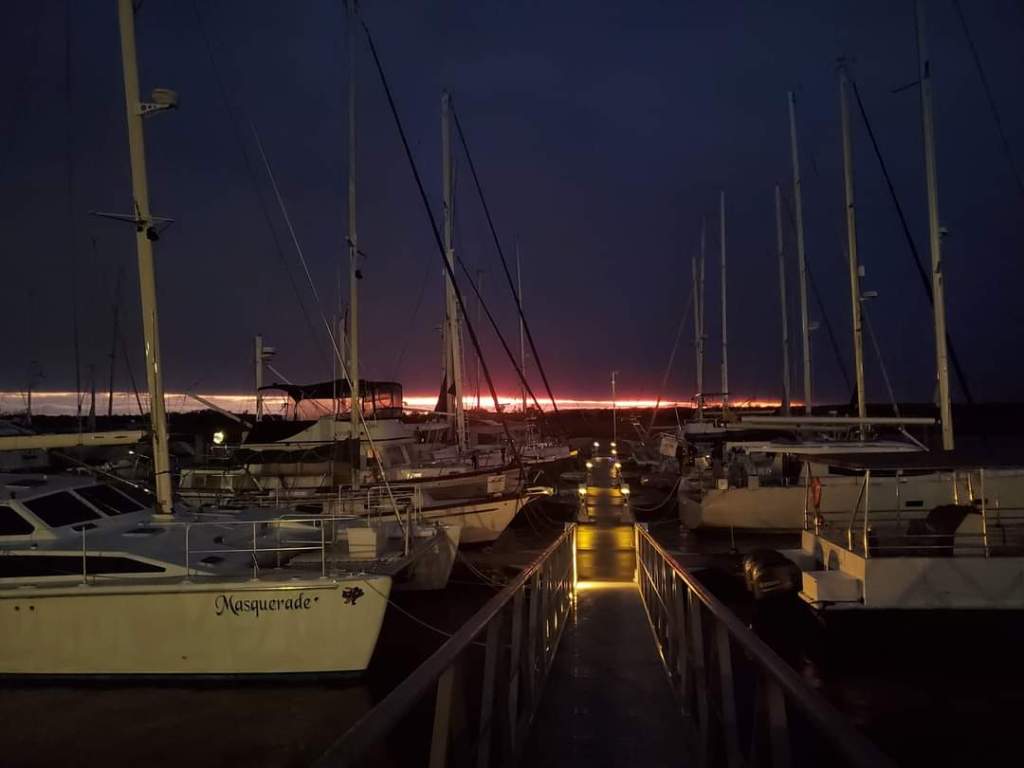
Finally, around 5:00, the winds shifted to the west indicating Idalia had passed north and the storm was fading. The yacht club filled with lots of relieved sailors, comparing stories and photos and breaking out a beer or a dram of rum to celebrate our good fortune. We all agreed we were very lucky in the westerly track the storm took, as well as the fact that it passed us at low tide. We’d been concerned that a tropical storm during full moon king tides could lead to crazy high tides and flooding but we lucked out. We appreciated the dramatic stripe of sunset beneath the heavy lingering clouds because “red sky at night means sailor’s delight” on our way to a secret candle-lit post-hurricane party in town. Happy lived to sail another day!

A few days in the boat yard

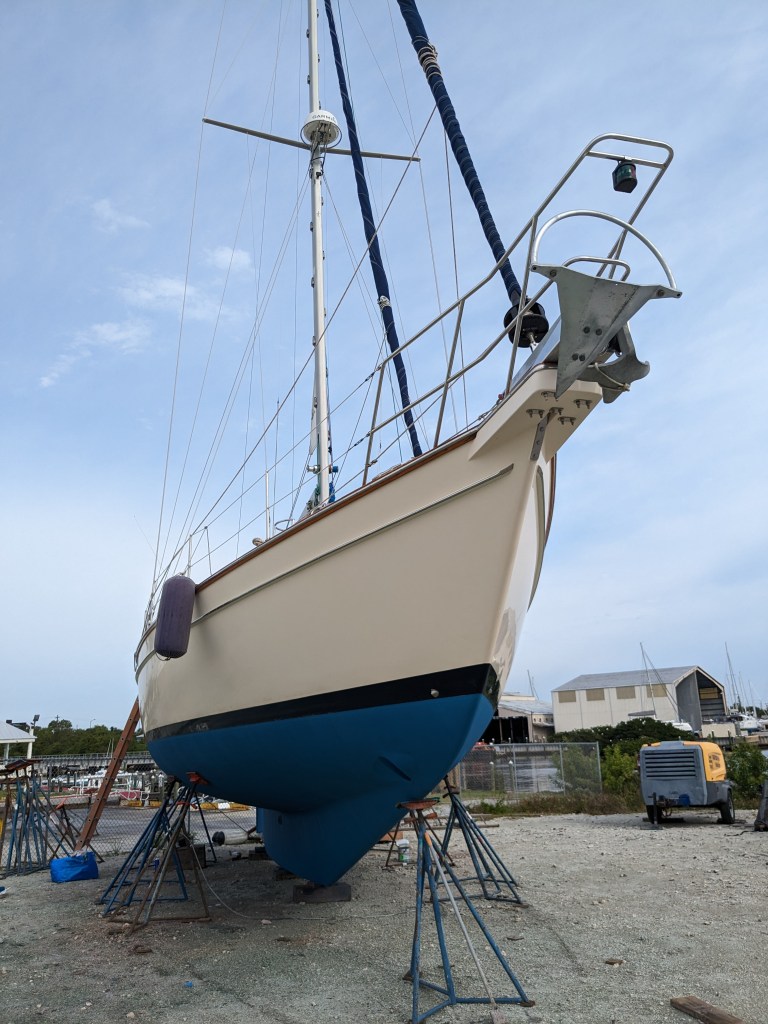
As soon as we left Stuart, Florida on our way north, we decided our new boat needed a little love. So we pulled into Cracker Boy Boat Works in Fort Pierce for a few days of hard and dirty work! (In case you hadn’t guessed, this is going to be another “keepin’ it real” blog post)

We were lucky to find a DIY yard where we could do some of the work ourselves to save some money (Thanks, Bill!) but these three days in the yard would still wind up costing about 3.5 “boat units”  – yikes! As we approached the haul out slip on Tuesday morning, we radioed the boat yard to let them know we were here. The office manager replied that the crew was almost ready for us – come in slowly with no lines and no fenders…. What? That’s a first for us, and I felt very nervous standing on the bow with nothing to do. But Capt. Mike drove us into the skinny little slip like a champ.  And the crew did a great job of communicating and guiding us in with little more than boat hooks. Phew. It’s always a relief to get into a slip without anything going wrong!

The first job we tackled was replacing the CQR anchor with a new 85-pound Mantus we fondly refer to as “The Beast” ⚓ It’s literally the biggest anchor that would fit on our bow and we will sleep much better through wind, tide changes, and heavy current knowing The Beast is keeping us safe. Capt Mike did a ton of research, including trying to decipher our mystery anchor chain (C4 chain is not the same as G4 chain) and to ensure our windlass could handle the heavy load. While we were at it, we marked every 25 feet of chain with colored zip ties so that I know how much rode I am letting out as I drop anchor.

Next, we replaced all the zinc anodes on the hull. Zincs are intended to be “sacrificial” and to corrode more quickly than other important metal boat parts. On Sanitas, we only had two zincs to deal with. On this bigger boat, with more complex systems, we had tons! Including on the bow thruster and related to the refrigerator cooling system. My turn to do tons of research to try to figure out the right shape and size and number to order. (I was mostly right – only two of the zincs I ordered didn’t fit – oops) While we were at it, we scraped barnacles off the prop and bow thruster blades and painted them with epoxy.

Our main priority was to apply new anti-foul paint to the bottom. We knew of one spot where the bottom paint was scraped off, and we wanted to have a nice clean bottom before leaving her in the water in a brackish river without moving for six months. Sounds easy enough, right? But unseasonable Florida thunderstorms were out to get us, cutting our working hours short each day.

In fact, on Wednesday evening we endured one of the strongest storms I’ve ever weathered on a sailboat…. In the boat yard! Our wind instruments aren’t working, so I can’t tell you exactly the max wind speeds, but Capt. Mike estimated sustained winds of 40 to 50kts. The boatyard measured gusts of 68kts. 😲 The worst part was wind came from the side instead of the bow and really shook the entire structure, while heavy rain and hail fell. Mike went out in the worst of the storm to rescue cockpit cushions that were blowing around AND he watched the blades to the bow thruster (which we had taken apart to paint with anti-foul) catch the wind and start somersaulting across the boat yard. Yes, he sprinted after them and made a heroic rescue. That would have been an expensive loss! For my part, I was dressed in my fouly, with my shoes tied, holding a waterproof bag of our phones and wallets, sitting on the floor at the bottom of the companionway, braced in case the boat fell off the stands. Ready to run through the storm if Mike told me to. Luckily, none of that was necessary and we all survived with only some damage to one of the cockpit enclosure panels and an antenna. Phew!

One more challenge to this stint in the boatyard was our lodging. The yard doesn’t allow anyone to live on their boats overnight so I had to find a hotel or Airbnb. The only reasonably priced place I could find was a dumpy motel about 2 miles away on Rt 1. So each morning, and each evening we had a 2-mile walk to get to work – except for the two times Mike hitched us a ride! Luckily, we walked right by a Dunkin each morning – hurray for ‘Merica!

Between the long commute, the storms, and the long list of jobs, it’s a minor miracle that we finished the bottom paint in time. My back still hurts just thinking about it. But we did it! And scrambled to put everything back together before our 9:30 splash appointment on Friday morning. Yes, I did temporarily lose the bolt required to put the bow thruster back together, but that’s another story. Capt. Mike frantically painted the spots where the stands were, just as the lift crew arrived and stood around watching him, smoking their cigarettes and tapping their feet.

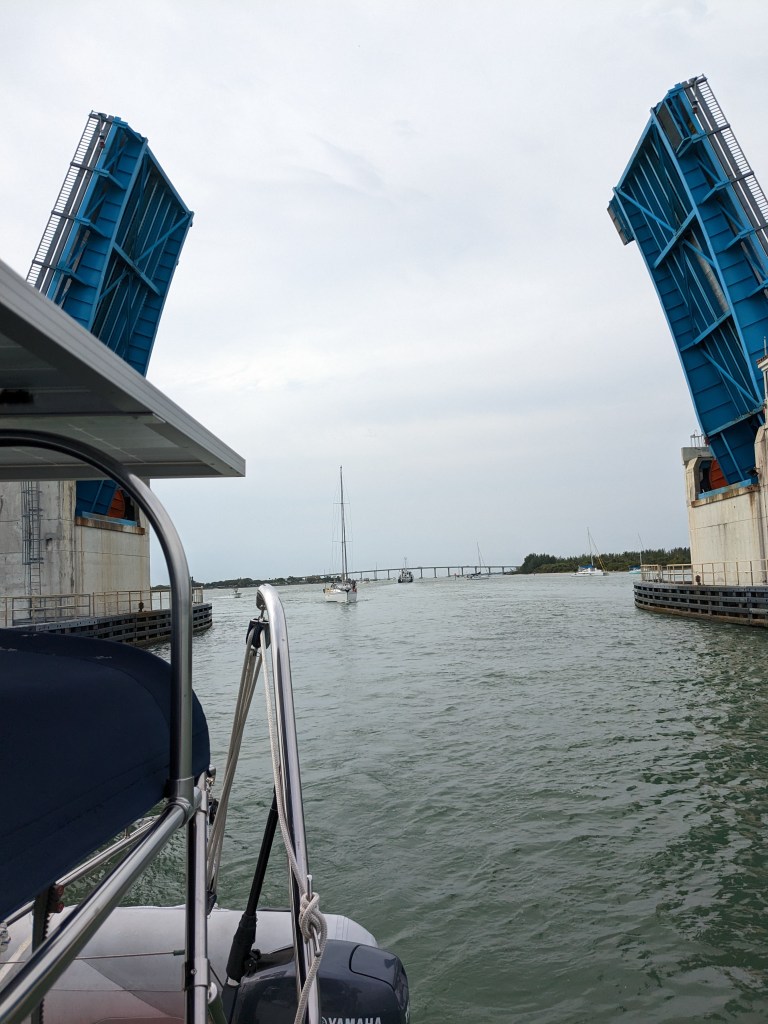
But we did it! Back in the water in time to make the 10:00 bridge opening. Huzzah!

Tropical Shipping Blues

When we first started talking about buying a new boat, I concocted a little fantasy in my head…. We’d buy a new boat in Grenada and we’d sell Sanitas in Grenada, so we’d put our two boats right next to each other on a dock. We’d simply carry armloads of belongings from one boat to the other, de-cluttering and donating as we went. But when we found our perfect boat in Florida, that little fantasy went “poof”!

So I toyed with the idea of Japanese minimalism. You know, “it’s all just stuff” and “everything is replaceable”  and we would just bring what we could fit into checked luggage. Until Capt Mike loaded just a fraction of his tools into a suitcase and immediately exceeded the 50 pound limit. Sure, everything IS replaceable, but how much did I want to spend to buy everything all over again? It takes A LOT of tools to keep a sailboat running and happy.

So we decided to use Tropical Shipping to ship a “Less Than Container” or LCL load from Grenada to Florida. That’s more difficult than it sounds – everybody wants to ship goods from the USA to Grenada, but who wants to ship things BACK to the land of plenty? Apparently we were lucky. We learned that sometimes people wait weeks or even months for enough containers to fill a ship heading west.  We called Tropical on a Thursday afternoon and learned there was a ship leaving the next week. Great news! Little did we know how much red tape and bureaucracy we were going to fit into that week….

Step 1: Find a container

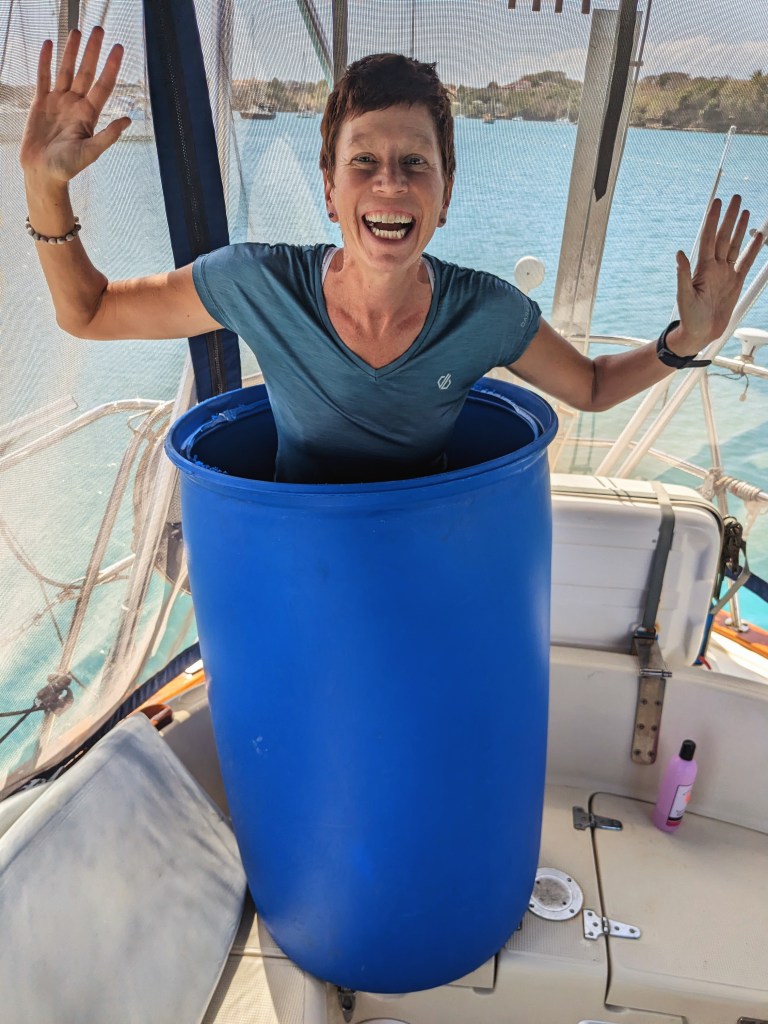
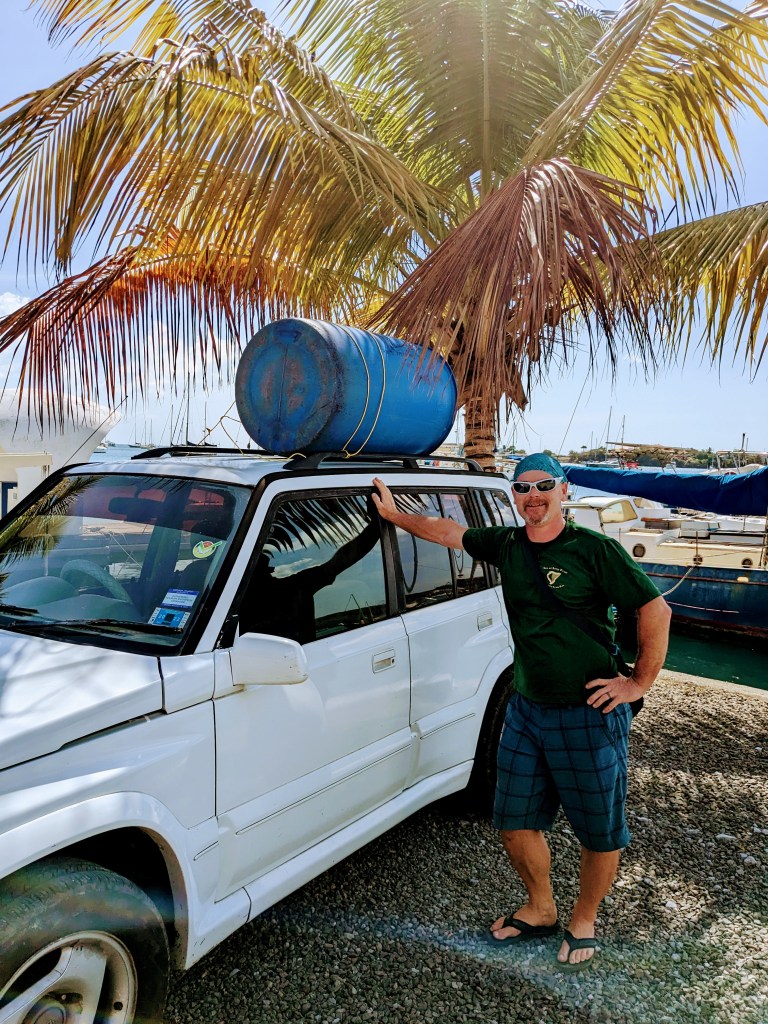
Apparently, when you are shipping “less than container” loads, you need to bring your own container. Who knew? And for some reason, the shipping companies don’t sell containers. Neither do the hardware stores, boat supply stores, home goods stores… And although you’ll see shipping barrels by the side of the road all over the islands, often doubling as garbage cans, they never have lids, so they are useless to us. Finally, I turned to the internet and found two big blue plastic shipping barrels (WITH lids) on Facebook marketplace for about $20 each and sent Mike out into Friday night traffic to collect them.

Step 2: Paperwork. A lot of paperwork

I naively believe Tropical Shipping would handle all the paperwork as part of the fee we were paying them. Nope! The customer service agent rattled off a list of forms and a deadline – our shipment would need to be delivered to the port in Grenada by 3:00 Tuesday to make the Thursday departure. Oh, and we’d need to hire a local broker to process our customs forms on the Grenada side. AND we’d need to hire a US broker to process things on that side. The deadline was already feeling tight! After getting a few price quotes, we chose Lund & Pullera and they were excellent! Stacy really helped me through the US Customs process. We hired Alana from Phenomenal Brokerage in Grenada who was also very responsive. But all together I probably spent 10 hours on the laptop tracking down forms and trying to figure out how to complete them. In addition to my part-time job as a boat broker, I’m now working as a customs broker, lol. I need to print new business cards.

Step 3: Pack the barrels

A big blue shipping barrel can swallow up a LOT of stuff. So after Mike packed his tools, we still had a lot of space to pack my favorite pots and pans, snorkel gear, clothes, and even some packaged gluten free food. I admit, we hit the point that everybody gets to eventually when moving house – that point when you just start shoving in whatever you can reach, and you’ll worry about whether you really need it or not on the other side. Then we realized our next problem. A full shipping barrel weighs over 400 pounds. So how were we going to get it out of the boat and to the port?

Step 4: Unpack the barrel you just packed

So we took everything out of the barrel, loaded it all into tote bags and shopping bags, made multiple dinghy trips from the boat to shore, and loaded all that stuff into a rental car.

Step 5: Repeat pack and unpack steps for Barrel #2

By this point, I’m pretty sure we’ve touched everything on the boat, and moved it around, at least five times.

Step 6: Keep calling Tropical until they finally break down and let us deliver the barrels

We worked hard all weekend, and by Monday morning we were ready to deliver our barrels to the port in St George’s. And then we got stuck. We couldn’t do anything until Tropical approved our paperwork, assigned us a container scheduled for that ship, and arranged for someone to meet us at the port. We waited… And waited.. and started calling them about every three hours. Nothing happened on Monday. Or on Tuesday morning. Remember we’d been given a 3pm Tuesday deadline? Finally we called Alana at Phenomenal and she called Tropical and finally we could proceed

We hopped in the rental car and drove into downtown St George’s to the Tropical office to get a car pass for the port. The customer service agent asked Mike for a hardcopy form that Alana processed for us. Uh oh. We couldn’t find it. Must have left it back on the boat. So we hopped back in the car and drove like a bat out of hell back to the dinghy dock, plus a long dinghy ride back to the boat, found the form, and did it all again in reverse. Phew! Got our car pass and headed to the port. It’s now 2:30pm.

Step 7: Deliver the barrels to the port

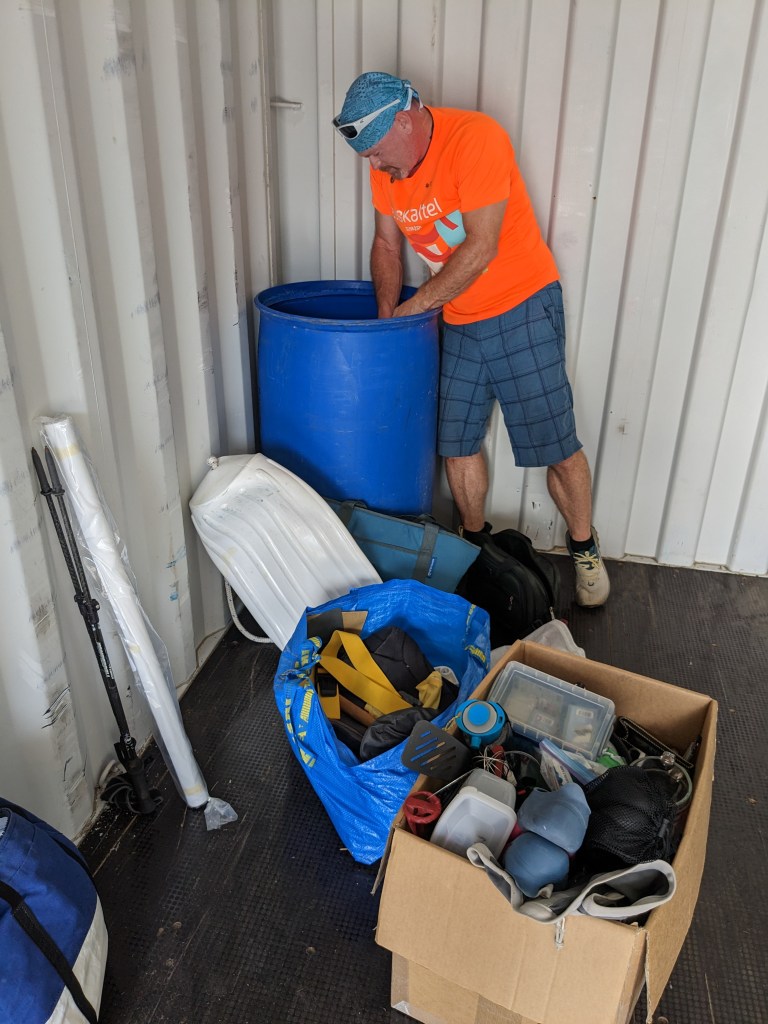
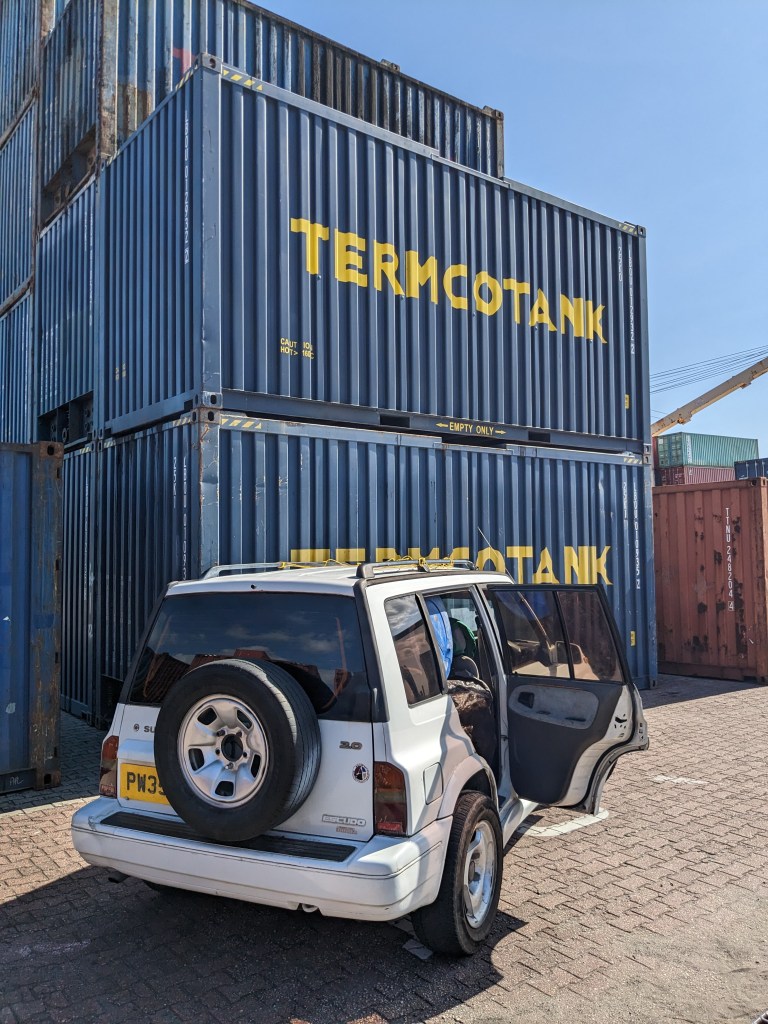
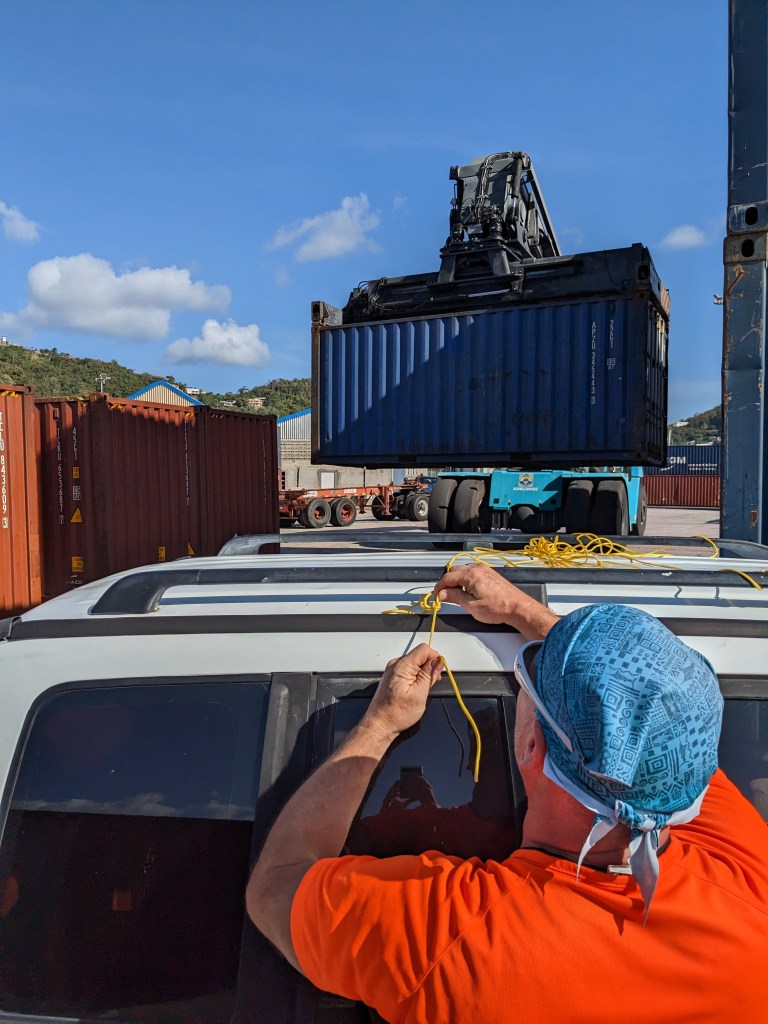
We donned our close-toed shoes and hi-vis shirts and rushed to the port. A very pleasant young man named Kelwin met us there and showed us to an empty container. Capt Mike set to work. Remember how we couldn’t carry a full barrel? That means we showed up at the port with two empty barrels tied to the roof of the car, with the car itself overflowing with all the stuff we hoped to fit inside them. Kelwin helped me carry bag after bag into the extremely hot shipping container while Mike worked his packing magic. Somehow, miraculously, it all fit. We were asked if Alana had “processed the customs form.” I assumed so, but when we called to find out, she said she’d come down to the port now to do it if, and we weren’t allowed to actually make our official delivery until the US Customs agent filed an ISF form but… the computer was down. We made a bunch of calls and I bit my nails, and eventually it all got done. We closed the lids on the barrels, sealed with a lot of duct tape, tipped Kelwin for his help, and left the port around 4:15. I guess we were on-time when you take into account the concept of “Island Time” We went home and as Mike was unpacking his bag, out fell the paperwork that we drove all the way back to the boat to collect. No one had asked for it again. And even as I am writing this week’s later from the US, no one has ever asked for it. Sheesh.