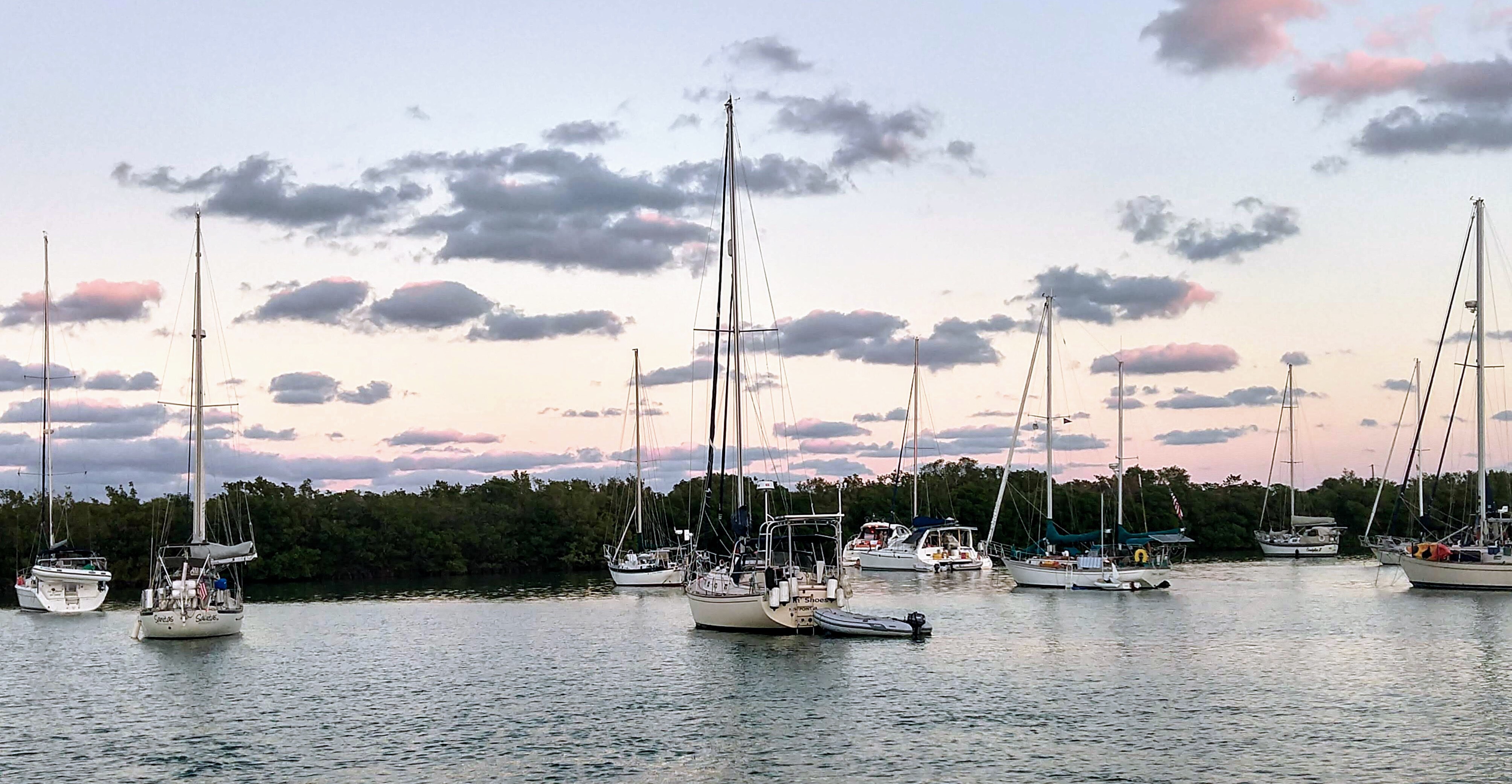
Sanitas gets a Makeover

Stuck in Grenada for hurricane season, this is the time of year we GET STUFF DONE! Each year, we invest time and money into a few big upgrades or maintenance projects that will make sailing life safer or more comfortable in the years to come. This year’s big project….replacing the canvas!
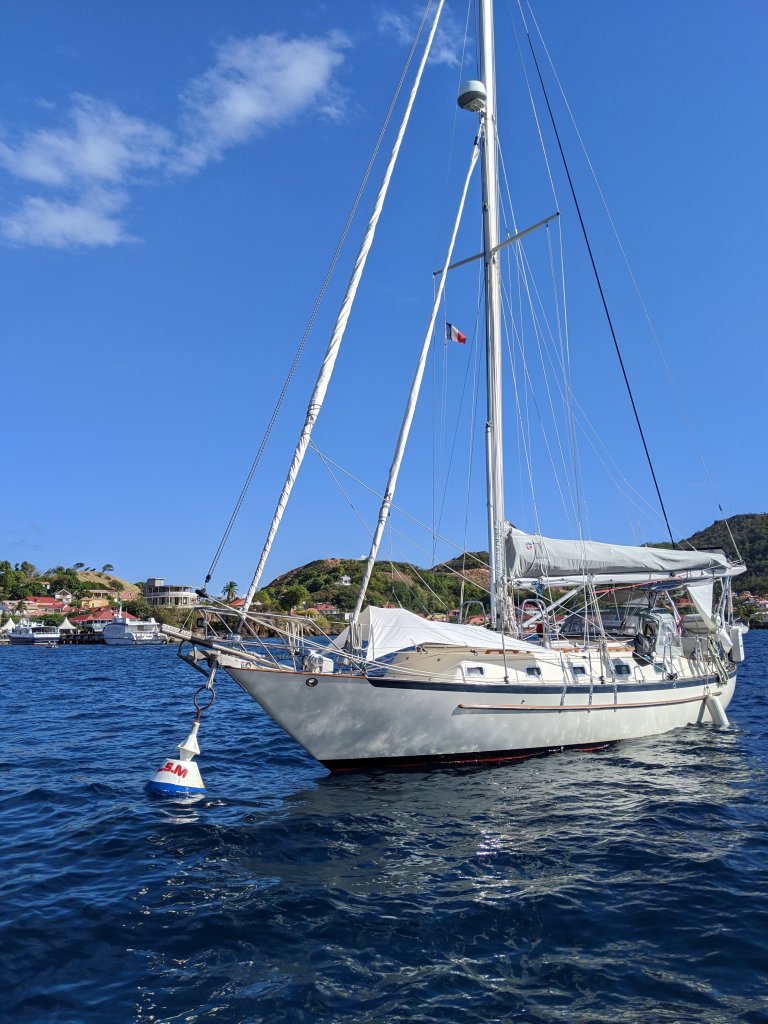
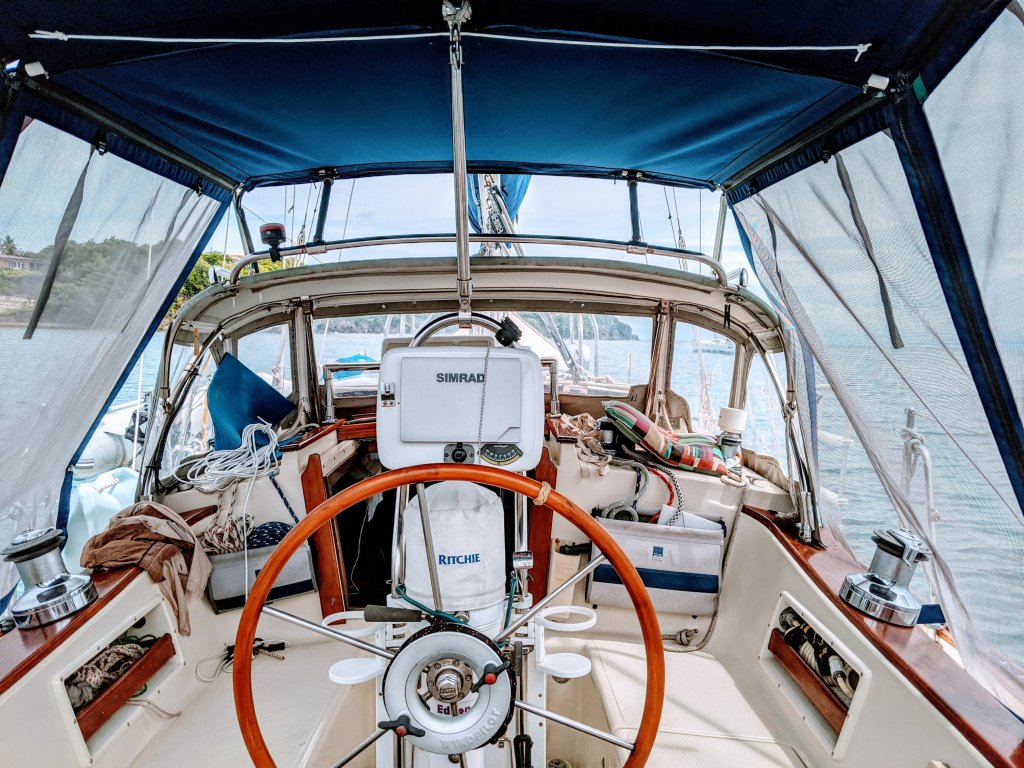
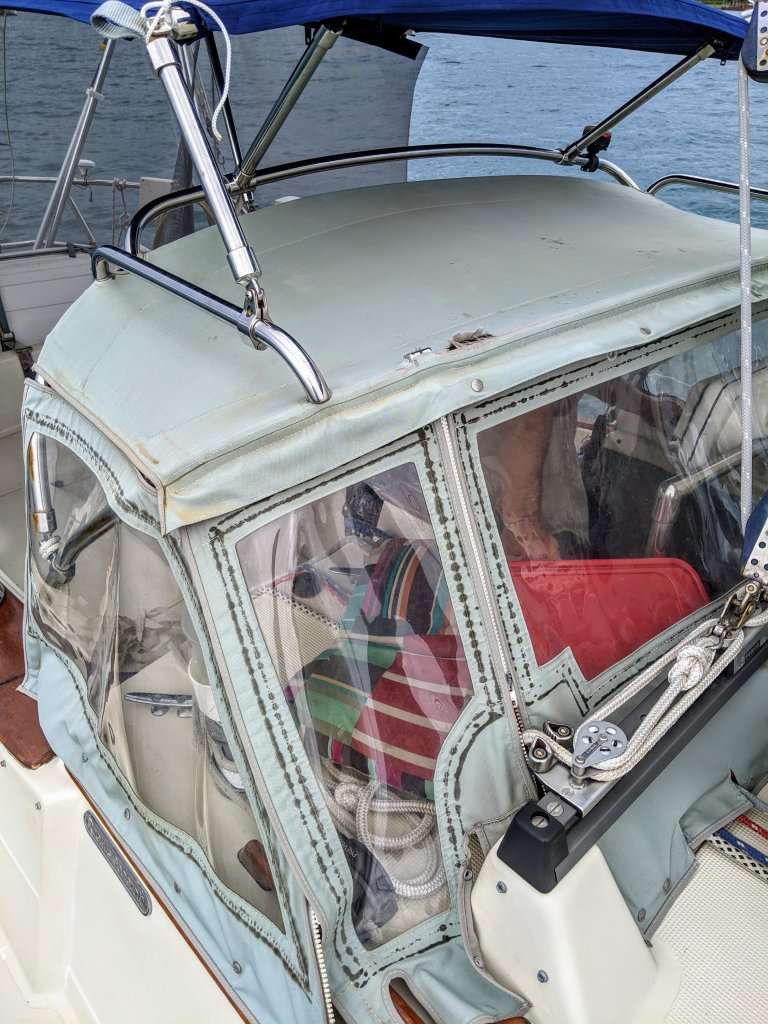
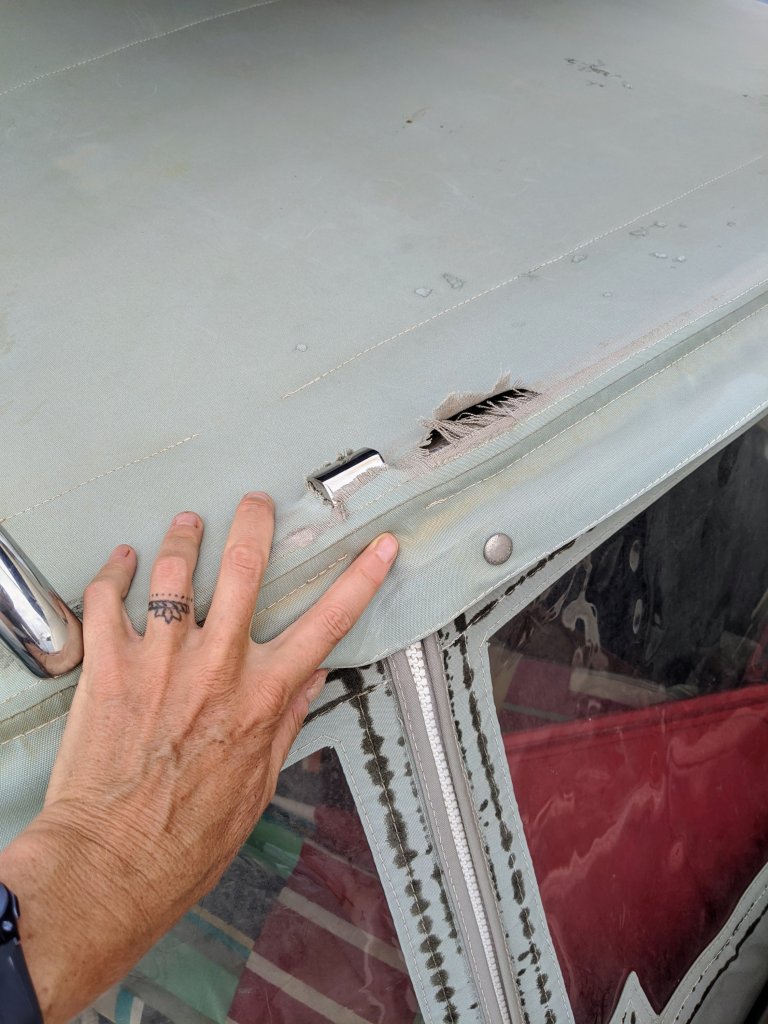
When new sailing friends ask “Which boat is yours?” in an anchorage, it’s kind of hard to answer. “Well, she’s the beige boat. With a beige sail bag. And a beige bimini and dodger. Never mind. She’s the cutter-rigged double ended of no particular color.” That’s practical – light fabric is cooler in the tropical sun, and it won’t fade. But that same strong sun has taken a toll on our canvas nonetheless, and it’s been right on the edge of falling apart this whole season. A couple of times a year, we hand sew the zipper back on the sail bag….again! And the metal frame that supports the dodger is showing right through the fabric there. We’re one tropical storm away from everything ripping right off!
So we made it a priority way back in July to meet with Ever After Canvas in Prickly Bay for an estimate and to take measurements. Because, we can’t just drive to Joann Fabrics to buy the supplies for this big job. Instead, to acquire Sunbrella fabric, plastic zippers, and 100% UV-proof thread that can stand up to the harsh marine environment, I ordered everything from the US and shipped it from Miami to Grenada using the EZone freight company. No free two-day-shipping here! I placed the order; got a C-14 form from Customs and Immigration to certify that all items would be leaving Grenada on our boat, and therefore I’m entitled to lower import duty; and eventually picked everything up almost four weeks later.
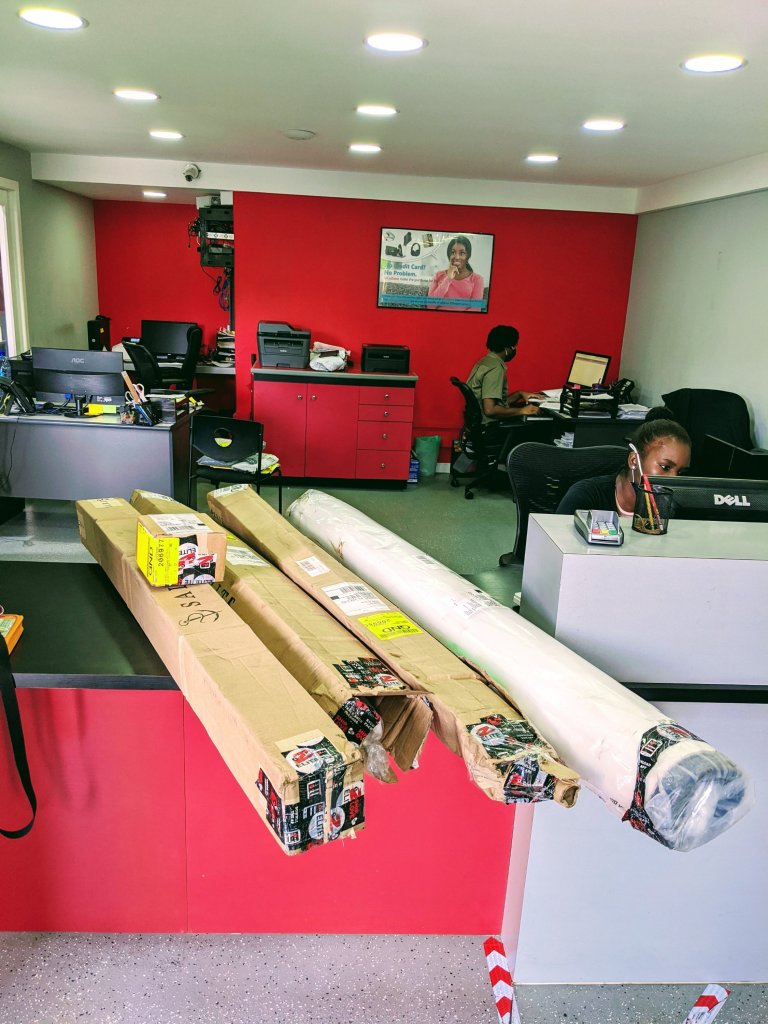
Jules and Frank, of Ever After Canvas, run their business from their boat, powering their sewing machine using a Honda generator. So we picked up a mooring ball just behind them in Prickly Bay and prepped to spend the next couple of weeks measuring, fitting, and installing. Frank’s a true artist; he tweaks each fabric panel and fitting until it fits perfectly. He was able to do most of the work on our sail bag before we even arrived, so we had the first piece of canvas installed quickly.
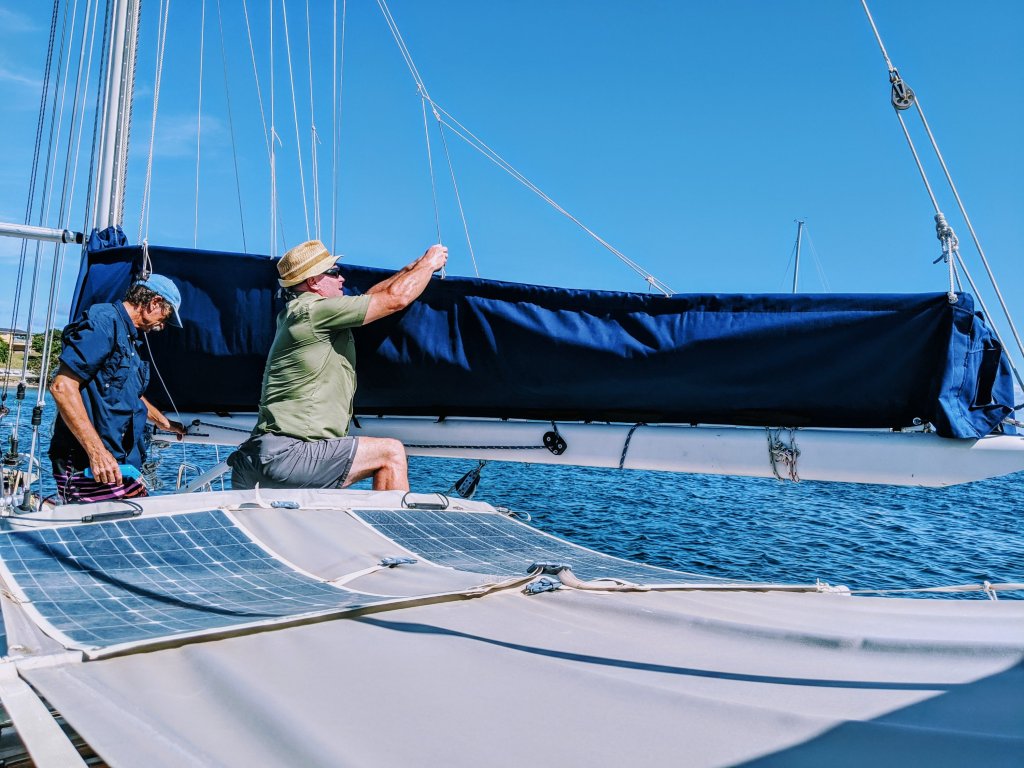
That gorgeous new sail bag whetted our appetite for progress, and we couldn’t wait to see the finished product. Along the way, we’d even added a few upgrades to our current system, such as shade panels on all sides of the cockpit, a water catchment system built into the bimini, and better rain protection. You know how you drive to Home Depot at least once a day while you’re in the middle of a big DIY project? Well Capt. Mike dinghied ashore just as often to buy new stainless fittings from Budget Marine, or added a mile-long walk to Ace Hardware for pvc pipes and bungees. And he and Frank worked together to get each piece installed perfectly. Frank worked his butt off, and got everything completed and installed within the two-week period we had free before we were scheduled to haul out at Spice Island Marine for the worst of hurricane season. Hooray! Finishing on schedule almost never happens! (Island time, and all 😁)
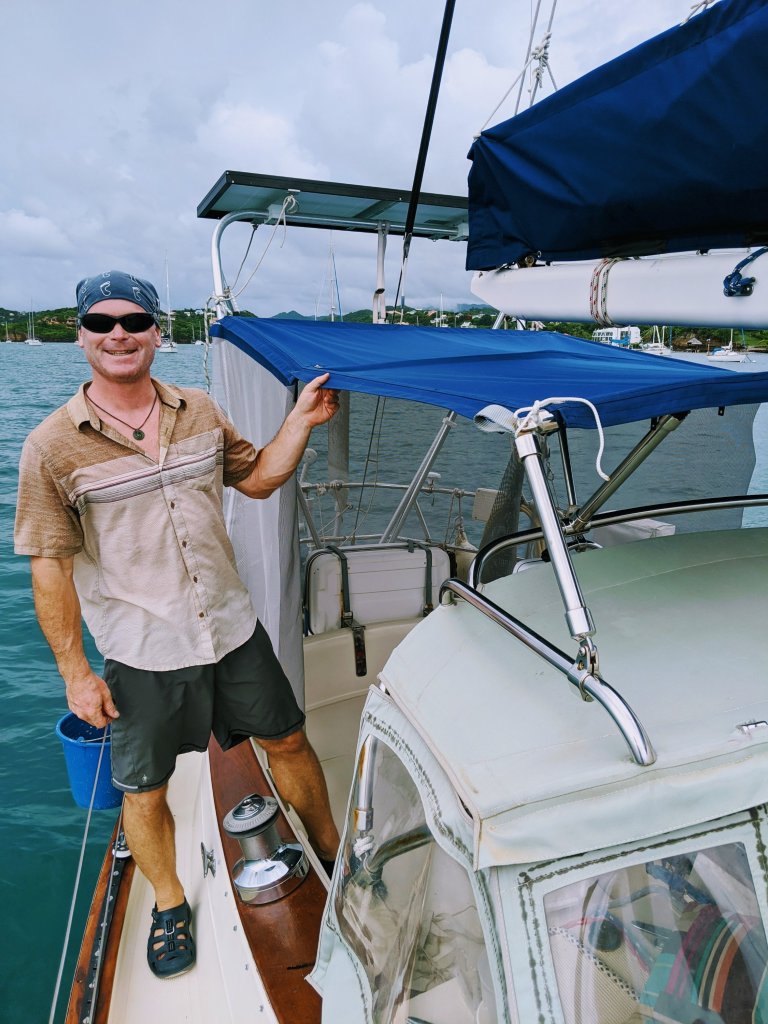
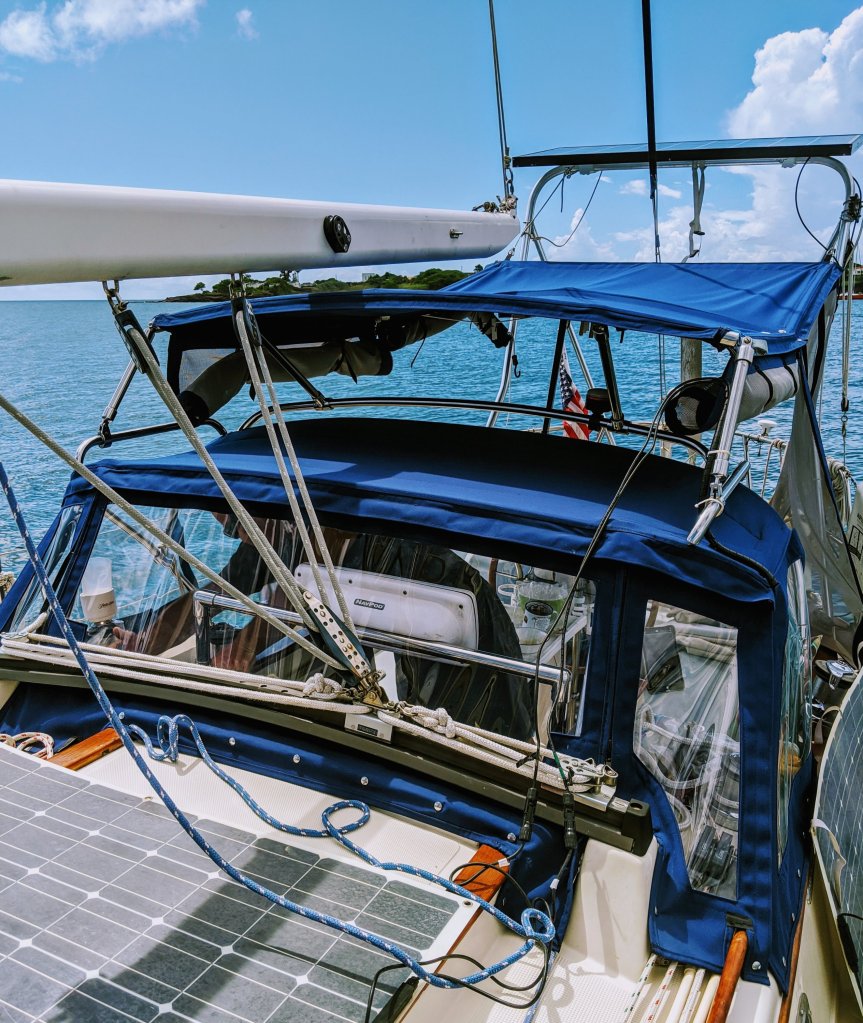
I think everything turned out great! Sanitas looks better than ever, and Capt. Mike and I are really looking forward to a more comfortable cockpit. Bring on the sundowner cocktails, and beautiful tropical sunsets!
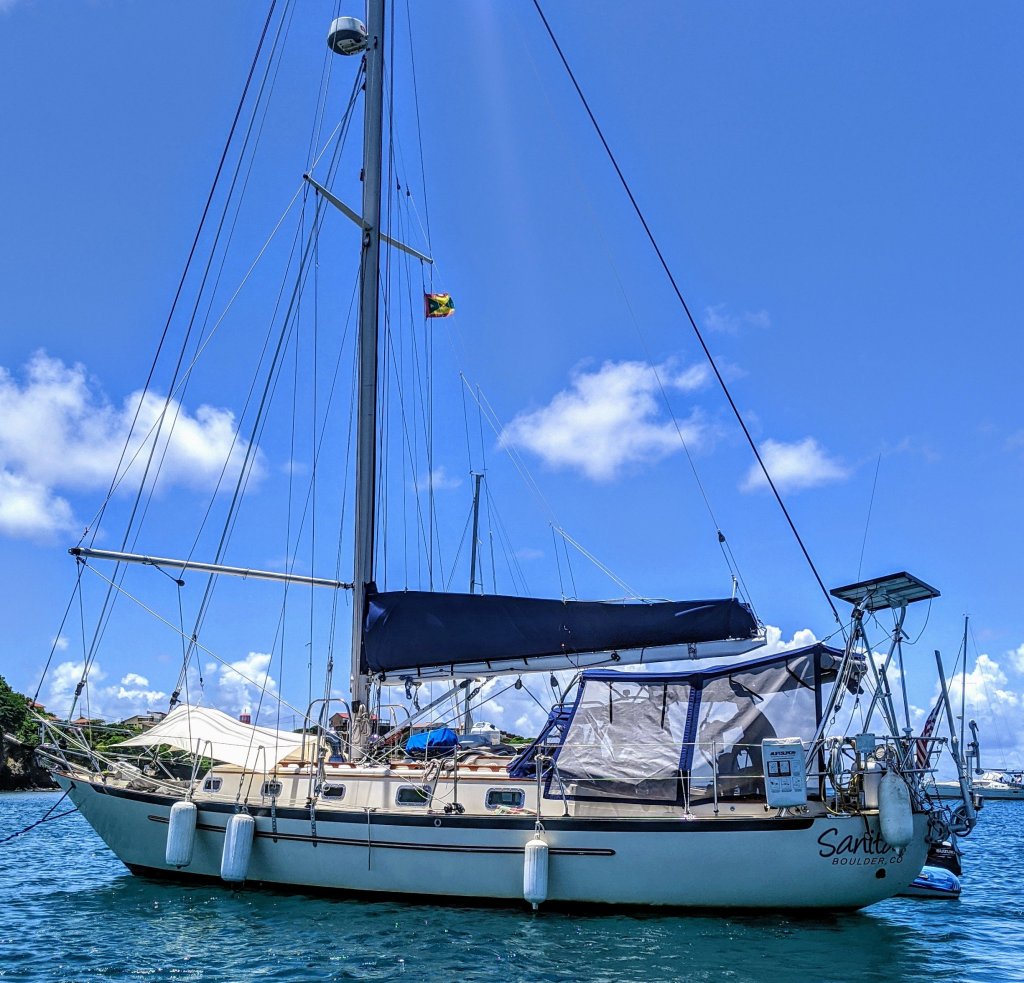
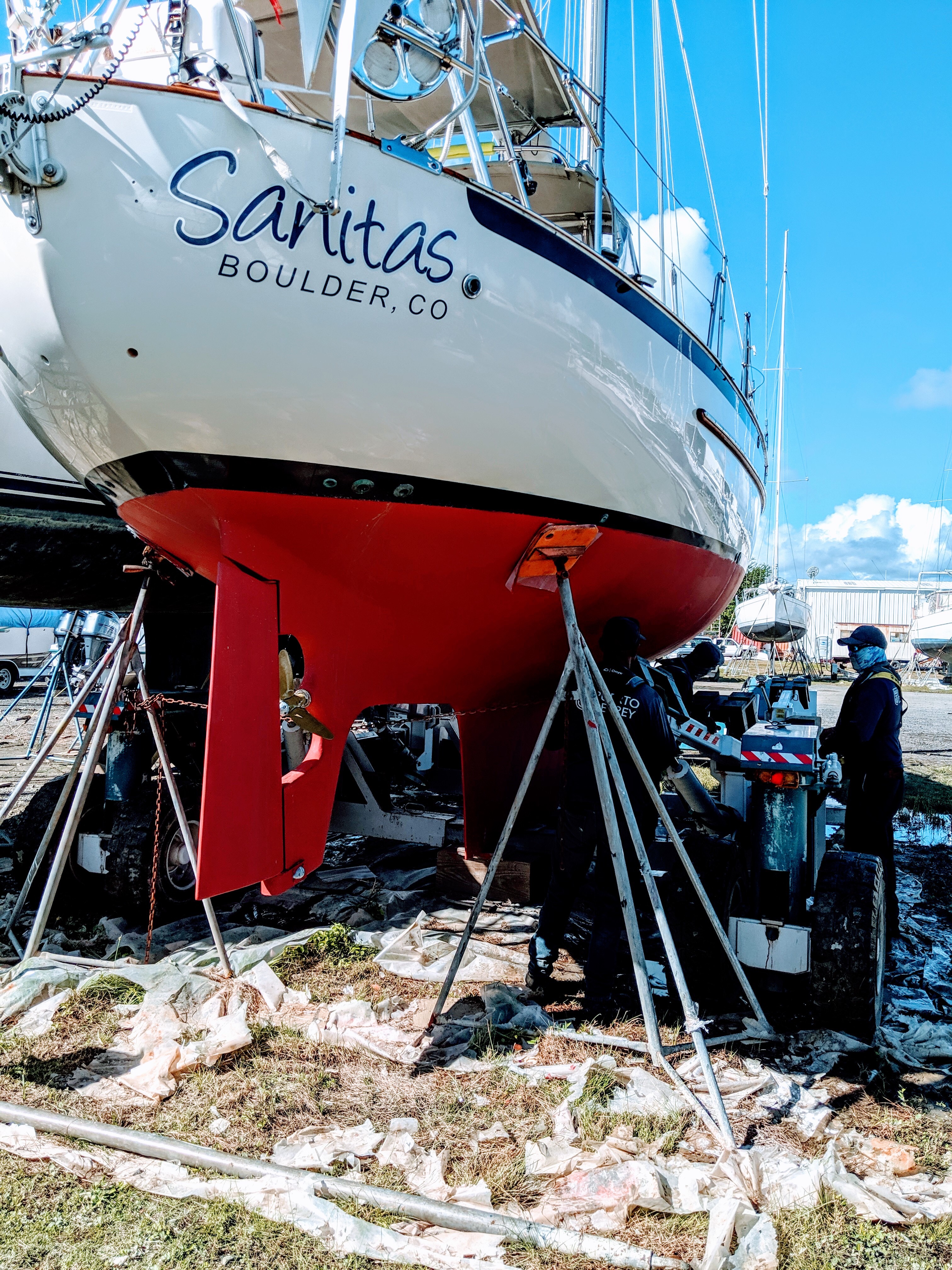
Splash Day! We’re back on the water!

At long last, all of our hard work in the boatyard has paid off and it was time for Sanitas to go back in the water where she belongs. Back in May, we picked a pretty arbitrary date toward the end of November to schedule our put-in. It was the only entry on Google calendar, except for our flight from Puerto Rico back to Colorado for the Skirt Sport retreat. Now suddenly; after six months away, a summer spent in the US and Europe, and nearly a month of sweaty, dirty work in the boatyard, the magical day had arrived.

We went to the marina office as soon as it opened, to pay our boatyard bill and to get our wet slip assignment. Engineers that we are, we showed up at the boat with a long list of things to do before our 10:30 appointment.

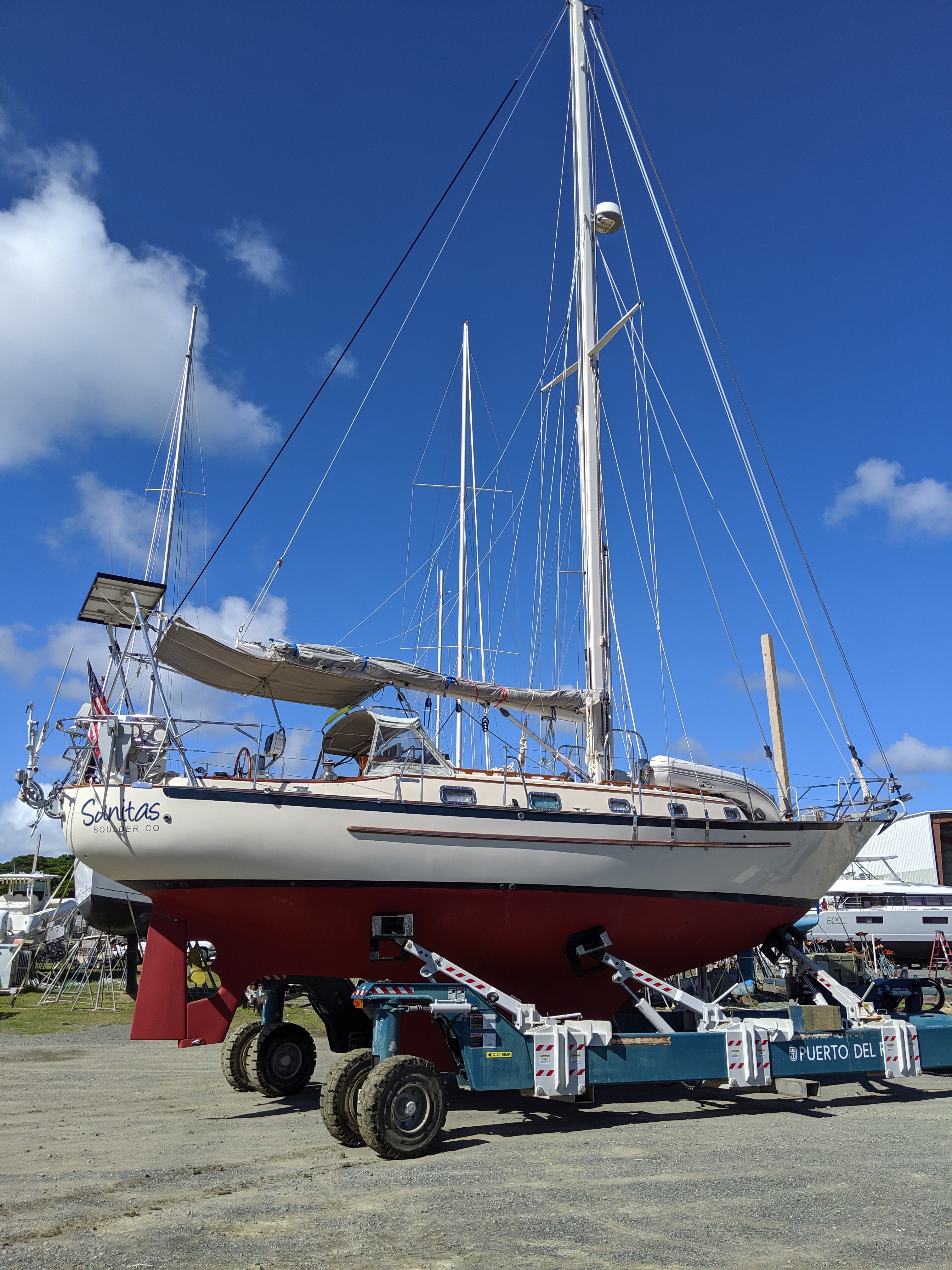
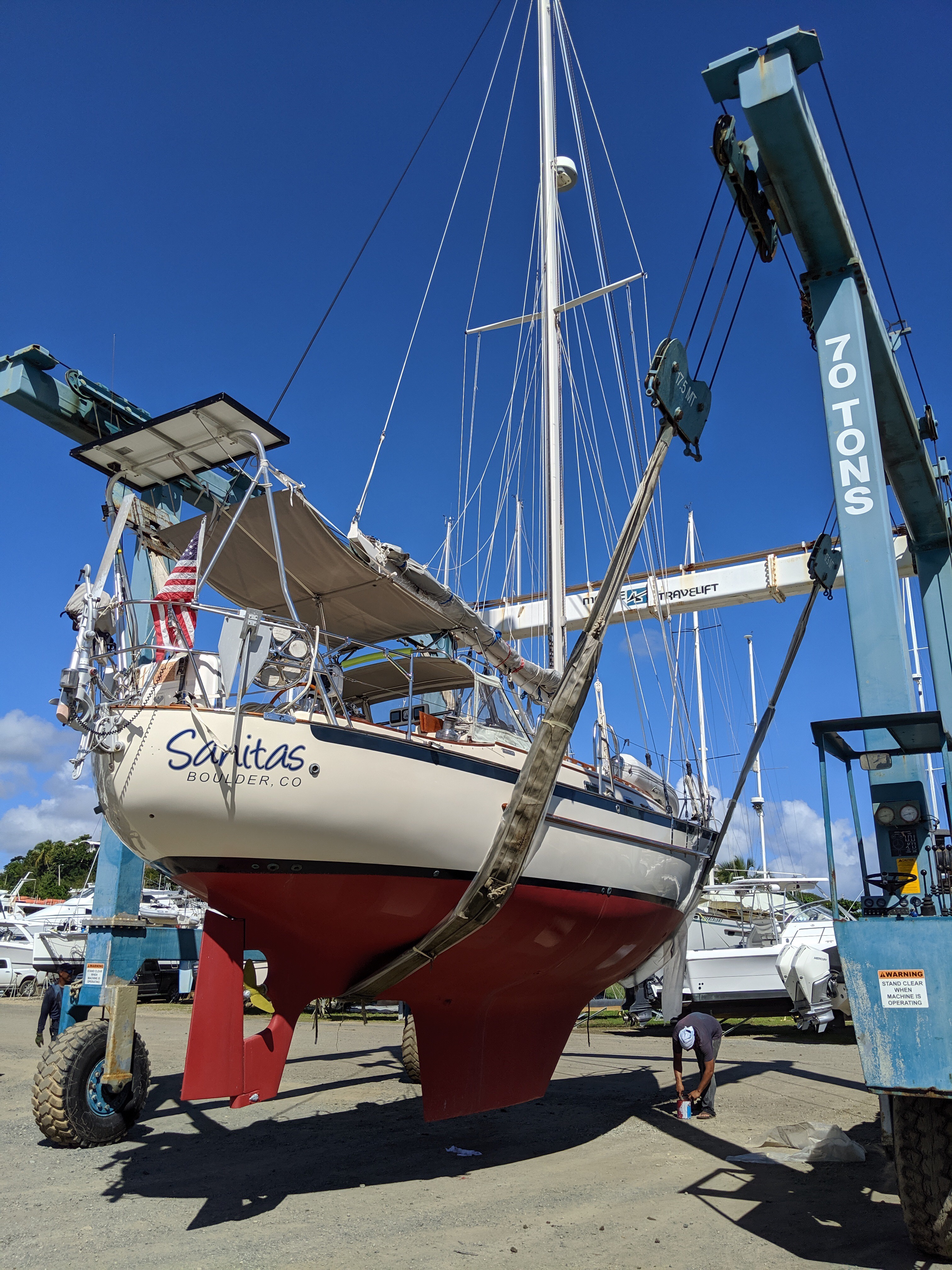
Everything went fairly smoothly, so we weren’t too upset when the travel lift operators showed up early. Sanitas did the long walk to the water in reverse of her spring trip: first a ride on a narrow, hydraulic trailer, then transfer to the slings of the travel lift. We were relieved to see Reuben of RBS Marine show up to touch up the anti-foul paint and to put down plastic before the dock hands lowered her into the slings. We followed the travel lift in its slow, lumbering transit out of the boatyard and to the water’s edge.

When they lowered Sanitas into the water bow-in, we clambered over the bow spirit and climbed aboard, checking first for leaks or open throughcocks, or anything else that could cause us to immediately sink. All looked good, so we signaled the dockhhands to tie us into the slip, and to drop the slings. That’s when everything went pear-shaped.

I turned the key to start the diesel motor and – click click click – nothing happened. We checked fuses and battery settings: nothing. Capt. Mike went below and started throwing things all over the saloon the get access to the engine, the battery banks, and the switches and lots of tools. He pulled up the cockpit floor to get access to the back side of the engine. The dock master started yelling at us; “You need to start your engine or call Sea Tow. See that boat right there? They’re waiting to get hauled out from this slip.” Now it’s pretty much impossible to work through a problem in a calm and reasonable manner when somebody is yelling at you and pointing at the clock. It made me very cranky, and Capt. Mike quickly hit the limit of his troubleshooting abilities without taking time to ready the bugs or research online. We confirmed power was getting to the starter, but that’s it. So we texted Bianca, our boat caretaker, and asked if she knew of an electrician or diesel mechanic who could help us.

By this time, I’d been ignoring the dock hands or responding “ok, ok” for about 15 minutes and they were getting very irritated with me. The new threat was, “We’re going to bring the lift back and haul you out again in two minutes” an action that would have cost us several hundred dollars NOT in the cruising budget. Just then Bianca sped up in her truck and introduced us to an electrician who’d been working on the boat next to her in the yard. He hopped aboard and followed Capt. Mike below decks to investigate.in less than five minutes, he found a grounding wire that had hosted free, reconnected it, and magic! The engine started right up on the next turn of the key. We handed him a couple of 20s, helped him back ashore, and we escaped the put-in slip at last.

I’m still pretty angry about the whole thing. We had that appointment from 10:30am to 12:30pm reserved for six months. There was no call for them to try to fit an extra boat haul out during our very expensive appointment window. It’s the only thing so far I have not been happy about in our Puerto del Rey experience. But all’s we’ll that ends well, and I’m grateful that we had a good relationship established with a boat caretaker who could get us a resource to solve our problem so quickly.

AND…at least Sanitas is back in the water, in a slip, and we can start to get back into cruising life!

Boatyard Blues

You know when you reach the point in a home improvement project where you have to go to Home Depot at least once a day? Well that’s where we are with boat projects. But instead of a Home Depot, it’s West Marine. And because it’s boat repair stuff, everything costs at least five times what seems reasonable.

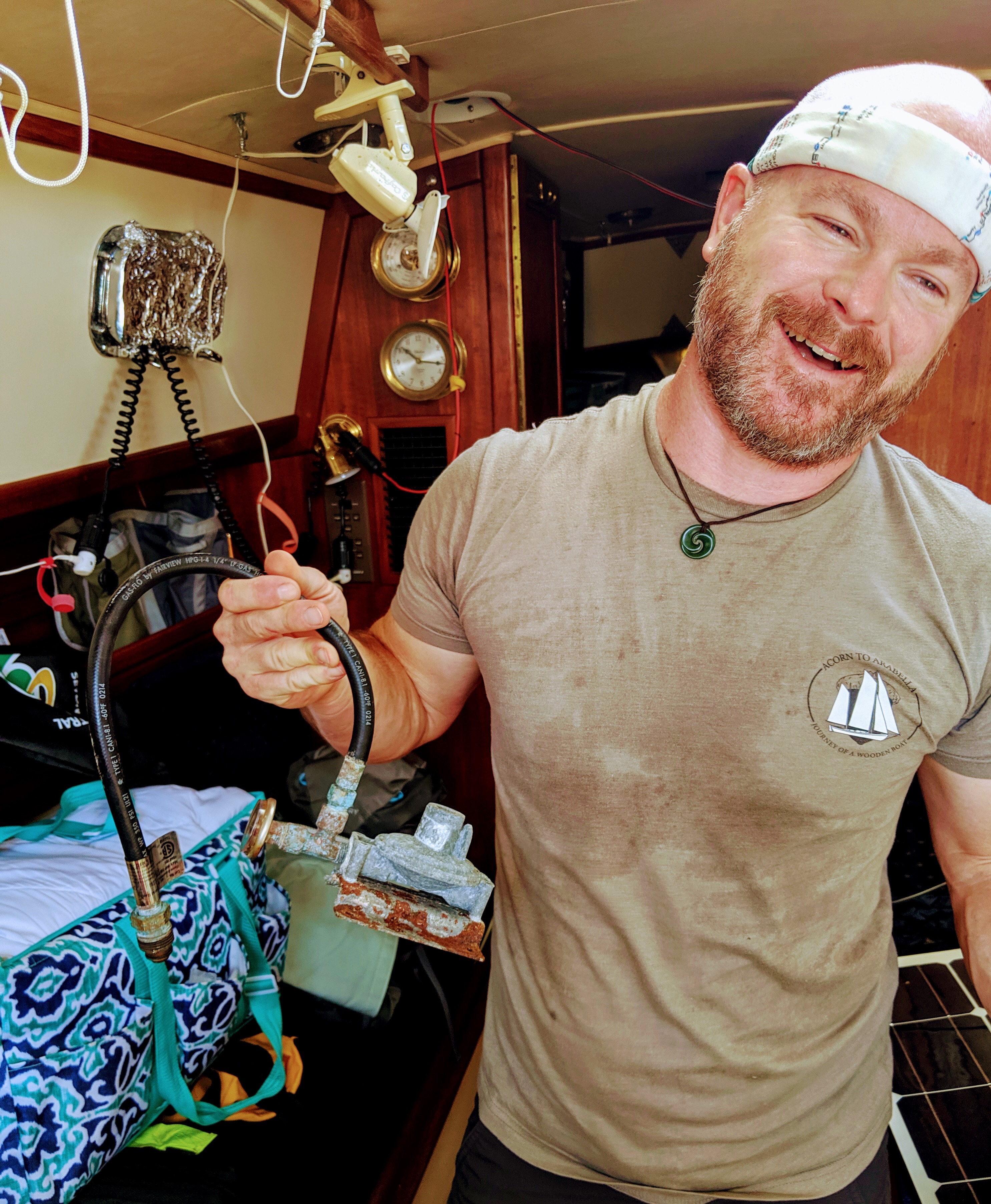
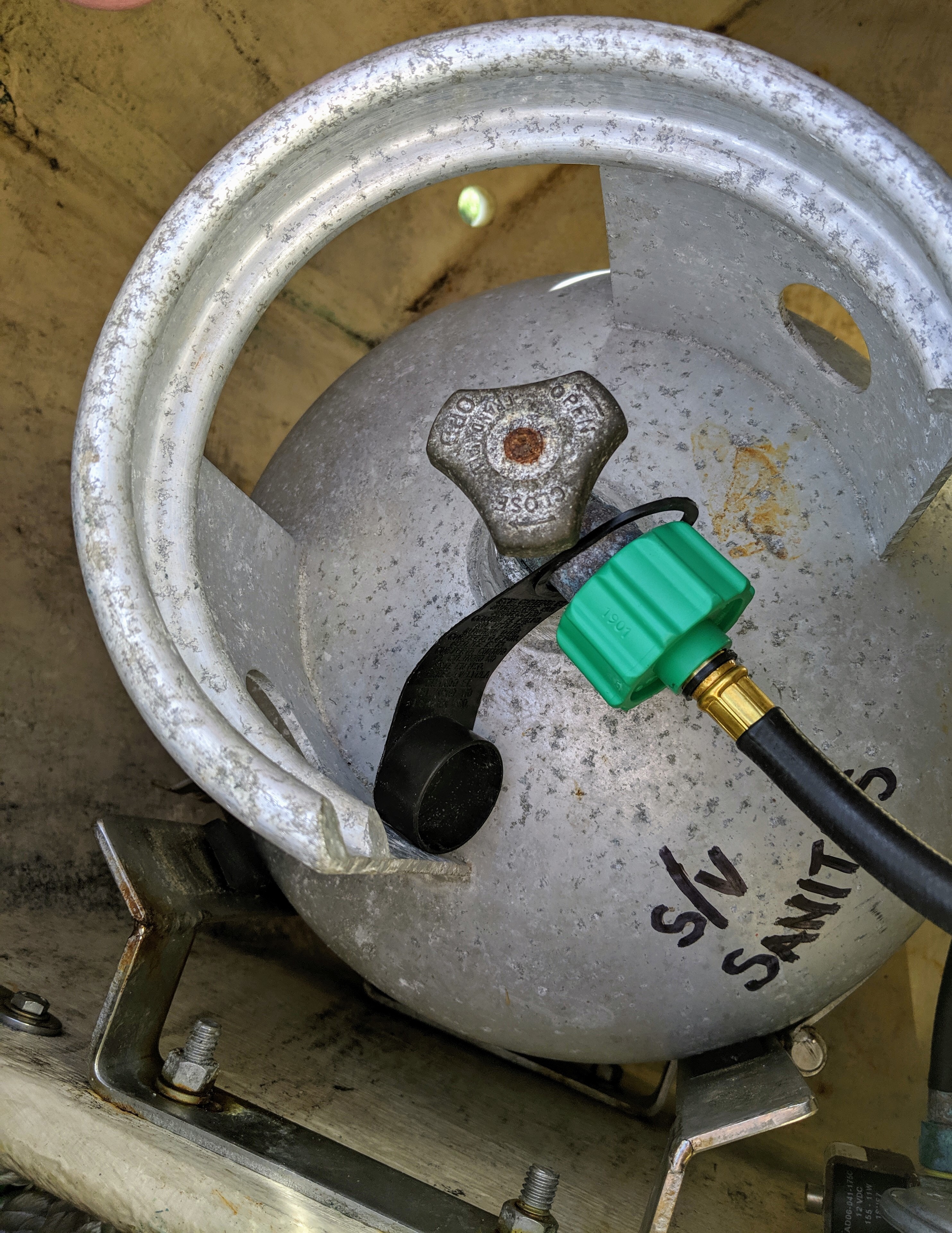
But first, for those of you who were wondering, we fixed our propane leak! After sleeping on it and returning fresh to the troubleshooting, Capt. Mike tracked the leak down to a faulty regulator as many of our boating friends successfully guessed. However, we couldn’t find a replacement locally – not at either of the Skipper Shops, West Marine, the propane store…. so thank goodness for the internet and companies that ship to Puerto Rico. In less than a week, we received a new regulator from Defender, and it was a pretty straightforward fix. We should be good to go to cook once we move aboard, and no more fire hazard. Hooray!

We didn’t sit idle while waiting for our part to be delivered. We’ve installed a new cockpit table, which will greatly improve our sundowner experience:

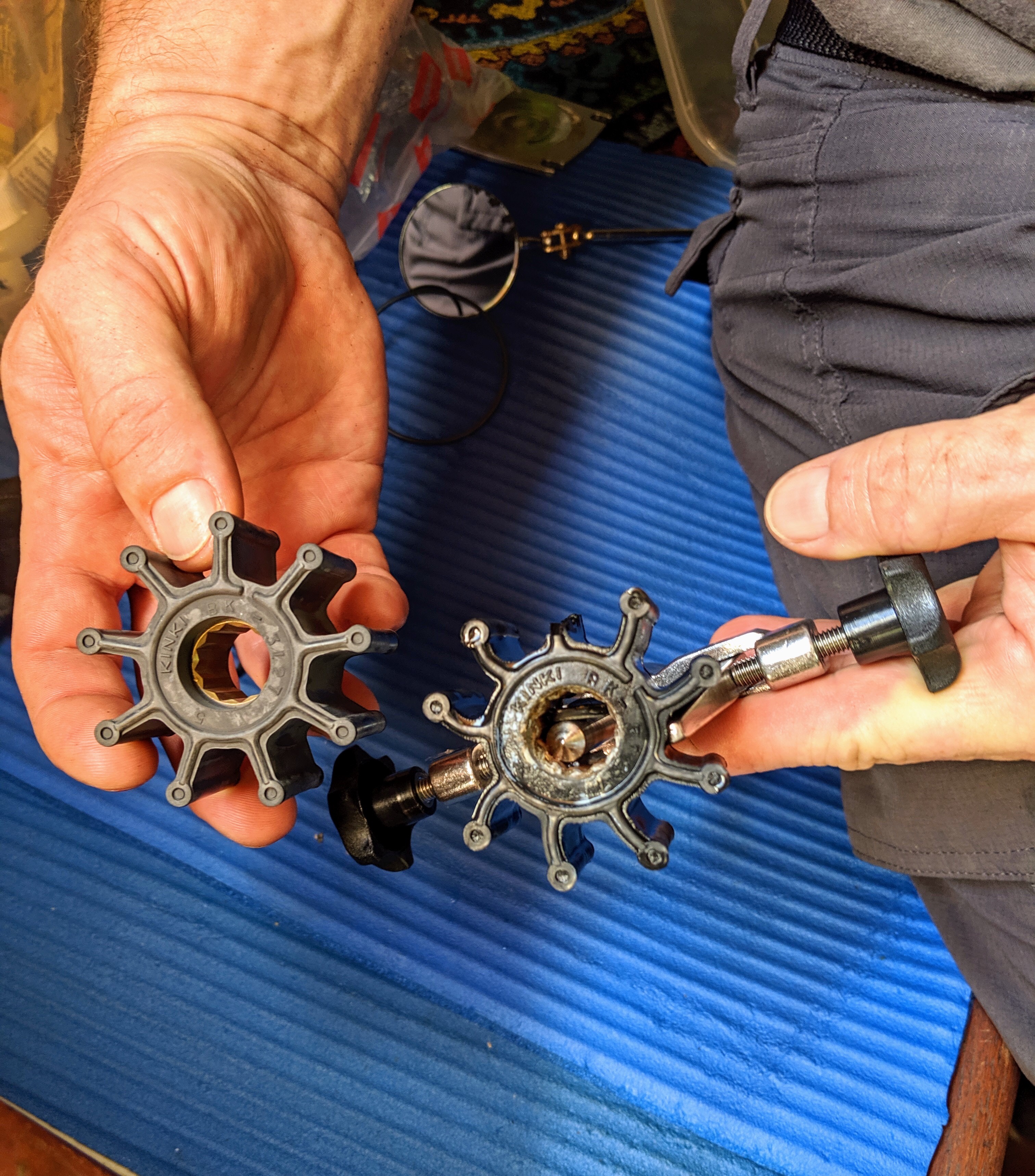
Changed the impeller on our diesel motor and found that unbeknownst to us, it had already started to fail:

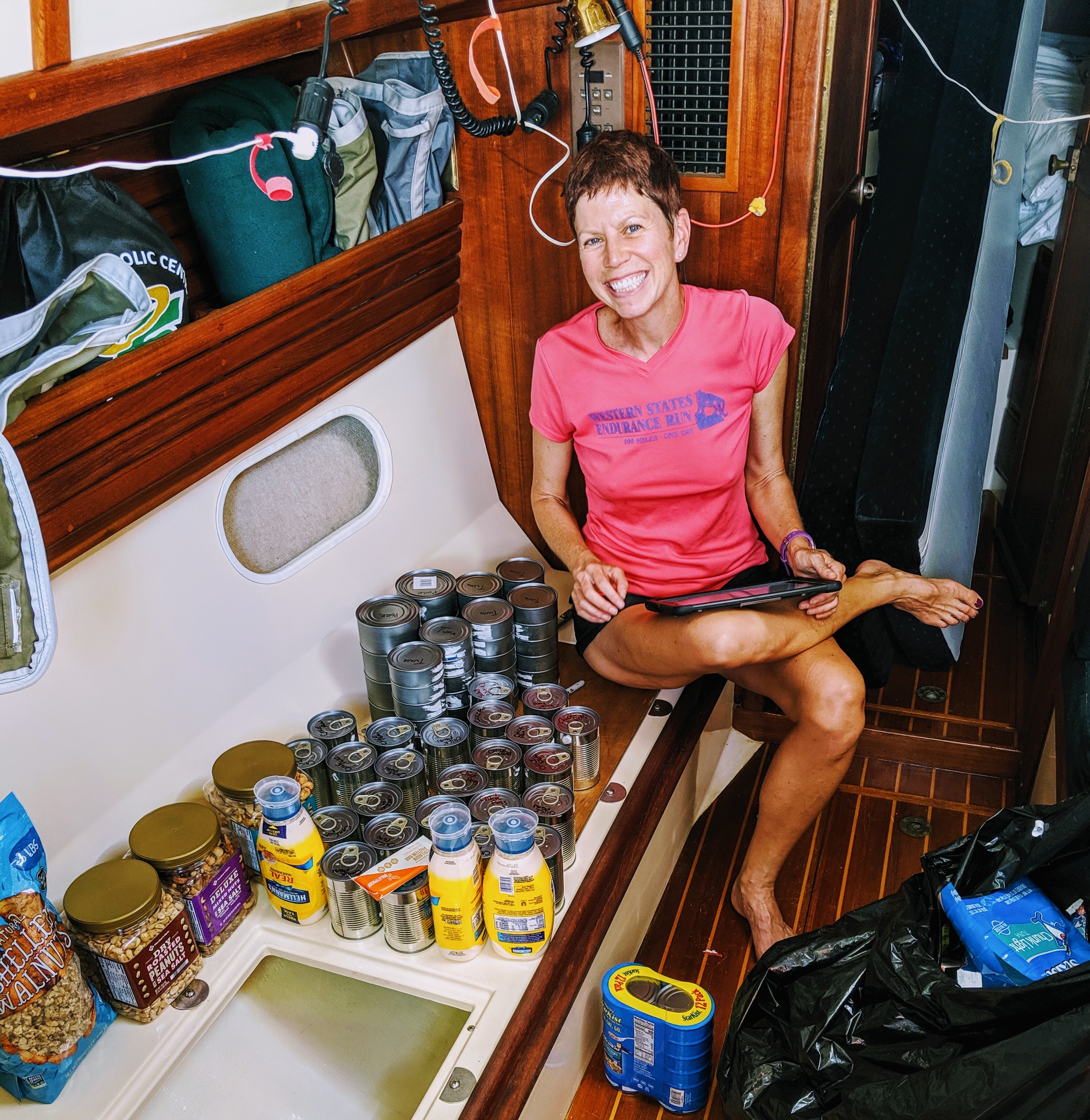
And did our first big grocery shopping trip of the season, stocking up on canned goods and snacks at Sam’s Club, so that we won’t have to pay island grocery store prices for pantry staples. I have a new method for tracking an inventory on provisions on my iPad. Not only do I track how many of each item we have aboard, but the trickiest part is tracking which hard-to-access hold it’s in, so that I can find it when I want it four months from now.

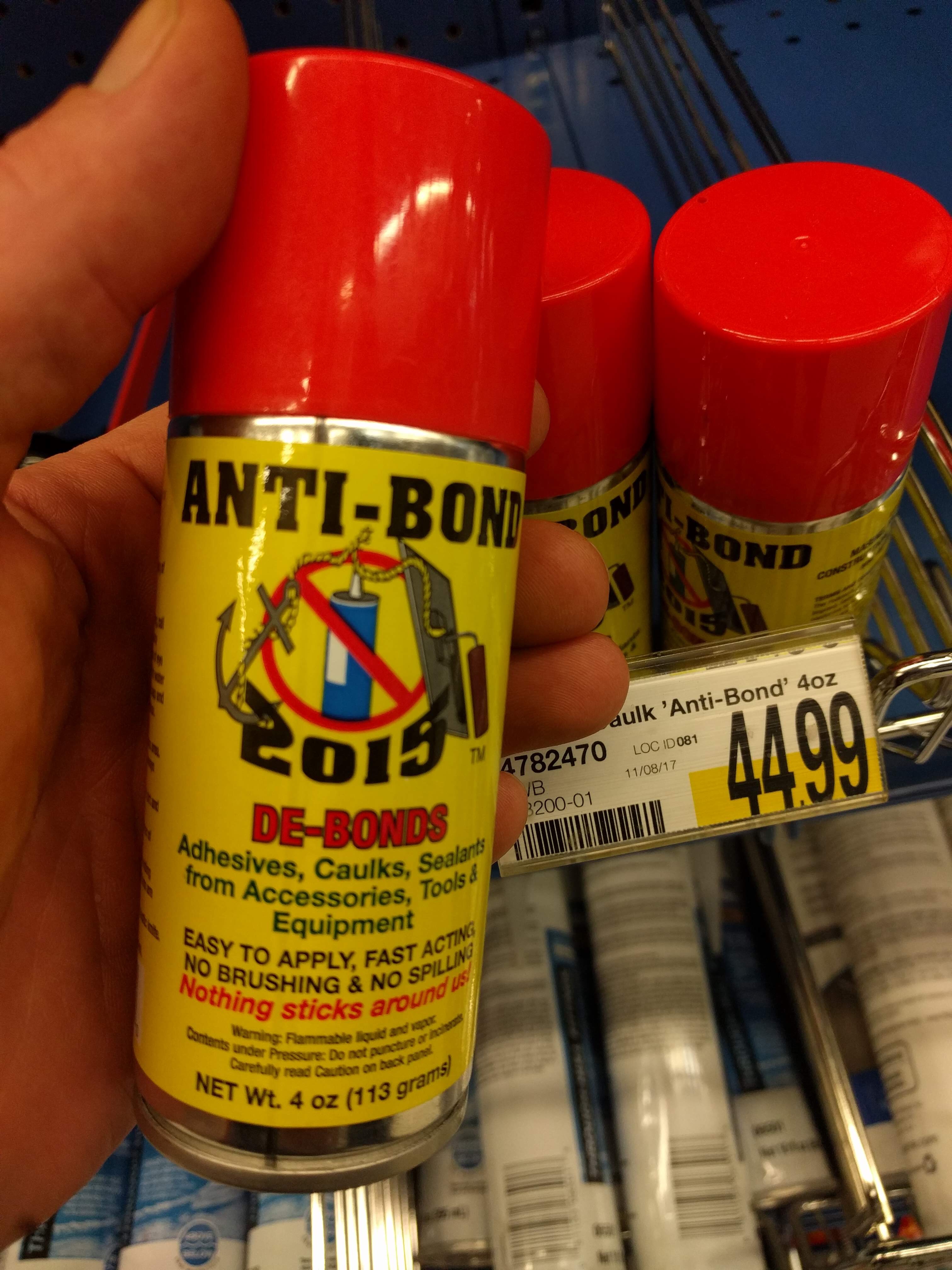
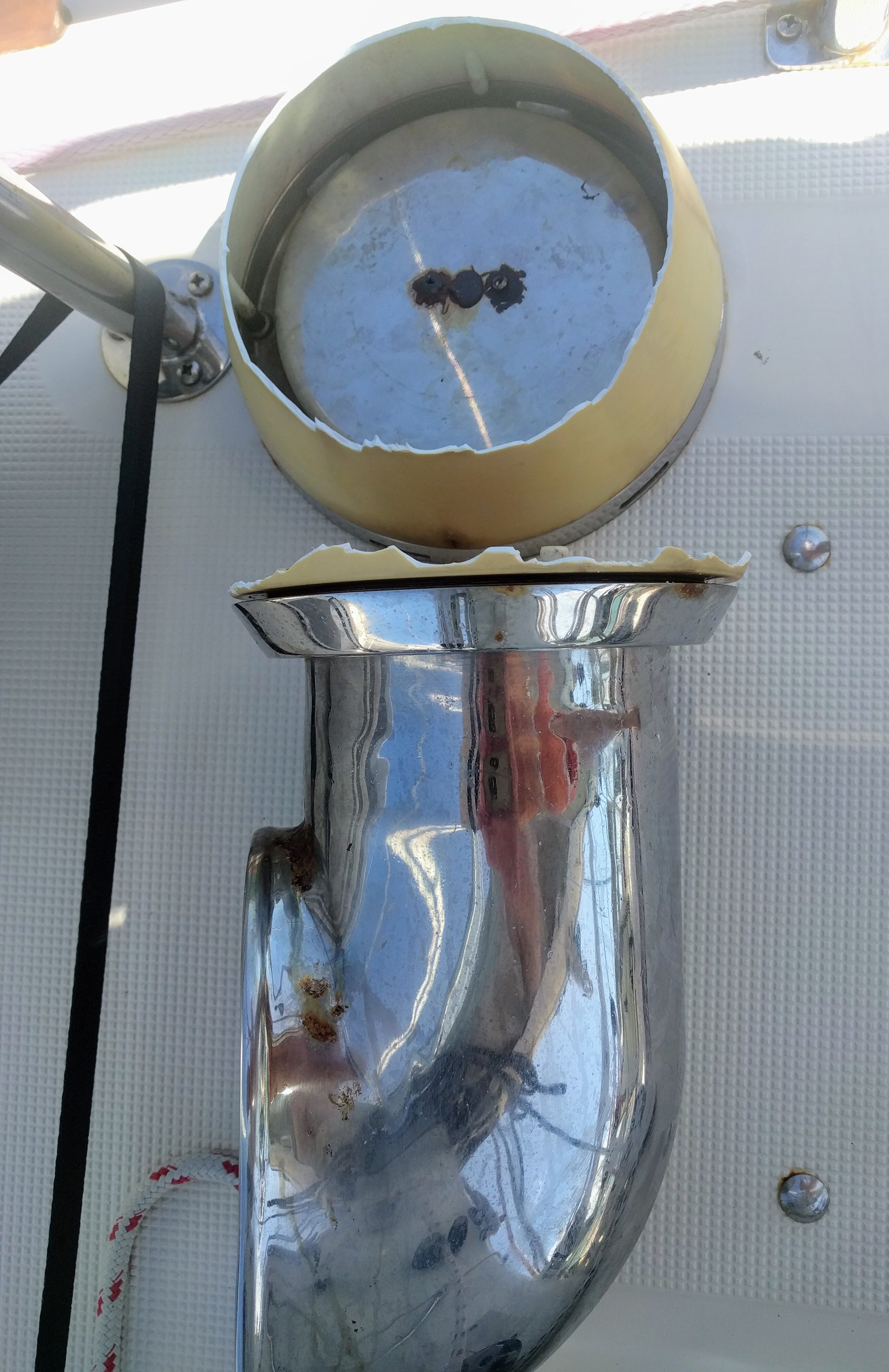
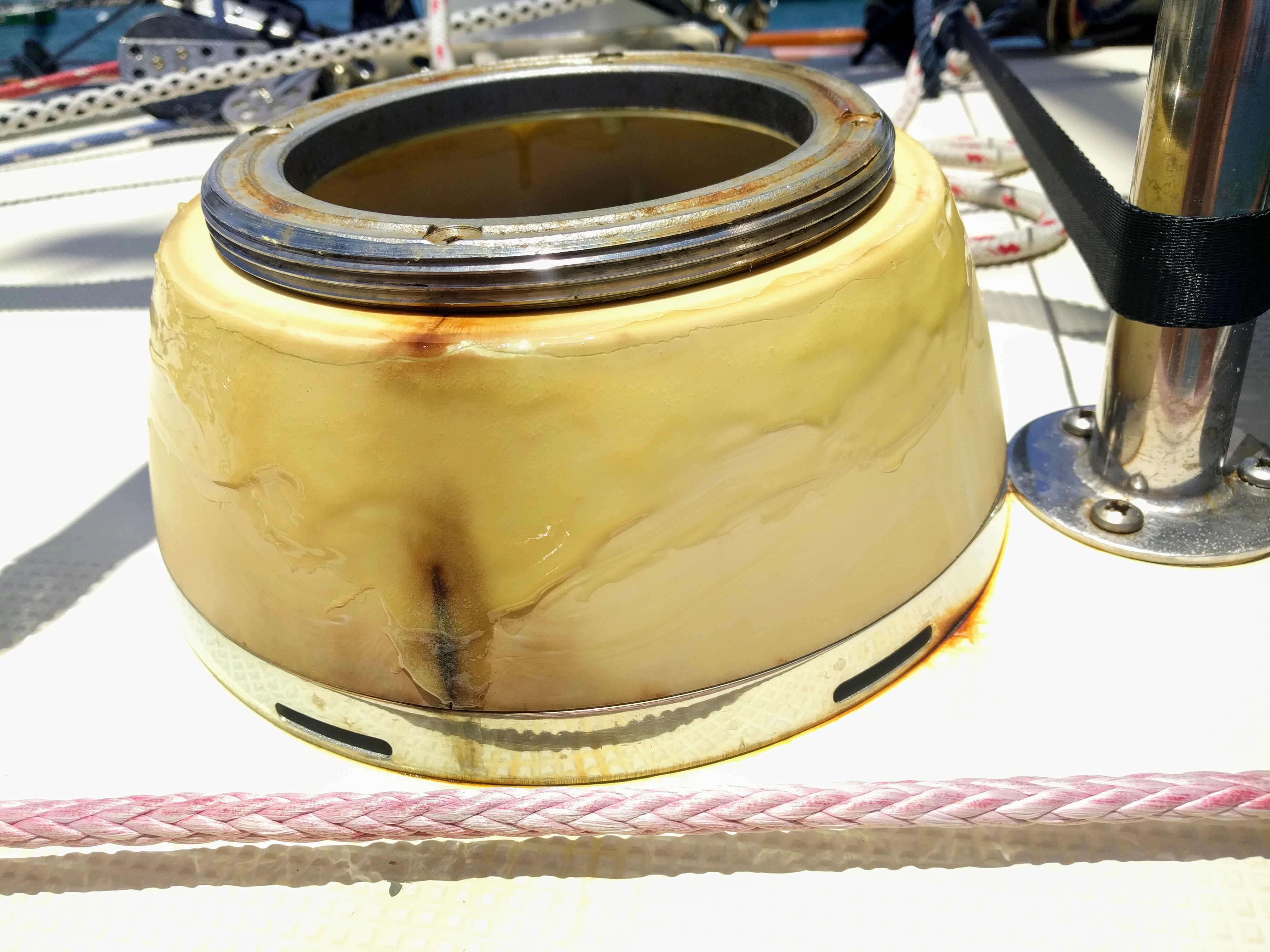
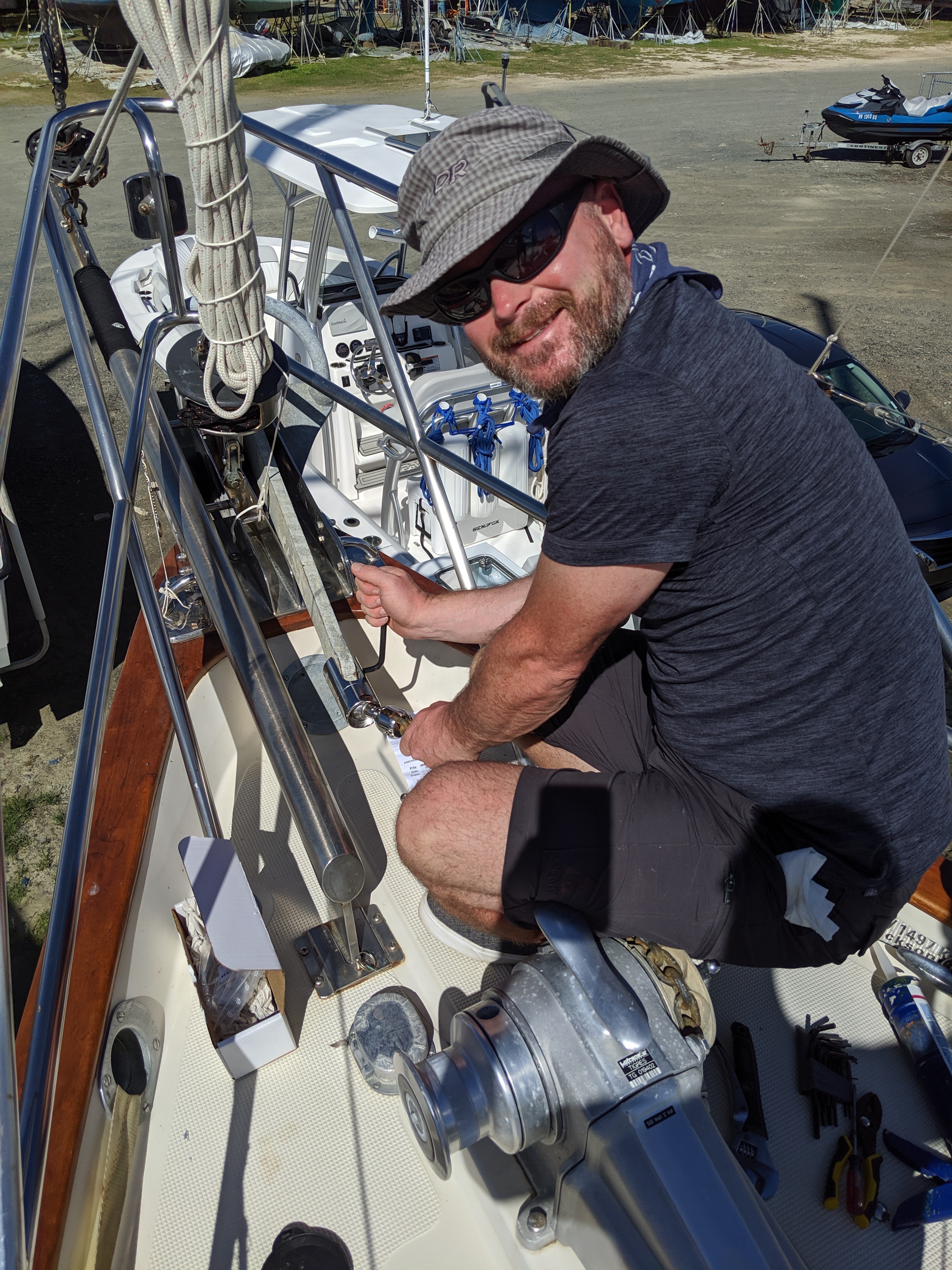
But back to that overpriced can of anti-bond in the first photo in this blog post … this was an unexpectedly difficult project to replace the dorade boxes (low profile round thingies) for our cowl vents (shiny stainless steel curved thingies) These vents let fresh air into the boat while keeping sea water out. Because yes, we get waves and spray all the way up onto the top deck while we’re underway. The dorade boxes contain a mushroom vent that you can turn to open, letting air in, or close, tightening things down in high seas. But ours were made of plastic and who knows how old. So they had cracked, leaked, and oozed rust. Finally, toward the very end of last season, a jib sheet under pressure caught the starboard cowl vent and popped it right off! Capt. Mike thought fast and dashed forward to grab it before it was swept overboard, saving us at least $1500 in replacement parts. At the time, he slathered a thick layer of epoxy on it, and hoped for the best during our last few weeks of the cruising season. Here are some photos of the damage:

We did not expect this to turn into such a difficult project. It turns out the old plastic dorade boxes were attached to the deck with some sort of permanent adhesive. Yes, I said permanent. Mike made yet another trip to the marine supply store and bought every utility knife and blade they had in stock and spent one whole day scraping away one millimeter at a time.

Six hours and eight utility knives later, Johnny from Ancla Marine asked “What are you trying to do?” and when Capt. Mike explained, Johnny sent us back to West Marine for a miraculous spray can that supposedly dissolves all adhesives. We were skeptical, so to improve our odds of success, we also stopped at Pep Boys and bought all of the utility knives they had in stock, plus a set of pry bars as an impulse buy. We sprayed around the base of dorade #1 and let it sit over night.

The next day was nothing short of miraculous. We both worked together; I put all my weight on a pry bar so that Mike could get a fraction of an inch of access beneath the dorade. Then he’d spray a little miracle juice and return to scraping. I’d move the pry bar into the space he just created and we’d start the spray-and-scrape process all over again. In about an hour, we’d accomplished what we couldn’t the day before. With a sucking noise and one last strong push on the pry bar, the dorade popped right off. And now that we had our system down, dorade #2 went much faster. By midday, we have both boxes off, and could move up to cleanup and prep for the reinstall. Thanks to Johnny and one $10/ounce bottle of miracle juice.

Here’s before and after on the inside of the boat:

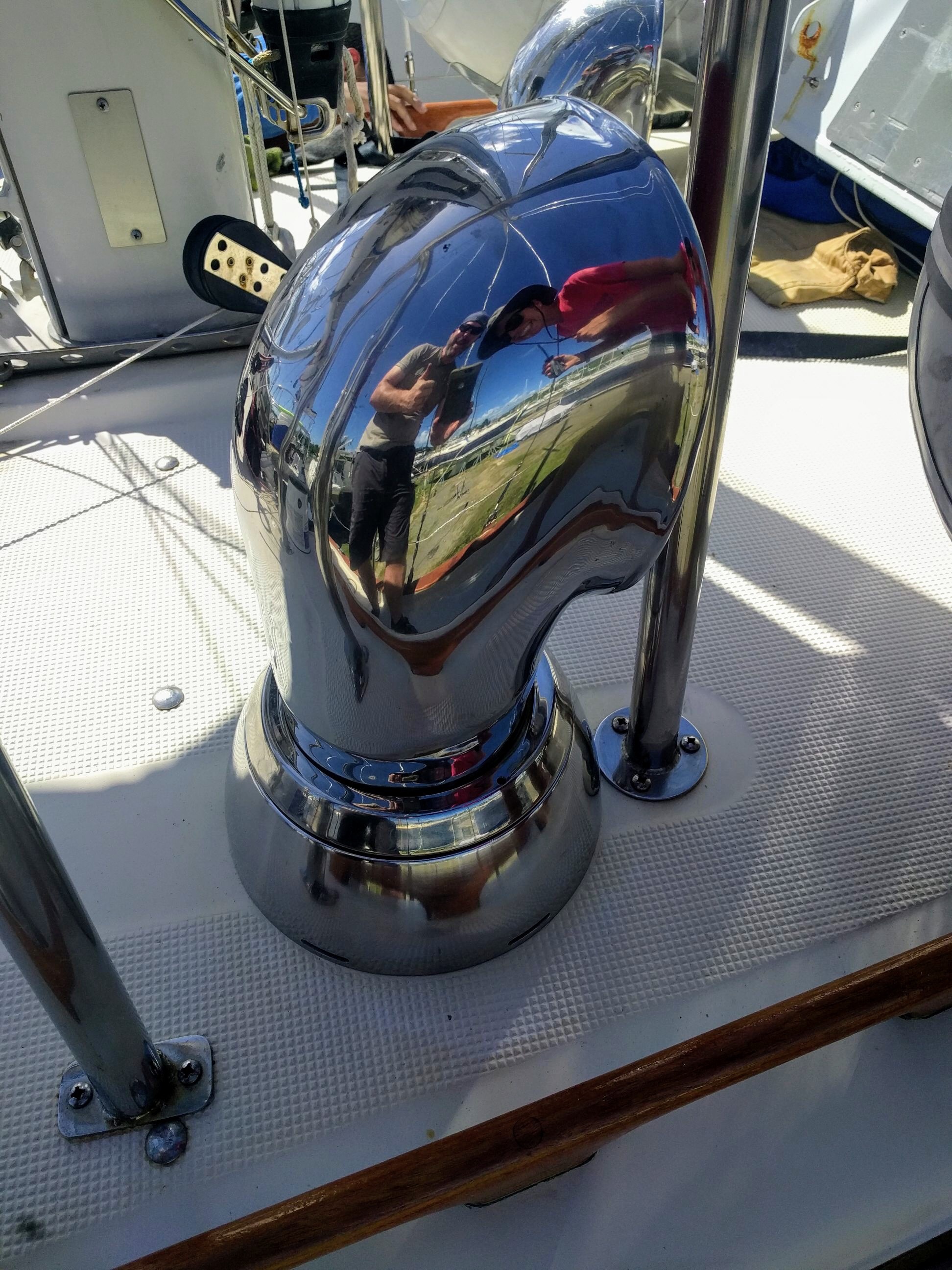
After scraping off the remaining adhesive and cleaning the surface with acetone, it was a pretty straightforward job to install the new dorades. AND we only had big open holes on the top of our boat during one tropical downpour! Don’t they look all nice and shiny now? I can see my face in it!

We’re Back!

After 5 months, 4 countries, 3 states, 1400 km of hiking, and visits with countless friends and family members, summer vacation is over and we are back in Marina Puerto del Rey in Fajardo, Puerto Rico! We’re not allowed to live aboard in this boatyard, so we’ve rented an Airbnb just up the hill with a lovely view of the marina.

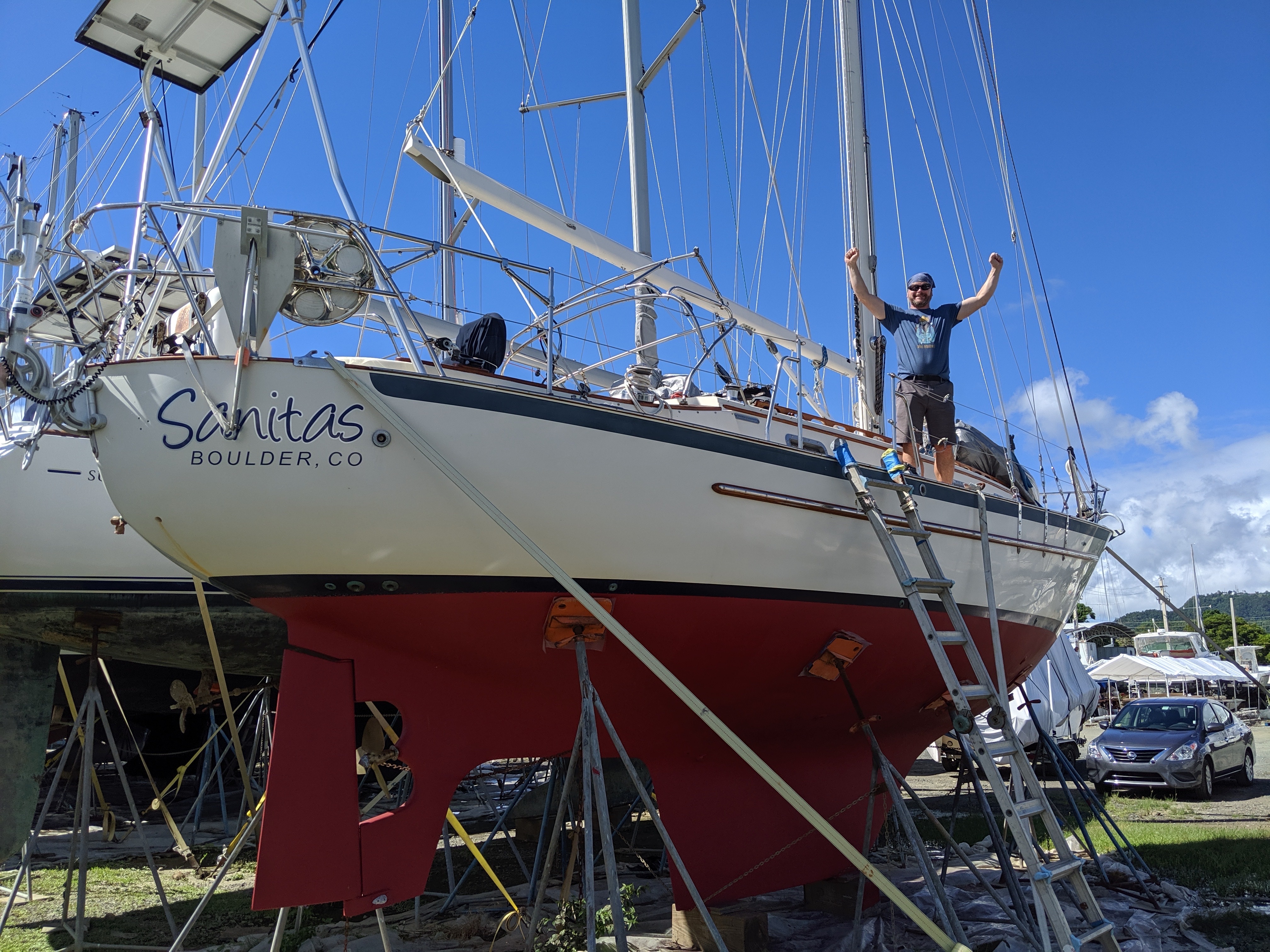
Sailing Vessel Sanitas is still on the hard in the boatyard where she has weathered hurricane season quite nicely. That’s partially thanks to our boat caretakers, Bianca and Johnny, who checked on her twice a month and performed extra storm prep during tropical storms Dorian and Karen. It’s also definitely due to the hard work Capt. Mike and I did in May to make sure everything aboard was as storm-ready as possible. We’ve done a thorough visual inspection and so far, so good – no mold or mildew, no bugs, no water in the bilge, nothing obviously broken. We’re keeping our fingers crossed that we continue to have no big surprises as we start up the systems and as we move into the water.

This month of preparation for the cruising season is the most expensive month of our year. We’re still paying boatyard fees for Sanitas and rental fees for a storage unit on land, as well as renting an apartment and car for daily use. We’re stocking up on spare parts, boat maintenance supplies, and canned and dry goods for six months. We’re paying for the only boat maintenance we don’t do ourselves; sanding and repairing the hull, applying a new coat of bottom paint, and polishing the hull. And we’re placing a new Amazon order practically every other day (did you know Amazon Prime free shipping works in Puerto Rico? Instead of 2-day shipping, it takes about 4 days, but who cares? It’s fantastic!) It makes me super anxious as we spend all this money, but I know we’ll be living at anchor and eating through those canned goods soon enough, spending practically nothing, so I try not to freak out.

This is our third time preparing for a winter in the Carribean. In fall of 2017 we had just bought Sanitas. She’d been out of the water for months while she was up for sale, so we found lots of surprises when we arrived at the boatyard in St Petersburg and set to work. The biggest, costliest project that first year was replacing the failed diesel fuel tank. In 2018, after surviving our first year of boat life, we returned to the boatyard with a massive to-do list of projects and things we needed to change to making living aboard a small sailboat more comfortable and our lives a bit happier. Each time, we spent much longer in the boatyard than we’d anticipated. But the investment of time and money up front made our cruising season go more smoothly. I’m hoping that third time’s a charm and that we know our boat well enough by now (and we’ve maintained her well enough as we go) that we can break free of the boatyard faster this time. I’d like to put in the work, and then hit the water! Let’s get to the the rewarding and fun part of cruising faster this time, ok?

Knock on wood because anyone who has ever owned a boat knows that there WILL be surprises – it’s just a matter of how serious and how costly… Ok, now back to work!

Crossing the Gulf Stream to The Bahamas …. Attempt #2

After our pit-crew efficient 15-hour stop in Boot Key Harbor, we were on the move again. Anchor raised, we headed north, planning to leave the Hawk Channel at Angelfish Cut and aim our bow for Bimini. But after listening to Chris Parker’s marine weather forecast on the short wave radio at 6:30 am, we learned that a cold front would pass through Florida tonight, and we should wait for the calm after the storm to make such an ambitious crossing. So we consoled ourselves with another glorious day of sailing along at 6 knots and anchored off Rodriguez Key.

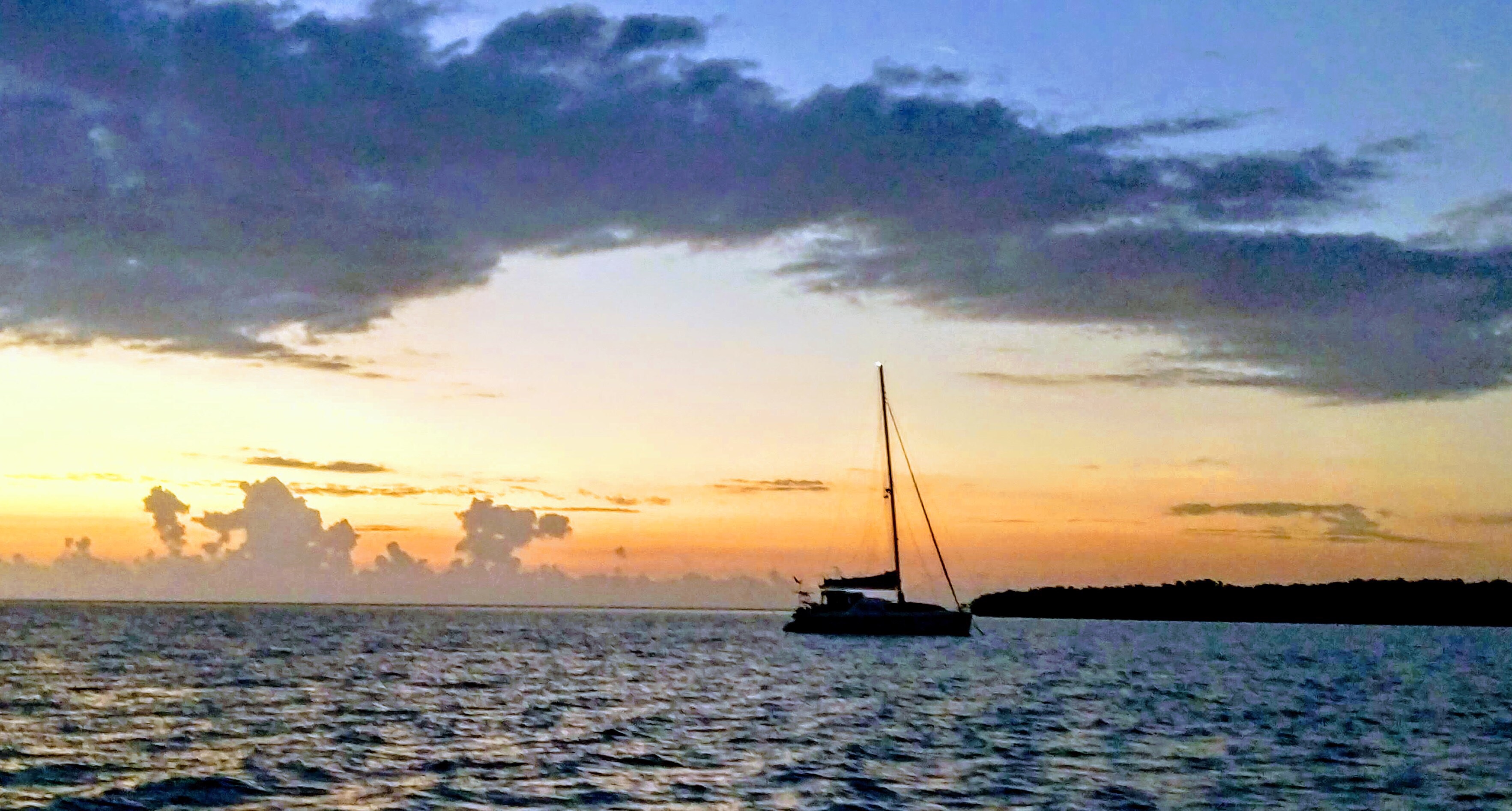
Now it really feels like we are cruising! Anchoring near just a few boats instead of crowded in a marina or mooring field, cooking a one-pot meal and digging into our canned goods, watching the sunset, moonrise, and sunrise away from city lights.
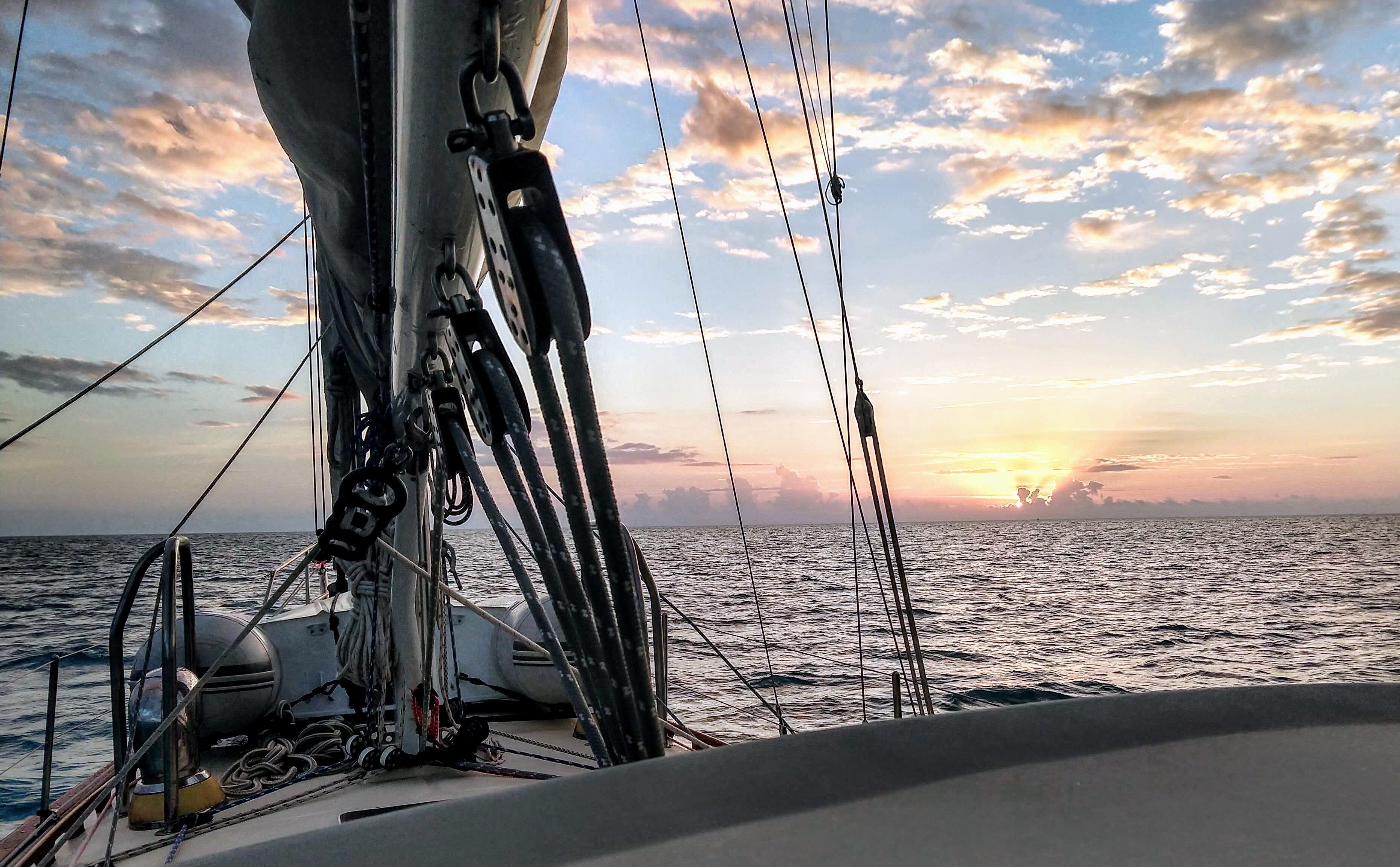
With that sunrise came a shiver of excitement. This is it! We’ll be in Bimini by nightfall, and will catch up with SV Eileen! Perhaps somebody should have knocked on wood.

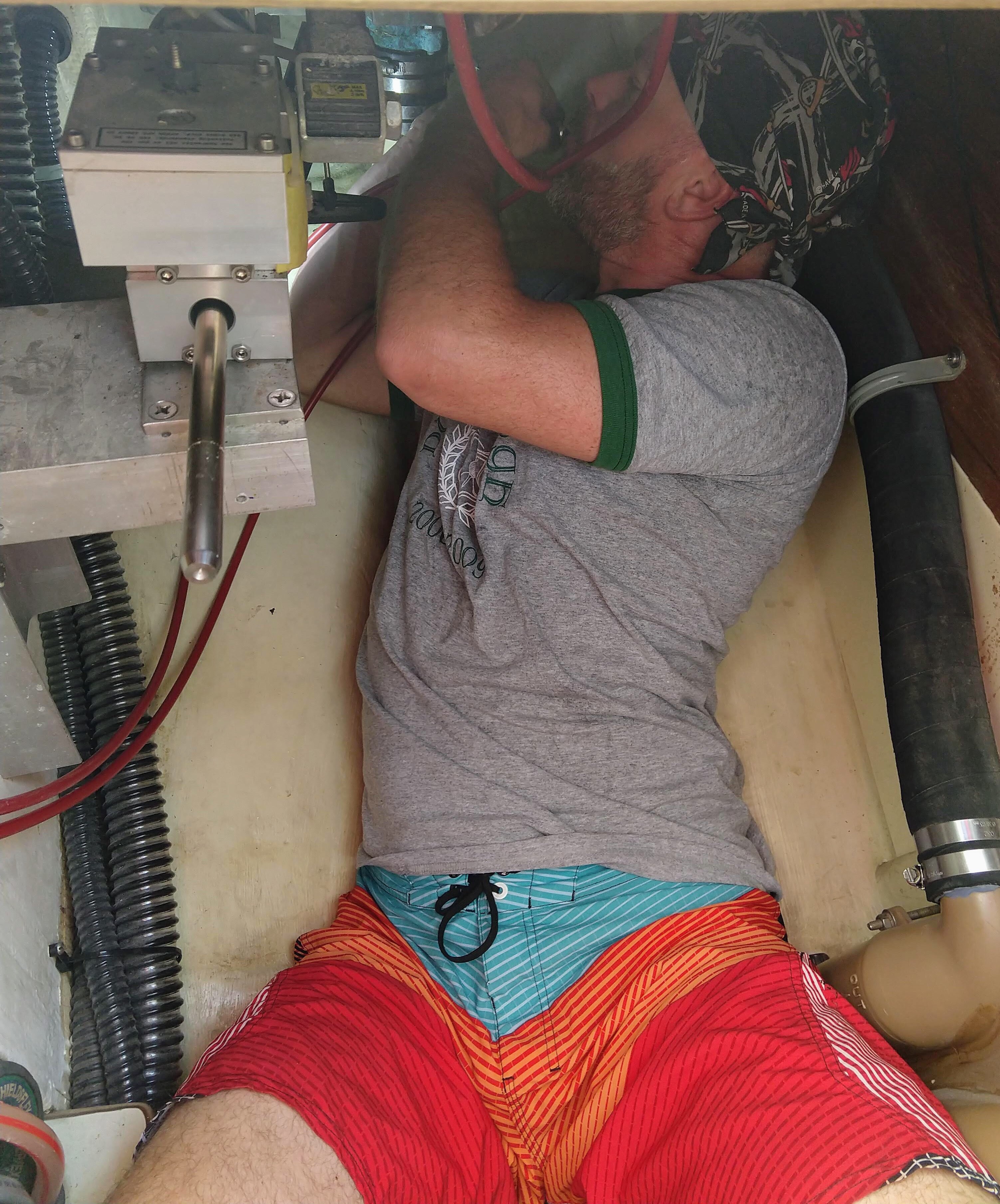
A couple hours into our sail, and before we’d even left the protection of the Florida reef, Capt. Mike noticed that the bilge pump was running frequently. With calm seas, there was no real reason for so much water entering the bilge, so he lifted the engine compartment to investigate. A steady stream of water was entering the boat from the rudder…and the stream increased the faster we moved. Huh.

A couple of Google searches later, we’d narrowed it down to the rudder packing gland. Fixing the problem might be as simple as tightening three bolts….or might be as complex and costly as lifting Sanitas out of the water and replacing the packing material. With a spare part we did not currently possess. Double drat! Either way, we decided not to leave the USA with a big leak of water into the boat. So guess what? For the second year in a row, we’re making an unscheduled stop in Miami. Triple drat!

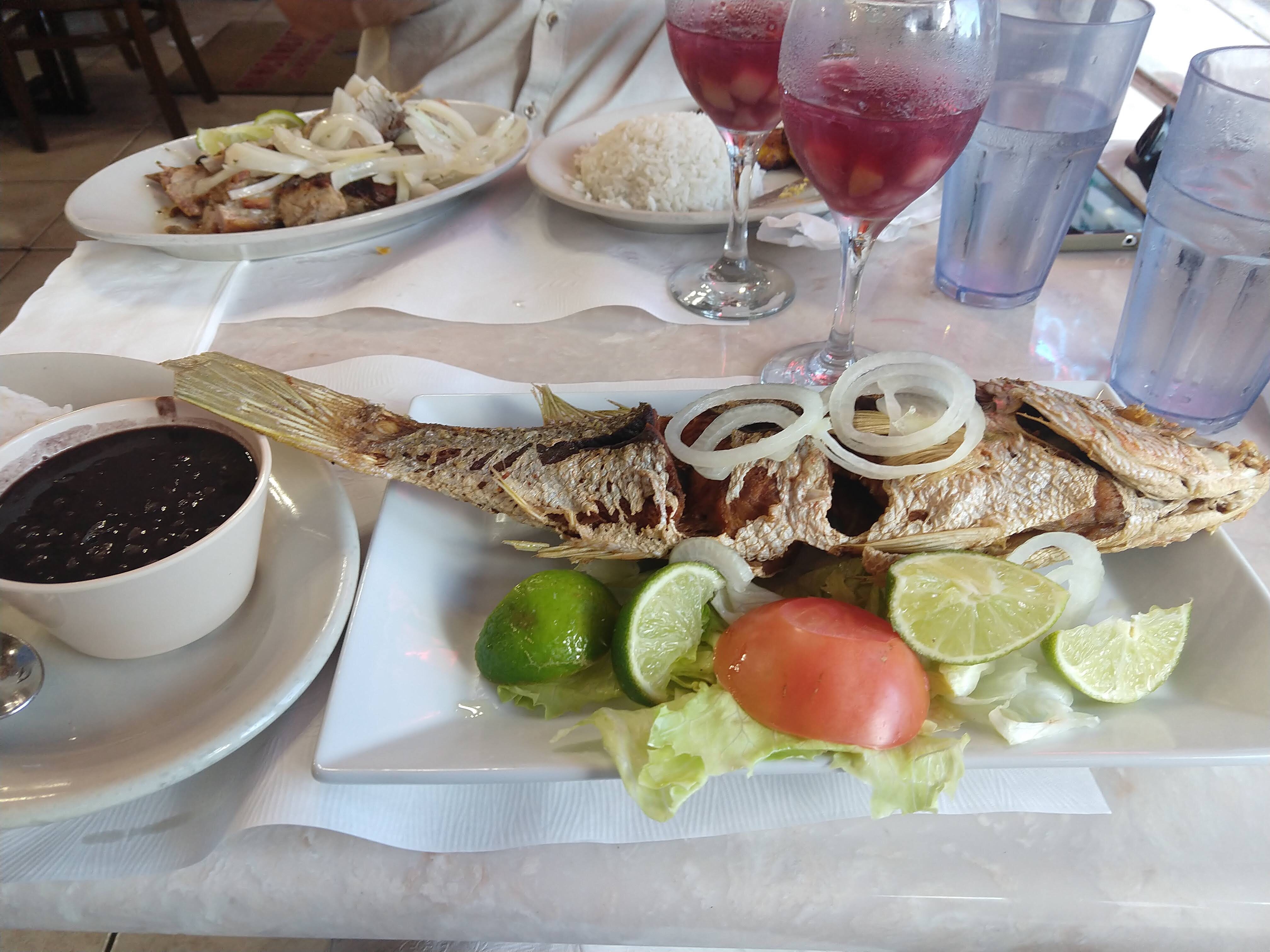
But we made the best of it this time, and anchored in lovely No Name Harbor on Key Biscayne. (Even lovelier after the brightly-lit-up, rap-music-blaring day trippers go home on Saturday night, lol). After our trek to West Marine to purchase parts, we joined a dozen Latino families at a Cuban restaurant for Sunday dinner of lechon asado, pescado entero, and sangria.

And we squeezed in a little time to enjoy the walking paths and beaches of Bill Baggs Cape Florida State Park

And THANKFULLY we did not need to find a boatyard to hoist Sanitas for repairs. Instead, Capt. Mike gambled that our stern was just barely high enough out of the water that he could replace the packing gland material in the water. We both held our breaths when he pulled out the old packing material, leaving a hole in the bottom of the boat, and let our breaths back out when the ocean stayed on the outside where it belongs.

Lots of cruisers in the harbor planning on an early Tuesday morning crossing. Let’s hope this time we will be one of them!