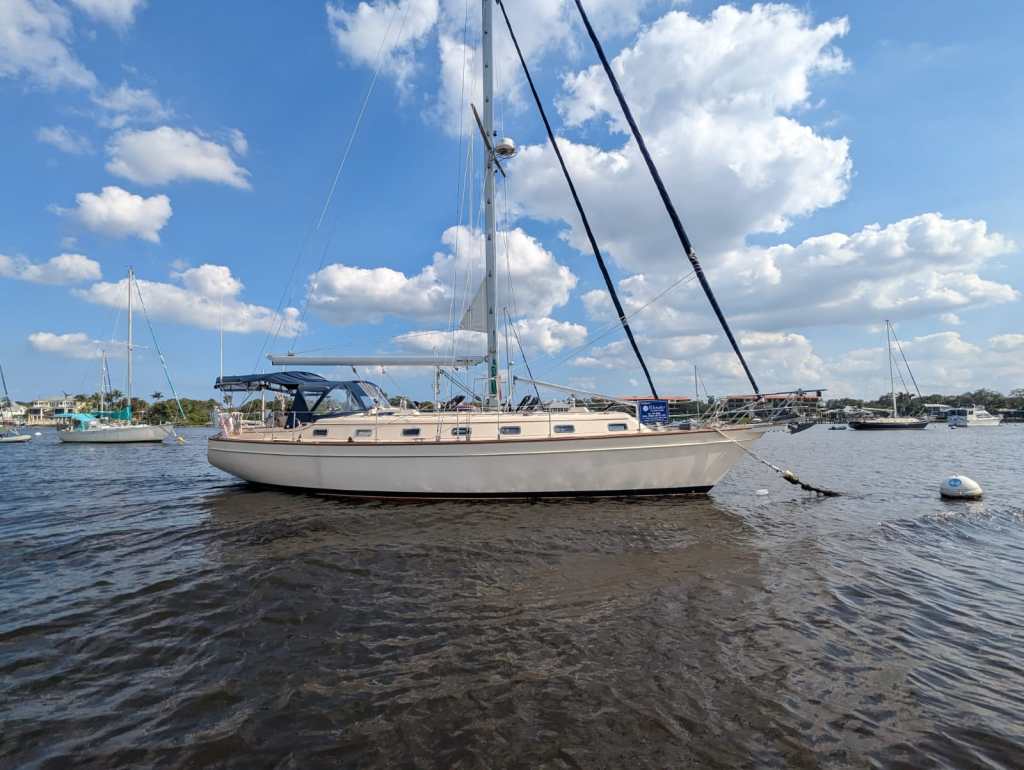
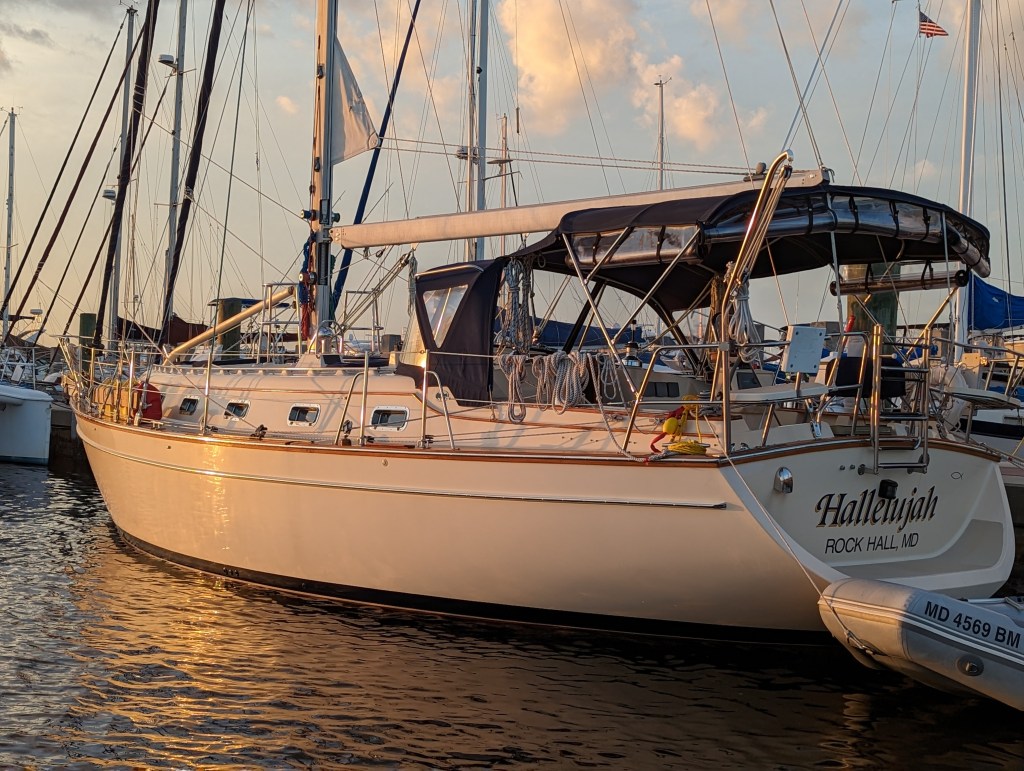
I hereby name you…

It can take a lot of money and effort to rename a boat. You need to re-register her with the Coast Guard under the new name, reprogram the AIS and VFH, buy and install new name decals. It’s enough to make me swear I’ll never rename a boat again! But, having a floating home with a name that feels right to us and feels like part of the family? Priceless!

Legend has it that when you do decide to rename a seafaring vessel, you need to hold a formal ceremony to protect the vessel and her crew from bad luck. You must make offerings to Poseidon and beg for his favor and protection. We held this ceremony and celebrated with several dozen of our friends and fellow sailors at Brunswick Landing Marina! We even had friends Shawn and Chantal from SV Camino drive down from Savannah to join us for the celebration!

In preparation, we stocked up on red wine, bubbly, beer, and snacks. We cleaned from bow to stern both above decks and below so we’d be free to offer tours. And we dug out our stash of courtesy flags and strung them up on a halyard to make her look colorful and festive. We removed all traces of the original name from our boat (on documents, decorative items, safety equipment and books) and prepared a metal ingot with the original name. With our friends gathered on the dock, beverages for toasting in hand, Capt. Mike and I walked forward to the bow and began the purging ceremony of the original name….

“Oh Poseidon, mighty and great ruler of the seas and oceans, to whom all ships and we who venture upon your vast domain are required to pay homage, I implore you in your graciousness to expunge for all time from your records and recollection the name “Hallelujah” which has ceased to be an entity in your kingdom. As proof thereof, we submit this ingot bearing her name, to be corrupted through your powers and forever be purged from the sea.”

I flung the metal tag over the bow into the water, then recited,

“In grateful acknowledgement of your munificence and dispensation, we offer these libations to your majesty and your court.”

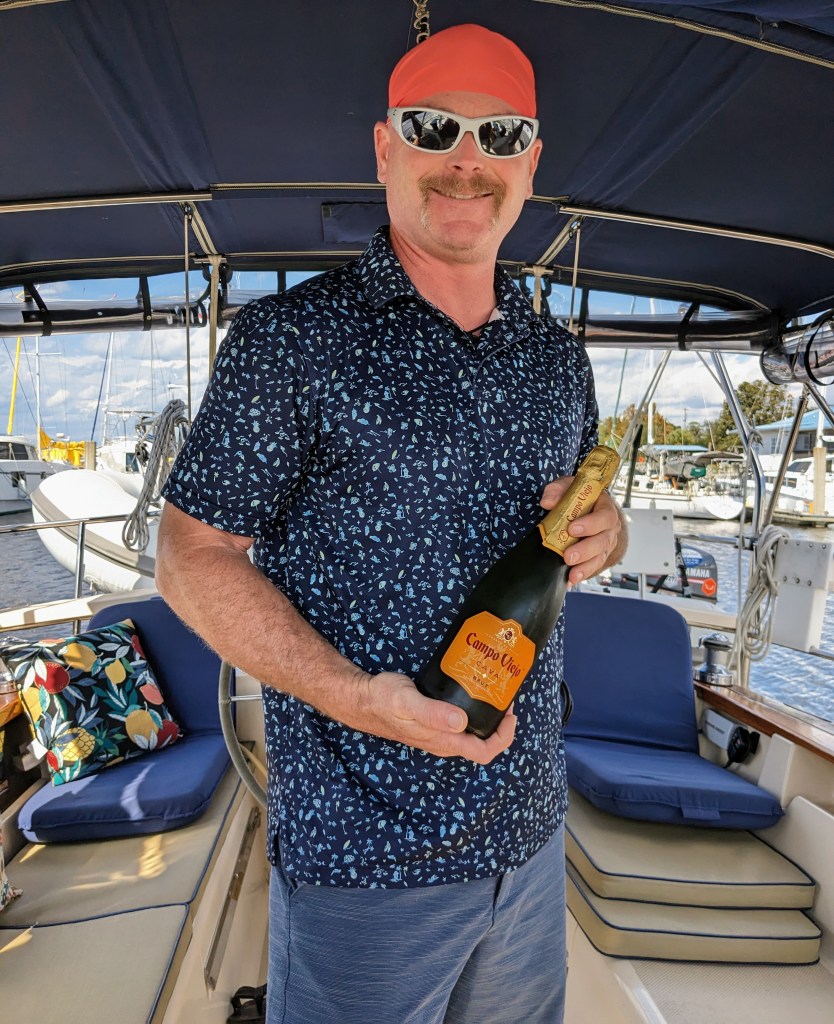
I poured at least half a glass of champagne into the water, from east to west, then took a sip myself. This concluded the Purging Ceremony.

Now for the naming ceremony itself….

“Oh Poseidon, mighty and great ruler of the seas and oceans, to whom all ships and we who venture upon your vast domain are required to pay homage, I implore you in your graciousness to take unto your records and recollection this worthy vessel hereafter and for all time known as “Happy” guarding her with your mighty arm and trident and ensuring her of safe and rapid passage throughout her journeys within your realm. In appreciation of your munificence, dispensation, and in honor of your greatness, we offer these libations to your majesty and your court.”

I poured another glass of champagne into the water, this time from west to east.

Next, I attempted to appease the four wind gods, Boreas, Zephyrus, Eurus, Notus.

“Oh mighty rulers of the winds, through whose power our frail vessels traverse the wild and faceless deep, we implore you to grant this worthy vessel “Happy” the benefits and pleasures of your bounty, ensuring us of your gentle ministration according to our needs.”

Facing north, I tossed some champagne from my flute to the north as I said:

Great Boreas, exalted ruler of the North Wind, grant us permission to use your mighty powers in the pursuit of our lawful endeavors, ever sparing us the overwhelming scourge of your frigid breath.”

Facing West, I repeated the champagne pour and toss while saying:

“Great Zephyrus, exalted ruler of the West Wind, grant us permission to use your mighty powers in the pursuit of our lawful endeavors, ever sparing us the overwhelming scourge of your wild breath.”

Facing East, I repeated the champagne pour and toss while saying:

“Great Eurus, exalted ruler of the East Wind, grant us permission to use your mighty powers in the pursuit of our lawful endeavors, ever sparing us the overwhelming scourge of your mighty breath.”

Facing South, I poured the champagne and tossed it one last time while reciting:

“Great Notus, exalted ruler of the South Wind, grant us permission to use your mighty powers in the pursuit of our lawful endeavors, ever sparing us the overwhelming scourge of your scalding breath

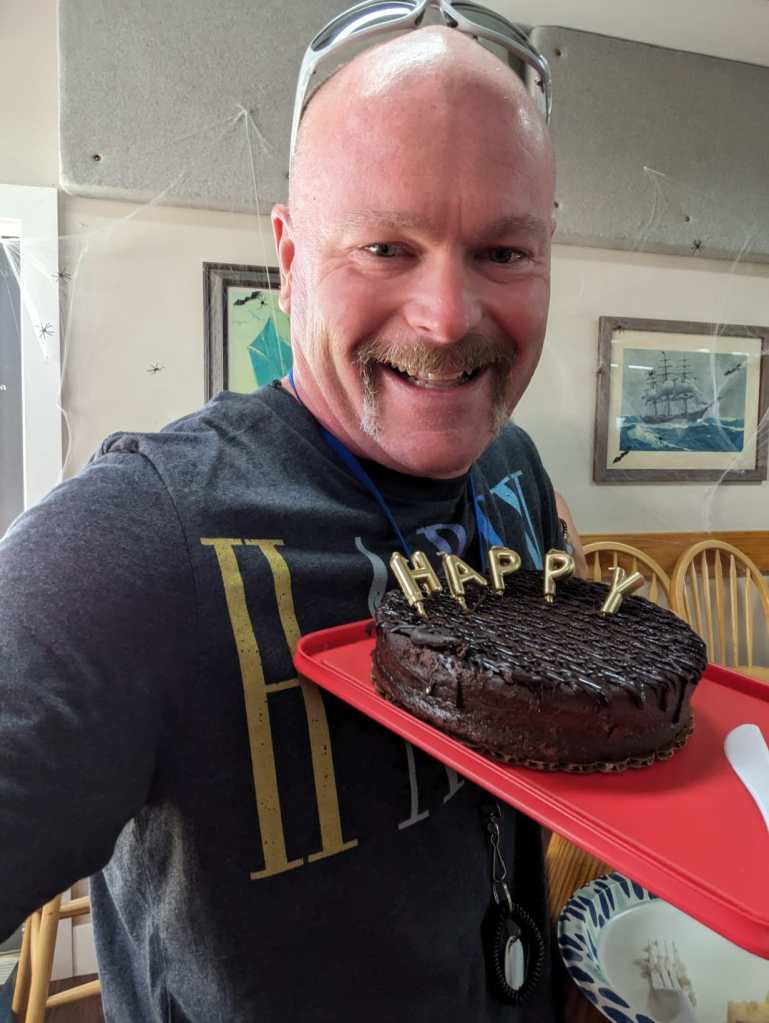
Our marina friends gave three cheers to the newly christened “Happy” as Mike and I donned t-shirts with the name Happy on them, and tore off the brown paper to reveal Happy’s new name on the transom and the boom.

Everything after that was a bit of a celebratory blur 😀 We gave tours of our beautiful floating home, accepted good wishes from friends and neighbors, and eventually brought bottles of bubbly and snacks up to the yacht club to continue the celebrations into happy hour. It felt great not only to celebrate the new name, but also the accomplishment of all the hard work and many boat projects we’ve completed since we moved aboard in March. Happy is almost ready to untie the lines and start sailing! If you see us in an anchorage, come say hi – we just might have a bottle of bubbly left over to share 😉
Big News for Team Sanitas!

As some of you may have noticed from our social media posts, there are big changes coming up for Capt. Mike and me this year. We have listed our beautiful Sanitas for sale ⛵️❤️ ⛵️ So what’s next?

Are we giving up on the nomad life and going back to work? 📇🗄️📅 No way!

Are we buying an RV and switching to land cruising? 🚐🌆🇺🇸 Not yet!

Are we fully committing to this crazy life and upsizing to a bigger boat? ⛵️🦈🏝️ Absolutely!

We’ve been making a lot of upgrades to Sanitas to keep her systems in great condition and to make living aboard more comfortable. But I think we’ve reached the limit of how well we can use the space on our beautiful but teeny boat. So for the past year or three, we’ve been casually on the lookout for an upgrade. We haven’t been looking very hard, just kind of hoping the universe would eventually deliver us the perfect boat – maybe finding a fellow cruiser moving back to land who just happens to have the perfect size, model, and age of boat for us! Clearly, that hasn’t really worked out. So on Christmas Eve I told Capt. Mike it was time to inject our boat search with “a bit more vigor.” Vigorously, we did so! On 18 January, we put in an offer on our next sailboat and we are working toward closing the week of 20 February.

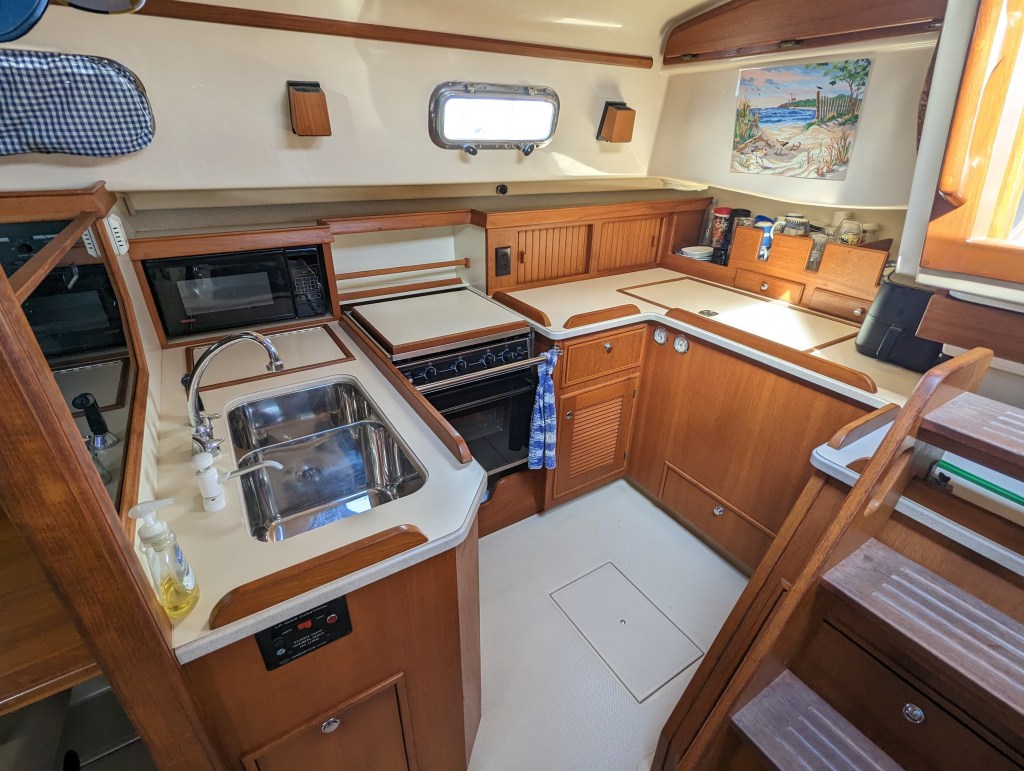
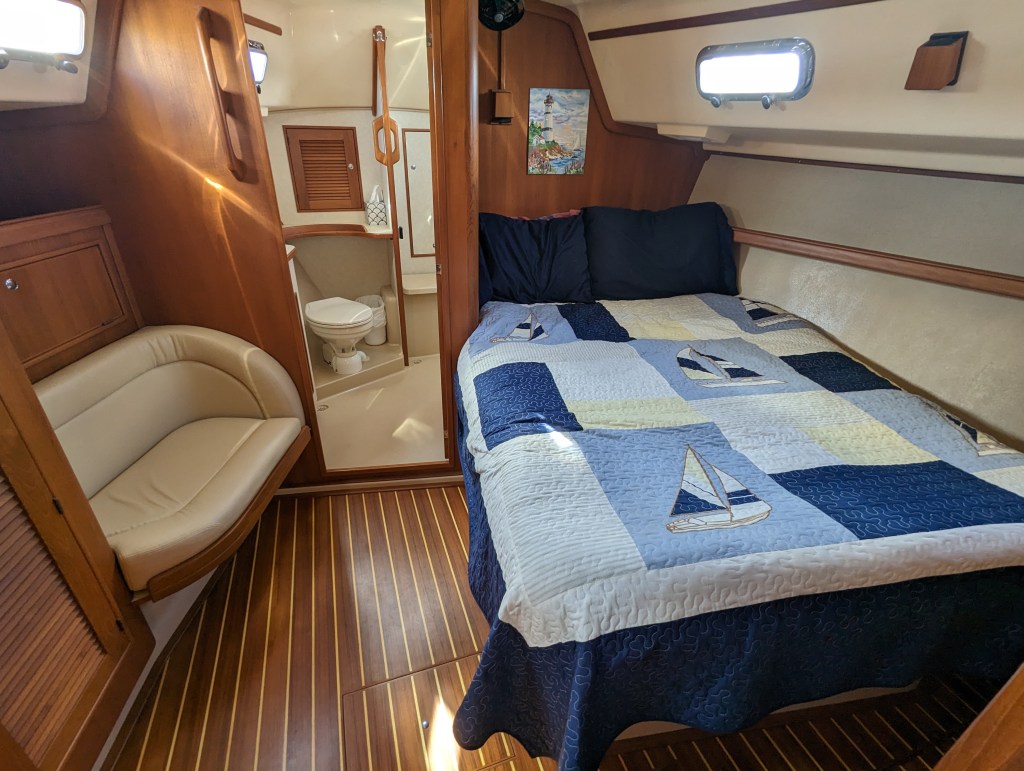
We are purchasing a 2001 Island Packet 420 currently located in Stuart, FL. I won’t tell you her name yet, because we are still deciding whether or not to change her name, and I am rather superstitious- I don’t want Neptune and Aeolus to know before we hold a formal renaming ceremony 😜 I can tell you she’s an absolutely beautiful vessel. She has only had one owner, AND he is a talented mechanic who worked with the Island Packet factory in Rock Hall, MD. She has been meticulously maintained and cared for. Equally important (at least to me) she has two cabins, two heads, a spacious galley, and enough room to support a larger dinghy with a bigger outboard than we currently use on Sanitas. Capt. Mike says this new boat will blow my mind. Did you catch that? She WILL blow my mind. Yes, we are buying a boat that I have not seen, leaving a small fluttering feeling in my tummy. However, Capt. Mike flew from Grenada to Florida and was present for the survey and sea trial. He even had the opportunity to spend time with the current owner and to investigate every hold and locker and every system. He assures me that I am going to fall in love as soon as I get the chance to meet her. Which I hope will be soon! 🤞🏼

Our next floating home

So what’s next for us? We are trying to sell Sanitas here in Grenada, hoping to find someone who will love her and care for her as well as we have. So, for the moment, my full time job is boat broker. Oh, and cleaning lady, stainless polisher, chef, insurance broker…all those jobs! Hopefully we will be able to transition Sanitas to her new home within the next couple of months, and then I’ll get the chance to meet my new floating home. We hope to spend June and July back home in Colorado, riding the 50th anniversary RAGBRAI at the end of July. Then we’ll leave the mountains and return to the water, moving our new boat from Florida to Brunswick, Georgia for storm season. At least this is Plan A. And you know what they say about cruising plans…”Cruising plans are written in the sand at low tide.” (That means everything is likely to change!)

Do yole wanna race?

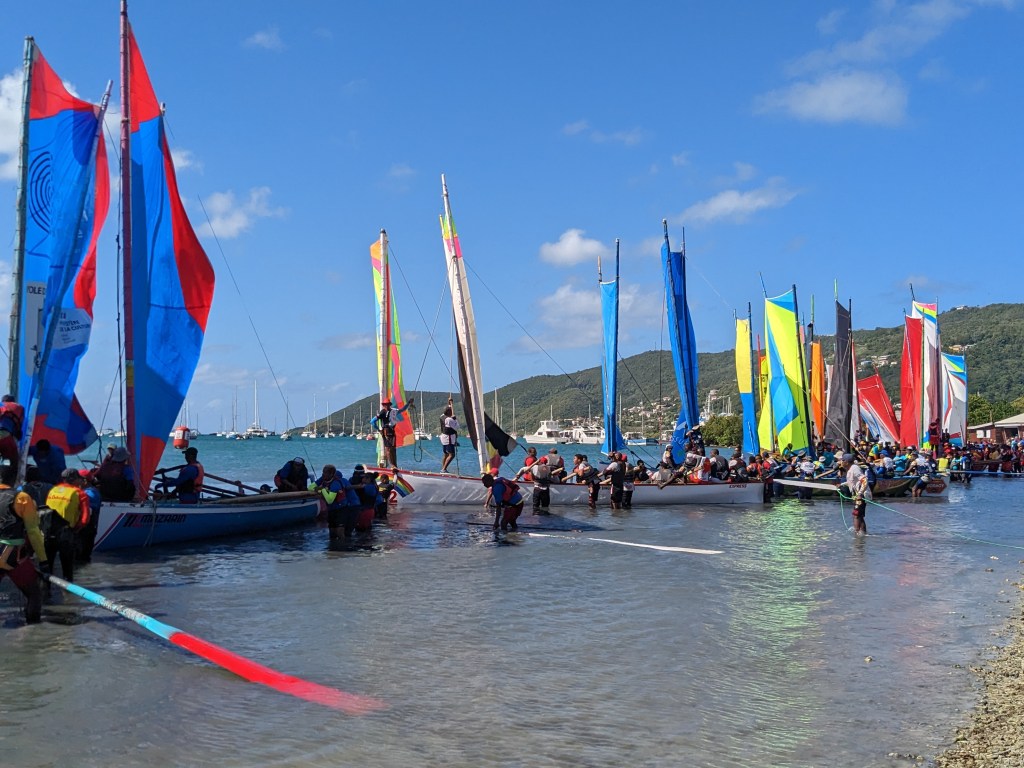
On our final Sunday in Martinique, we tagged along with Popeye and Lisa on SV Tumoltuous Uproar to watch the traditional Martinique Yole boats race in a regatta. We didn’t really know what to expect but Ooh la la! It turned out to be an exciting day.

One of the best teams – look at that coordination!
At the starting line!

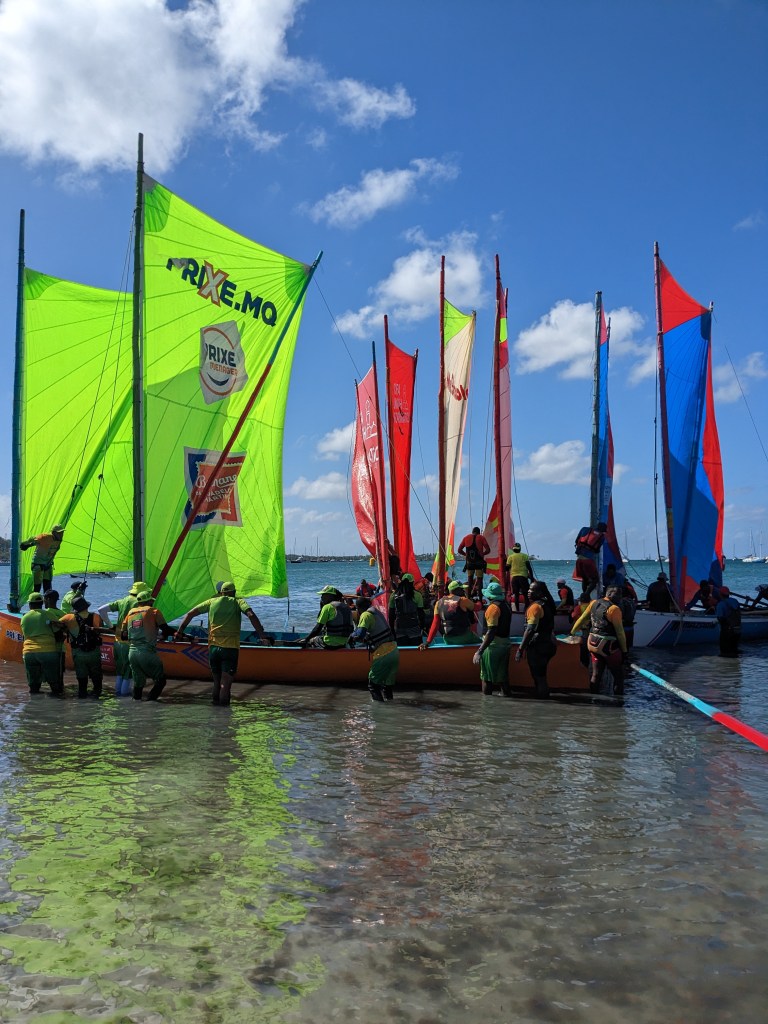
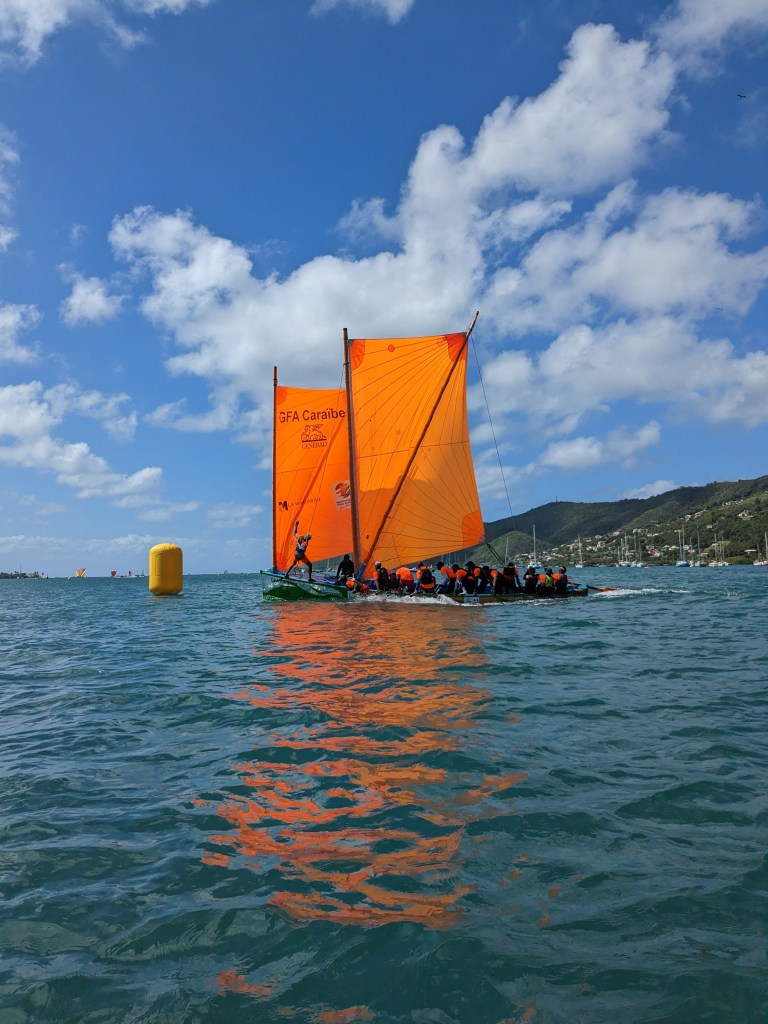
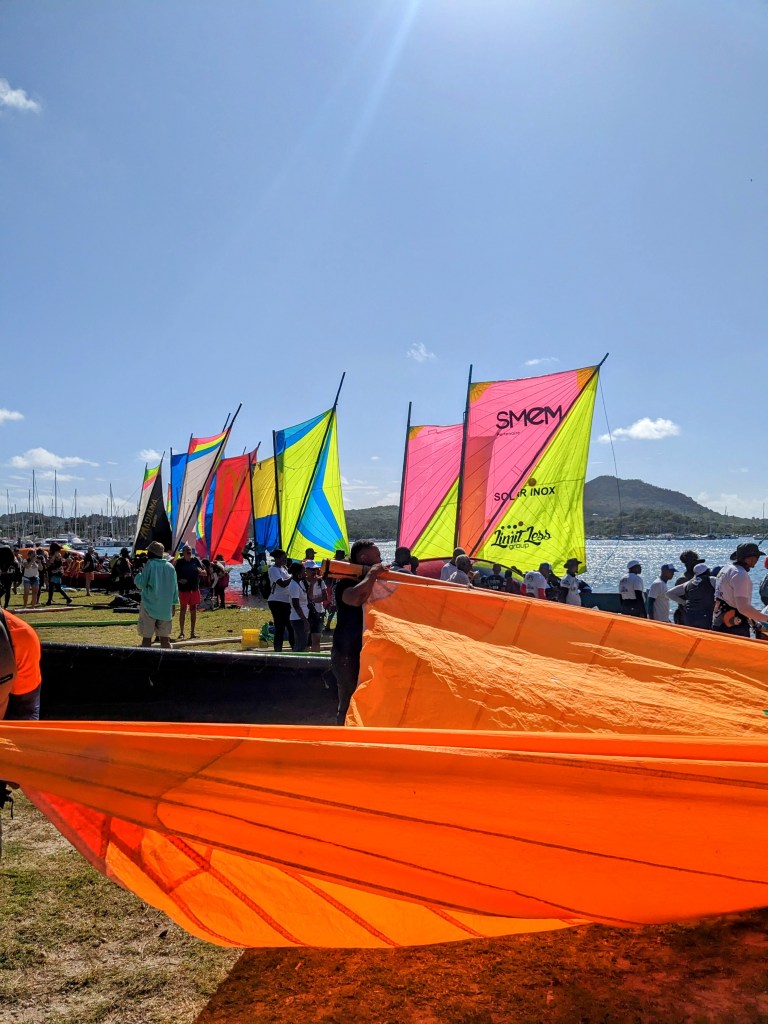
What is a yole? Well basically, they are traditional wooden sail boats, originally used by fisherman and to transport goods around the island. Each 10.5 meter yole boat is hand carved out of solid wood, without a keel or any ballast. So they are light and fast, but extremely “tippy.” The masts are made of bamboo, and instead of a rudder, a long wooden oar is used to steer the boat and to help paddle it through each turn or tack. The sails are rectangular and un-battened and extremely hard to manage. To balance the boat, a team of strong, burly, coordinated men hike way out from the boat onto sets of wooden poles, using their body weight and hopefully perfect timing to keep the boat from tipping over. Did I say “hopefully”? Several times during the race, we saw a boat heel over a tad too far, scoop up a whole bunch of seawater, and slowly sink. A race boat then had to tow them back to shore in the “tow of shame” with the boat sinking lower and lower, arriving back to the beach before it completely sank. There are actually members of the racing team whose sole job is to bail out water with plastic bottles and buckets during the race. If you can’t quite picture that strangle jumble of boat parts in action, have no fear ‘cause I took tons of pictures!

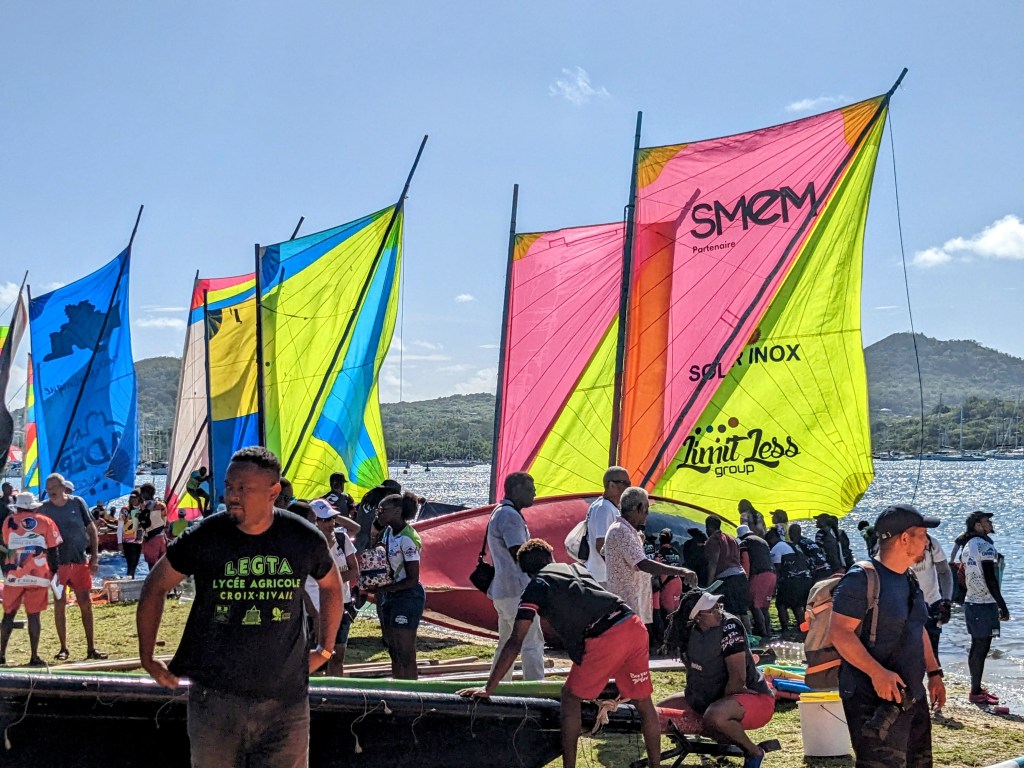
So colorful!
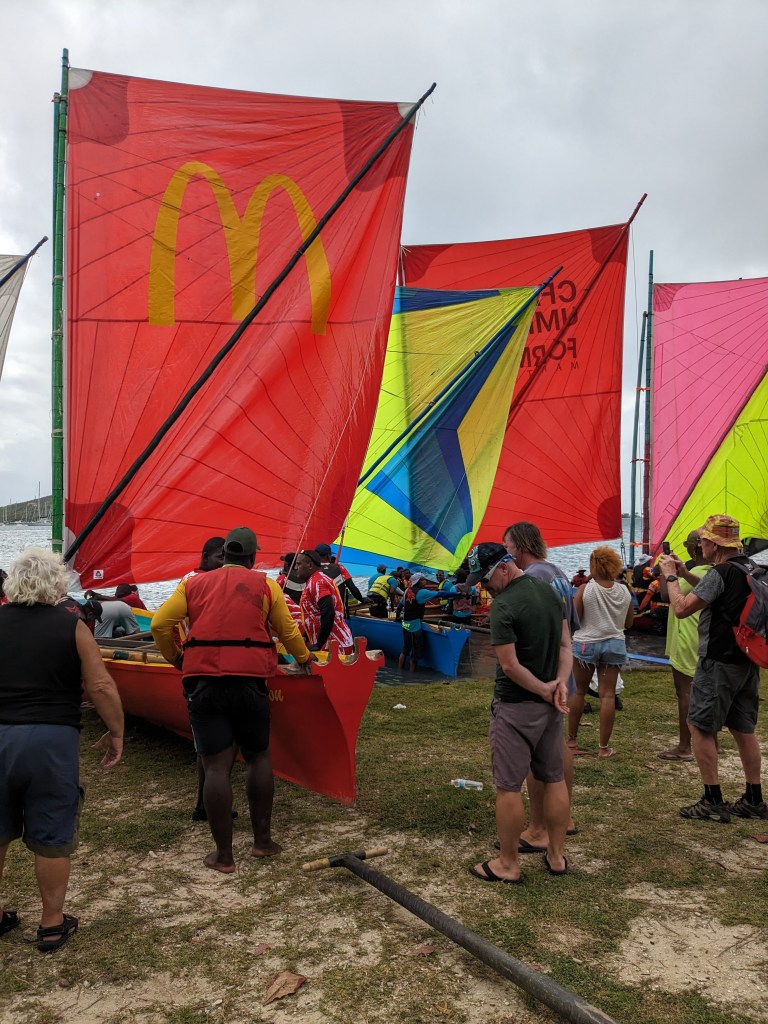
Capt. Mike getting ready to help launch team McDonald’s
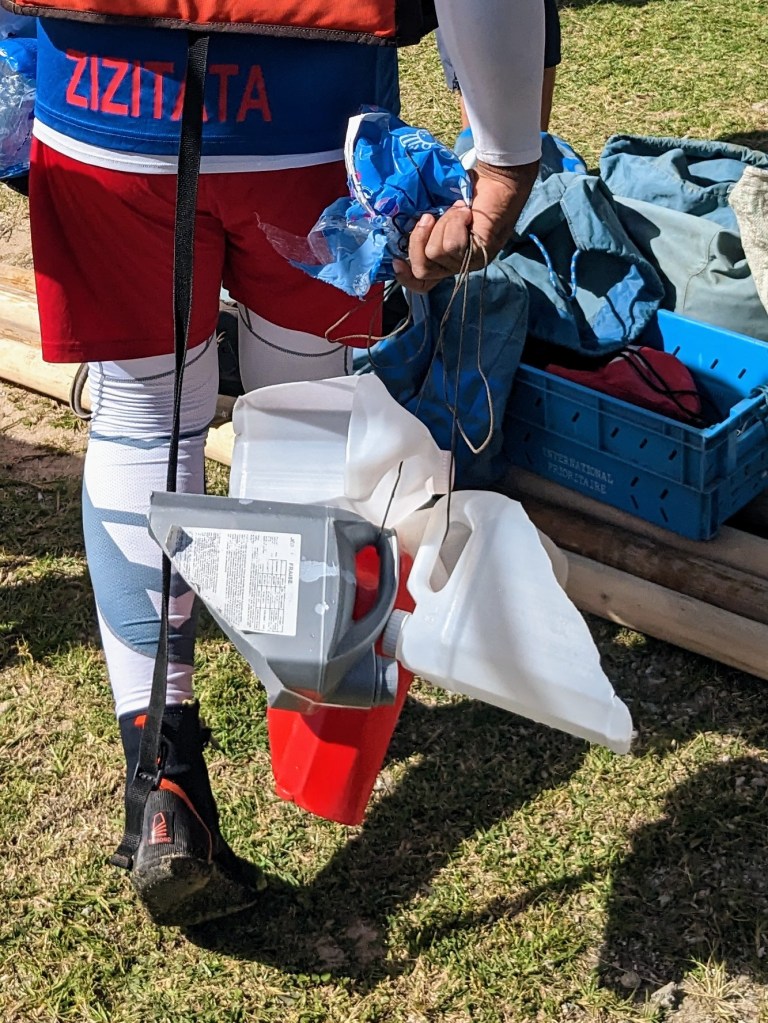
One man’s trash is another man’s bailing bucket

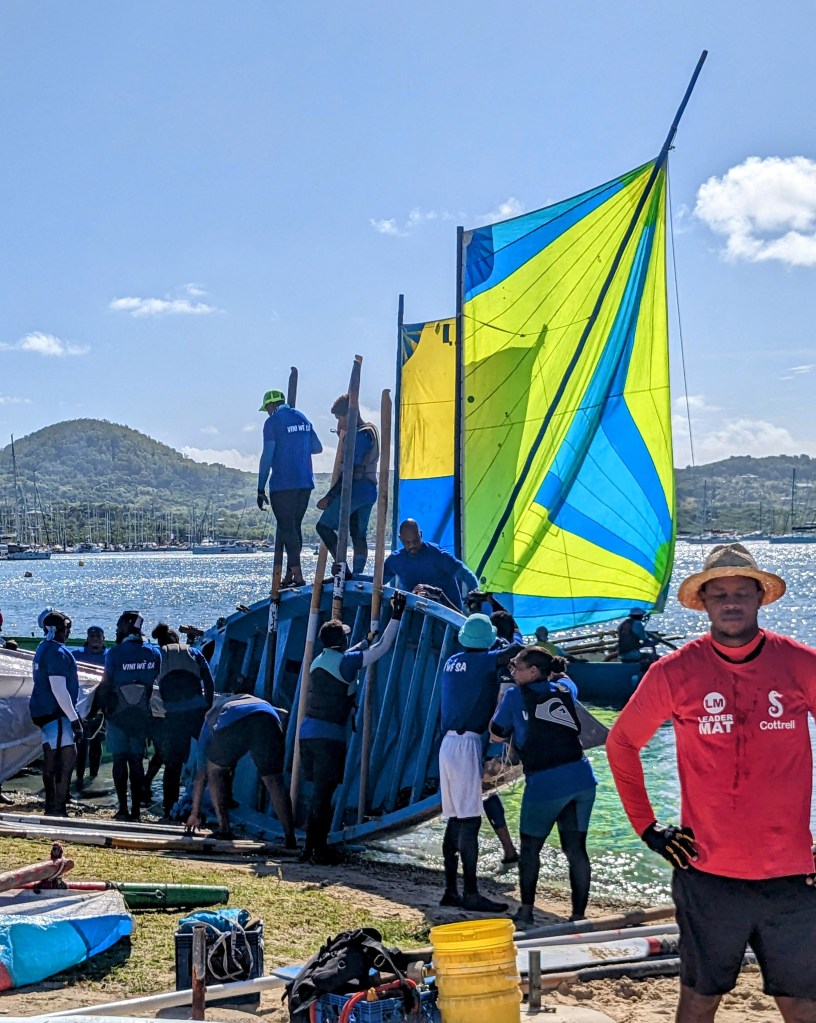
The best part of the race is the start. Each boat gets dragged down the beach to the water’s edge and turned onto its side. On land, the two masts are maneuvered into place and the team rigs the two sails by tying a whole bunch on knots while the boat is still on its side. Once all the hiking out poles are slotted into place, three or four of the heaviest guys stand up on the high side, lean their weight onto the poles, and slowly (then all of a sudden, very quickly!) they tip the boat upright, with other team mates running in at the last minute to push it into the water. It’s a blast to watch! When it goes smoothly, it’s a work of art. When it doesn’t, watch your head ‘cause it’s all going to fall back to the ground again.

Ready to launch

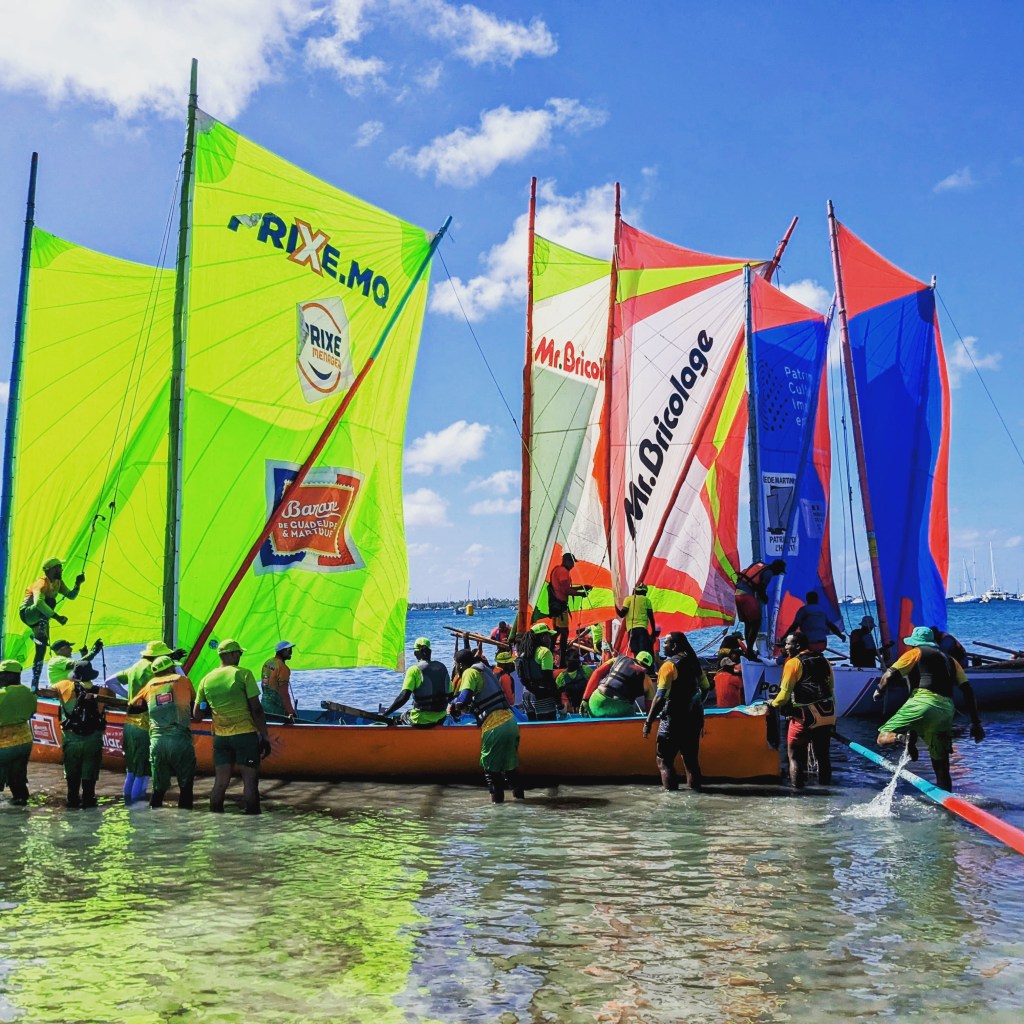
To start the race, crews wait for the final horn blast and then shove and push these heavy boats full of heavy guys into deep enough water for them to float and start sailing. With at least a dozen boats all starting from that same stretch of beach there’s always a lot of bumping, knocking, crashing, and shouting until they get far enough apart to settle down a bit. Mike and Popeye helped launch the McDonalds boat. Luckily, this maneuver went fairly smoothly and we did not have to experience the local health clinic.

The next best part of the race is watching the boats round a big floating race marker. We took the dingy out to watch the lead boats make the turn from up close. They come in HOT with the team captain shouting out commands. As the turn starts, everyone hikes way, way out on the poles trying to keep their legs out of the water. Not to stay dry (this is definitely not a dry sport) but to avoid slowing the boat down due to drag. The sail guy on the bow basically bear hugs the mast and the spar to force the sail to tack from one side to the other. The boat slows way down and three guys on the stern start rowing with all their might to complete the turn. If all goes well, the sails quickly grab the wind and the boat surges forward on the next leg of the race – with very little bailing required. If it doesn’t go well, the boat loses all speed, scoops up a bunch of water and starts that slow sinking process. It’s very exciting!

We all picked a team to root for and joined the rest of the crowd in cheering on our favorites. I understand just enough French to understand the announcer calling out the team in first position, followed by the second team, followed by the third. At one point, he announced that a team was “trés malade,” I asked, “Did he just say that boat is very sick?” I got my answer a few minutes later when the race boat towed in a bright red yole nearly submerged with its team members sitting in sea water up to their waists. Very sick, indeed!

On the road (water) again!

Once we got Sanitas’ engine fixed, we didn’t waste any time! Laundry, groceries, filling the water and fuel tanks, moving from the marina to the anchorage…in about 24 hours we had Sanitas ready to move. A good weather window was coming up at the beginning of April and we wanted to be ready to take advantage of it.

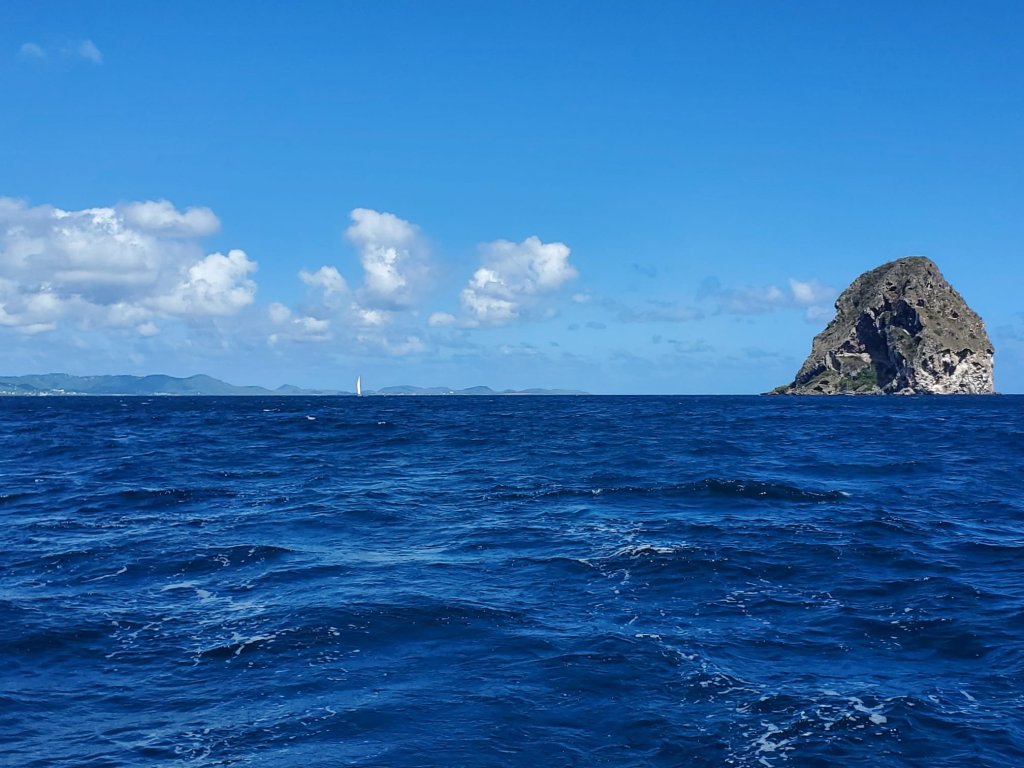
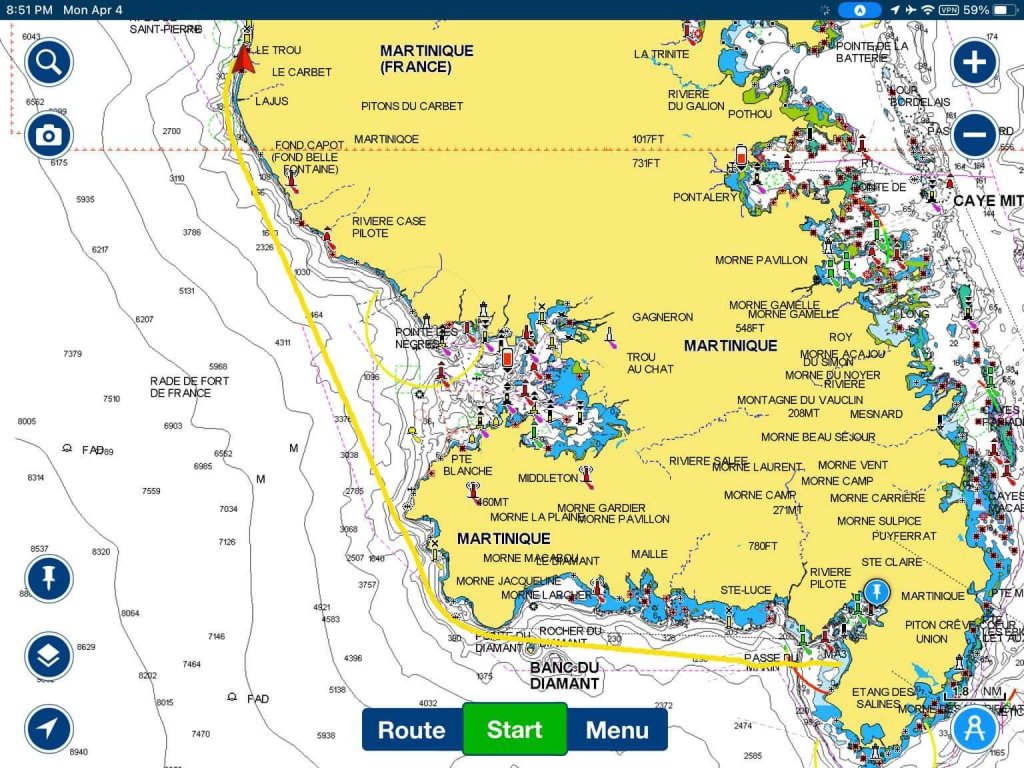
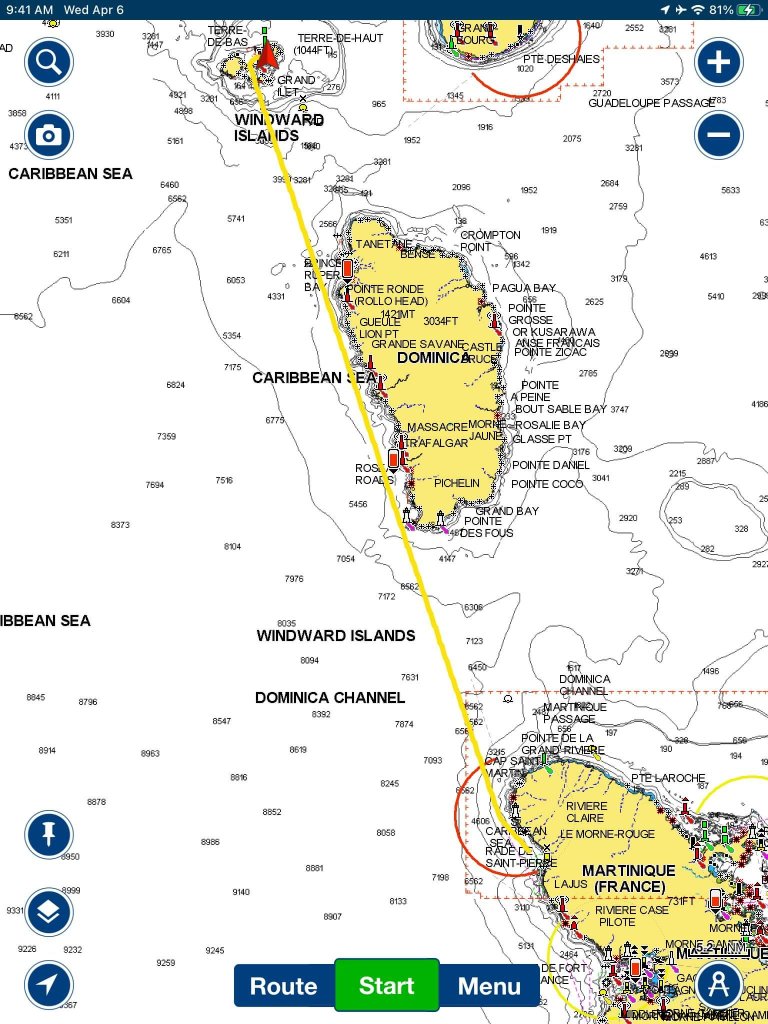
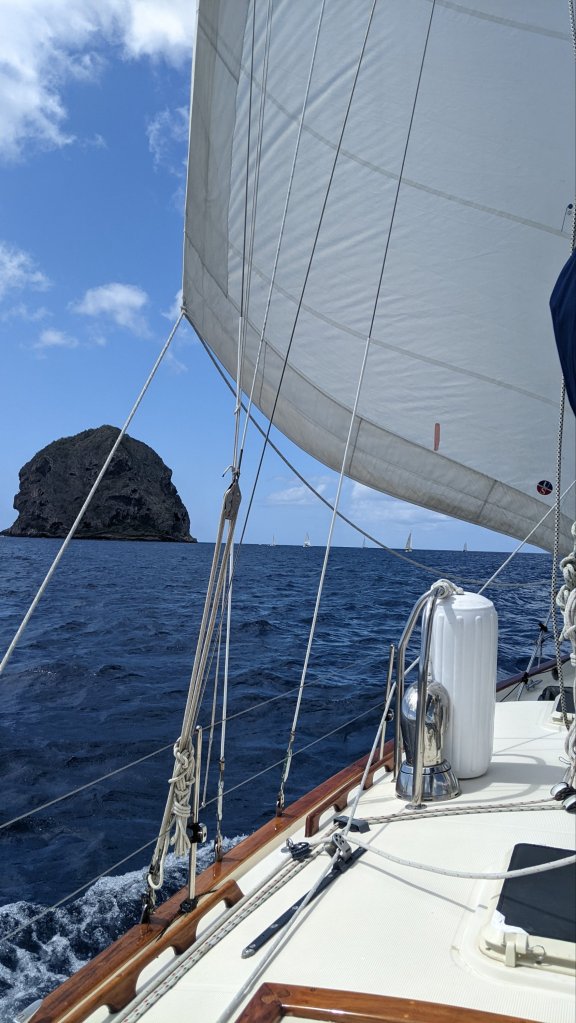
Take advantage of it we did! Around noon on Tuesday we raised anchor and started north. The engine purred like a kitten (or maybe more like a tiger) when we used it to navigate out of the anchorage and get ourselves on our point of sail. But as the Captain says, “We’re a sailboat!” and we didn’t use the engine for long. We had a glorious sail up the west coast of Martinique, past Diamond Rock, and anchored in St Pierre just before sunset.

We set the alarm for 4am and were underway well before sunrise. Setting off in the dark is always a bit disconcerting, but the harbor in St Pierre is wide open with few hazards, so it wasn’t dangerous. We mainly had to watch out for fishing boats and floats for lobster pots. Sunrise at sea is always glorious, and this morning we even had a beautiful bright double rainbow to welcome us back to the sea.

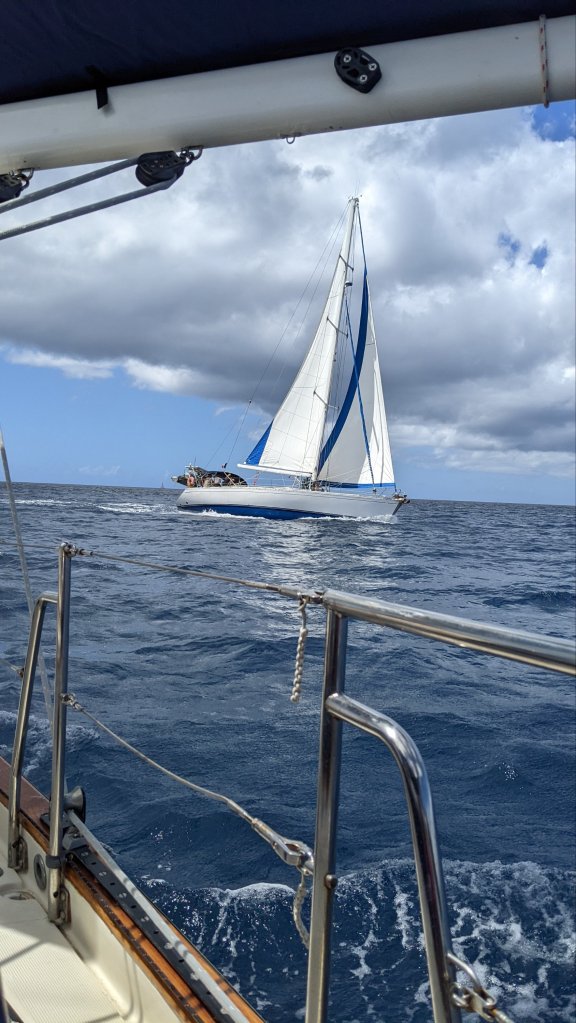
Conditions were perfect for a fast, salty sail. We had easterly winds pretty consistently from 90 degrees between 12 knots and 20 knots. However, we encountered a lot of variation in conditions as we traveled part of the day between the islands of Martinique and Dominica (where seas can be quite big, and winds are strong and sometimes swirl as they are funneled between the islands) and partly in the leeward protection of mountainous Dominica (where wind and waves were lighter, and we actually had to motor sail for about an hour when we had no wind at all). Capt. Mike was kept on his toes putting in reefs and shaking them out. Bringing out the headsails and furling them in. We both ended up with callouses as our soft little hands had to become accustomed to line handling again.

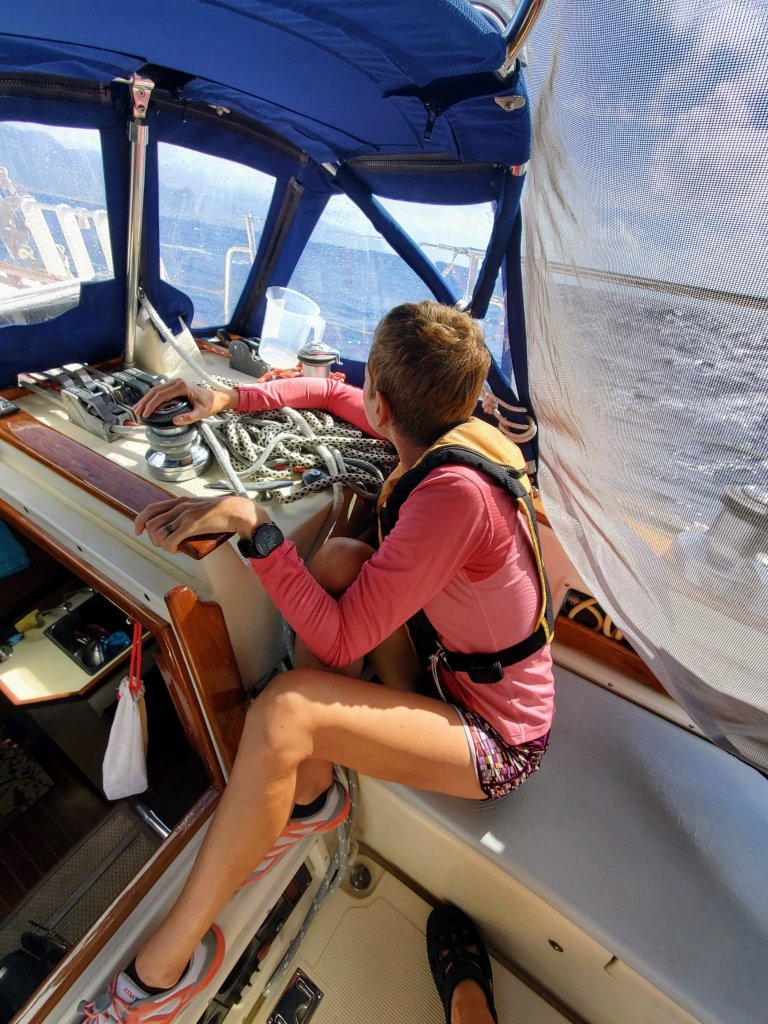
Seas hit us on the beam which makes for a very rocky and rolly ride. There was a period of about an hour when we experienced the worst of the wind funneling effect with consistent 29 knots and I mostly just held on for a very wild ride. Capt. Mike took a picture of me in what he calls my gecko pose. You probably can’t tell from this photo but we are heeled over about 30 degrees so I’m bracing myself with my legs and holding onto the companionway and the winch. I’m kind of huddled in the protection of our bimini because waves on the beam create a great deal of splash.

Speaking of splash! We had a huge wave hit us without warning, and Mike and I were both soaked. The cockpit was swamped – good thing we have good scupper drains – and both bilge pumps turned on, and an alarm started beeping loudly. The worst part of the chaos was that we had forgotten to close the companionway with the sliding boards. So at least a couple of liters of that huge wave ended up with in the cabin. We spilled a bit of wind off the main and once I was sure that the Captain had things under control, I went below to survey the damage. Bilge pumps seemed to be doing their job. The alarm came from the lpg propane gas sensor, so I turned the propane solinoid off at the breaker panel. Mike disconnected it back at the tank just to be sure. I mopped up the saltwater lake on the cabin sole, rolled up the rugs, and did my best to dry off the port settee. I wiped down the breaker panel and port bulkhead. It’s the first time ever that I had to wash saltwater off the INSIDE of the portlights as well as the outside. Looking back on it, we weren’t in danger, but things were pretty darn exciting for a while.

Speaking of water in the cabin, I found a new leak, or what sailors call euphemistically “saltwater incursion.” I noticed that small drops of water were landing on the cushions of the port settee. I first thought that we hadn’t closed the cowl vent well enough. Nope. Watching for a while, I observed a drop forming on the zipper of the headliner, growing, growing, and then falling onto our lovely comfy couch. Darn it! That’s a problem to investigate for another day.

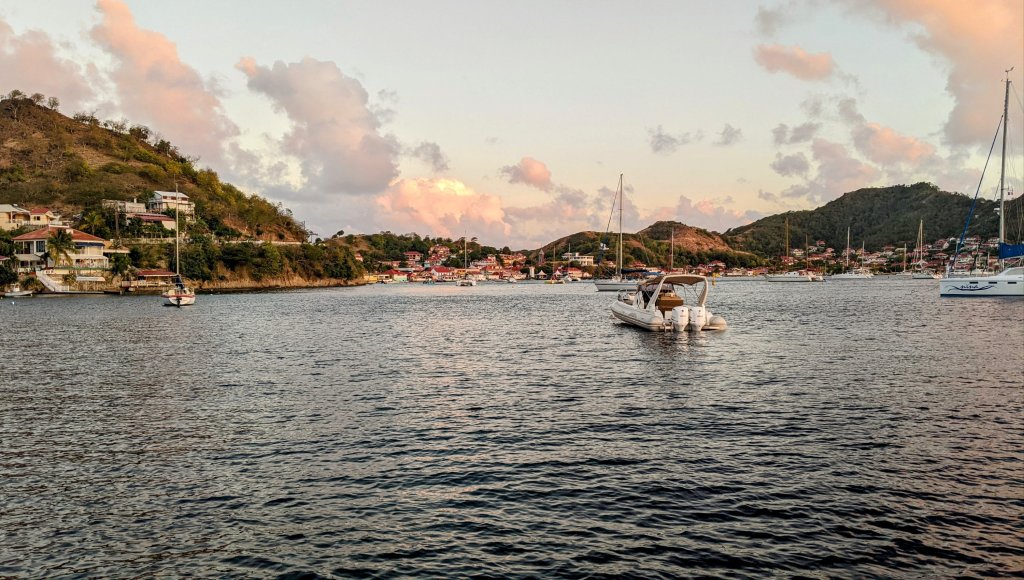
All in all, we averaged over 6 knots today which is crazy fast for little Sanitas. We made it to the mooring field near Terre-de-Haut in The Saintes, Guadeloupe with plenty of time to pick up a ball before sunset. After a day and a half of very active sailing, we were much too tired to go ashore. But after taming the chaos of the boat a bit, we could enjoy a magical view of the island during dinner and then a well-deserved early bedtime.

Our diesel engine has “un mal de tete” (a headache)

On the last day we sailed with our guests Micki and Nathan, we had a bit more adventure than they signed up for.

We sailed down the western coast of Martinique and then east from beautiful Anse d’Arlet to Sainte Anne. For most of the day, we were heading straight into the wind, using the diesel engine as well as the sails to give us a little boost in speed while cutting through big waves. All hands were safely wearing PFDs, and our guests got a lot of practice tacking. It was a bumpy and salty day for sure.

This boat felt awfully close!
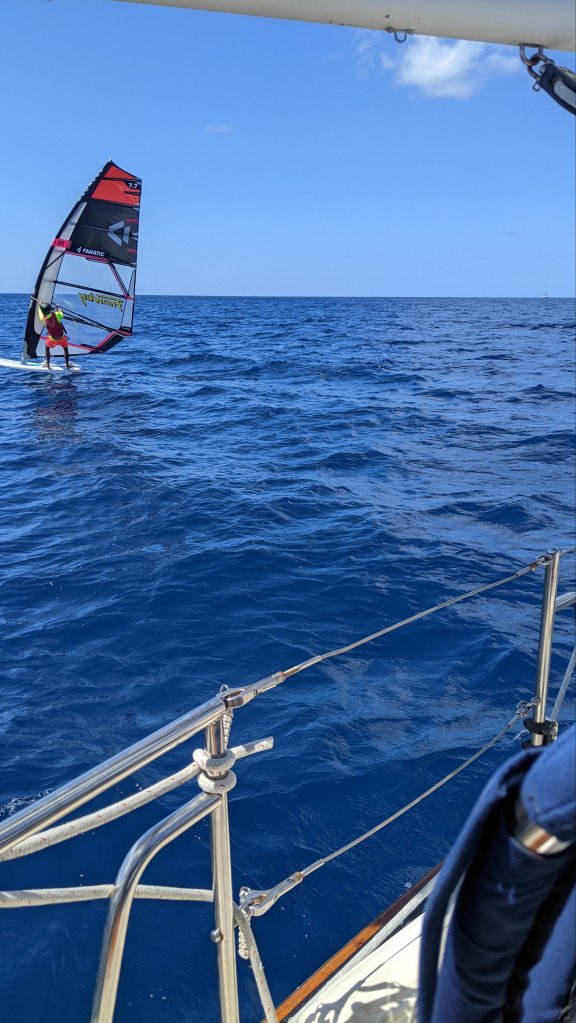
So did this kite surfer!
So did this rock!

A couple of miles out from Ste Anne, with the masts of that massive anchorage in sight, we could no longer keep the staysail full of wind, so we attempted to furl it. Nope! The furling line was snagged on something so every attempt to put the sail safely away for the day resulted in loud and violent flogging instead. Capt. Mike went forward to investigate and discovered that we had an overwrap on the furling drum. It was going to be much too difficult to resolve it in the rough seas and high winds, so he decided we were better off simply dropping the staysail to the deck and fixing the furler later when we’d arrived in the protected anchorage. I took the helm to keep us pointed into the wind. And Mike, Micki, and Nathan went forward to wrestle the sail to the deck by dropping its halyard. Good thing it was the small sail!

While I was at the helm, I discovered a new and even more disturbing problem. Even with the throttle fully open, I couldn’t get enough power from the engine to keep us moving forward. And a sailboat needs to be moving at about 2 knots in order to be able to steer. We’d dropped down to less than a knot of speed-over-ground, so I really couldn’t steer at all. I got the Captain’s attention and explained as calmly as possible what I’d observed. That convinced him to stop messing around with the staysail and come back to the cockpit pronto!

Capt. Mike did a quick bit of troubleshooting and confirmed I was telling the truth. Almost no power coming from the engine. So, after an already long and difficult day, we were looking at another hour or more of sailing upwind and tacking in slow motion through the anchorage. We probably could have dropped anchor in deeper water far back in the harbor. But with guests aboard, we prioritized calmer water closer to shore, and a shorter dinghy ride to the dock when we had to offload people and luggage in our little dinghy Bug. Capt Mike took over at the helm and did an excellent job maneuvering Sanitas through the crowded anchorage, finding a spot just barely big enough for us to drop anchor between all the other boats.

We were all pretty much exhausted. Micki and Nathan helped clean up the boat from our rough passage, and then went ashore for an hour or so, giving Capt. Mike and I time to get the rest of the place organized with fewer adult bodies in the small space. Dinner was simply cartons of french vegetable soup – surprisingly good! – and we went to bed early. We’re safe and sound, and we’ll worry about that engine tomorrow.