I don’t know where I’m a gonna go when the volcano blows

The La Soufriere volcano on the north side of St Vincent has been active since we arrived in December. Back then, it was considered in an “effusive” state – some steam, a little smoke, growth of a new dome. That all changed Friday morning, April 9th, when a series of small earthquakes announced the start of explosive eruptions! 😯 I’m writing this on Sunday morning and scientists from the University of the West Indies don’t know whether the eruptions will end soon, or will continue for days or weeks.

Did I mention we just visited St Vincent on Tuesday? We took a day tour and visited attractions on the east side of the island; all the way to the northernmost village named Owia. On Tuesday, it was a scenic tropical paradise. Now, it’s residents have been evacuated and buildings and vegetation are covered in several inches of ash. Please take a moment to pray for the citizens of St Vincent. Over 20,000 people have been evacuated, and the damage to homes, property, and farm crops is going to be immense.

So how has an erupting volcano effected the crew of Sanitas? Well first of all, we are definitely safe. We were anchored off the island of Mustique on Thursday night into Friday morning when the first explosive eruptions occurred. It’s around 27 miles as the frigate flies from the volcano. I think we felt the effect of the earthquakes that occurred early Friday morning. Mustique is a notoriously rolly anchorage. But right about 4:00am, Sanitas started rolling so violently that items were thrown off the shelves. It took about 90 minutes for things to settle back down. The earthquakes occurred around 3:30, and since our harbor faces north, with very little protection, we think we experienced swell caused by the quakes.
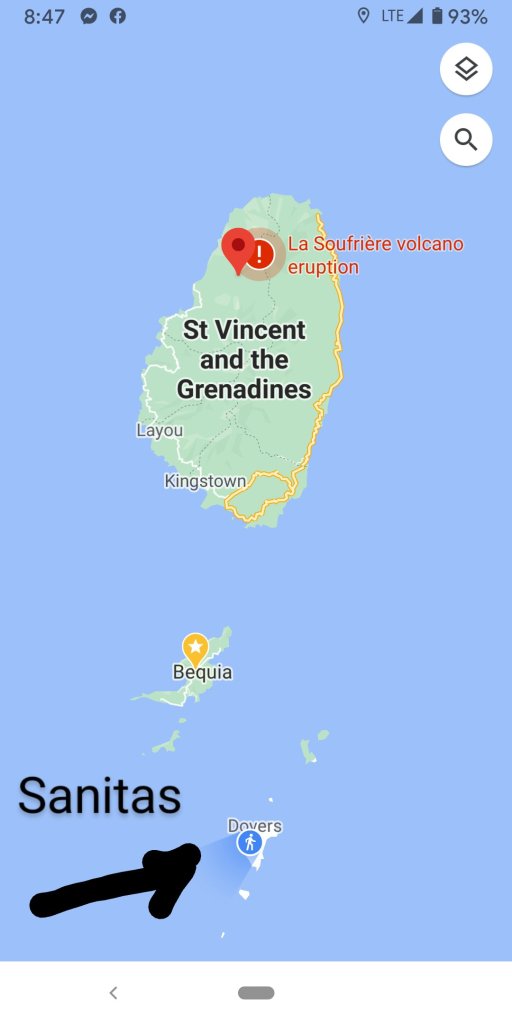
Sanitas was anchored off Mustique when La Soufriere erupted on Friday

We woke up to a thin layer of ash covering the boat… and the table… and the floors… and the clean dishes. From that point on, we kept the boat tightly closed up. Which makes things hot and miserable inside, but it’s worth it to keep the indoor ash to a minimum. Volcanic ash is extremely fine and black – I’m thinking it’s much like the dust used by detectives to find fingerprints. It gets everywhere and is super hard to wash off. When it rains, it rains mud. Capt. Mike attempted the first of many wash-downs of Sanitas with bucket after bucket of sea water.
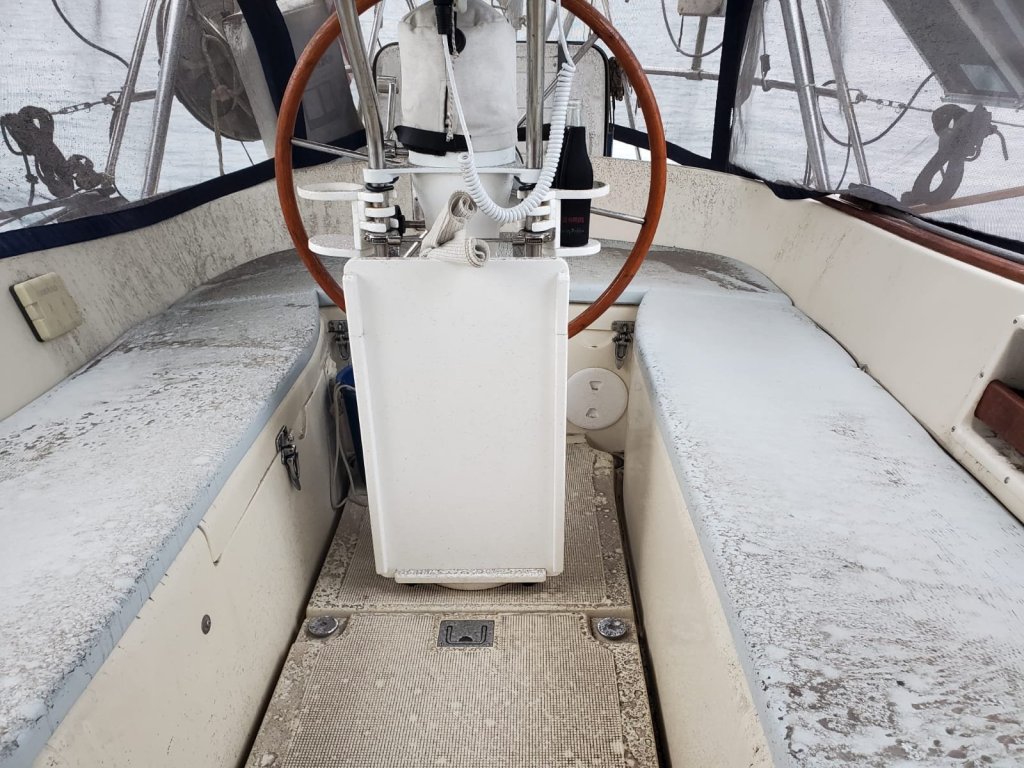
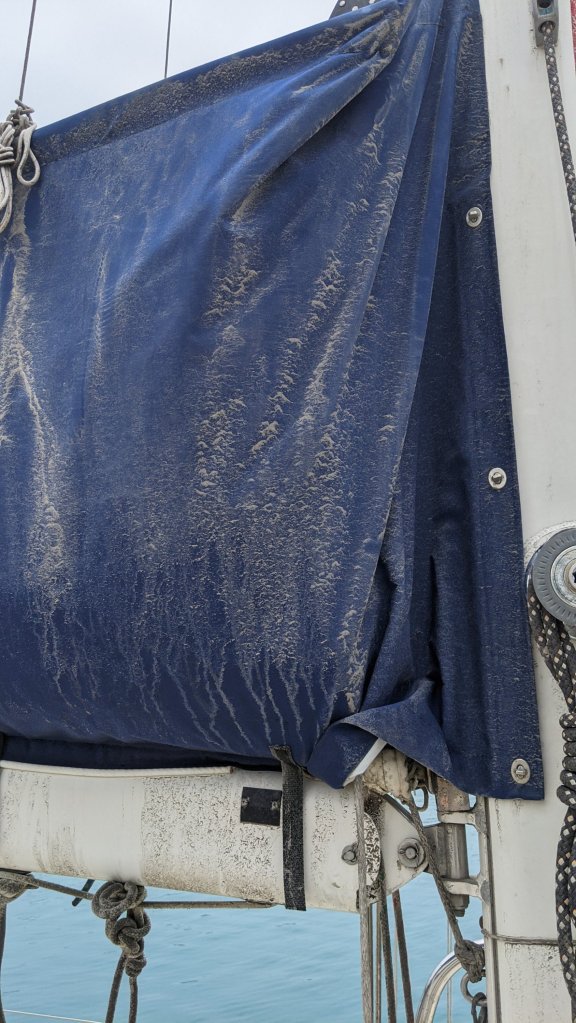
The cockpit is protected by a canvas cover… And it still got this dirty.
Ash really sticks to our new canvas, and to all the running rigging

The sky has been a heavy grey haze. Visibility is very poor, and we can’t even see the next island south in the chain. Air quality is bad, and we are constantly sniffling and dealing with headaches. When we went for a walk on the island, I could tap my teeth together and feel the grit in my mouth.

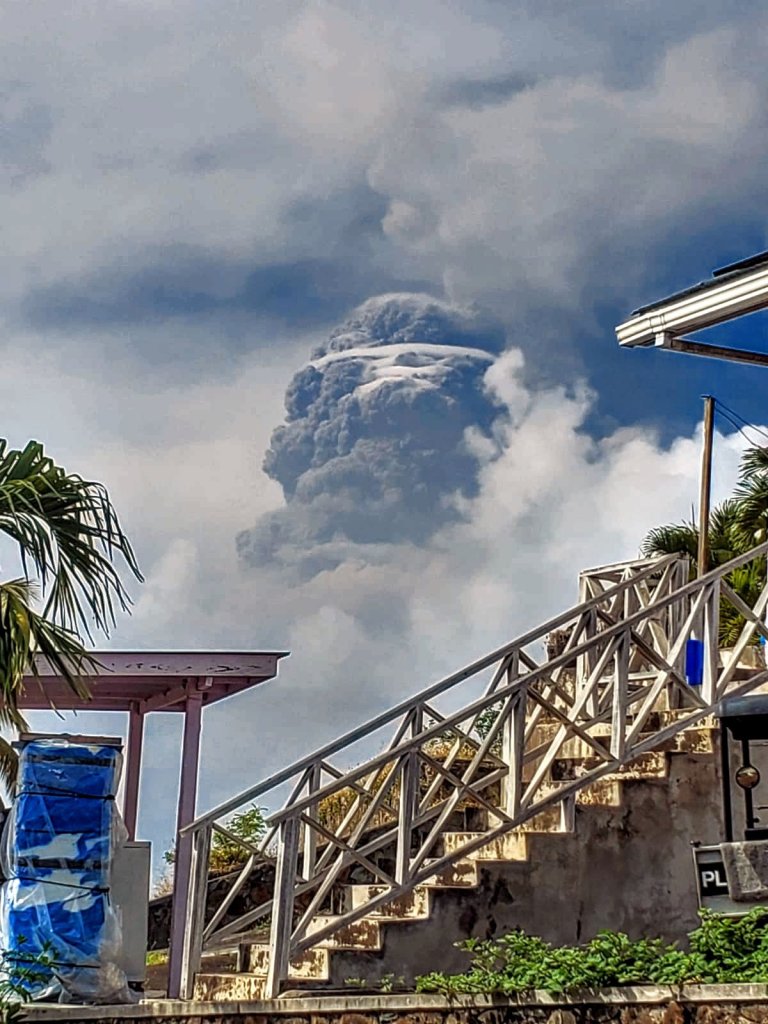
On Friday afternoon, we walked up to the hilltop village of Mustique. Little did we know, La Soufriere had just experienced it’s second eruption. We joined the group of villagers standing in the middle of the road, looking north and pointing at the huge grey volcanic plume.
It’s difficult to know where to go to wait out the eruptions and to find the best air quality and least amount of ash. Our sailing friends are mostly heading as far south as possible. In a normal (aka non-Covid) year, we’d probably turn around and sail straight to Grenada. They’re getting a bit of ash fall there, but not as much as we are in the Grenadines. If this continues for a while, we might start the process to head south about two months earlier than planned (requesting permission from the Coast Guard, PCR tests, quarantine, etc.) But for now, we’re just returning to the marina in Canouan, where we can access fresh water to clean the boat, and hot showers to clean ourselves.

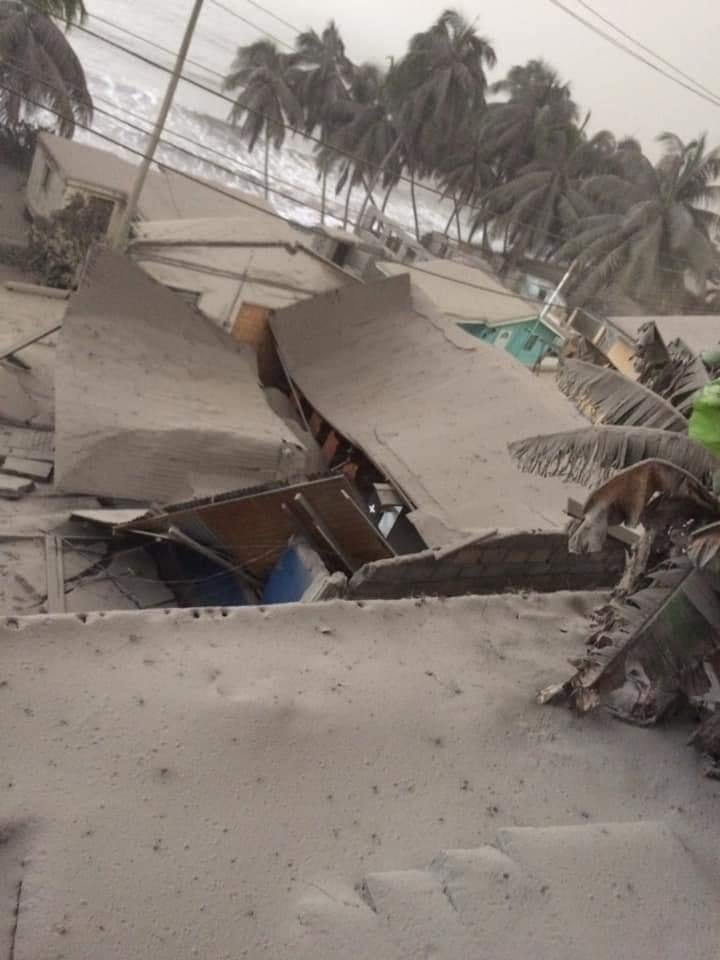
I’ll share a few photos from the local newspaper, showing how bad the ash fall has been on St Vincent. It looks like snow on the ground, and some northern villages have seen several inches of ash accumulation. Roofs are starting to cave in from the weight and the entire island is water rationing because ash can get into the water supply. If you can spare it, please consider donating to relief efforts for this beautiful country and her strong people.
Invest Caribbean GoFund Me

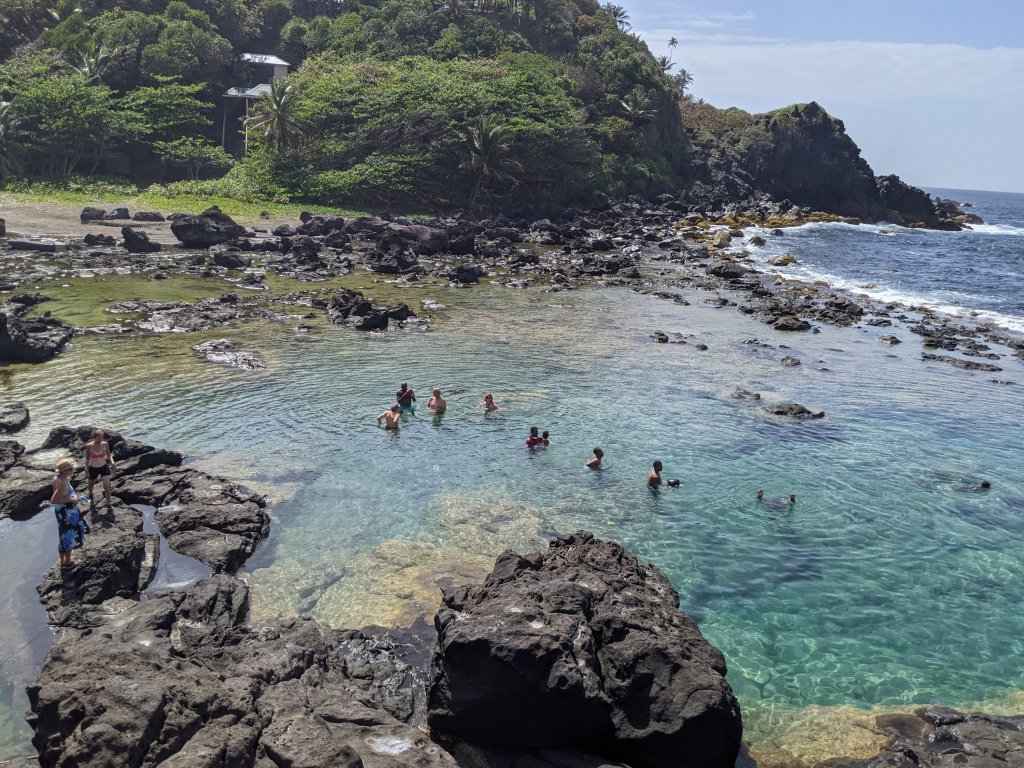
This is a photo I took at Owia in the northern part of St Vincent on Tuesday
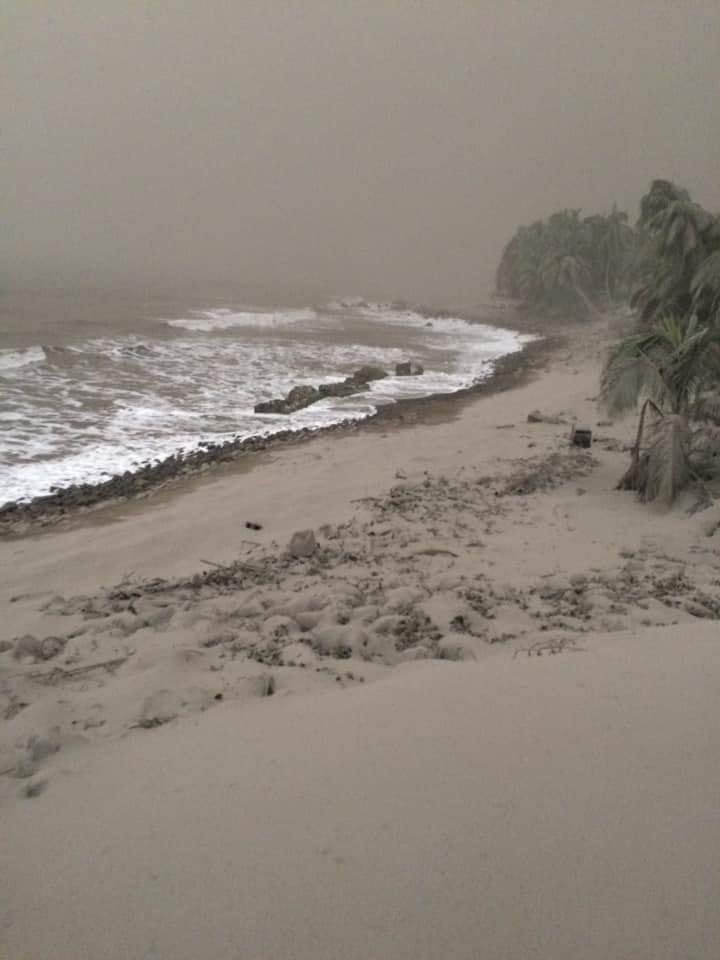
These pictures are from the same area after the eruptions, with vegetation and homes covered in ash

Lobster – It’s what’s for dinner

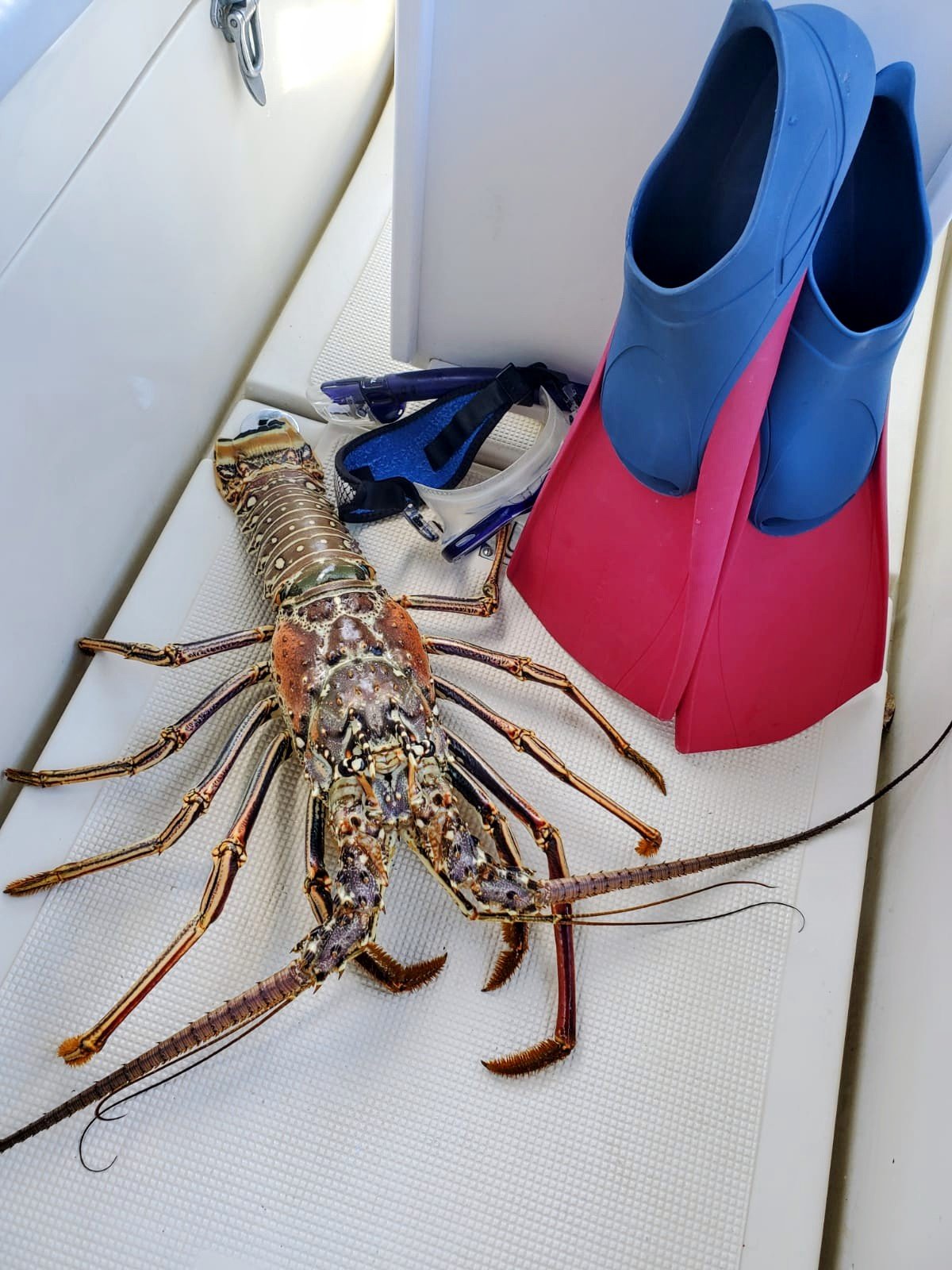
How did the biggest lobster I’ve ever seen end up in my cockpit?

  • Fisherman- You want lobster?
  • Me- How much per pound?
  • Fisherman- 20ec
  • Me- Nope
  • Fisherman- How much you pay?
  • Me- 12ec
  • Fisherman- 15?
  • Me- Ok
  • Fisherman- Holds up a gigantic 5-pound lobster
  • Me- Gulps. What have I gotten myself into?

That’s how, for 70ec (about $26) I ended up with a very large and very grumpy creature in my cockpit, and an unplanned afternoon of lobster butchering ahead of me.

I wasn’t planning on lobster for dinner
Size comparison to Mike’s snorkel gear

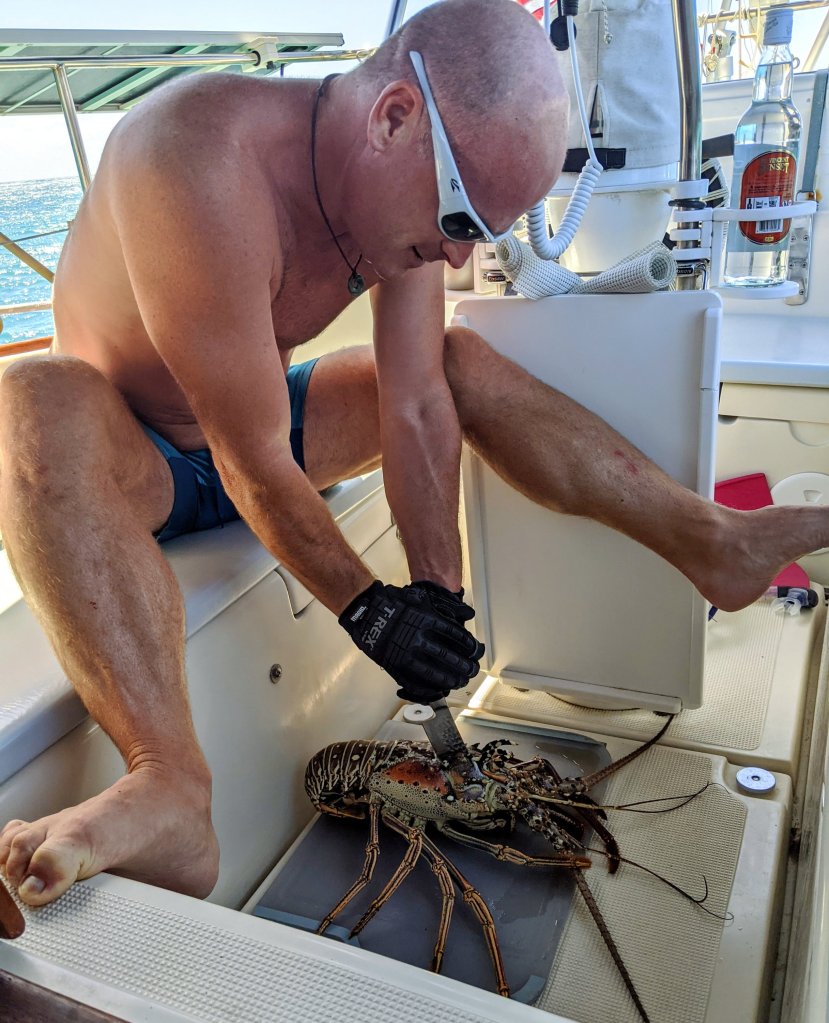
I’m usually in charge of lobster killing. When we have small lobsters it’s easy to simply put on a pair of gloves, hold the lobster over the side of the boat, and pull off the tail. The rest of the critter just goes back in the water. Then I use one antenna to pull out the poop chute. But this guy was so big (and wiggly) I didn’t think I could twist the tail off without killing it first. So I pulled Capt. Mike into the effort. He used our largest kitchen knife to make a quick stab behind the eyes to kill it as humanely as possible. Then we used a thin, long knife to cut around the tail in order to remove as much of the head meat with the tail as we could.

Putting him out of his misery

Looking back on it, I should have stopped right there. But… Such a big lobster also has some significant meat in the body and in the legs. And I was DETERMINED to retrieve as much of that meat as possible. So, while Capt. Mike took a nap, I proceeded to turn Sanitas’ cockpit into a disgusting crime scene. With a combination of knives and kitchen shears, a mixing bowl for the good bits and a plastic tub for the gross bits, I eventually ended up with a big pile of legs and “knuckles” to accompany the tail meat. I wish I had taken a photo of the aftermath. Did you know that lobster blood is originally clear, but it turns black when exposed to air? Or that it dries into a sort of jelly that sticks to everything it touches? Me neither! A couple of buckets of saltwater and a bit of deck brushing later, my butchering effort was finally complete.

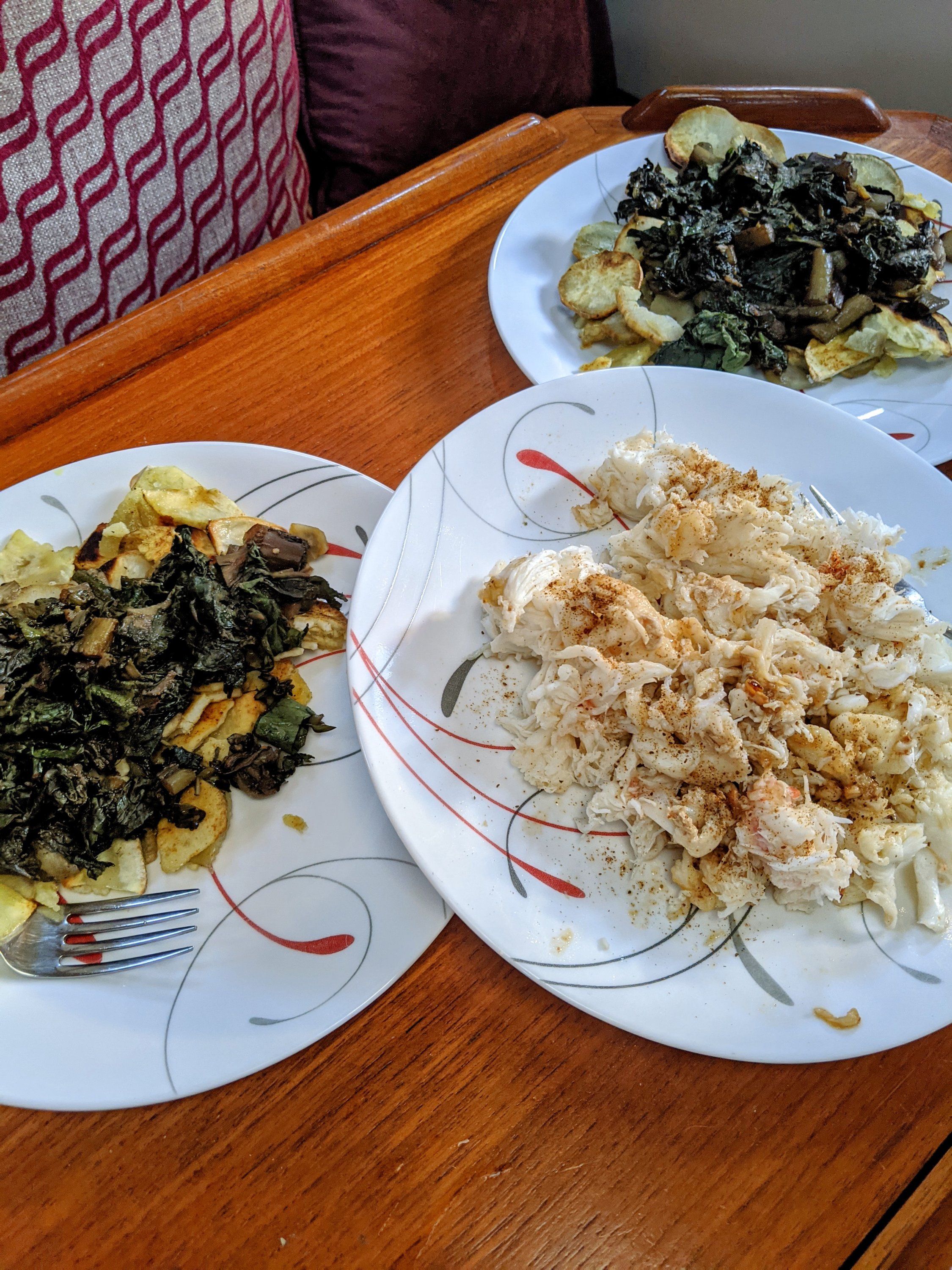
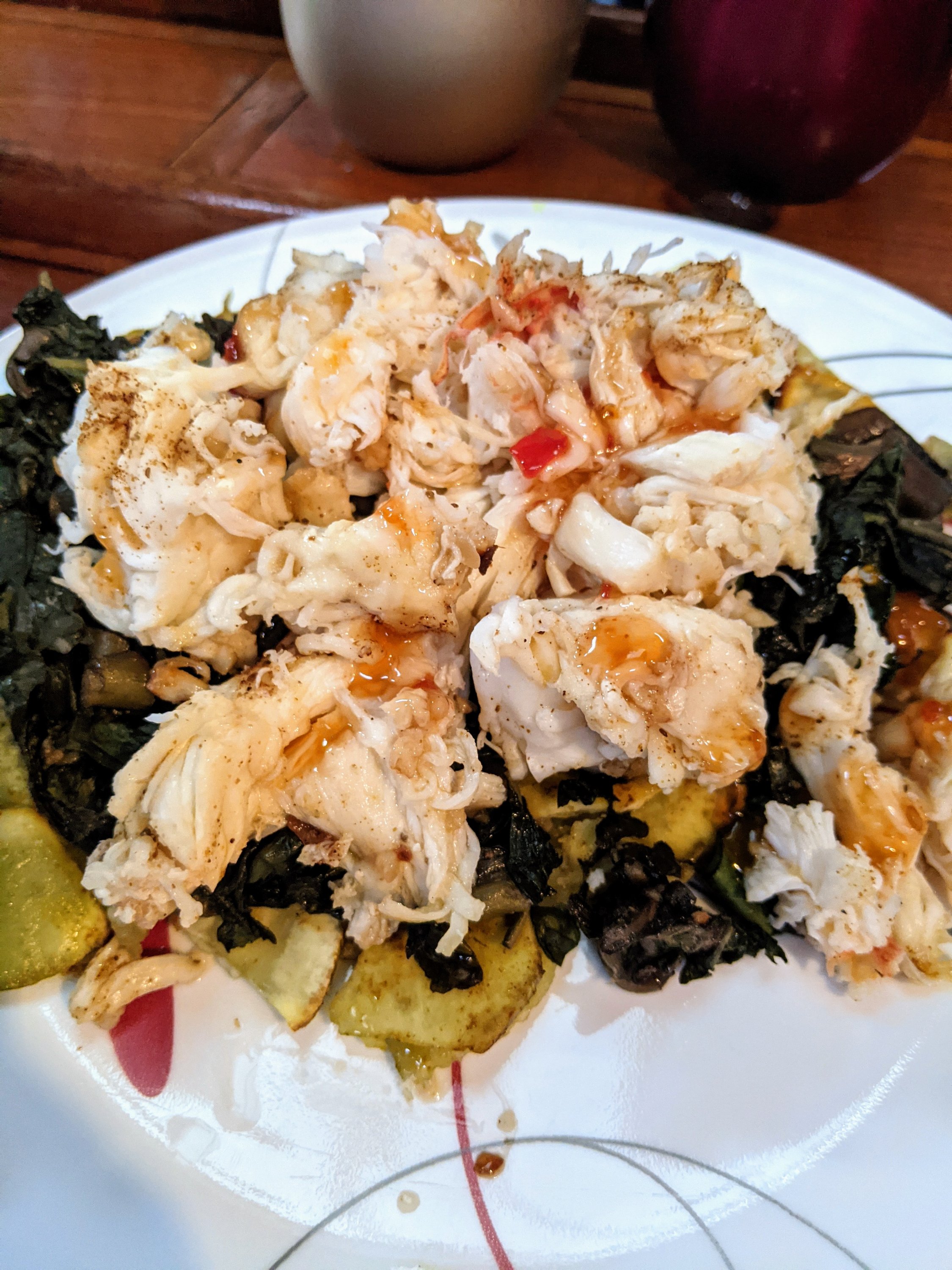
After a nap and a swim I resumed the effort with cooking lobster for dinner. We don’t have a grill on Sanitas, or a super large pot. So my go-to lobster cooking method is to treat the tail with butter, garlic, and Old Bay and to roast it in a very hot oven. We try to conserve propane by always baking more than one thing at a time in the oven. So Capt. Mike sliced up some strange looking local sweet potatoes and threw them in to roast at the same time. I’m strict about us always eating our veggies, so I sauteed a bag of chopped callalou with more garlic and some curry spices. Layering the potatoes, callalou, and lobster with a drizzle of sweet chili sauce over the top, I think my little galley turned out a restaurant-quality meal!

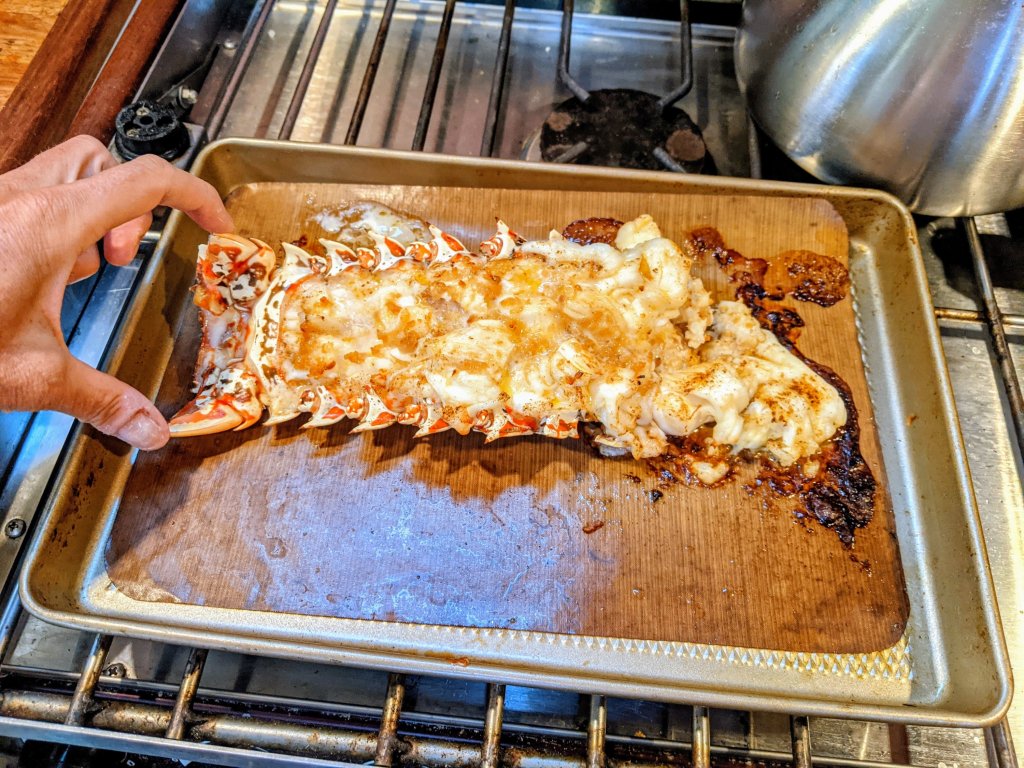
Tail filling up my 9×13 cookie sheet
Tail meat filling up a Corelle dinner plate
The finished product!

Lesson learned… Next time I find myself with a monster like this, I’m gonna take it to shore to clean it on the beach, probably involving a machete. Preferably, the beach will have a fire pit for grilling so neither my cockpit nor my galley will end up the the huge mess they were yesterday 😁

No more holes in the roof!

Remember when I said we may have bitten off more than we could chew with the boat yard projects this year? (Catch up here) Well, the decision to remove both of our hatches, take ‘em apart, and refinish them, wasn’t even on our project list so that might have been a big, big bite.

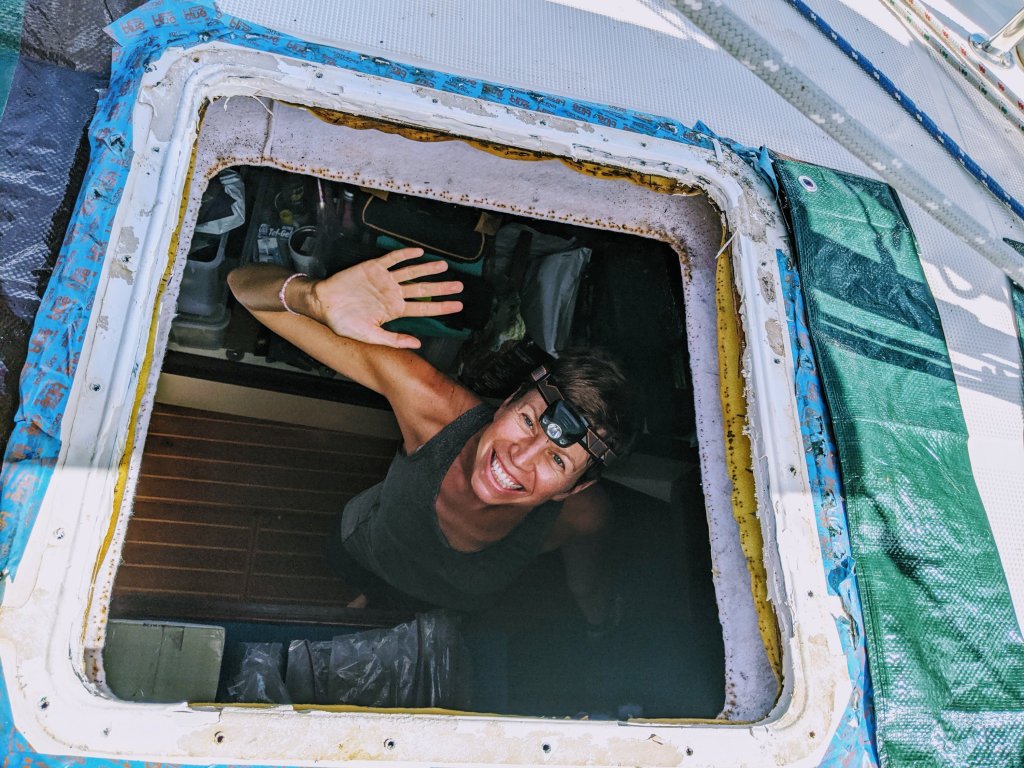
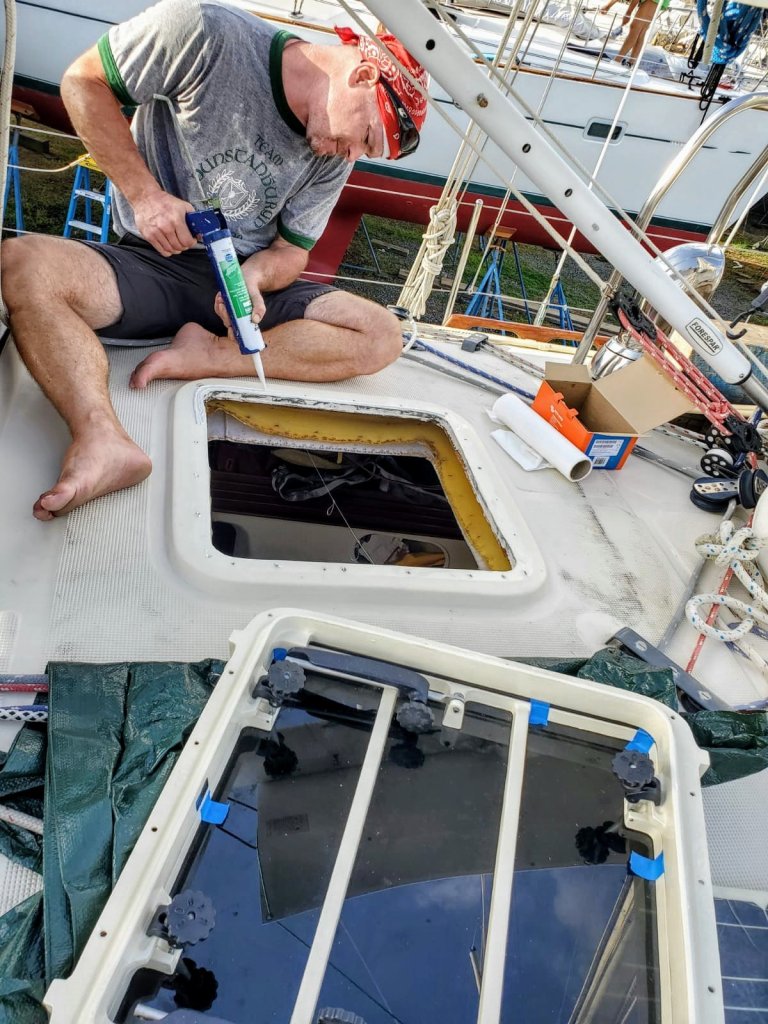
Early days, still smiling

Five or six weeks ago, when we scheduled the boat yard crew to sand-blast Sanitas’ keel, Capt Mike had the brilliant idea to have them sand-blast our aluminum hatches at the same time. So we disassembled both hatches, leaving two large gaping holes in the “roof” of our cabin and salon, and threw a tarp over the holes. It really was a good idea to address the blistering paint and fix any small leaks. Except…

  • The yard didn’t get around to the sanding for two weeks (Island time!)
  • And we learned they couldn’t sandblast until after we manually removed old adhesive and glossy paint
  • Rainy season started immediately
  • And the project was much, much harder than we expected! 😳
So much for machine sanding
How do you paint all sides of a 3-dimensional object?
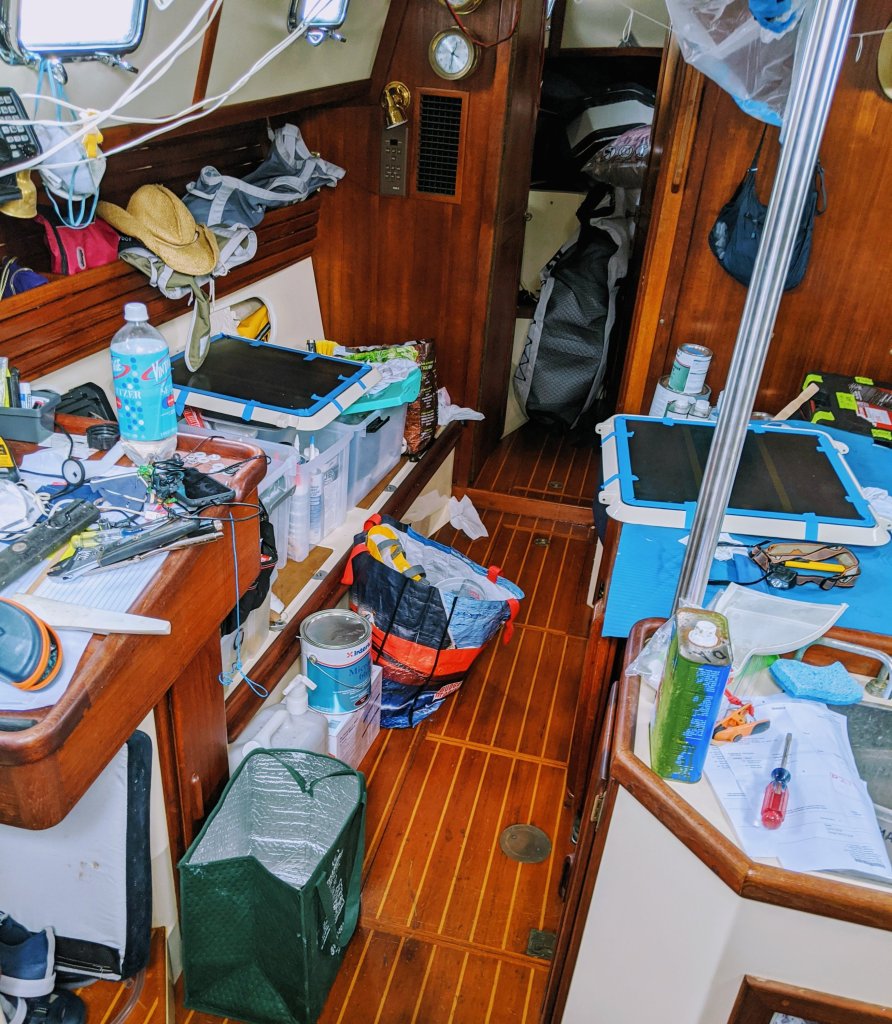
This is what Sanitas like like in the middle of a big project

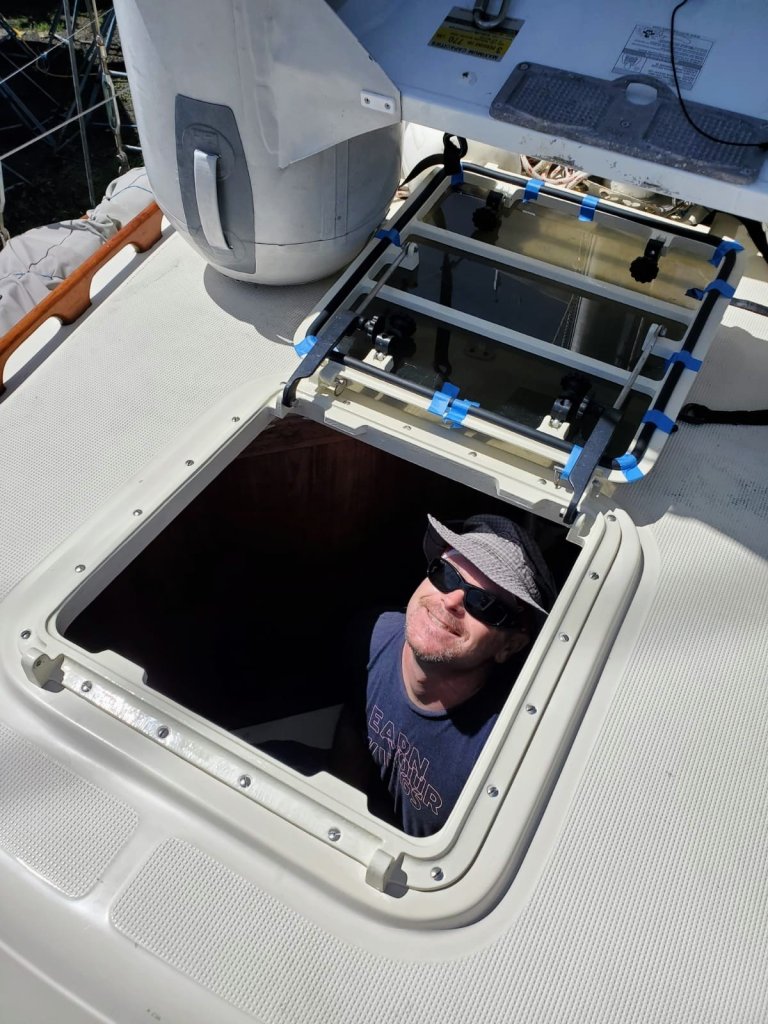
Six weeks later, we’ve survived sanding, torrential island rains, and oh so many coats of paint. After a bit of swearing, we even figured out how to put it all back together again! What a relief. I won’t bore you with the details, but suffice it to say that simply writing this brief summary is bringing on a few PTSD flashbacks. I am so relieved to have Sanitas waterproof again, and I hope I never have to do this particular project again!

Why doesn’t it fit back together again?
Finished! Even the captain is smiling!

Sometimes we get carried away

Sanitas is back in the boatyard for the most active part of hurricane season, and Capt. Mike and I thought we might have a nice little vacation from the boat. You know, stay in a pleasant apartment, rent a car, maybe explore the island of Grenada, doing hikes to waterfalls and discovering isolated beaches. But no. Instead, we are up to our eyeballs in boat projects. As we walked home yesterday evening, covered in paint residue and mud and completely exhausted, I asked Capt. Mike, “Do you think we got a little bit carried away this time?”

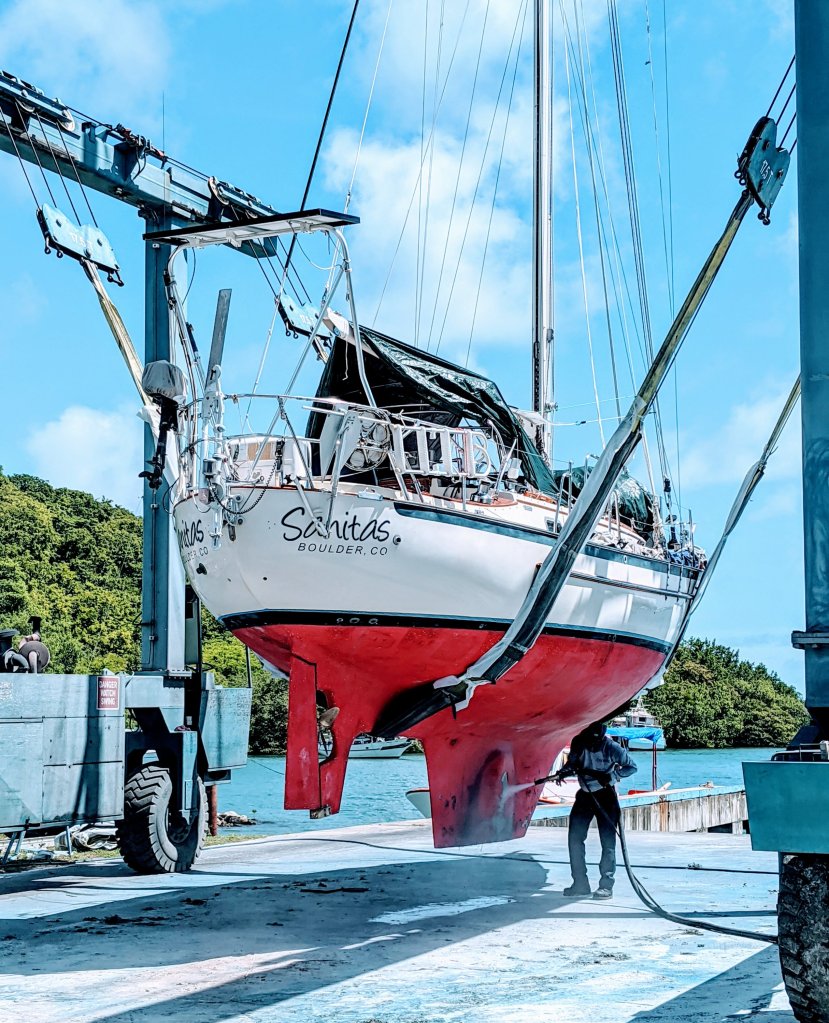
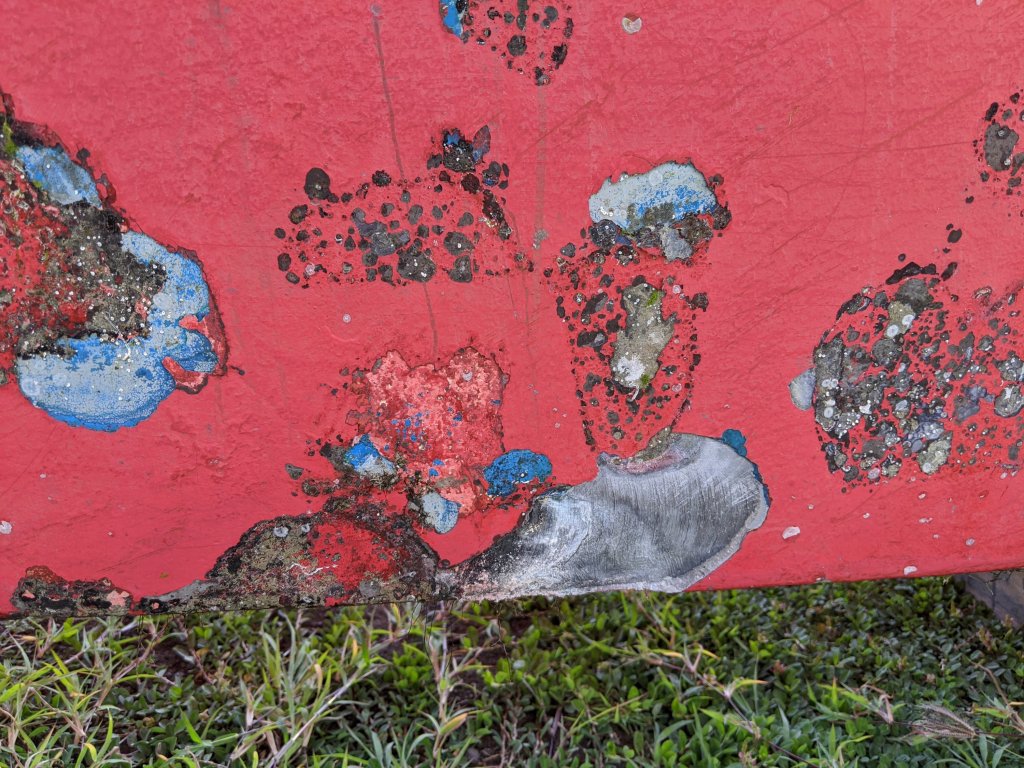
It all started with our normally scheduled annual haul out and inspection of the hull and keel that are usually hidden below the water line. The red anti-foul bottom pain hadn’t held up as well as in previous years – we got a lot of hard and soft growth on the bottom this season, and we’d scraped the red paint all off and down to the blue layers underneath in several spots. Perhaps the Puerto Rican boatyard had applied the anti-foul too far in advance of splashing into the water last fall? And then we looked closely at our lead keel and noticed spots where all of the anti-foul and primer were gone, and we could see the exposed lead. Well, that’s a problem. We’ve got to do something about that.

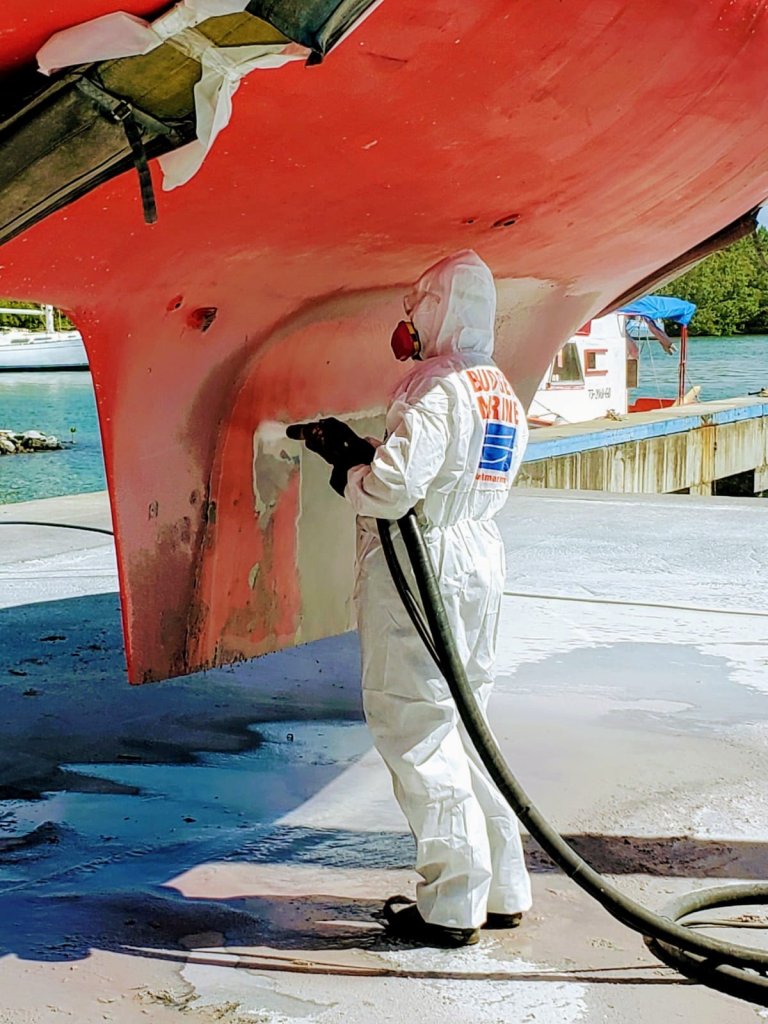
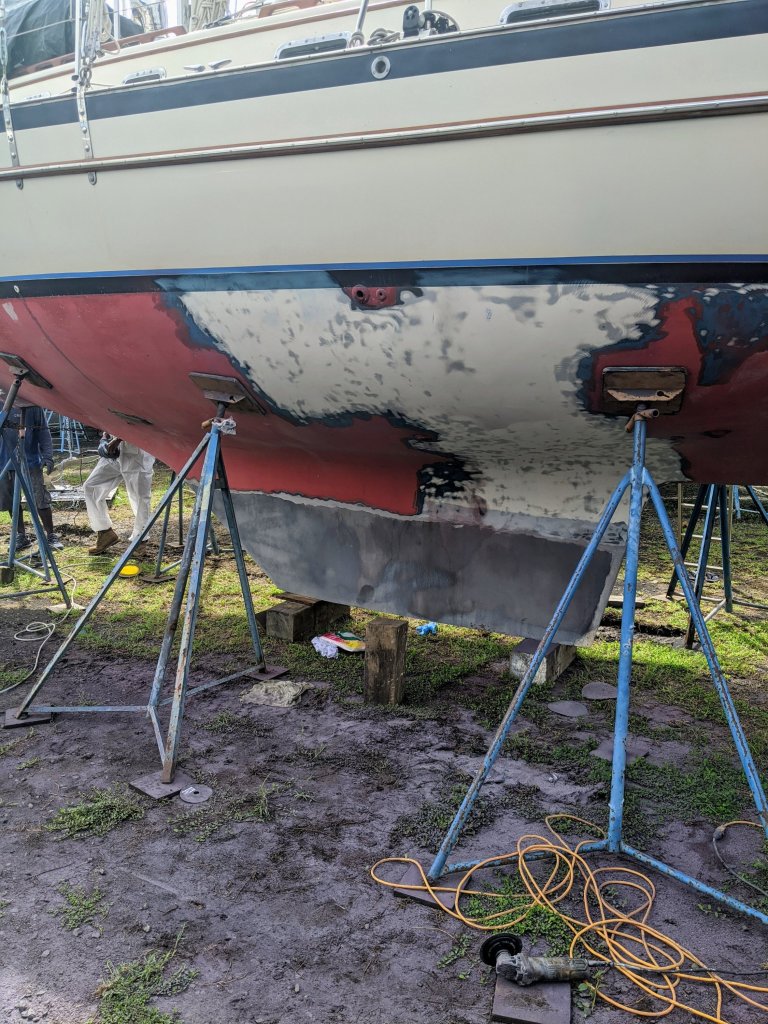
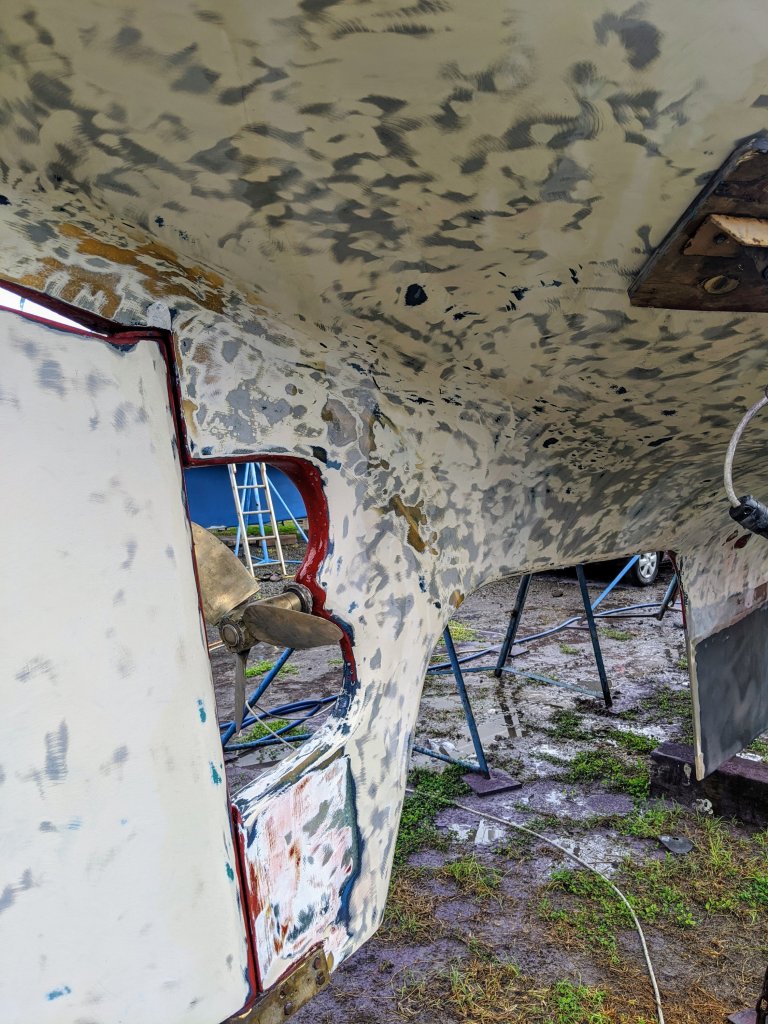
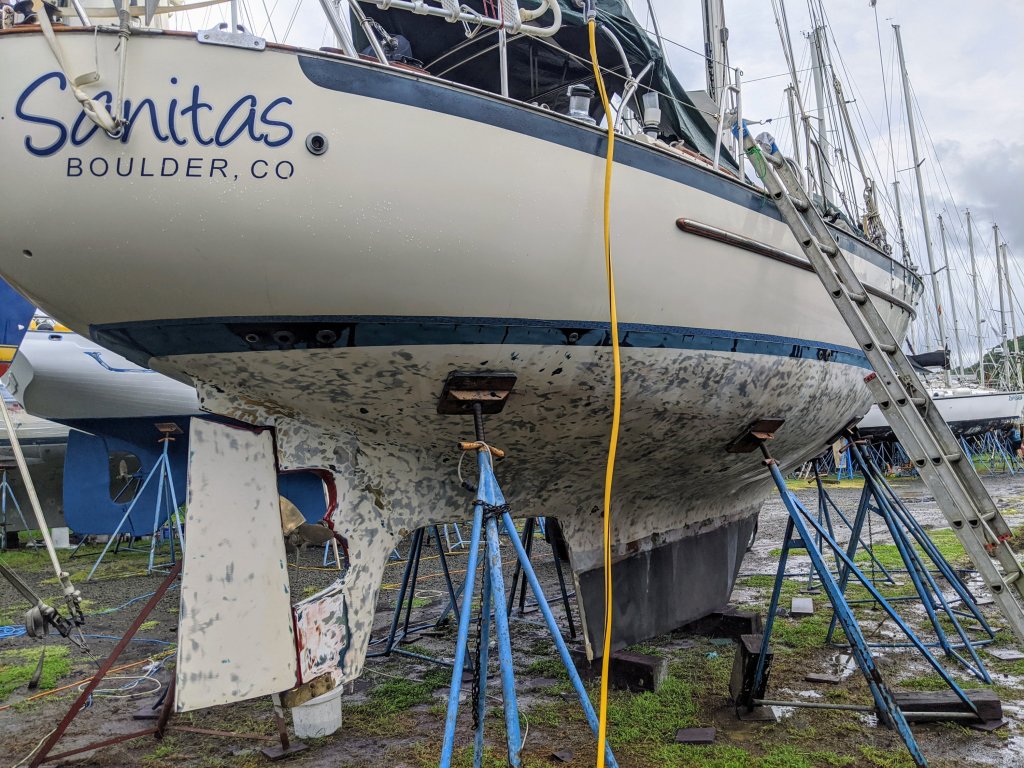
So we hired the team at the Spice Island Marine boatyard to sand Sanitas’s hull. The goal was to get down to a good layer of primer so that we could reapply lots of layers of anti-foul paint and be really confident in our hull’s condition for the 2021 cruising season. But…between sand blasting and hand sanding, they took off much more than we expected. Primer? Fuggedaboutit. They took the keel down to exposed lead, and sanded the hull right down to the white gelcoat. In fact, we can even see the fiberglass in some spots. Uh oh.

So, now instead of a couple of coats of anti-foul, we have a big project on our hands. We have to finish sanding and prepping all the parts they did poorly. Then we have to epoxy all the spots where fiberglass is showing through. Next, four or five layers of Interprotect 2000e epoxy primer – with very specific temperature and humidity constraints and dry times between coats. THEN we’ll finally get to the point where we can start applying the anti-foul. And all of this primer and anti-foul contains some pretty yucky chemicals and toxins, so we’ll need to apply it wearing respirators and a paper bunny suit. I have to admit, I’ve stopped even asking what all of these jars of epoxy and primer and paint and solvent actually cost!

Oh! And did I mention that since we were having the yard sand the hull down so far, we decided to raise the water line? That means we’ll apply anti-foul a couple of inches higher this time, because I guess I provision too many canned goods and Sanitas always sits lower in the water than planned. And once we raise the water line, we’ll have to repaint the dark blue boot stripe a couple of inches higher as well? And of course we have to find the right color blue to match the other blue trim on Sanitas so she doesn’t look trashy, right?

So if you want us over the next few weeks, you’ll find us in the boat yard. Definitely sweaty, probably covered in paint, most likely hungry or thirsty, and guaranteed grumpy. I hope it’ll all be worth it and Sanitas will be in the best shape of her long life when we’re finished!

Winner winner, lobster dinner!

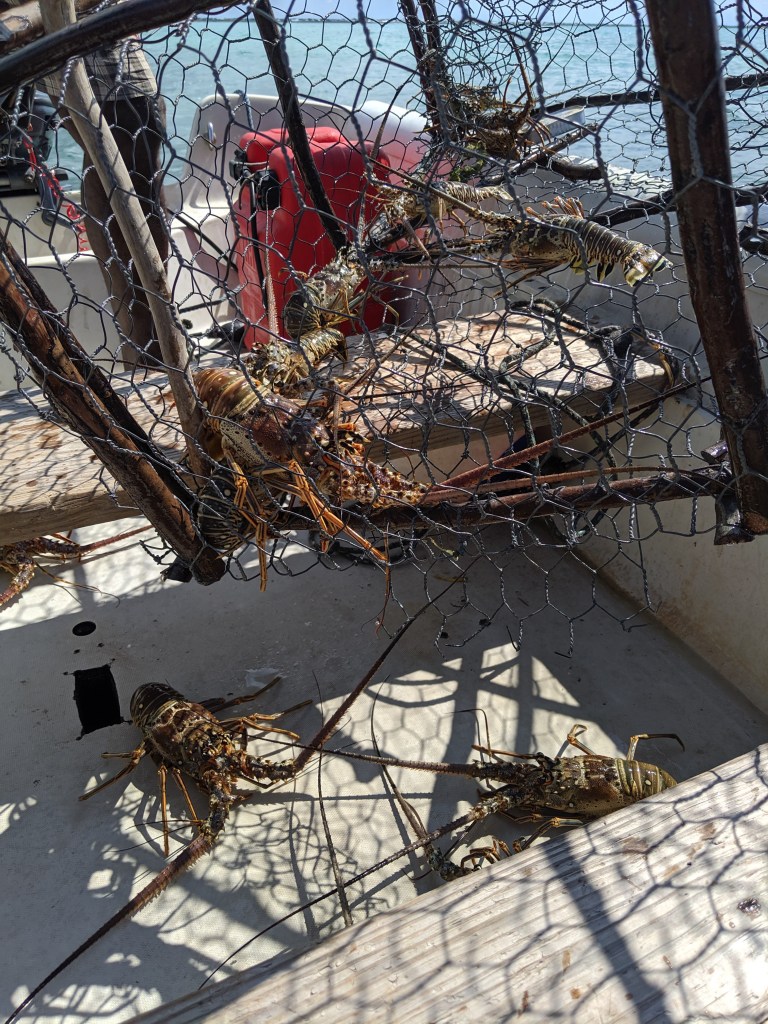
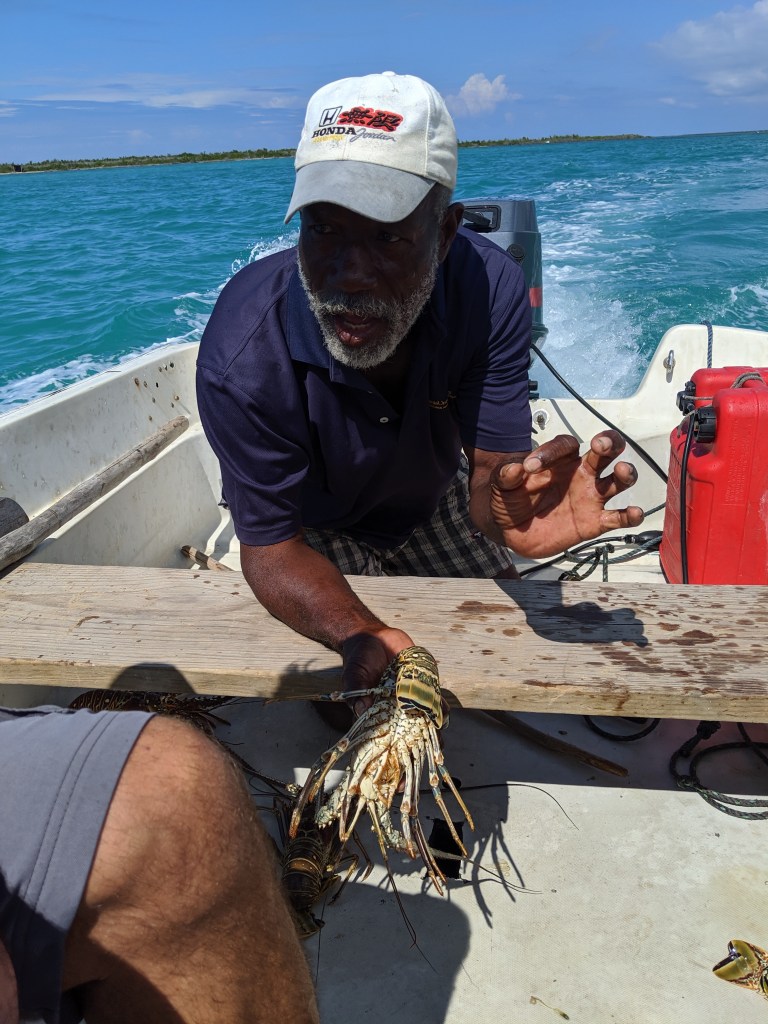
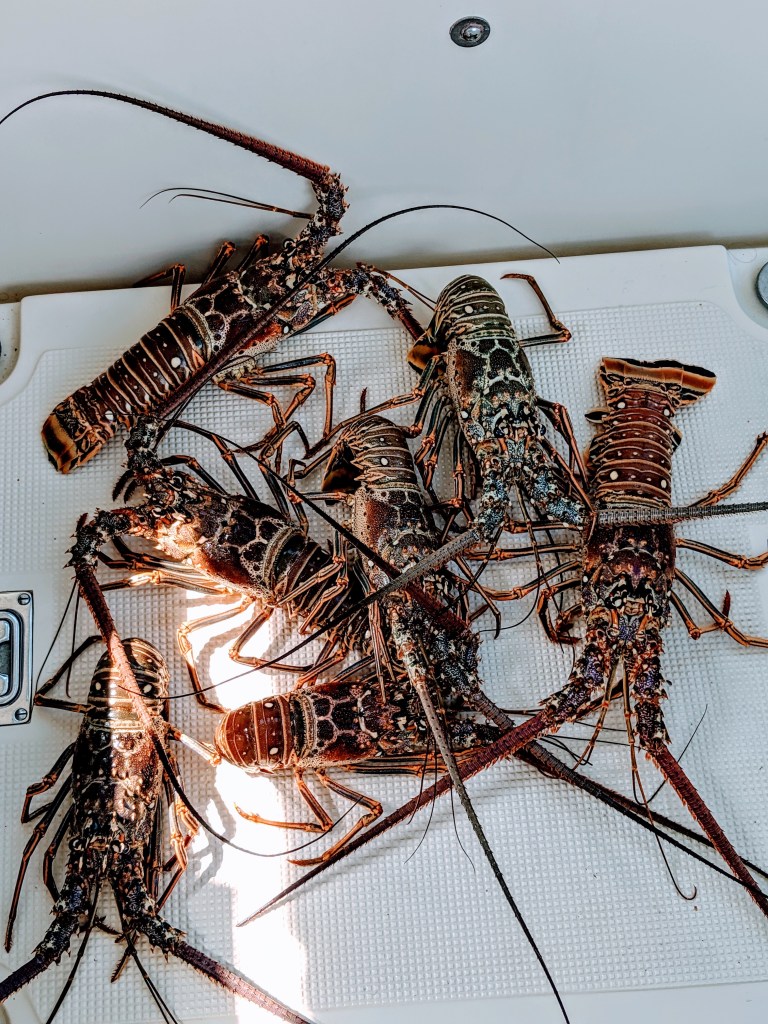
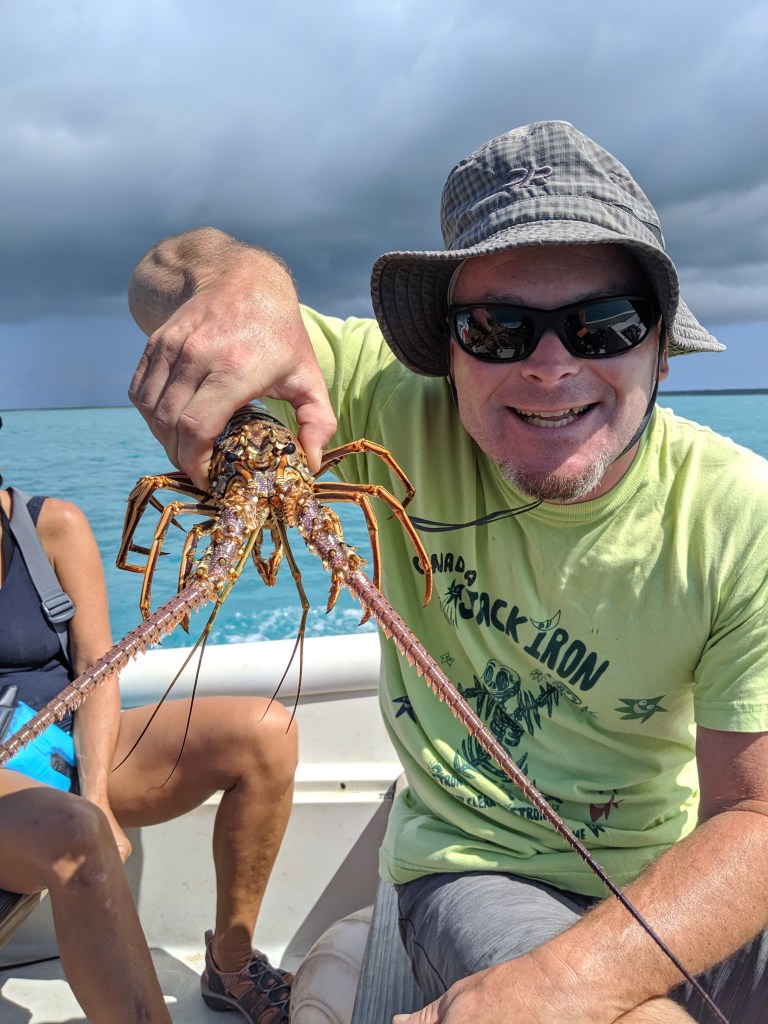
After our tour of the Frigate Bird Sanctuary, our guide George Jeffreys steered his Boston Whaler north in the lagoon to a spot near the ruins of the old Lighthouse Hotel. Capt. Mike and I kind of looked at each other, like “Where’s he going? I thought he was taking us back to our boat” But George found some magical unmarked spot and lo and behold! Raised up a big lobster trap and dumped it in the boat. Silly me wondered whether there would be a lobster in the trap. Well, there were at least a dozen! George used a stick to pull out all of the lobster that were over the legal size for fishing – seven in all. For $15 we had the makings of a wonderful dinner!

Treasures from the deep
George teaching us the difference between male and female lobster

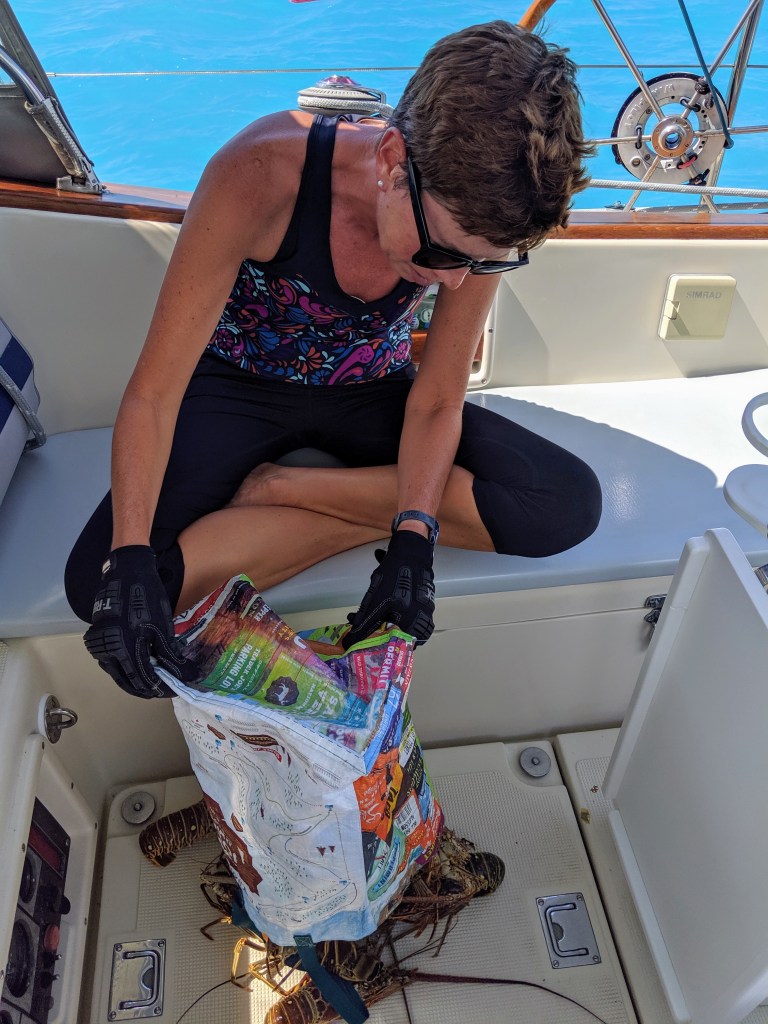
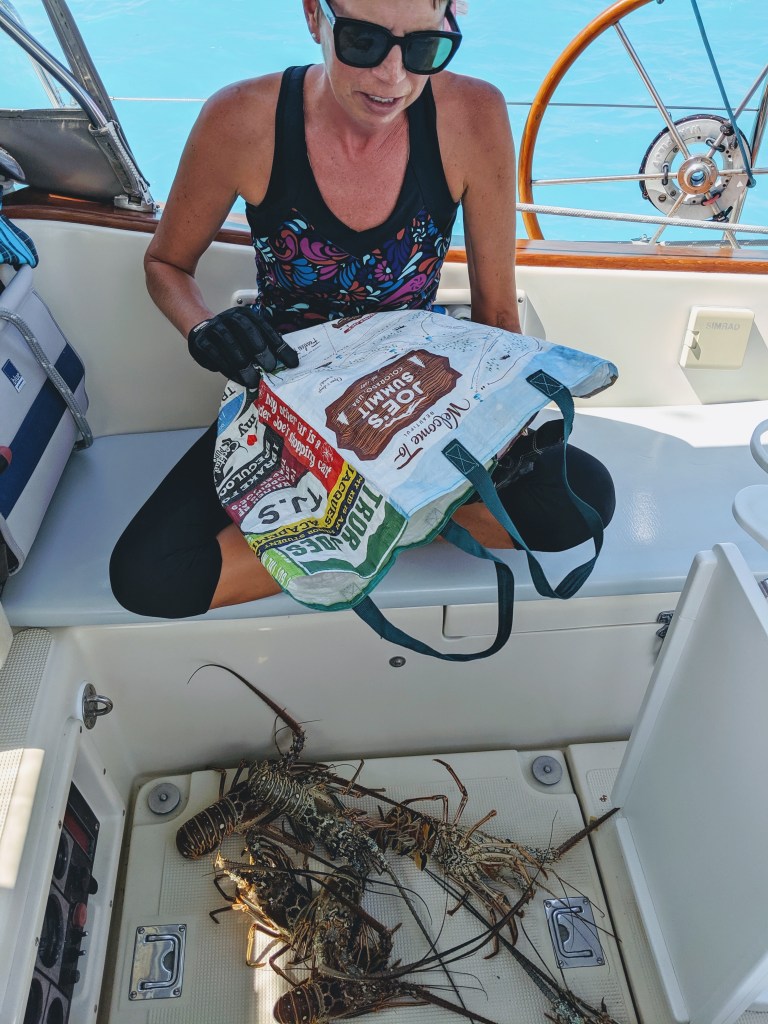
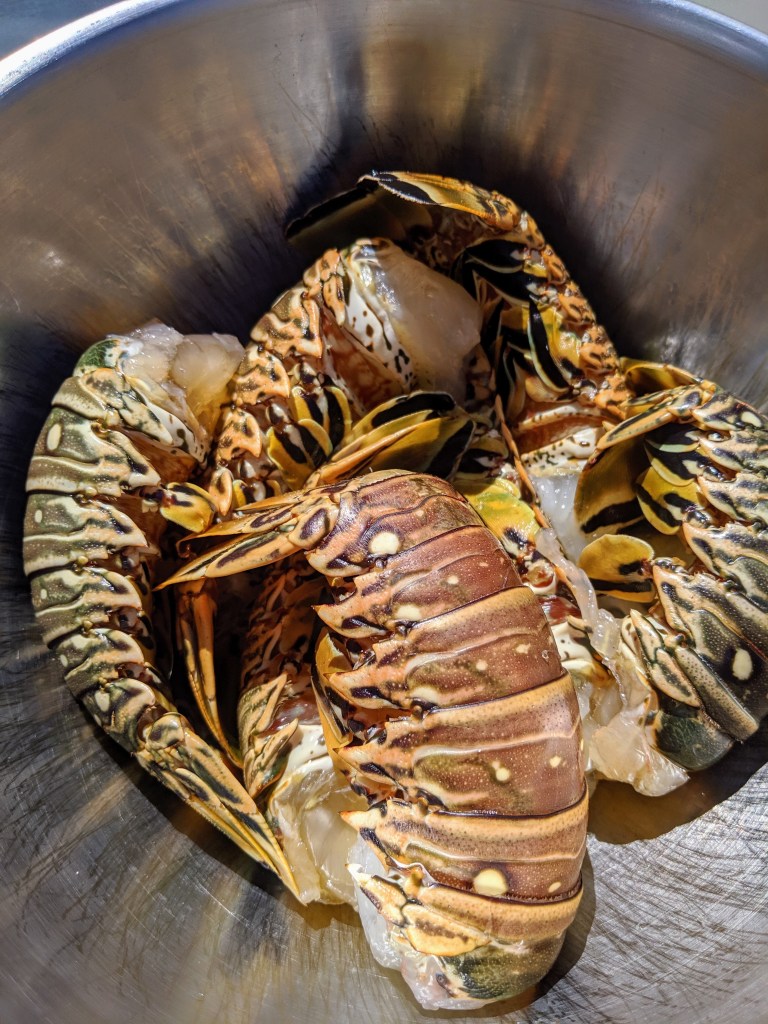
At least we WOULD have a good dinner if we could herd those grumpy lobsters onto our boat, and could figure out how best to clean them and cook them. So Capt. Mike is in charge of sailing, and I guess I’m in charge of killing lobster. I googled “how to clean a Caribbean lobster without tools”, and it goes something like this…. First, put on a pair of work gloves to protect your hands from the spiny bits. Then grab the body of a lobster in one hand, and it’s tail in the other and pull and twist. Drop the body overboard quickly, so you don’t have to watch it twitch or confront the reproach in its beedy little eyes. Save one of the long tentacles because you’ll use it to pull the digestive tract (aka the poop chute) out of each tail. Then rinse well with seawater.

Before all the killing and cleaning
After all the killing and cleaning

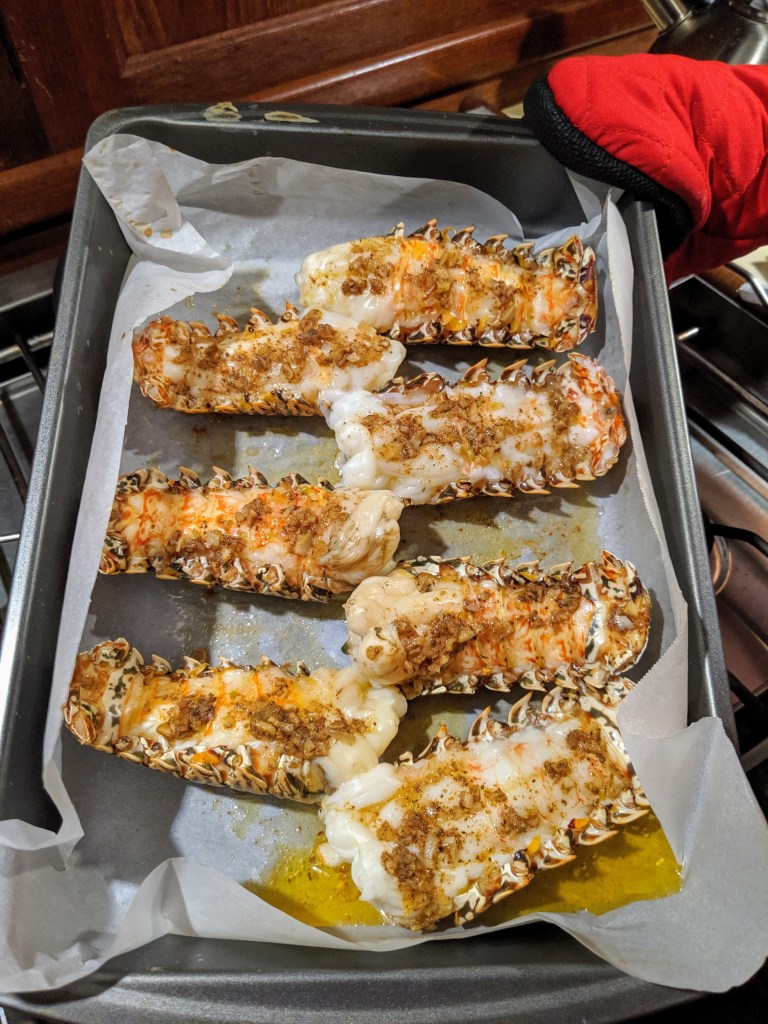
I trimmed the soft inner shell off each tail, topped with melted butter, garlic, and Old Bay spice, and roasted in the oven for 15 min. With a side of mashed sweet potatoes, and a fresh tomato salad concocted by Melinda on SV Sava, we had an amazing lobster dinner while watching the sunset.

The finished product! Bon appetit!