Tropical Shipping Blues

When we first started talking about buying a new boat, I concocted a little fantasy in my head…. We’d buy a new boat in Grenada and we’d sell Sanitas in Grenada, so we’d put our two boats right next to each other on a dock. We’d simply carry armloads of belongings from one boat to the other, de-cluttering and donating as we went. But when we found our perfect boat in Florida, that little fantasy went “poof”!

So I toyed with the idea of Japanese minimalism. You know, “it’s all just stuff” and “everything is replaceable”  and we would just bring what we could fit into checked luggage. Until Capt Mike loaded just a fraction of his tools into a suitcase and immediately exceeded the 50 pound limit. Sure, everything IS replaceable, but how much did I want to spend to buy everything all over again? It takes A LOT of tools to keep a sailboat running and happy.

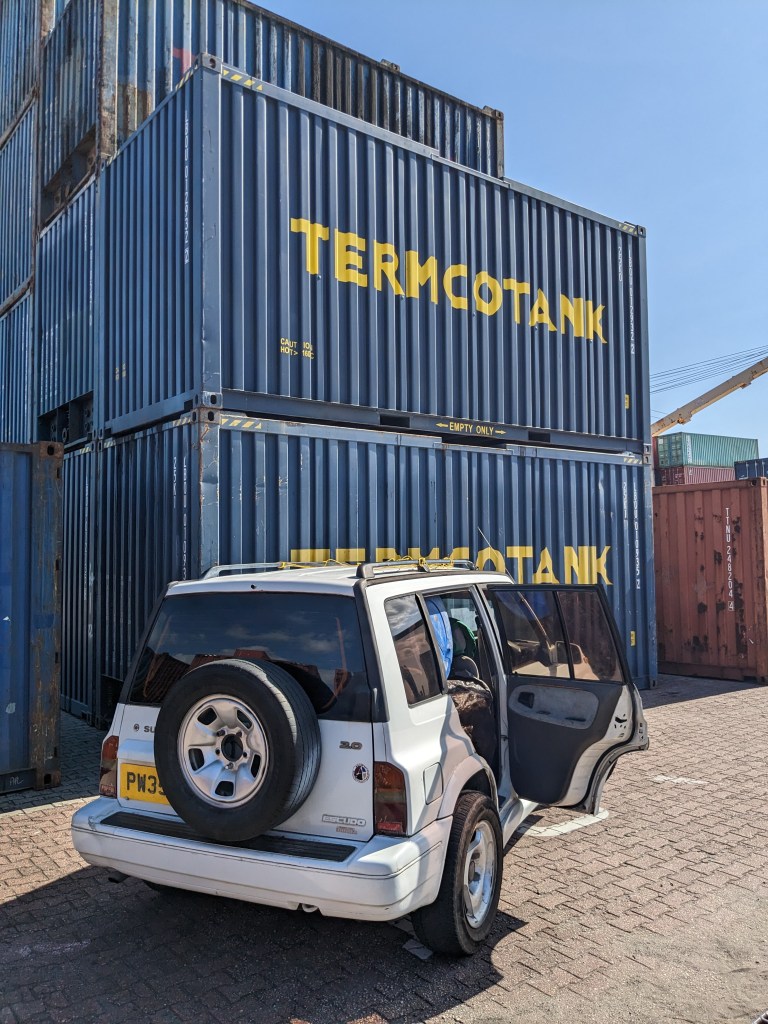
So we decided to use Tropical Shipping to ship a “Less Than Container” or LCL load from Grenada to Florida. That’s more difficult than it sounds – everybody wants to ship goods from the USA to Grenada, but who wants to ship things BACK to the land of plenty? Apparently we were lucky. We learned that sometimes people wait weeks or even months for enough containers to fill a ship heading west.  We called Tropical on a Thursday afternoon and learned there was a ship leaving the next week. Great news! Little did we know how much red tape and bureaucracy we were going to fit into that week….

Step 1: Find a container

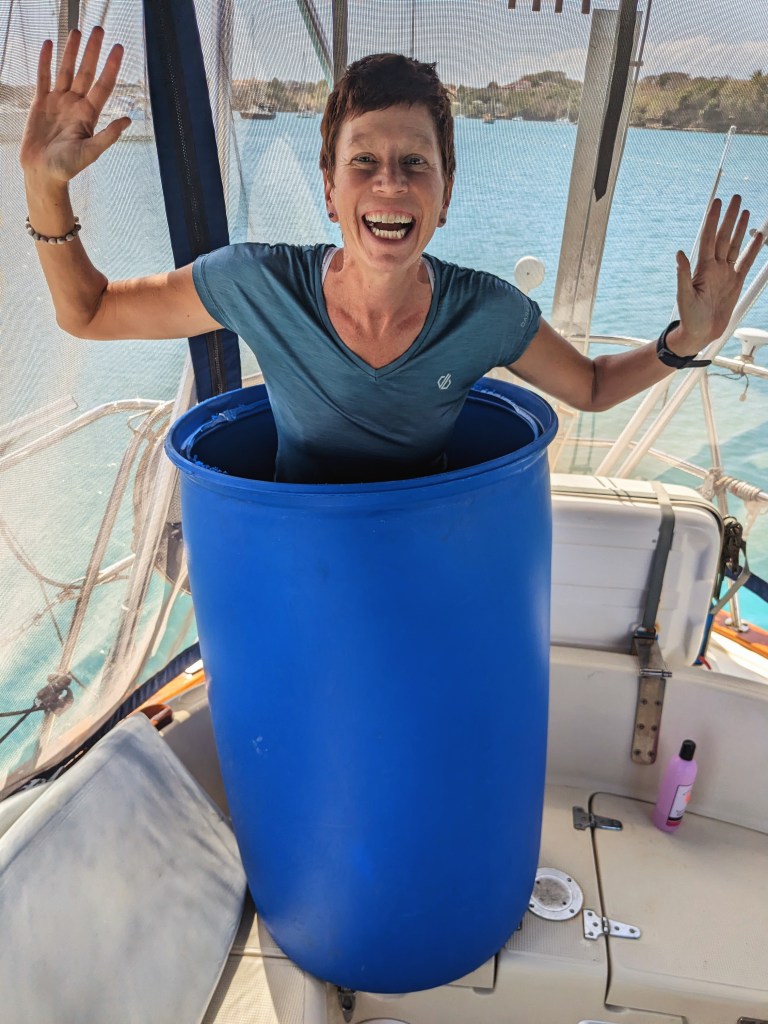
Apparently, when you are shipping “less than container” loads, you need to bring your own container. Who knew? And for some reason, the shipping companies don’t sell containers. Neither do the hardware stores, boat supply stores, home goods stores… And although you’ll see shipping barrels by the side of the road all over the islands, often doubling as garbage cans, they never have lids, so they are useless to us. Finally, I turned to the internet and found two big blue plastic shipping barrels (WITH lids) on Facebook marketplace for about $20 each and sent Mike out into Friday night traffic to collect them.
Step 2: Paperwork. A lot of paperwork

I naively believe Tropical Shipping would handle all the paperwork as part of the fee we were paying them. Nope! The customer service agent rattled off a list of forms and a deadline – our shipment would need to be delivered to the port in Grenada by 3:00 Tuesday to make the Thursday departure. Oh, and we’d need to hire a local broker to process our customs forms on the Grenada side. AND we’d need to hire a US broker to process things on that side. The deadline was already feeling tight! After getting a few price quotes, we chose Lund & Pullera and they were excellent! Stacy really helped me through the US Customs process. We hired Alana from Phenomenal Brokerage in Grenada who was also very responsive. But all together I probably spent 10 hours on the laptop tracking down forms and trying to figure out how to complete them. In addition to my part-time job as a boat broker, I’m now working as a customs broker, lol. I need to print new business cards.

Step 3: Pack the barrels

A big blue shipping barrel can swallow up a LOT of stuff. So after Mike packed his tools, we still had a lot of space to pack my favorite pots and pans, snorkel gear, clothes, and even some packaged gluten free food. I admit, we hit the point that everybody gets to eventually when moving house – that point when you just start shoving in whatever you can reach, and you’ll worry about whether you really need it or not on the other side. Then we realized our next problem. A full shipping barrel weighs over 400 pounds. So how were we going to get it out of the boat and to the port?

Step 4: Unpack the barrel you just packed

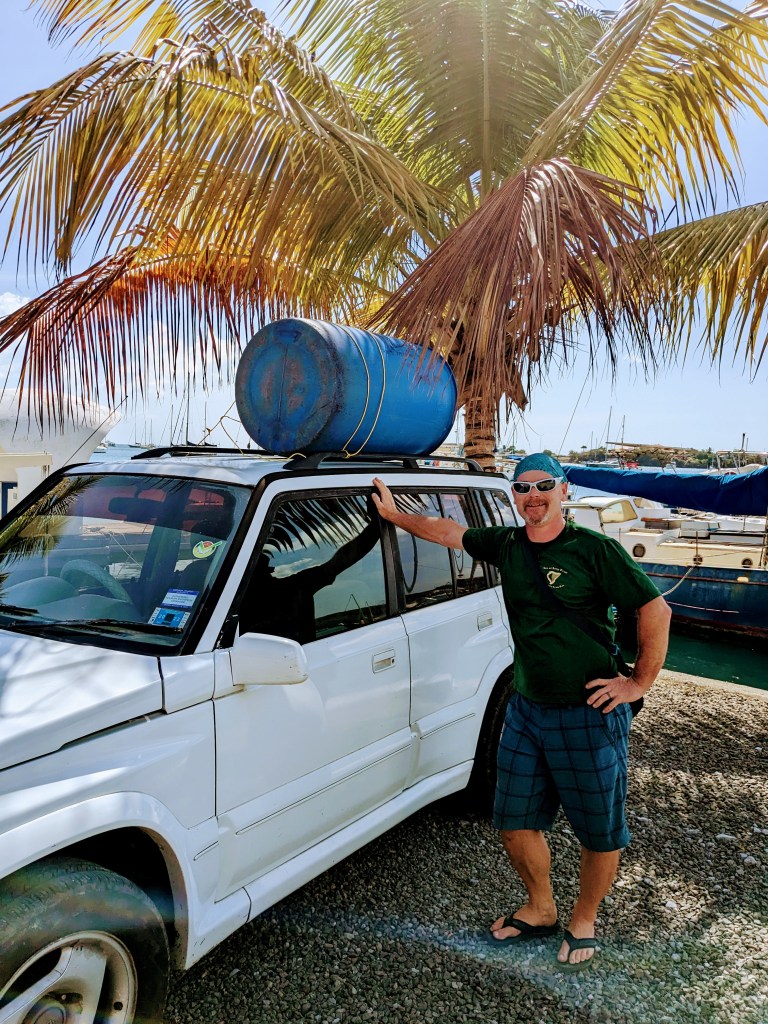
So we took everything out of the barrel, loaded it all into tote bags and shopping bags, made multiple dinghy trips from the boat to shore, and loaded all that stuff into a rental car.
Step 5: Repeat pack and unpack steps for Barrel #2

By this point, I’m pretty sure we’ve touched everything on the boat, and moved it around, at least five times.

Step 6: Keep calling Tropical until they finally break down and let us deliver the barrels

We worked hard all weekend, and by Monday morning we were ready to deliver our barrels to the port in St George’s. And then we got stuck. We couldn’t do anything until Tropical approved our paperwork, assigned us a container scheduled for that ship, and arranged for someone to meet us at the port. We waited… And waited.. and started calling them about every three hours. Nothing happened on Monday. Or on Tuesday morning. Remember we’d been given a 3pm Tuesday deadline? Finally we called Alana at Phenomenal and she called Tropical and finally we could proceed

We hopped in the rental car and drove into downtown St George’s to the Tropical office to get a car pass for the port. The customer service agent asked Mike for a hardcopy form that Alana processed for us. Uh oh. We couldn’t find it. Must have left it back on the boat. So we hopped back in the car and drove like a bat out of hell back to the dinghy dock, plus a long dinghy ride back to the boat, found the form, and did it all again in reverse. Phew! Got our car pass and headed to the port. It’s now 2:30pm.

Step 7: Deliver the barrels to the port

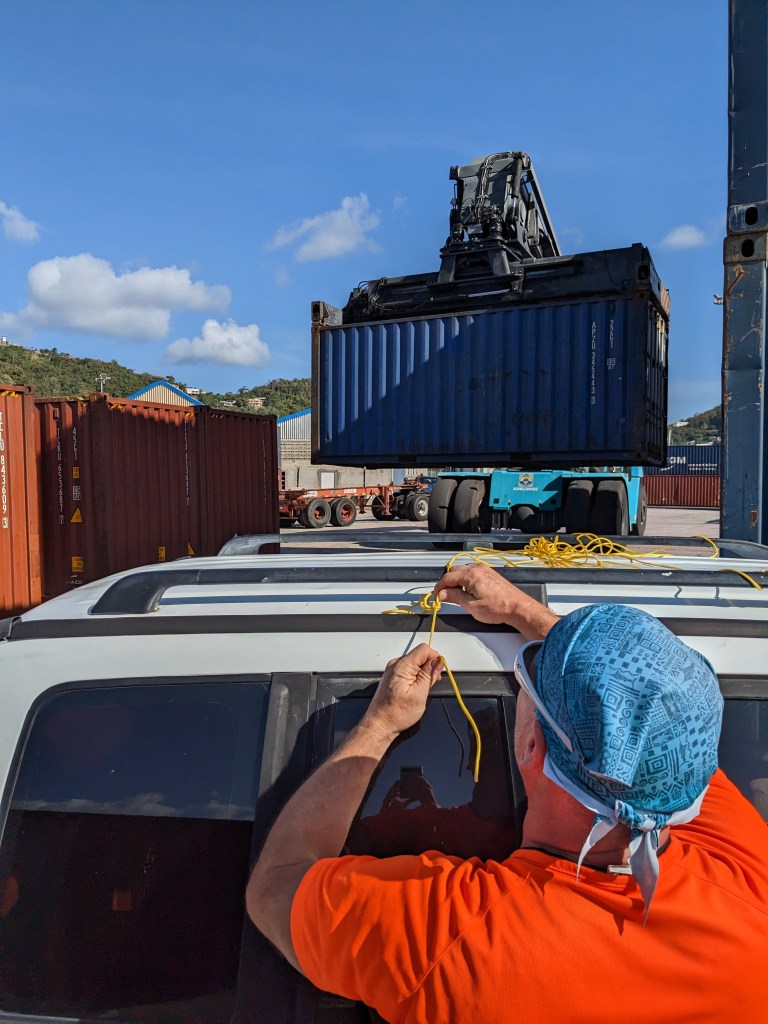
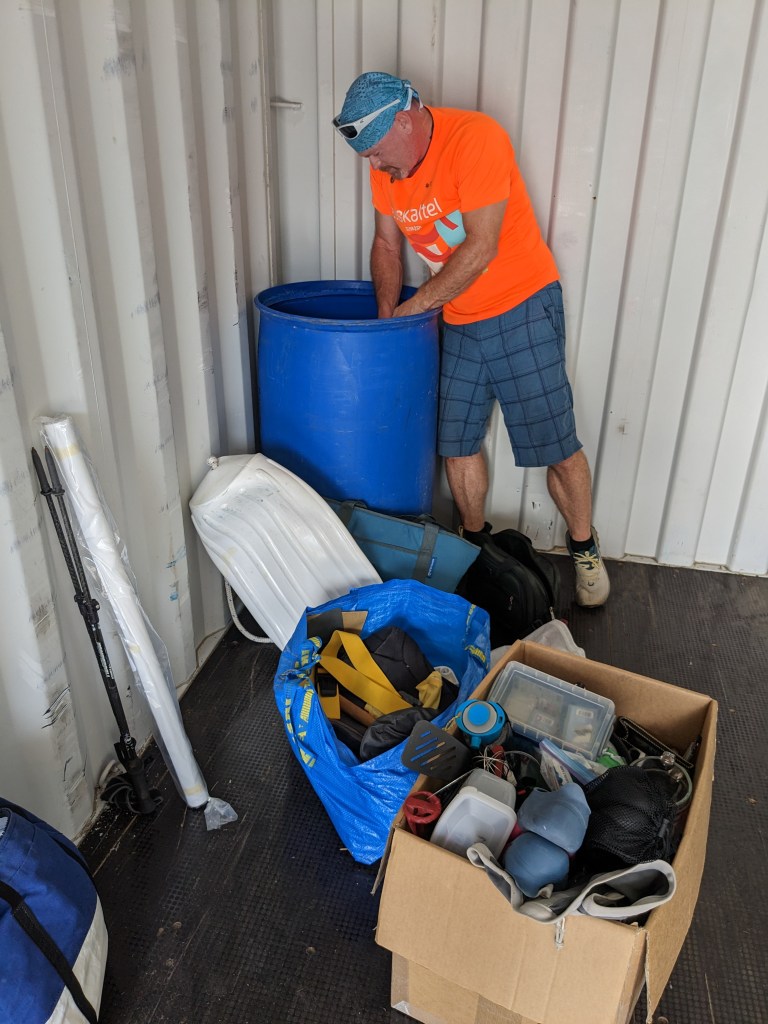
We donned our close-toed shoes and hi-vis shirts and rushed to the port. A very pleasant young man named Kelwin met us there and showed us to an empty container. Capt Mike set to work. Remember how we couldn’t carry a full barrel? That means we showed up at the port with two empty barrels tied to the roof of the car, with the car itself overflowing with all the stuff we hoped to fit inside them. Kelwin helped me carry bag after bag into the extremely hot shipping container while Mike worked his packing magic. Somehow, miraculously, it all fit. We were asked if Alana had “processed the customs form.” I assumed so, but when we called to find out, she said she’d come down to the port now to do it if, and we weren’t allowed to actually make our official delivery until the US Customs agent filed an ISF form but… the computer was down. We made a bunch of calls and I bit my nails, and eventually it all got done. We closed the lids on the barrels, sealed with a lot of duct tape, tipped Kelwin for his help, and left the port around 4:15. I guess we were on-time when you take into account the concept of “Island Time” We went home and as Mike was unpacking his bag, out fell the paperwork that we drove all the way back to the boat to collect. No one had asked for it again. And even as I am writing this week’s later from the US, no one has ever asked for it. Sheesh.
Big News for Team Sanitas!

As some of you may have noticed from our social media posts, there are big changes coming up for Capt. Mike and me this year. We have listed our beautiful Sanitas for sale â›ĩïļâĪïļ â›ĩïļ So what’s next?

Are we giving up on the nomad life and going back to work? 📇🗄ïļðŸ“… No way!

Are we buying an RV and switching to land cruising? 🚐🌆🇚ðŸ‡ļ Not yet!

Are we fully committing to this crazy life and upsizing to a bigger boat? â›ĩïļðŸĶˆðŸïļ Absolutely!

We’ve been making a lot of upgrades to Sanitas to keep her systems in great condition and to make living aboard more comfortable. But I think we’ve reached the limit of how well we can use the space on our beautiful but teeny boat. So for the past year or three, we’ve been casually on the lookout for an upgrade. We haven’t been looking very hard, just kind of hoping the universe would eventually deliver us the perfect boat – maybe finding a fellow cruiser moving back to land who just happens to have the perfect size, model, and age of boat for us! Clearly, that hasn’t really worked out. So on Christmas Eve I told Capt. Mike it was time to inject our boat search with “a bit more vigor.” Vigorously, we did so! On 18 January, we put in an offer on our next sailboat and we are working toward closing the week of 20 February.

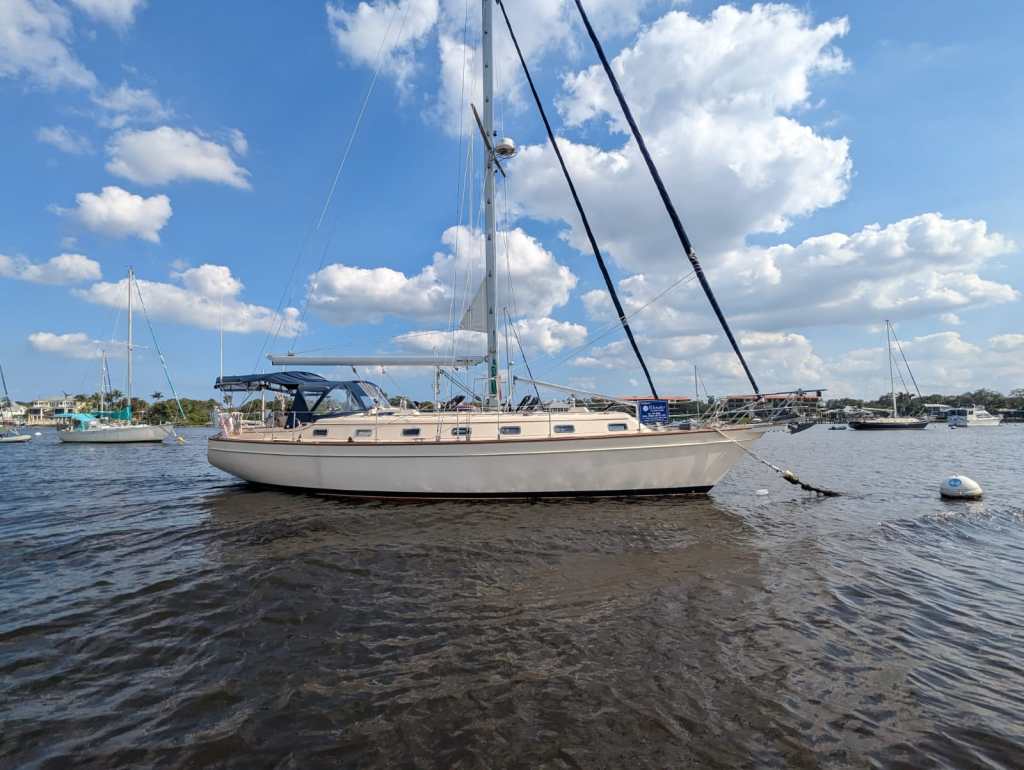
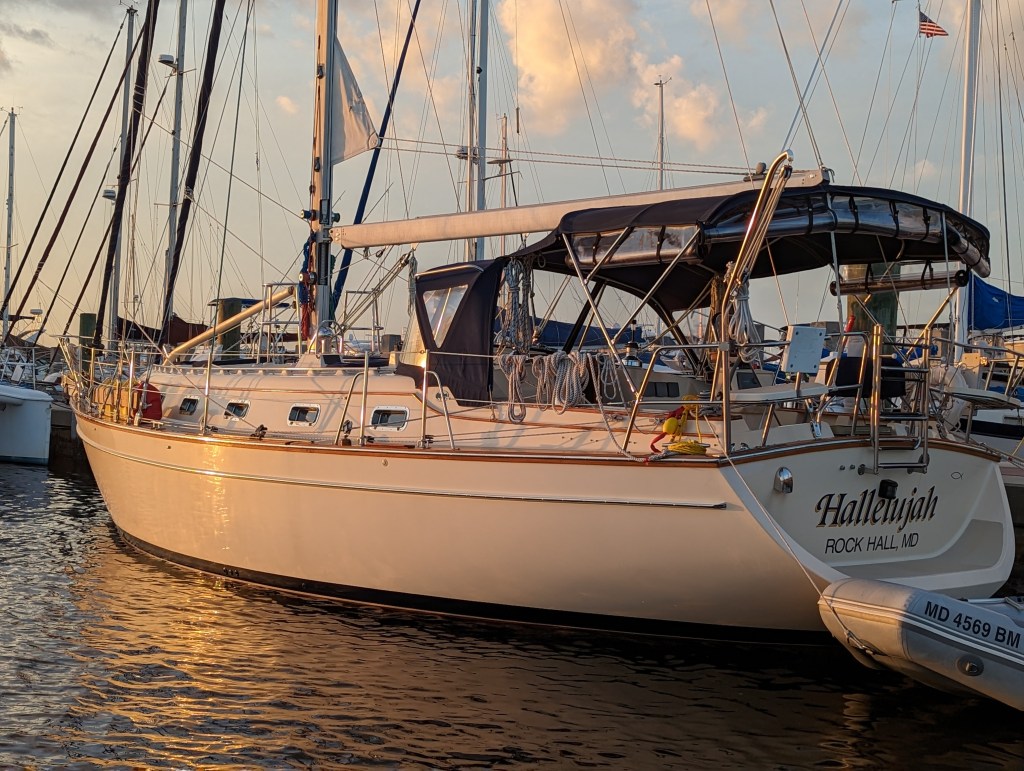
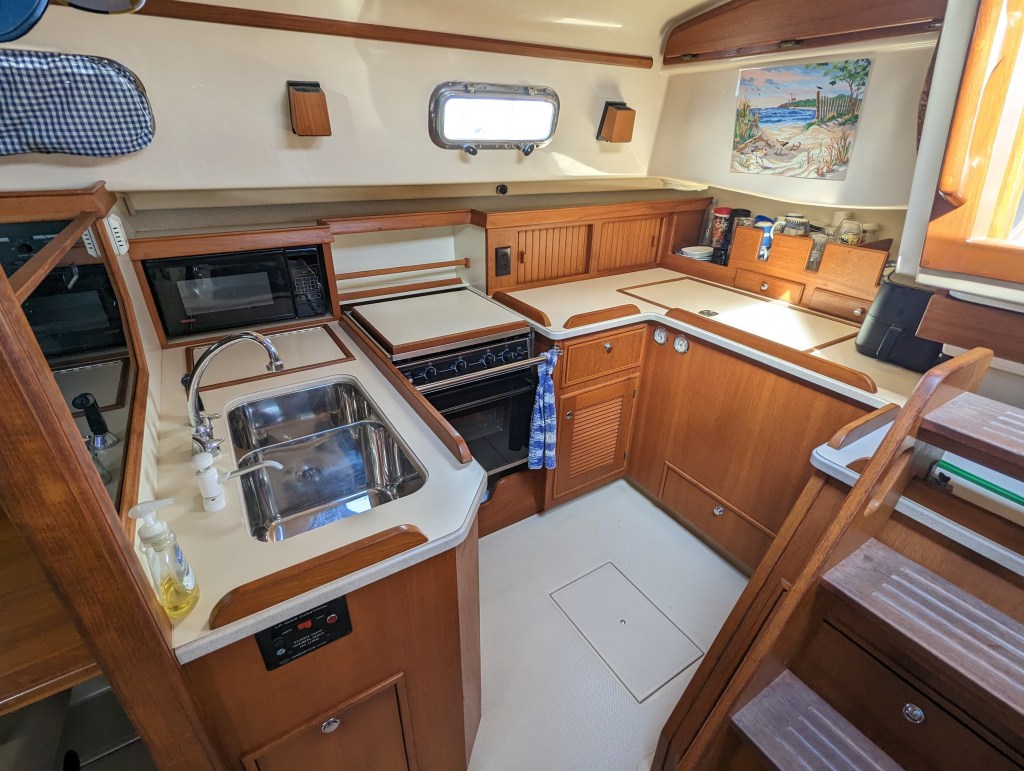
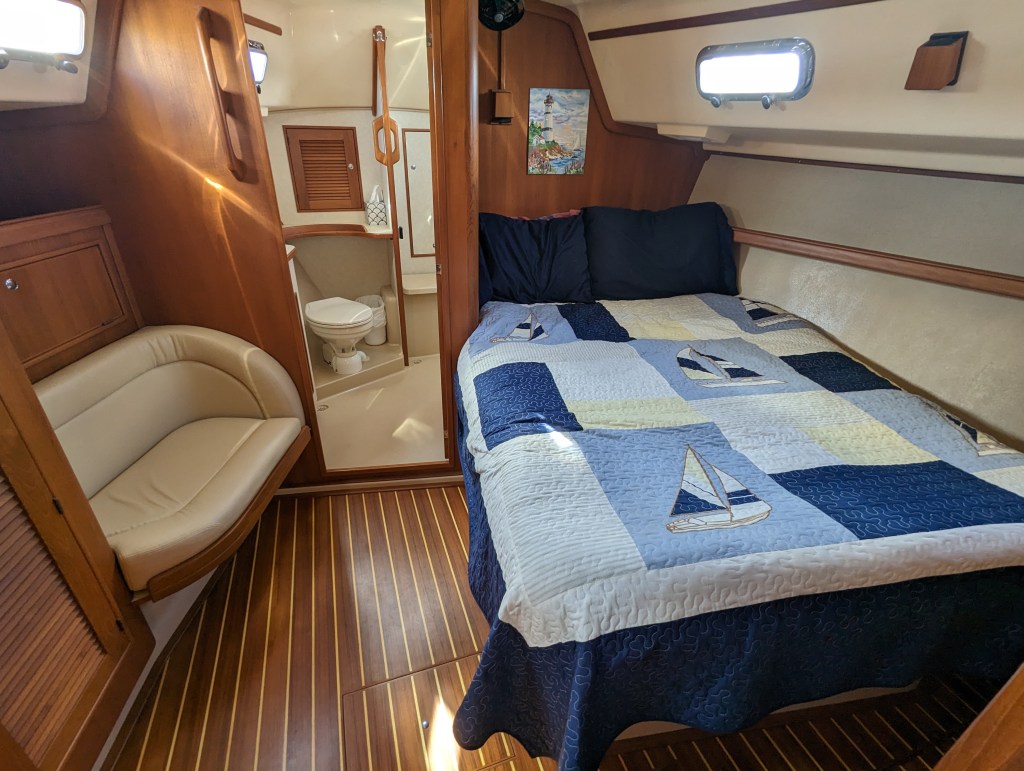
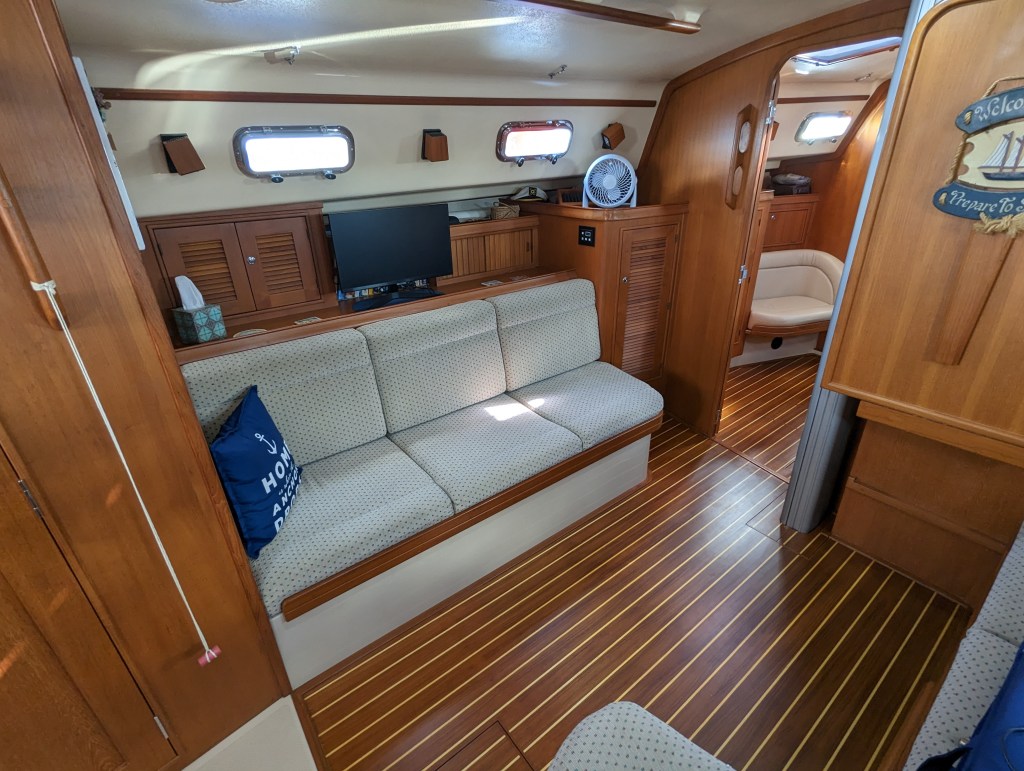
We are purchasing a 2001 Island Packet 420 currently located in Stuart, FL. I won’t tell you her name yet, because we are still deciding whether or not to change her name, and I am rather superstitious- I don’t want Neptune and Aeolus to know before we hold a formal renaming ceremony 😜 I can tell you she’s an absolutely beautiful vessel. She has only had one owner, AND he is a talented mechanic who worked with the Island Packet factory in Rock Hall, MD. She has been meticulously maintained and cared for. Equally important (at least to me) she has two cabins, two heads, a spacious galley, and enough room to support a larger dinghy with a bigger outboard than we currently use on Sanitas. Capt. Mike says this new boat will blow my mind. Did you catch that? She WILL blow my mind. Yes, we are buying a boat that I have not seen, leaving a small fluttering feeling in my tummy. However, Capt. Mike flew from Grenada to Florida and was present for the survey and sea trial. He even had the opportunity to spend time with the current owner and to investigate every hold and locker and every system. He assures me that I am going to fall in love as soon as I get the chance to meet her. Which I hope will be soon! ðŸĪžðŸž

Our next floating home

So what’s next for us? We are trying to sell Sanitas here in Grenada, hoping to find someone who will love her and care for her as well as we have. So, for the moment, my full time job is boat broker. Oh, and cleaning lady, stainless polisher, chef, insurance brokerâ€Ķall those jobs! Hopefully we will be able to transition Sanitas to her new home within the next couple of months, and then I’ll get the chance to meet my new floating home. We hope to spend June and July back home in Colorado, riding the 50th anniversary RAGBRAI at the end of July. Then we’ll leave the mountains and return to the water, moving our new boat from Florida to Brunswick, Georgia for storm season. At least this is Plan A. And you know what they say about cruising plansâ€Ķ”Cruising plans are written in the sand at low tide.” (That means everything is likely to change!)

Back to the Boat!

International travel is possible again, but you’ve really gotta want it

After our epic Long Trail backpacking adventure, Mike and I spent a few more weeks visiting family and attending the Annapolis Sailboat Show and then, suddenly, it was late October and time to return to Sanitas and the Caribbean. Who would’ve thought we’d still be dealing with border closures and COVID restrictions in fall of 2021? Definitely not me!

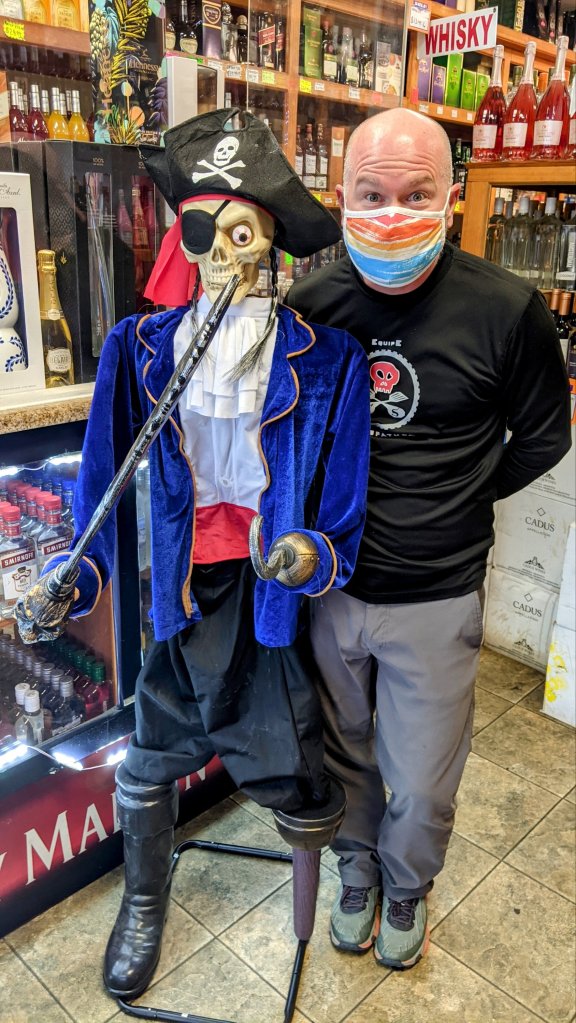
We found a pirate in Queens!

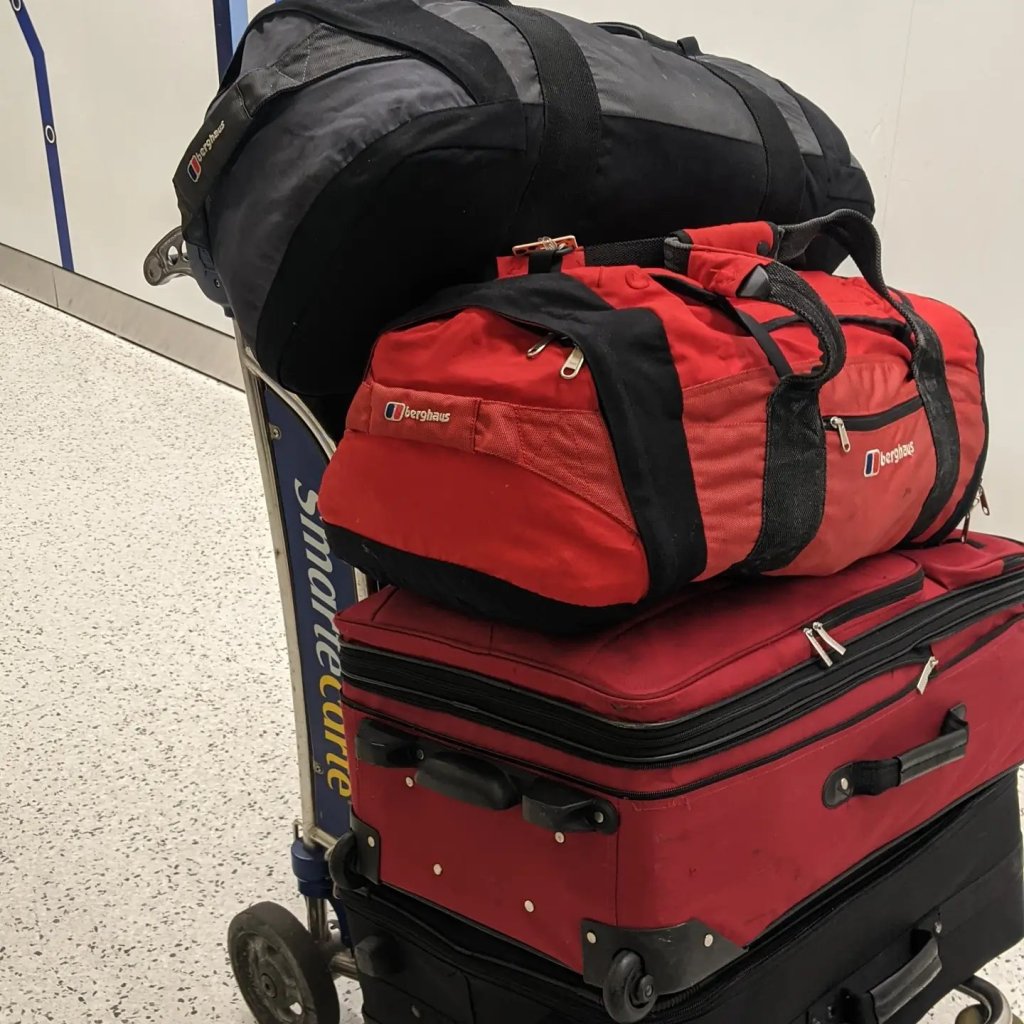
Our first challenge in returning to the islands was to figure out what to do with all of our stuff. Somehow, whatever we packed to bring home back in June bred and multiplied in the back of our Ford Escape and we suddenly owned way more junk than fit in our luggage. Visiting “The Land of Plenty” will do that to you. Also, a Costco membership card.😜 Some of it, we’d bring back with us – American toiletries and supplements are very expensive in the islands, as are gluten-free foods. Extra clothing we donated to charity. Luckily, almost all the clothing I bought as “land clothes” for our visit came from a thrift store so it was easy to part with – almost like renting warm clothing that we wouldn’t need when we returned south. Speaking of thrift stores, here’s a great nomad life hack for youâ€Ķif you are returning home from your trip with a little more than you started with, consider buying an extra suitcase from Goodwill. We bought 2 huge pieces of luggage for $6.99 each and filled them as close as we could get to the 50-pound airline limit. Then we donated them on arrival in Grenada. Just don’t forget to pay for your bags in advance to avoid paying more at the airport! Even international flights don’t always include free luggage these days.

Yeah, we’re gonna need a bigger luggage cart

The next challenge is to comply with all the entry requirements of your destination country. That’s complicated by the fact that restrictions change quickly, based on the number of active cases in a country, and on whether the US is considered “high risk” at the time. When we traveled from New York to Grenada at the end of October, the rules were:

  • Only fully-vaccinated visitors are allowed to enter. We brought hard copy and digital copies of our vaccination cards
  • Apply for a Travel Authorization form one week before your flight
  • Have a negative PCR test result, taken within 72 hours of travel
  • Pre-pay for a 2nd COVID PCR test to be administered at the airport upon arrival in Grenada
  • Book two nights in an approved quarantine hotel in Grenada where you’ll stay until your arrival test results are available
  • Print everything to show the airline prior to checking in, or use an app such as New York’s Excelsior Pass

Our flight from JFK left before 7:00am on a Monday morning, so our covid tests were complicated by the weekend. We tried to take advantage of free testing at a Rite-Aid on Friday morning. But when we didn’t receive results by Saturday afternoon I panicked and paid $160 per person to get a test that guaranteed results by Sunday at 5:00 pm. It was a good decision. Capt Mike didn’t get his free test results until we arrived to the airport – I would have been totally freaking out if the results of our paid tests hadn’t been available!

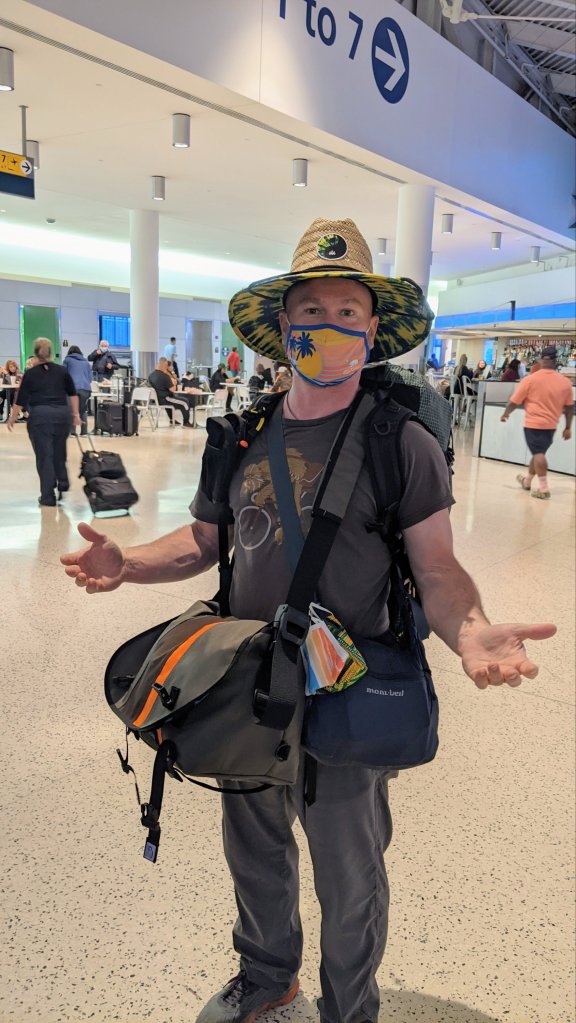
Nomad man
You gotta wear your hat, so you don’t crush it!

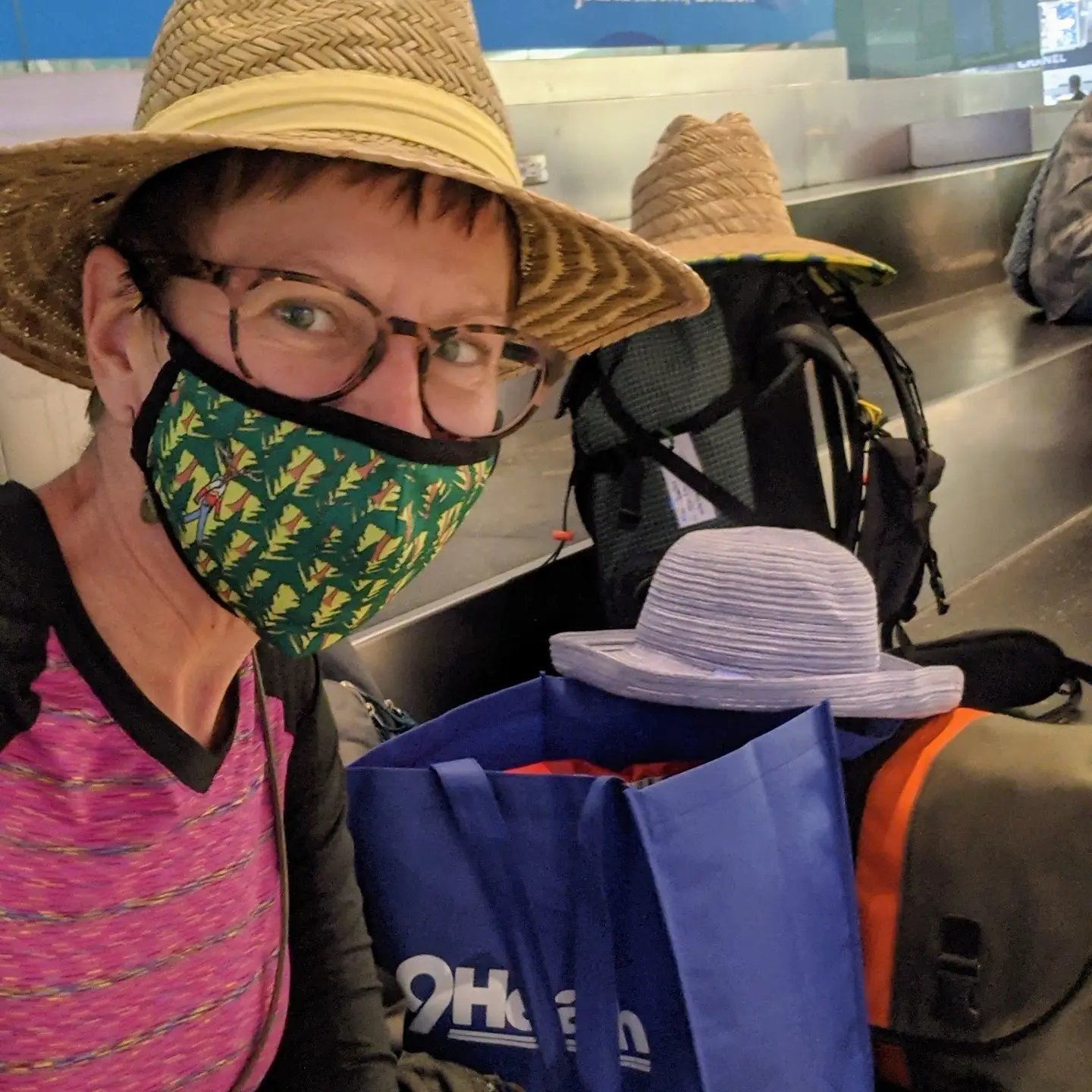
After that, everything went smoothly. A 3am alarm got us to JFK in plenty of time for Mike to drop off me and my massive pile of luggage while he parked. I have nothing but positive feedback for JetBlue. Just a week after the Southwest flight cancelation fiasco, and a week before the American Airlines meltdown, every JetBlue employee we interacted with was professional and helpful. Our flight was about half full and on time, and it felt wonderful to take our first breaths of warm, humid island air when we deplaned at Maurice Bishop international airport. We arrived on a local holiday, but the clear-in process was still smooth and efficient. After our third nose swab in four days, we collected our bags and hopped into a taxi for the short trip to Sunflower Apartments.

I’d planned ahead and ordered delivery of grocery basics (eggs, fruit, pasta, potato chips, and booze) for our 48-hour quarantine. It was brilliant! The delivery van from IGA arrived at the apartment at the same time as our taxi. After Lauren in security took our temperature and showed us around, we settled in for quarantine, aka well-deserved rest and recovery period. With air conditioning and lots of Netflix movies, we barely minded, and we were officially cleared around 4:00 pm on Tuesday. Just in time to go out to eat at Greek Kitchen before restaurants closed round 5:00 for COVID curfew.

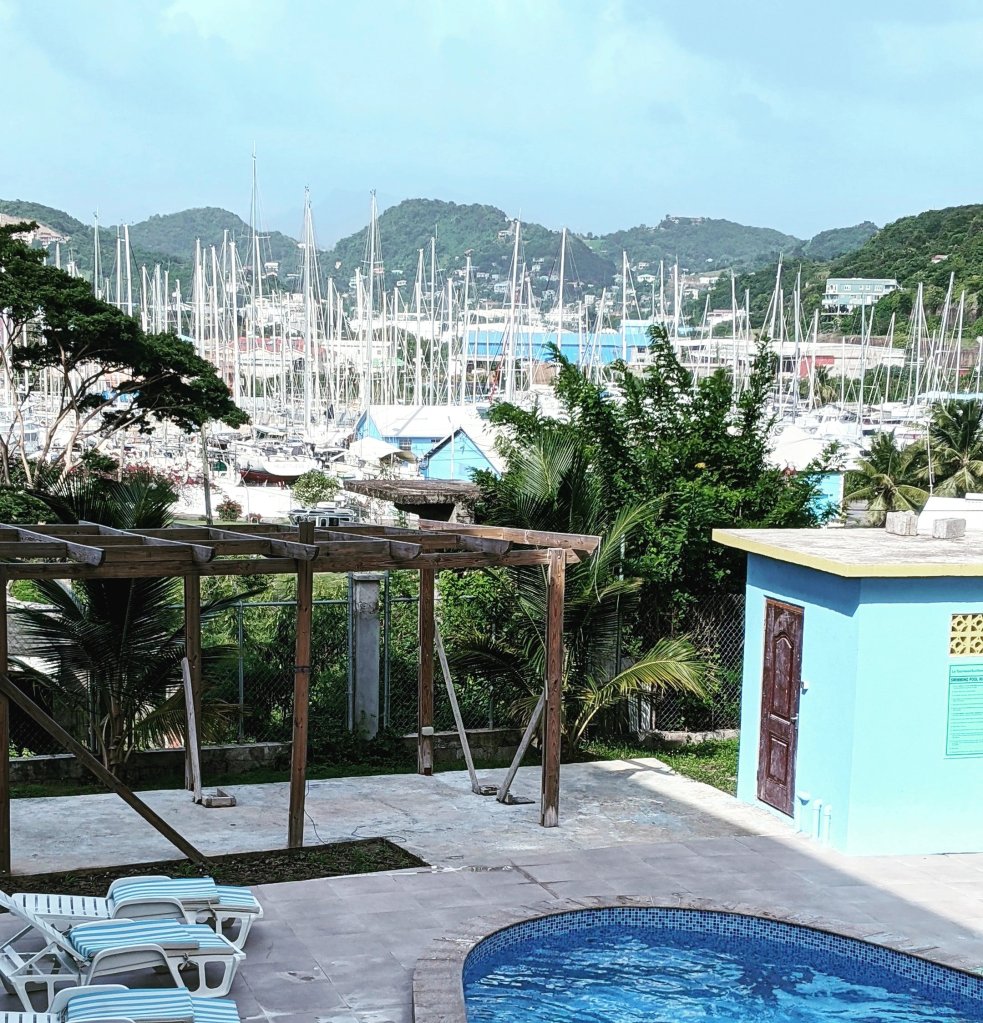
Sanitas is one of those masts, way over there. (View from our quarantine apartment)

Do all these Covid protocols sound strange to my fellow Americans? Well, Caribbean island nations are still taking Covid quite seriously, especially since many have limited medical facilities. But they are also balancing safety with the need to improve the economy and to restore tourism. Both Grenada and St Vincent have recently removed the quarantine requirement for fully-vaccinated visitors. Grenada now only requires a rapid antigen test on arrival, rather than the costlier PCR test. And they’ve significantly lowered the cost of the tests for departure, which are required when you return home to the States. While Covid-related protests have turned violent in the French islands, Grenada feels safe and peaceful – especially as the beautiful weather means we live our lives almost entirely outdoors all winter long. I’m very glad we were able to return to Sanitas this fall, and I’m really looking forward to being able to sail more and explore more than we’ve been able to for the past two years!

Celebrating our freedom from quarantine

How do we vote from our Sailboat?

This is the first year since we sold everything in 2017 and moved onto our sailboat, Sanitas, that we won’t be visiting friends and family in the USA in the fall. You know – COVID. ðŸĪŽ So how do we vote when we’re “stuck” in the tiny island country of Grenada 🇎ðŸ‡Đ with no access to the good old USPS? Well, it took a lot of research, a bit of trial and error, and about $15 but I think I’ve figured it out!

When we sold our house in Colorado, we established residency in Green Cove Springs, FL. (Yep. You can go ahead and call Capt. Mike “Florida Man.”) Florida is a no excuse vote-by-mail state. That means any registered voter can request a vote-by-mail ballot, without needing to prove a hardship or disability or that you’ll be out of town on Election Day. And, regardless of what the Pres says in his tweets, there’s no difference between an absentee ballot and vote by mail in Florida. in fact, in 2016, Florida removed the words “absentee ballot” completely from all government websites, ballots, and documents. When we registered to vote in Clay County, we ticked the box requesting to vote-by-mail and each time we return a ballot, we tick the box again stating we want to continue voting in this manner. That’s all well and good when we’re in the US, and we can get our mail forwarded to us, but what do we do when we’re overseas?

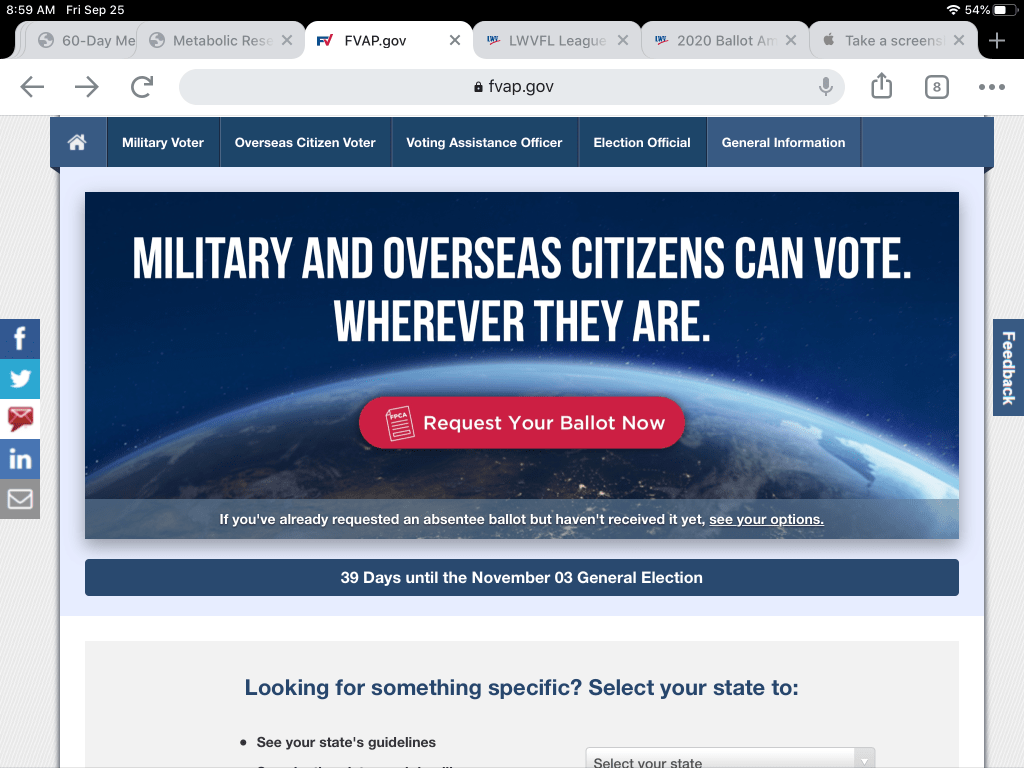
There’s an excellent government website called the Federal Voter Assistance Program or www.fvap.gov that provides tools and links to help US citizens vote from overseas. Being the government, it’s all acronym alphabet soup. First, we filled out the Federal Post Card Application (FPCA) to certify that we’ll be living outside the US on Election Day and requesting our ballots by email, rather than USPS mail. It required filling out and printing a form, then signing it, scanning, and e-mailing it back. In just a couple days, I received an e-mail confirming that Clay County received the form, and we were good to go on e-mail ballots. Step 1 successfully complete!

FVAP also does a great job of providing the election timeline for each county, including deadlines to register, request vote-by-mail, to return your ballot, and more. It even provides contact info for each county board of elections. This might just be the most useful government website ever! And now I’m slightly embarrassed about how much I’m gushing over a government website.

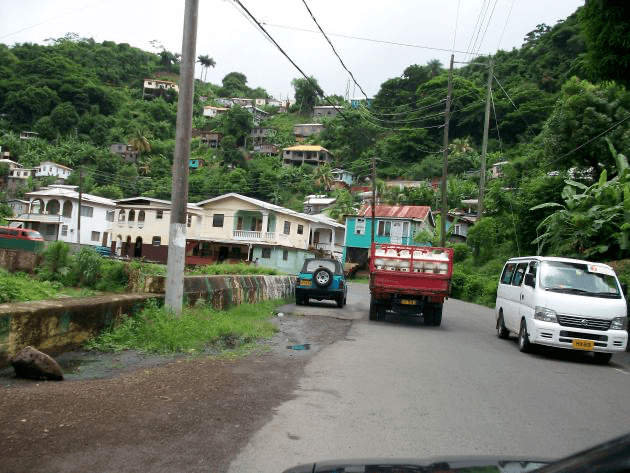
On September 18, we received our ballots and voting instructions in an e-mail – right on schedule! I hopped on a local minivan bus and traveled to the only shopping mall on the island, where I found a business center and printed our ballots and instructions for 10.50 ECD ($4USD) Back home, I used resources at Ballotpedia.org and the League of Women Voters lwvfl.org to research candidates and constitutional amendments on the ballot. When we were ready, Capt. Mike and I marked our ballots, signed them, and filled out a fax transmission sheet.

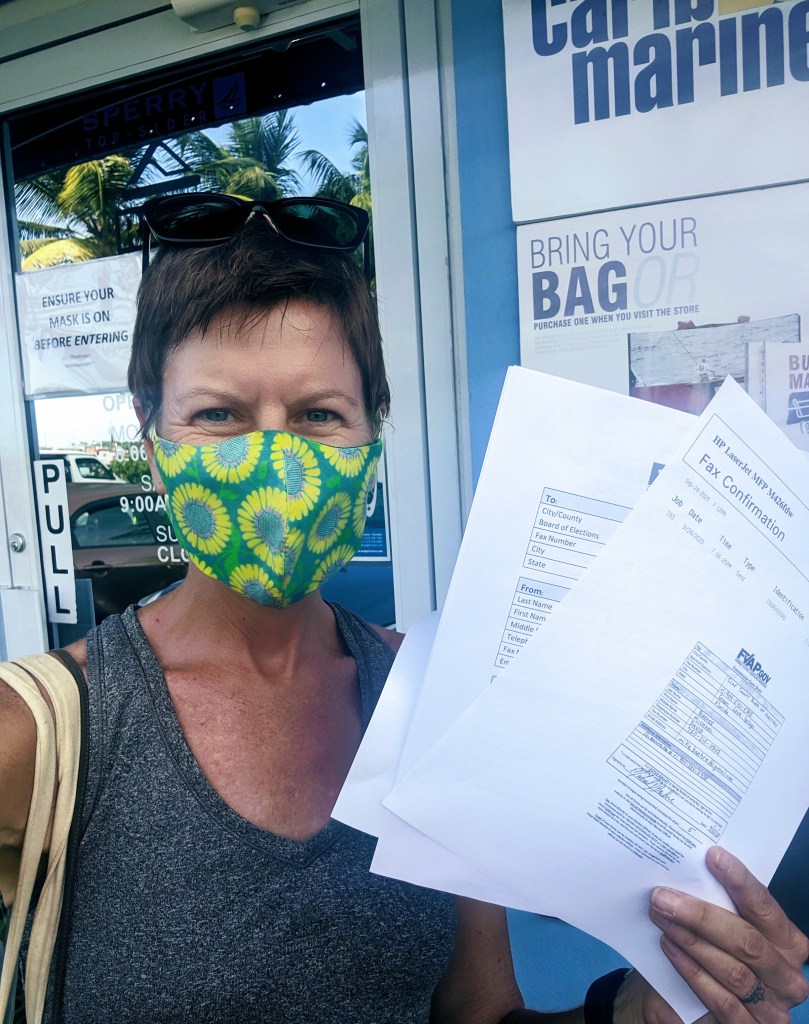
Florida doesn’t allow you to return a ballot via email (some states do!) so we also signed a waiver acknowledging that our faxed ballots wouldn’t be private. And then I set off in search of a fax machine – remember those? I spent about a day and a half walking back and forth between the boatyard and the Budget Marine chandlery with a folder full of paperwork trying to make it there during business hours (Island time is no joke!) and trying to find one with a fax machine that would function correctly and stay connected for 5 whole pages. I phoned Clay County directly a couple of times and spoke to a lovely, polite southern woman who checked that the fax machine was indeed turned on, and even gave be a backup fax number when the first one didn’t work. You gotta love that southern politeness! Finally, and after paying 2ec per faxed page, success! My mantra is, “Well it’s a heck of a lot cheaper than FedEx!” I have fax transmission sheet to prove my ballot went through. Now, fingers crossed that my signature from 2020 matches the one I gave them when I registered back in 2017 and I should be confident that Capt. Mike and I did our part to make our votes count and our voices heard. Even from the islands, mon.

Nomad Life in the Time of Corinavirus

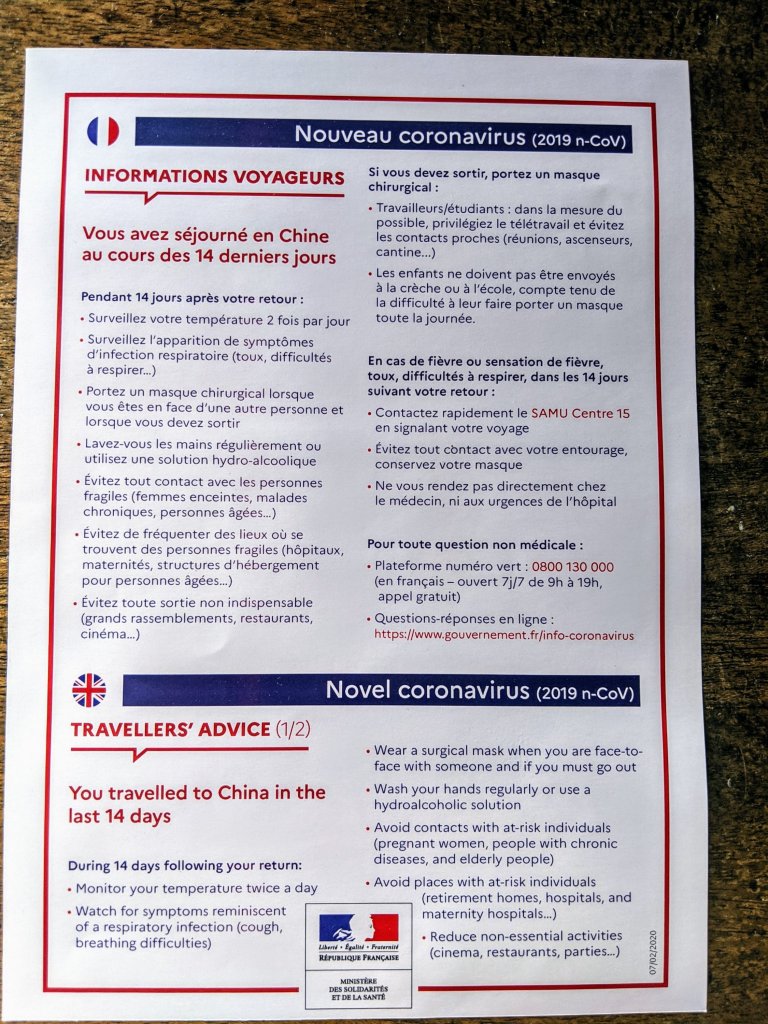
Several folks have reached out and asked if Capt. Mike and I are ok with all the Covid-19 stuff going on. Well… So far, so good. Sanitas is currently in the French overseas territory of Guadeloupe which at the time of writing had one confirmed case of the Corona virus. So, more than West Virginia, but less than most other regions. 😉

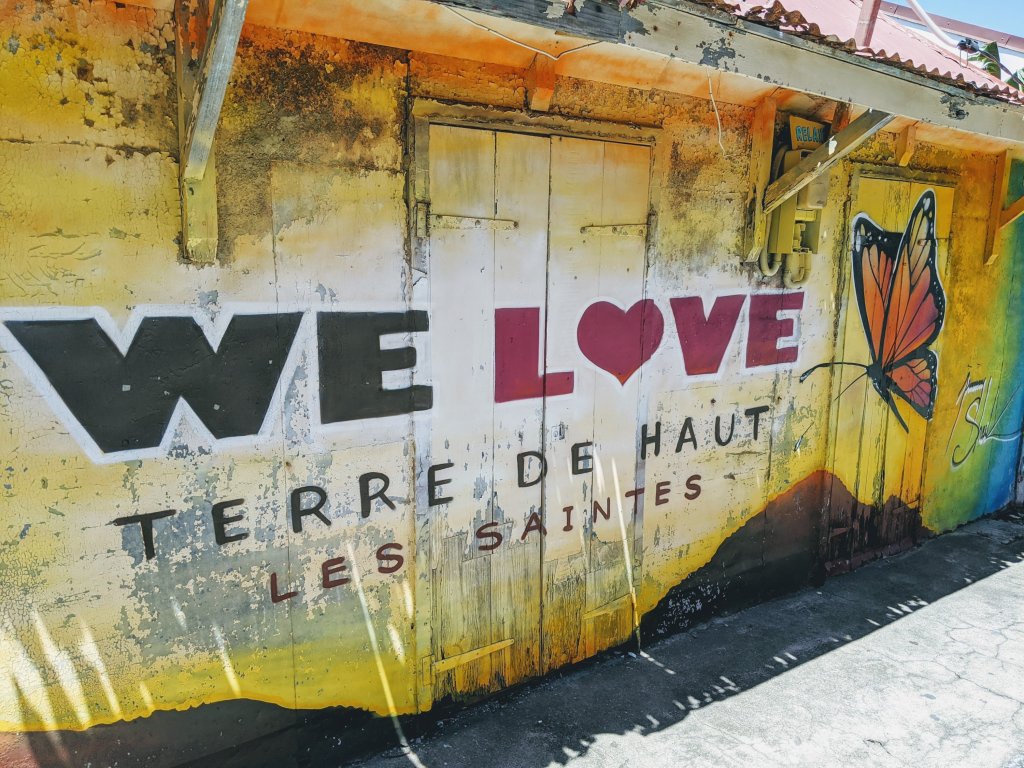
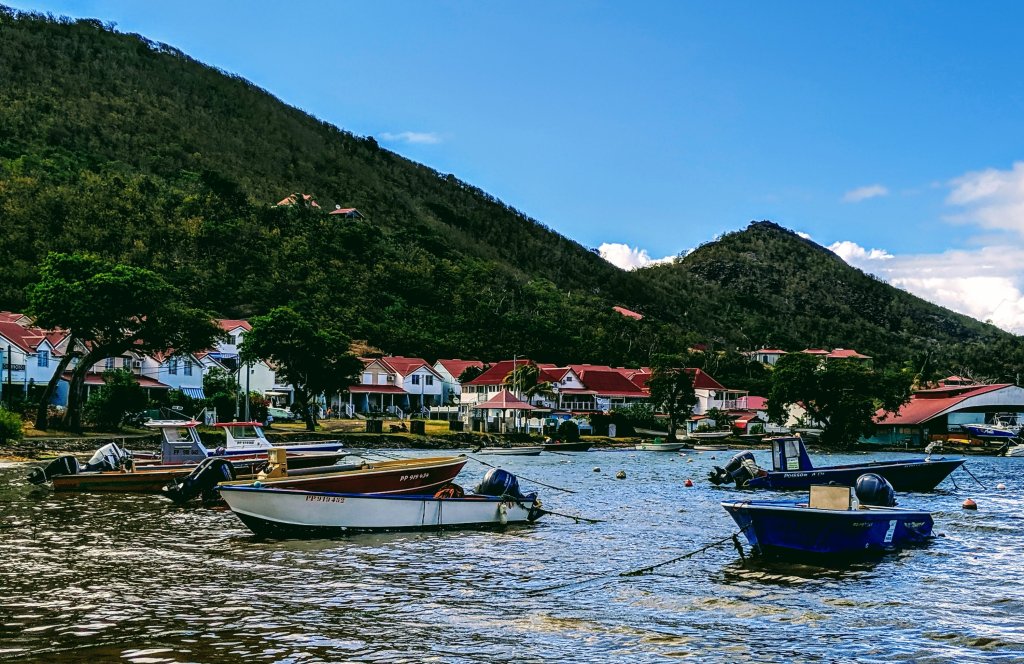
Last night at midnight, France directed that all bars, restaurants, and non-essential businesses must close in order to stop the spread of the virus, so I wasn’t sure what to expect when I dingied ashore to the small town of Terre de Haut this morning. But, surreal as it seemed, things were pretty much the same as usual. Restaurants were open, ferries were running, the sun was shining. The small grocery store (about the size of a 7-11) was quite busy. But they always are on Sunday mornings when most shops close at noon. There was plenty of toilet paper on the shelves, and I found everything on my list – even fresh veggies and eggs. I did see two women great each other with the usual French kiss on both cheeks. And then they threw up their hands and looked a bit sheepish and tapped the toes of their right feet together instead. People aren’t freaking out here like they are in the States. Or… Maybe they are but because I don’t speak French, I’m missing it all.

Mike and are feel like we’re in pretty good shape on little old Sanitas. We went grocery shopping in the big supermarket in Point-a-Pitre a few days ago, so we have lots of French cheese and fresh veggies. And when that runs out, the bilge is full of canned goods, nuts, gluten free noodles, and energy bars. We have full water tanks and diesel, and our solar panels are working great.

That’s not so say we aren’t watching what’s happening and taking precautions though. We wash our hands a lot – and certainly every time we return to the boat. I belong to several sailing and cruising Facebook groups that share information on each island’s travel restrictions and entry procedures. I guess that’s our biggest concern right now – what if every island closes its borders to everyone except residents? Where will we go then? What if cargo ships stop sailing and the grocery stores DO get empty? What if we run out of propane for our cook stove? I checked today, and we can stay in Guadeloupe for 90 days without a visa, so I think we’ll sit tight and wait to see what happens. Our hurricane season plans call for us to haul out in Grenada for the summer on 1 July. Hopefully things improve by then, and if we really have to, we could sail straight to Grenada without stopping in less than 48 hours. We could also self-quarantine at anchor for 14 days if Grenada requires it. Although Mike and I would REALLY get on each other’s nerves by that time! ðŸĪŠ Imagine being stuck with your spouse for 14 days in a space the size of your master bathroom!

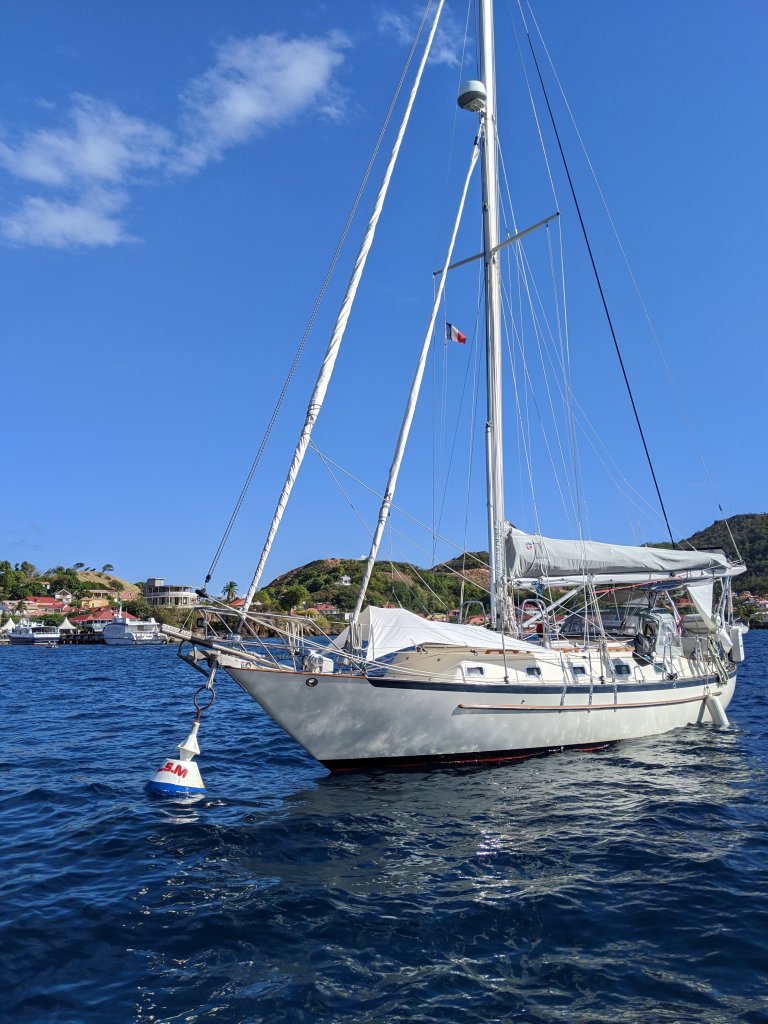
For now, we’re in a small, quiet place, with relatively few people. The weather is good. We’ve got plenty of food, water, and medicine. If everything shuts down, we can still swim and go for walks. It only costs 11₮ per day to stay on a mooring ball. The main island of Guadeloupe is only a 4-hour sail away if we need more provisions or medical care. Right now, it feels like the right decision to stay put and see what happens. Which is pretty much all anyone can do, right? Now if only I had more books and a slightly bigger boat!