Tool of the Day …. Drill Pump

Remember when I told you about the diesel fuel in the bilge? Well, we finally tried to pump all the fuel out. But … apparently petroleum products kill the rubber diaphragms in the pump.

So, R.I.P. to the 3 pumps that we killed trying to extract the diesel from the bilge. And we still ( by we, I mean I) bailed the rest of the diesel out manually with a cereal scoop and some paper towels.

Tool of the Day …. Bilgkote

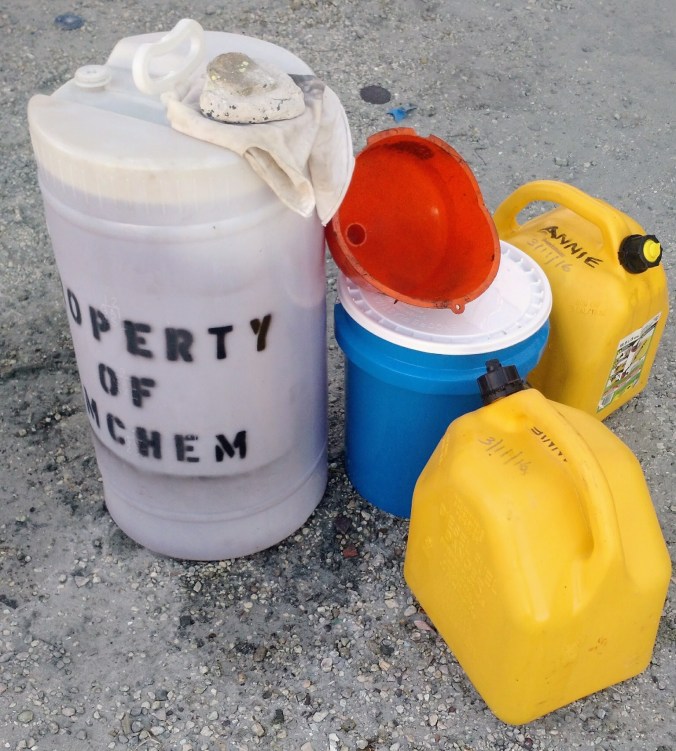
Final step of reclaiming the black water holding tank of tool box storage consisted of several coats of bilgekote; a very thick paint. This did a good job of sealing the hold surface after sanding, and removed any remaining waste odor. It worked so well here, that I continued to paint all of the hold storage compartments and the entire bilge. A mask was key! At one point I think I came very close to passing out while upside down in the hold, breathing in those fumes!

And just for fun, a few gratuitous boat / tool chaos pictures! I’m grateful that we decided to rent an Airbnb instead of trying to live on the boat during these initial project stages. It gave us a place to escape to every evening to shower, eat, sleep and then start all over again the next day. PLUS, we had internet access to research all of our questions about the next step in each project.

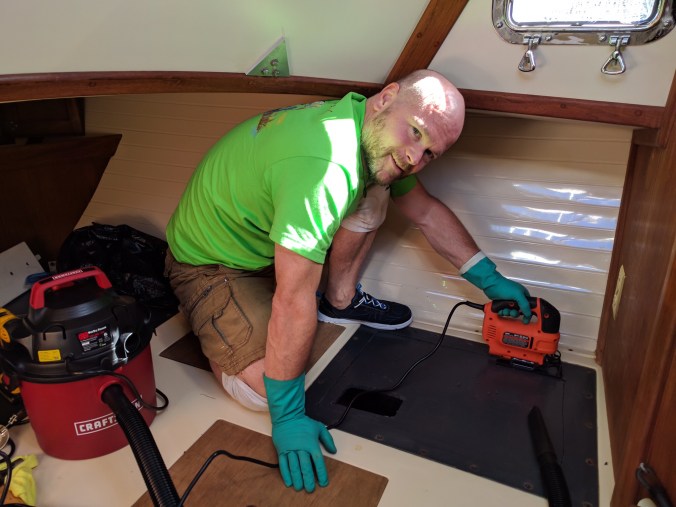
Tool of the Day…. Jigsaw (and a lot of bleach)

So we made the decision to tear out the traditional marine head and to replace it with a composting toilet. Before you call us crazy, here are our reasons:

No need to find a pump-out

It is illegal to dump toilet waste within three miles of shore, so all waste gets stored in a holding tank until far out to sea or until pumped out at a marina. Our holding tank is small; only about 14 gallons which won’t last long for two people living on a boat full time. We don’t want to be in a beautiful anchorage in some tropical paradise wishing to stay off the grid for days or weeks at a time and feeling the pressure to find a pump-out service.

No maintenance

Even the highest quality marine toilets require a lot of maintenance to keep to hoses clear, the pumps in good working order, and to prevent clogs. When a marine toilet does go wrong, the results are notoriously messy. I’ll leave that to your imagination! In theory, the new generation of composting toilets require some monitoring and periodic emptying, but there are no moving parts to fail. We shall see.

Storage

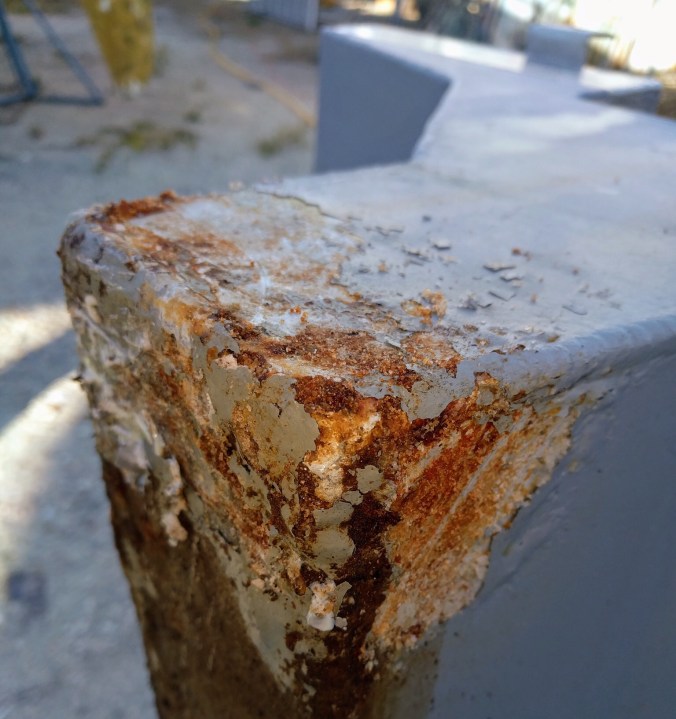
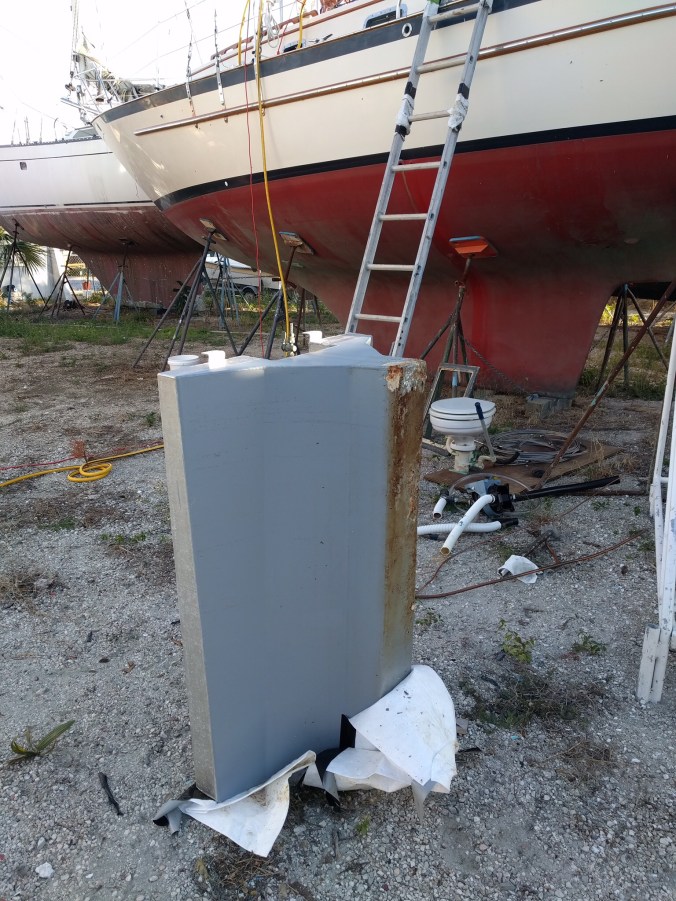
We are really being optimistic, and decided to turn the old holding tank into additional storage for tools. Although it was tempting to seal the whole thing off and pretend it never existed. So we pumped out the contents of the tank, and cut off the top to see what we had to deal with. Keep in mind that this tank lives directly below our bed ……
Hmmmmm….. pretty. Some bailing and scooping was also required to get to the goal of an empty tank. And rinsing, and scrubbing, and sanding (as we have already discussed). All of this was my job, so Mike says I get a pass on emptying the toilet for the next four months. I think it should be six months!

We also pulled all the hoses, and plugged the through-hulls where the hoses used to run.
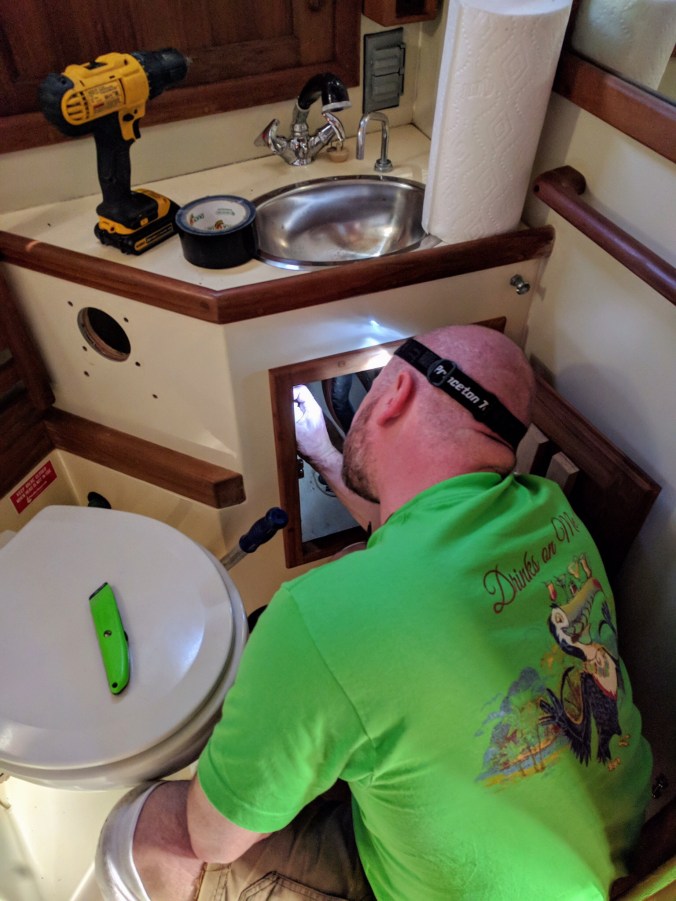
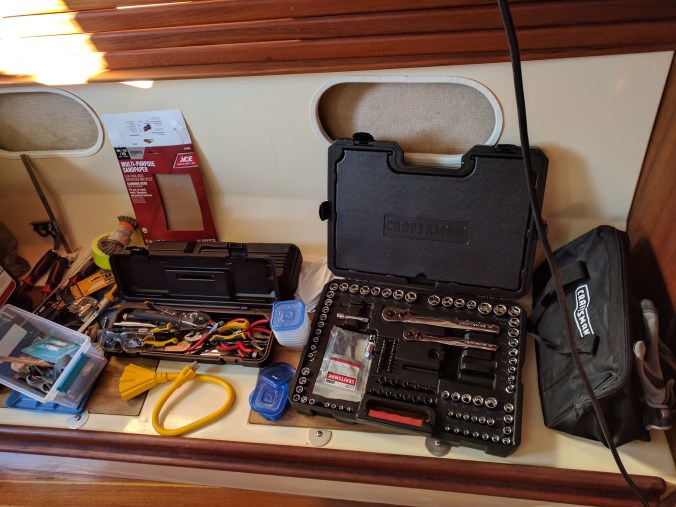
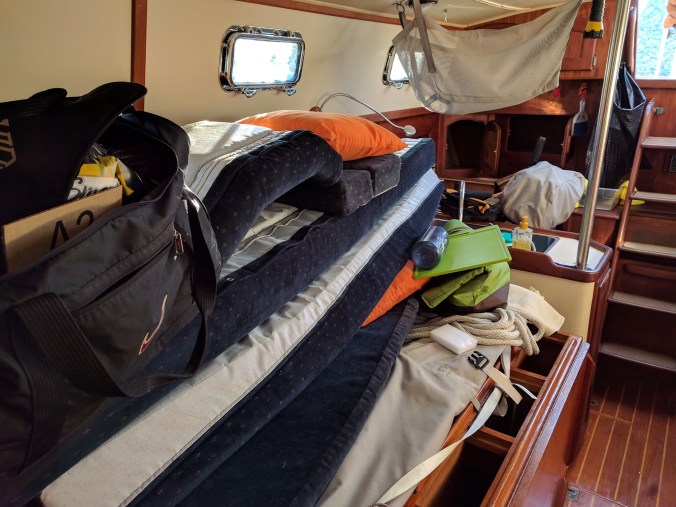
Every project requires a nearly infinite array of tools and results in a gigantic mess. The boat looked like this 99% of the time while in the yard.

Step #1 of this toilet project was successfully completed when the old toilet was removed, the tank cleaned and painted with a coat of very thick paint, and Mike fabricated a new cover for the additional storage space. Now to select, order, and install the replacement toilet!
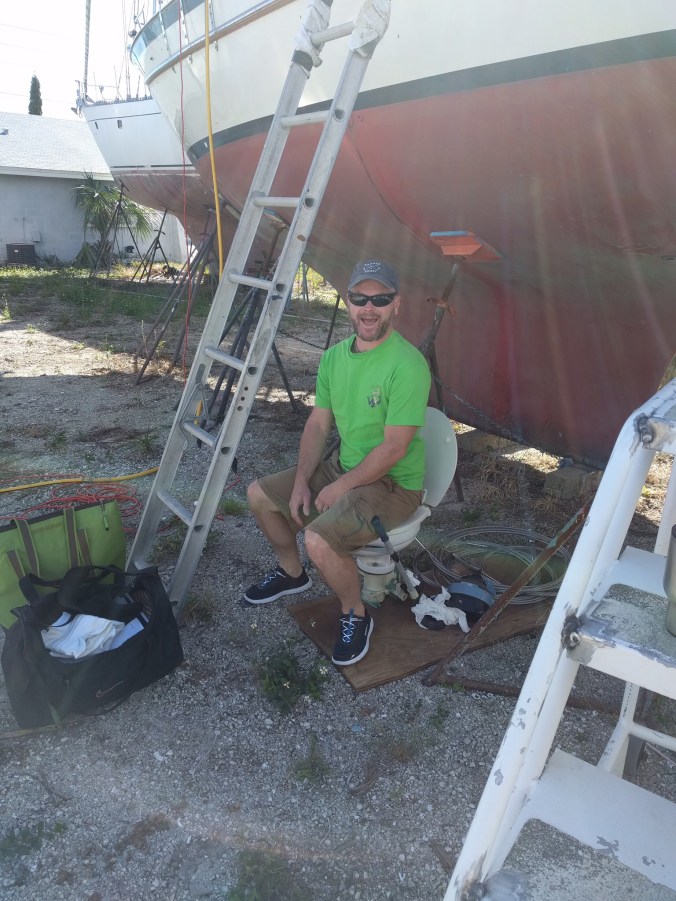
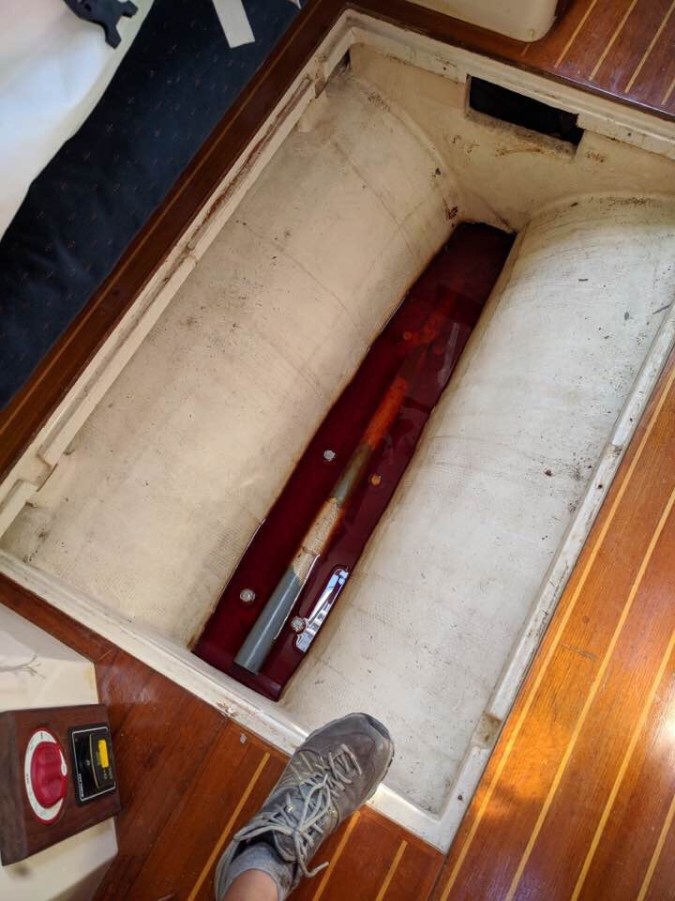
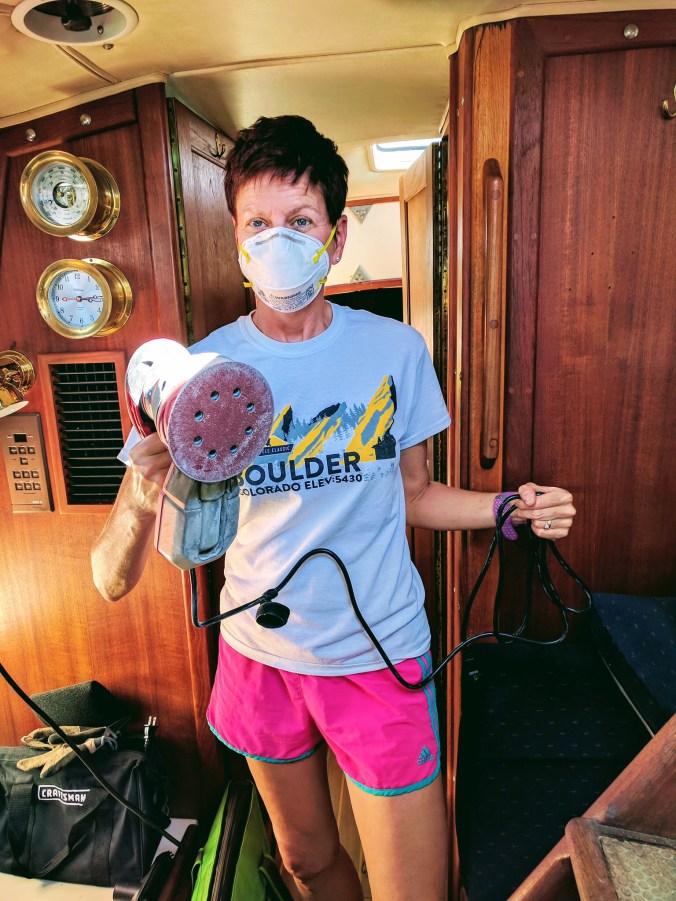
Tool of the Day… Orbital Sander

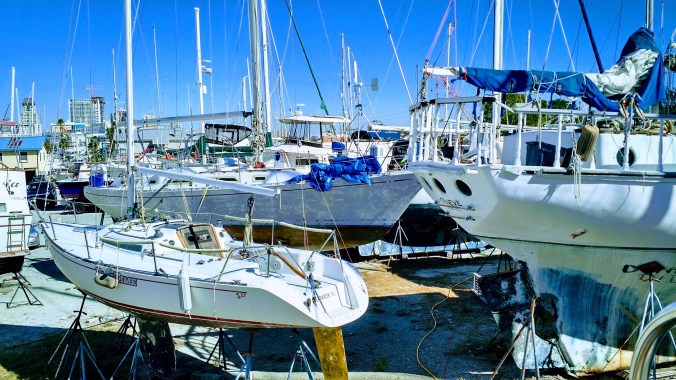
Living the glamorous life of the boatyard!

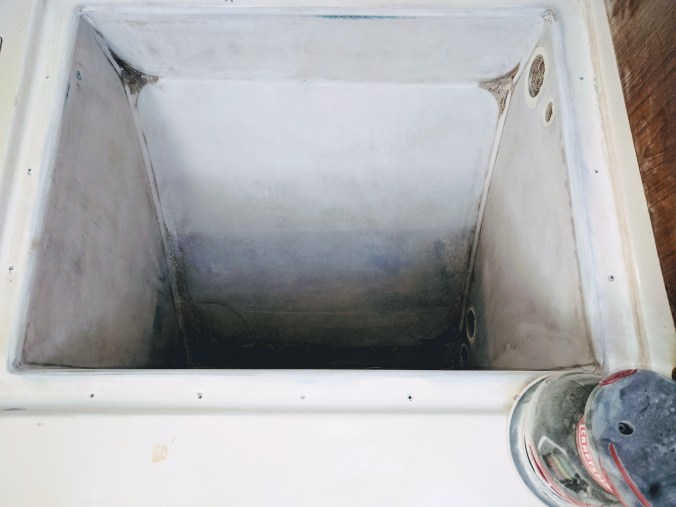
It is hot and dirty and smelly. Especially as my job is to sand the remaining debris from the black water holding tank, so that we can repurpose that space for storage. Oh yes, there is a much longer story here! More about the holding tanks next time!

Believe it or not, this tank looks a heck of a lot better than it used to!

Last night, I dreamed that Mike sent me back to work to earn money for all the things we’ve been ordering from Amazon 😀

Change is Hard

Ok, tell me something I don’t know, right? Yes. We finally made it to Florida by the end of October. But unfortunately we weren’t quite ready to sail off into the sunset. The only people we knew in St Petersburg were our boat broker, the boatyard manager, and our landlord. Not much socializing with that crew! And our first apartment was a big disappointment. Great location in Old Northeast St Pete, but…… it smelled like a huge ball of mold and mildew. We went through boxes of tissues, and soon found that we could smell our own clothes whenever we left the apartment. Yuck! So much for a cheap VRBO! Not to mention we couldn’t quite figure out streets versus avenues and how you could really have an address of “on the corner of 2nd and 2nd.”

But we buckled down and started to find our way around. By the first weekend, we were officially Florida residents (can you say “no state income tax”?) which came with a little twinge of sadnesses as our Colorado licenses came back to us with big holes punched in them. And we put that vacation mindset behind us and got to work at the boatyard.

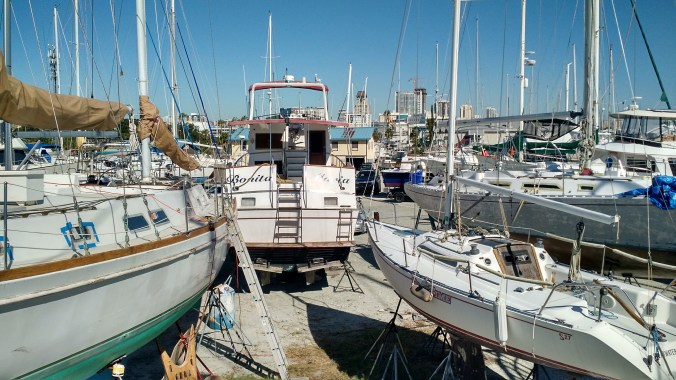
Now boatyard life is not glamorous. It’s hot and dirty and you have to climb a ladder to get to the boat up on its stands, and there’s always a whiff of chemicals and rotting fish and perhaps body odor. But the Salt Creek Marina was very accommodating and allows do-it-yourself boat projects, so we were grateful to have found this particular yard.

And also very lucky that all of the boats in the yard successfully weathered Hurricane Irma in September. Phew! We pulled off the tarps that covered the companionway and the mast, and pulled the steel wool out of the thoughhulls and took the foil off the portlights, and she appeared not much worse for the wear. Just a little water on the cabin sole, but not bad for an entire summer of storms.

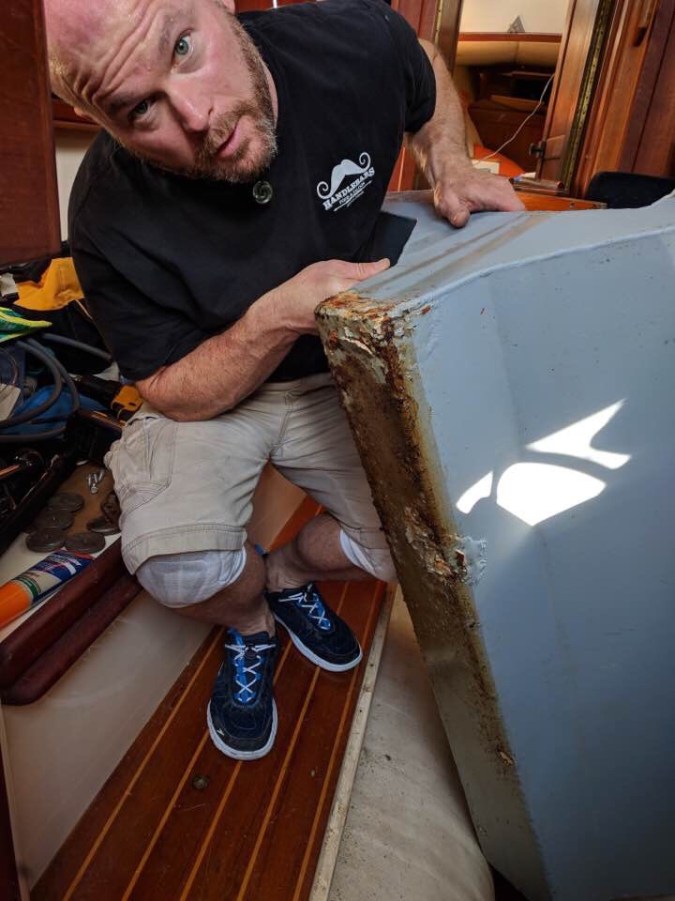
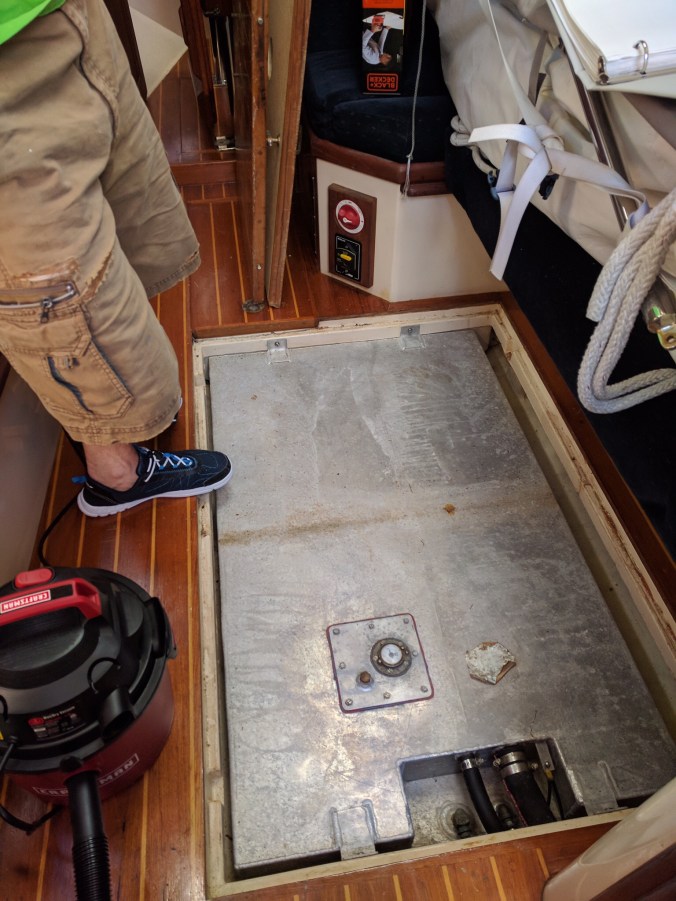
We had a list that was three pages long of things we wanted to fix, replace, or maintain before putting the boat in the water. But our first surprise wasn’t even on the list at all. When we pulled up the cabin sole, and checked out the bilge, we found several liters of diesel fuel in the bottom. A teaspoon or two might not have been too bad. But liters?! First task was to investigate the fuel tank and discover that the bottom of the tank had corroded completely through. The good design of Pacific Seacraft boats allowed us to get to the tank easily, but we had to pull the whole thing out and order a new one from the factory. THAT’S and expense we hadn’t planned on!

Thus began the series of boat projects that (everyone tells us) you just have to expect when you own a boat. But we didn’t…..