Saying goodbye to The Grenadines

After five months in The Grenadines (yikes – five months in one country!) we are finally preparing to say goodbye to this beautiful country and to head south for hurricane season. And we’re also saying goodbye to many good friends. We’ve been sharing anchorages with some of these same boats since Covid first started in 2020. I’m not so fond of goodbyes, so here’s a “See you later” to some of my favorite places and people….

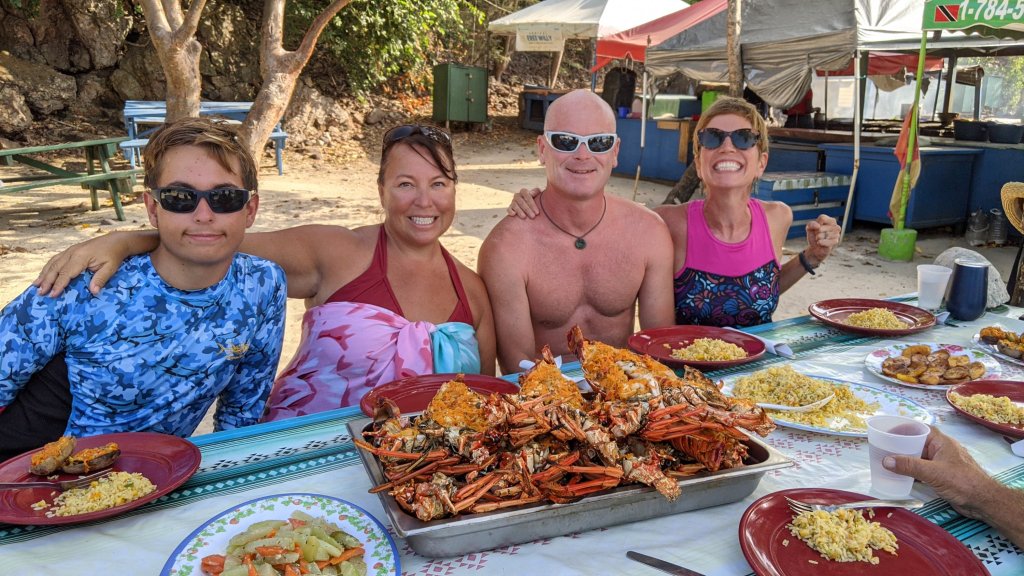
All good things must come to an end. And so, lobster season in St Vincent ends on the last day of April. I kind of thought Capt. Mike’s epic birthday party in the Tobago Cays would be our last lobster beach barbecue of the season. But wait! In a calm weather window, we herded the cats and gathered four boats of cruisers off the beach of Petite Bateau for one last hurrah. Romeo and Juliet motored by in their red power boat, shouting out “welcome back my friends!” And, wow did they treat us well this time! They whipped up a towering platter of grilled critters, plus conch curry, plus all the delectable sides. We had so much lobster, we celebrated “Mofongo Monday” with the crews of Dorothy Rose and Soulshine with the leftovers the next day. Thanks Karen! I haven’t had mofongo since Puerto Rico, and yours is delicious! 😍
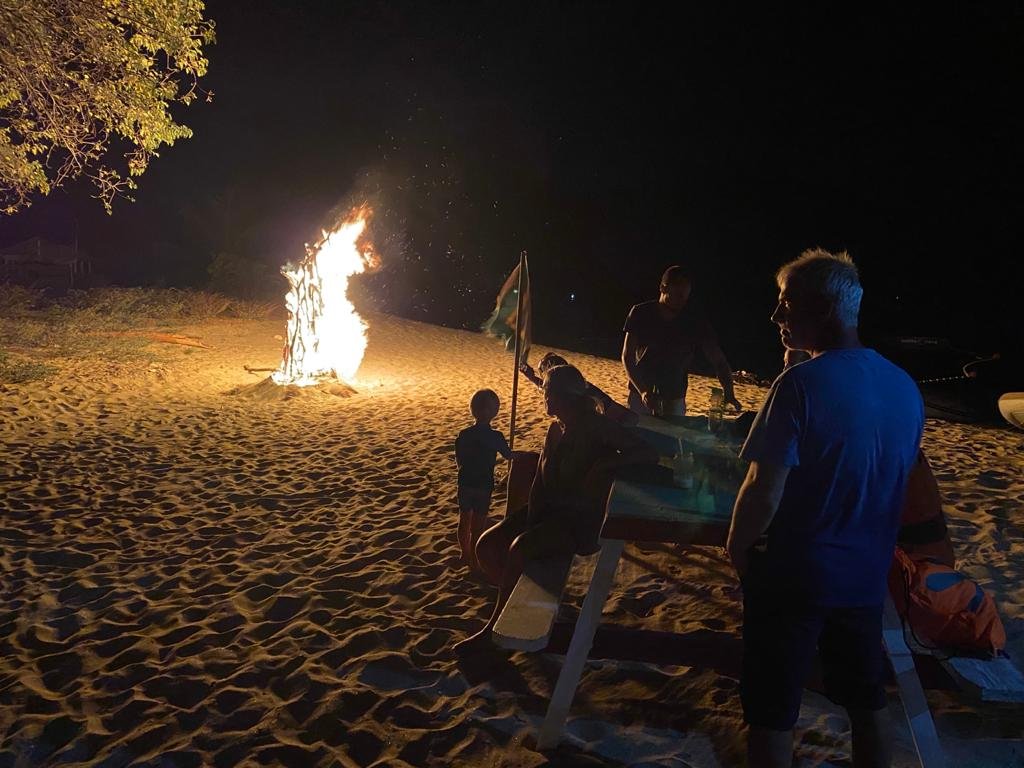
We recently had the opportunity to meet a large group of Scandinavian cruisers. It’s been fun to meet and play with a whole new crew! At one point, all of our boats were anchored in beautiful Chatham Bay on the quieter, undeveloped side of Union Island. There’s only a couple of rustic beach bars on this spot, and we’ve kind of colonized Sunset Cove, returning time and time again for Adele’s great food and Bald Head’s strong rum punch. We spent an afternoon there in a super competitive Mexican train dominos tournament. (Jill, from SV Ticora, shared the bottle of rum that she won with the rest of us). Ken, who owns the bar, offered a buffet barbecue and bonfire if we could get a good sized group together. Cara, from SV Music, took on the challenge and in no time, we had a goodbye party scheduled for the next day. This sleepy beachfront turned into a disco with a DJ getting everybody dancing off their dinners around the embers of a gorgeous fire.
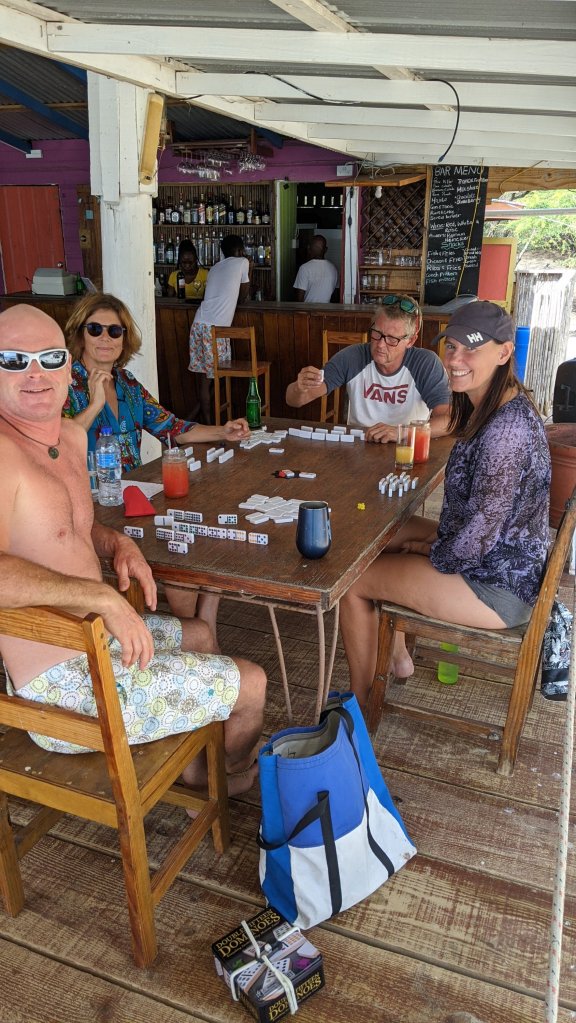
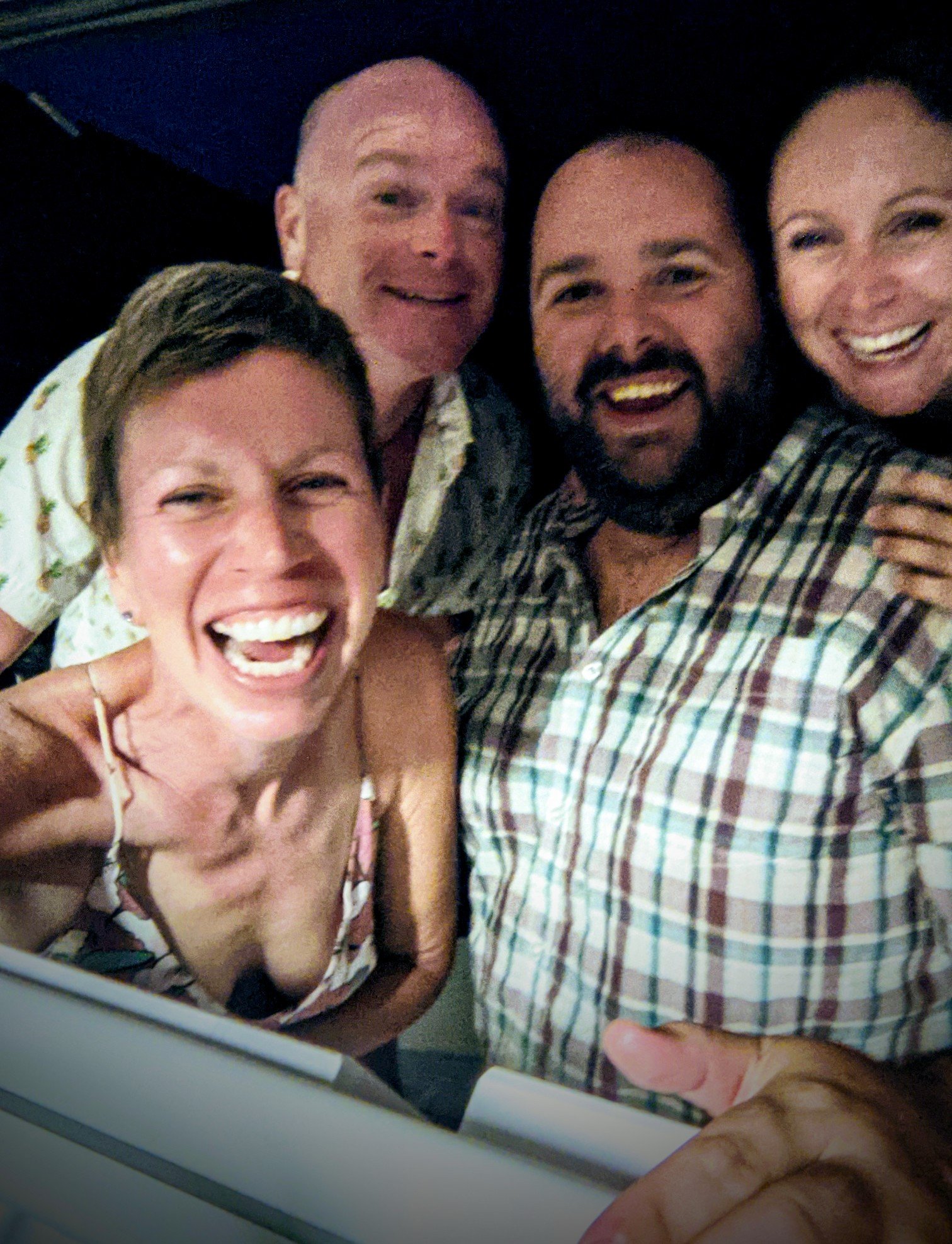
We had to return to the “big city” side of Union Island soon after, so that we could get our second shot of the Covid-19 vaccine at the Clifton hospital. Many of the Scandinavian boats followed us over to the new anchorage, prompting the idea for a farewell to yet another favorite place. Sparrow’s Beach Club, on the most beautiful beach on Union Island, is always a special day out. I’ve organized so many group outings there that Bertrand, the manager, replies to my phone call with “Hello Jennifer.” This was the biggest group of all, with 20 sailors – pretty much every cruising boat in Clifton Harbor – attending. We had the largest pavilion to ourselves, claimed all the beach chairs with their fluffy pink towels, and lucked out on the sunniest and warmest day of the week! The fresh fish is always delicious at Sparrows, and you really can’t beat the location. When I told Bertrand it would be our last visit for the season, he treated me to a free mojito. Well played, monsieur Bertrand! You’ll see me and all my friends again next season for sure.
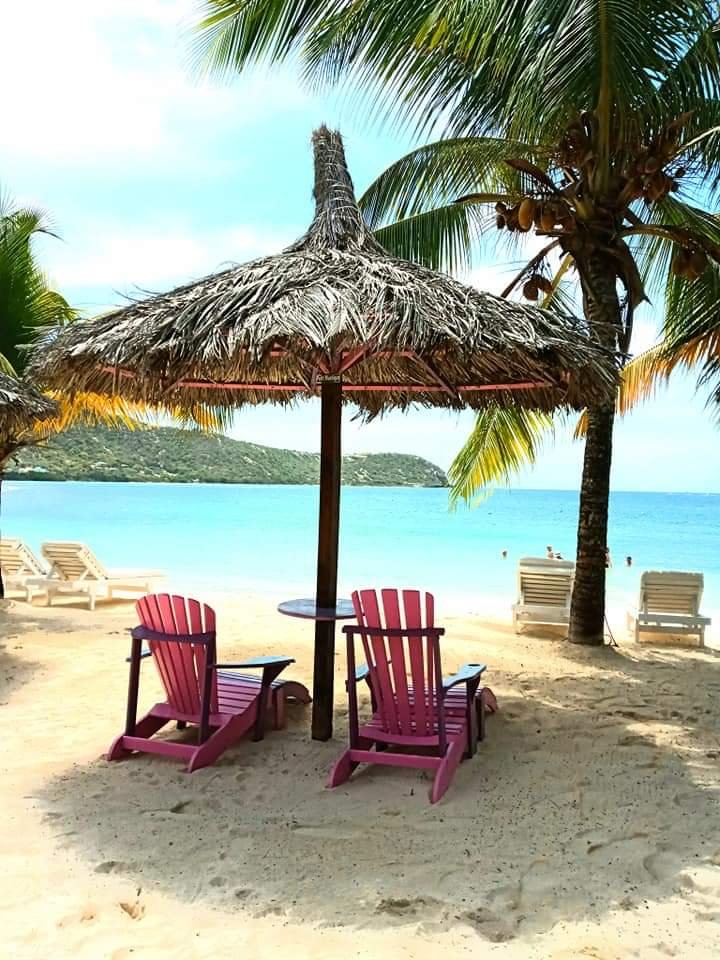
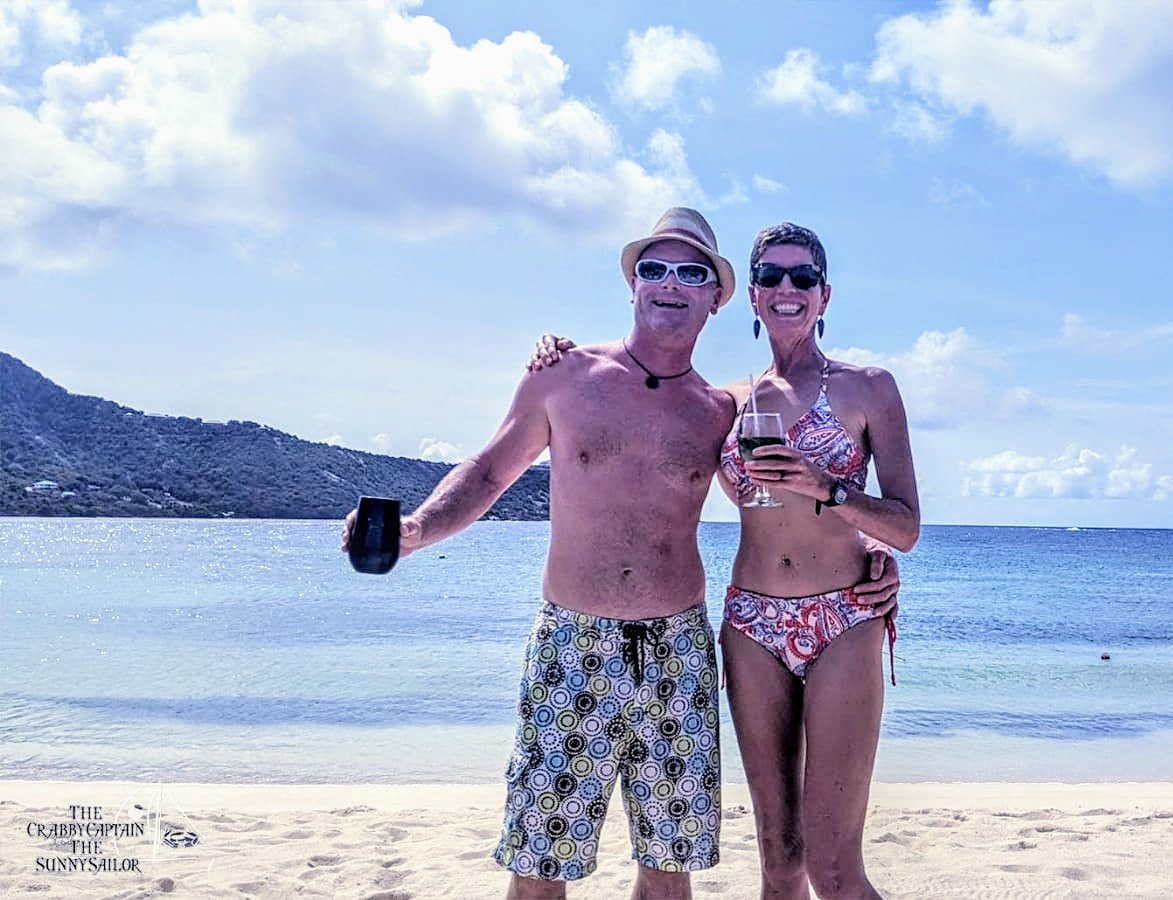
Photo credit: Nikki Marie on SV BooRie
Photo credit: Cara on SV Music

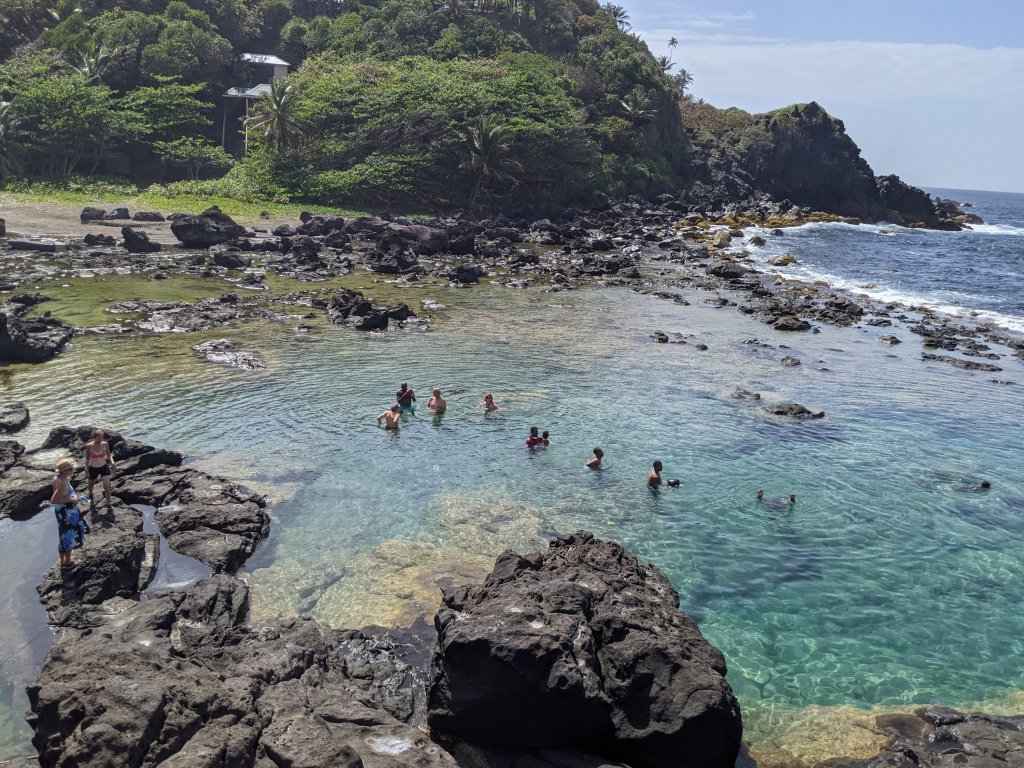
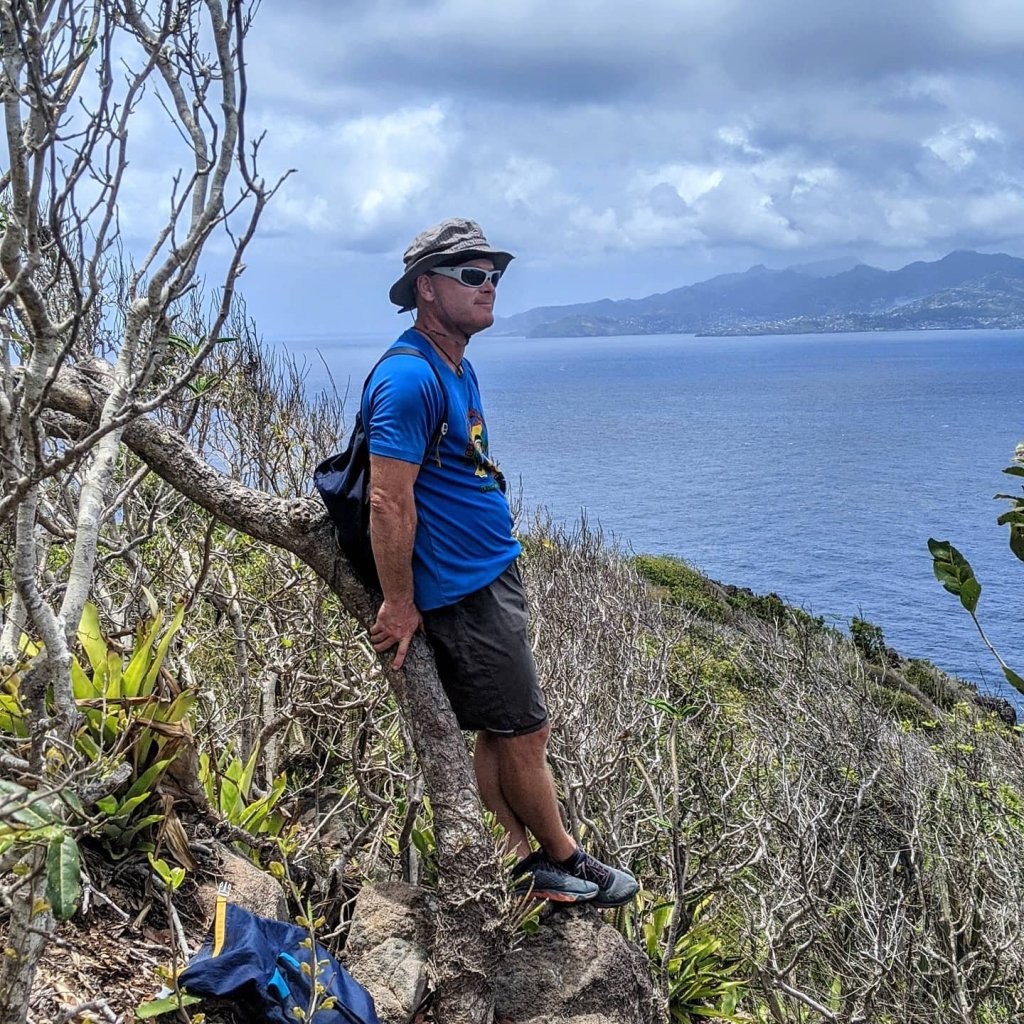
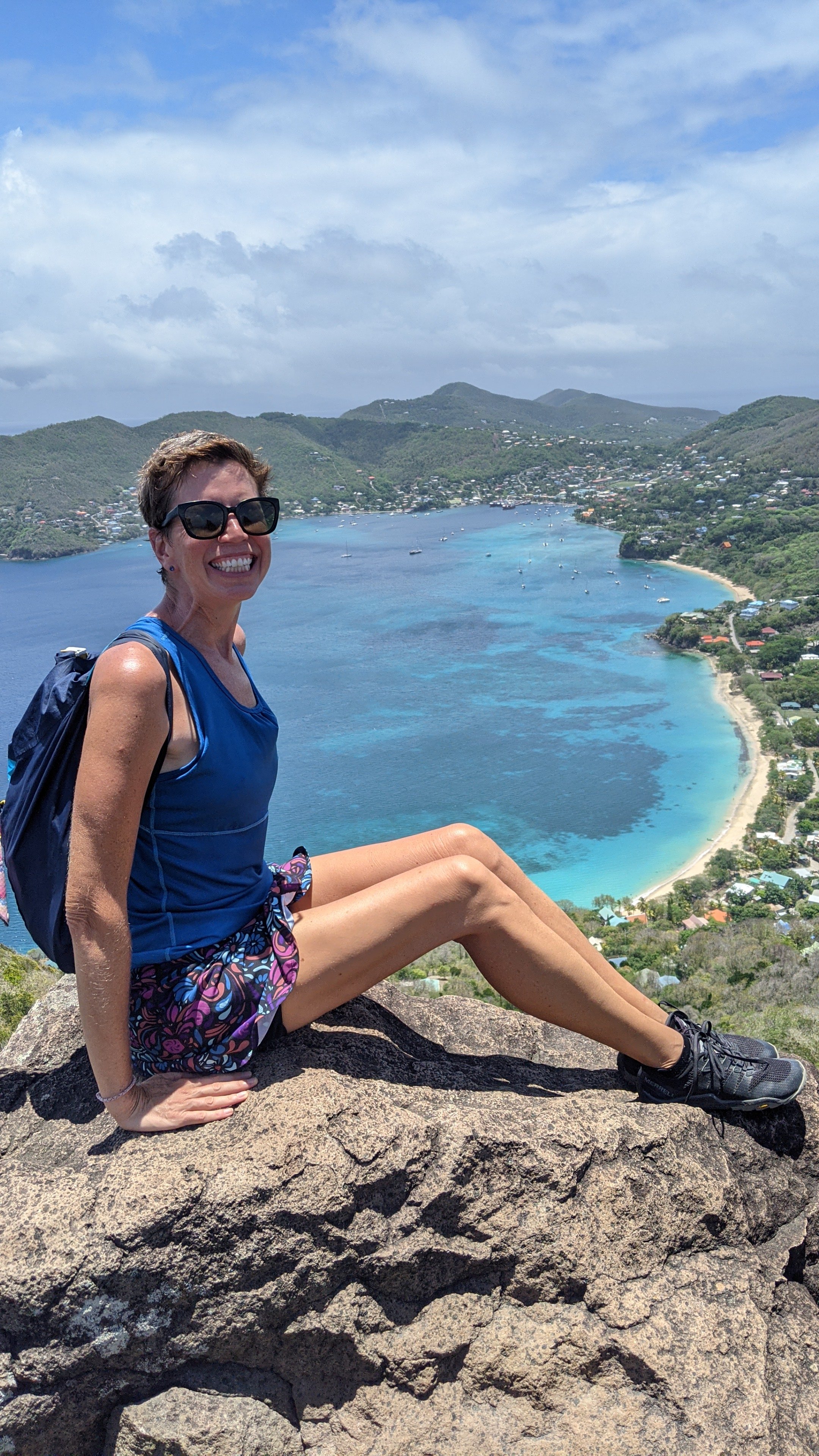
Caribbean countries have just started relaxing quarantine requirements for fully vaccinated visitors. We had to wait two weeks after our second shot to be considered fully vaccinated, so we squeezed in one last sail north to Bequia to check off the last few items on our wish list there. (If you recall, our last visit was cut short by that pesky volcano) I thought I’d walked every road and trail on the island, but I found one that I’d missed – a 9.5 mile round trip trek to the northernmost point on the island, with great views of the main island of St Vincent. I’m glad we came back for it, because this turned out to be one of the nicest trails we’ve encountered in the Grenadines – even if our feet were aching by the end of the trek. Life on a sailboat sure isn’t good for hiking training! In Bequia, we were also able to squeeze in a little gift shopping and gluten free food shopping, as well as visits to our favorite restaurants, and one last hike to picturesque Peggy’s Rock.
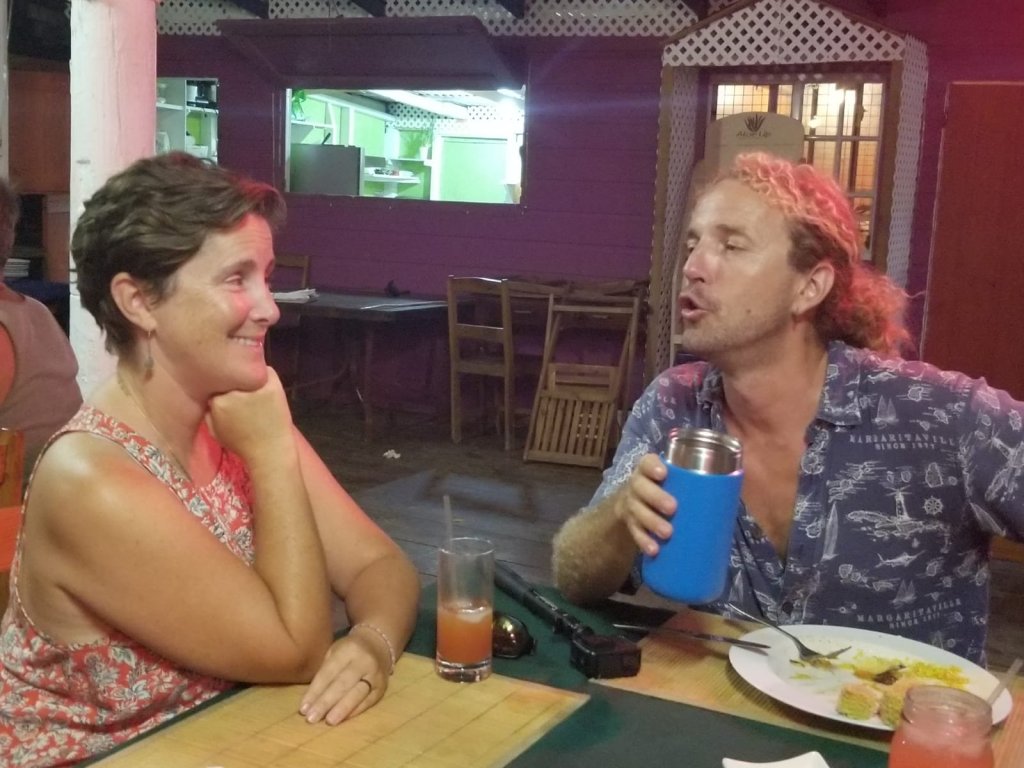
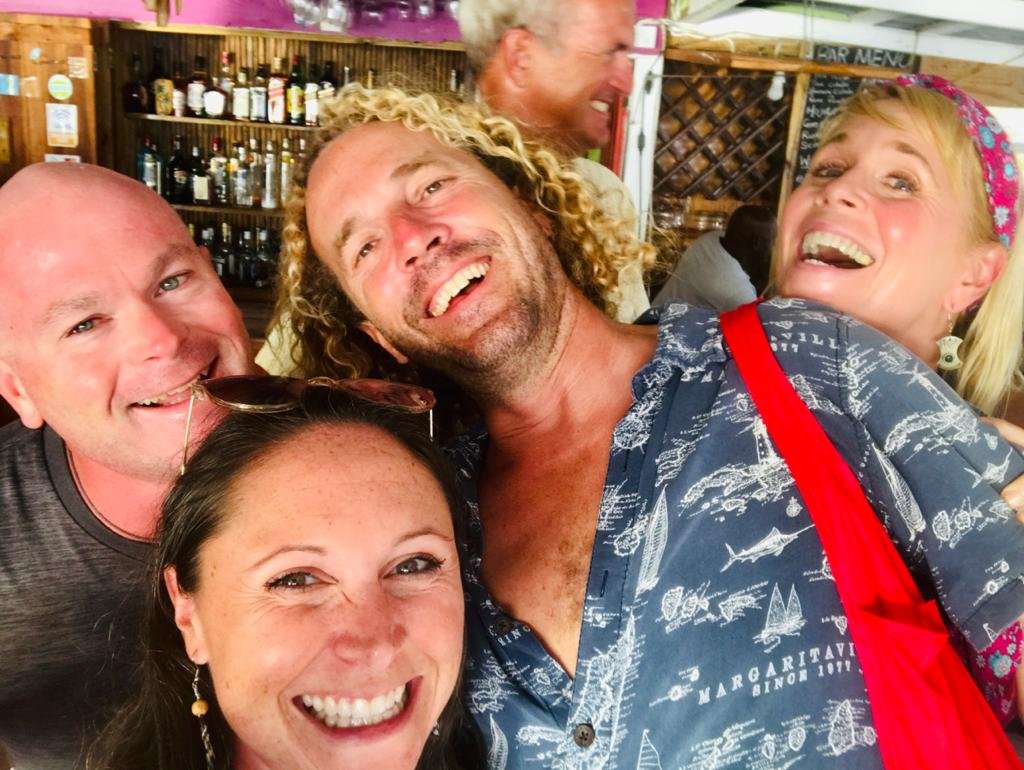
Most of this long drawn-out goodbye has been loads of fun. But the downside of this nomadic life (and the flip side of meeting so many great people) is that eventually we have to say goodbye to close friends who have become our chosen family. We’ve been buddy boating with Kevin and Cheryl on SV LeefNu and Zach and Lindy on SV Holiday on and off for the past three years. (Check out the “Fun on Holiday” YouTube channel for great videos of cruising life – with ukulele serenades!) From SVG, we are all going our separate ways. And while we might meet up with Holiday somewhere during next year’s cruising season, LeefNu will be sailing back home to Ontario to resume careers and hunting and canoeing adventures up north. We’ve had great times together; hosting beach barbecues, sharing recipes, repairing each other’s boats, hiking and snorkeling, and drinking rum. Saying “See you later” to such good friends was the toughest part of our long goodbye.
Well, goodbye month is winding down, and it’s time to stop liming on the beach, and start making plans for keeping Sanitas and ourselves safe during hurricane season. Next blog post, we’ll be heading back south to Grenada!
I don’t know where I’m a gonna go when the volcano blows

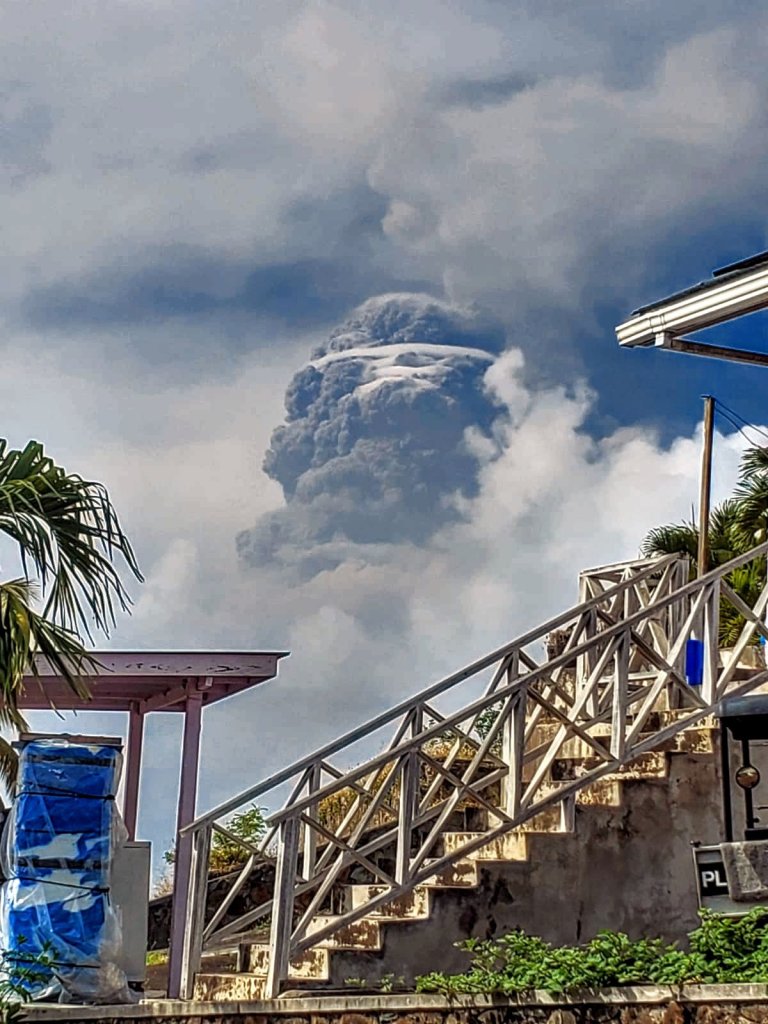
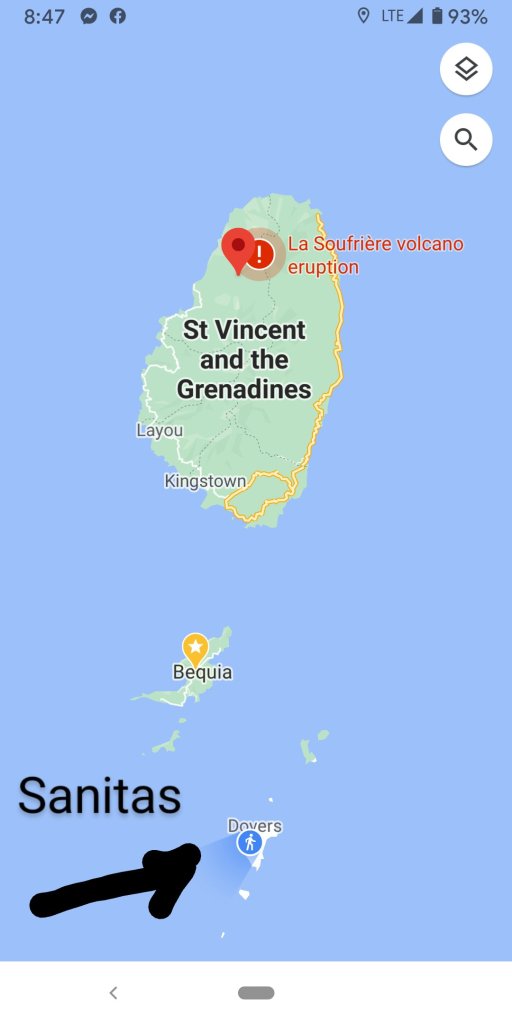
The La Soufriere volcano on the north side of St Vincent has been active since we arrived in December. Back then, it was considered in an “effusive” state – some steam, a little smoke, growth of a new dome. That all changed Friday morning, April 9th, when a series of small earthquakes announced the start of explosive eruptions! 😯 I’m writing this on Sunday morning and scientists from the University of the West Indies don’t know whether the eruptions will end soon, or will continue for days or weeks.

Did I mention we just visited St Vincent on Tuesday? We took a day tour and visited attractions on the east side of the island; all the way to the northernmost village named Owia. On Tuesday, it was a scenic tropical paradise. Now, it’s residents have been evacuated and buildings and vegetation are covered in several inches of ash. Please take a moment to pray for the citizens of St Vincent. Over 20,000 people have been evacuated, and the damage to homes, property, and farm crops is going to be immense.

So how has an erupting volcano effected the crew of Sanitas? Well first of all, we are definitely safe. We were anchored off the island of Mustique on Thursday night into Friday morning when the first explosive eruptions occurred. It’s around 27 miles as the frigate flies from the volcano. I think we felt the effect of the earthquakes that occurred early Friday morning. Mustique is a notoriously rolly anchorage. But right about 4:00am, Sanitas started rolling so violently that items were thrown off the shelves. It took about 90 minutes for things to settle back down. The earthquakes occurred around 3:30, and since our harbor faces north, with very little protection, we think we experienced swell caused by the quakes.

Sanitas was anchored off Mustique when La Soufriere erupted on Friday

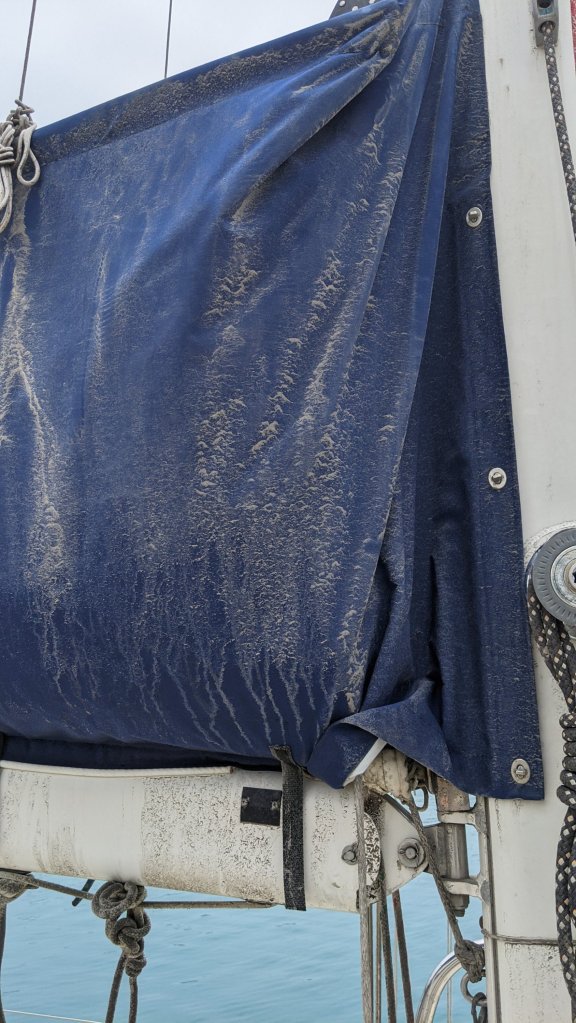
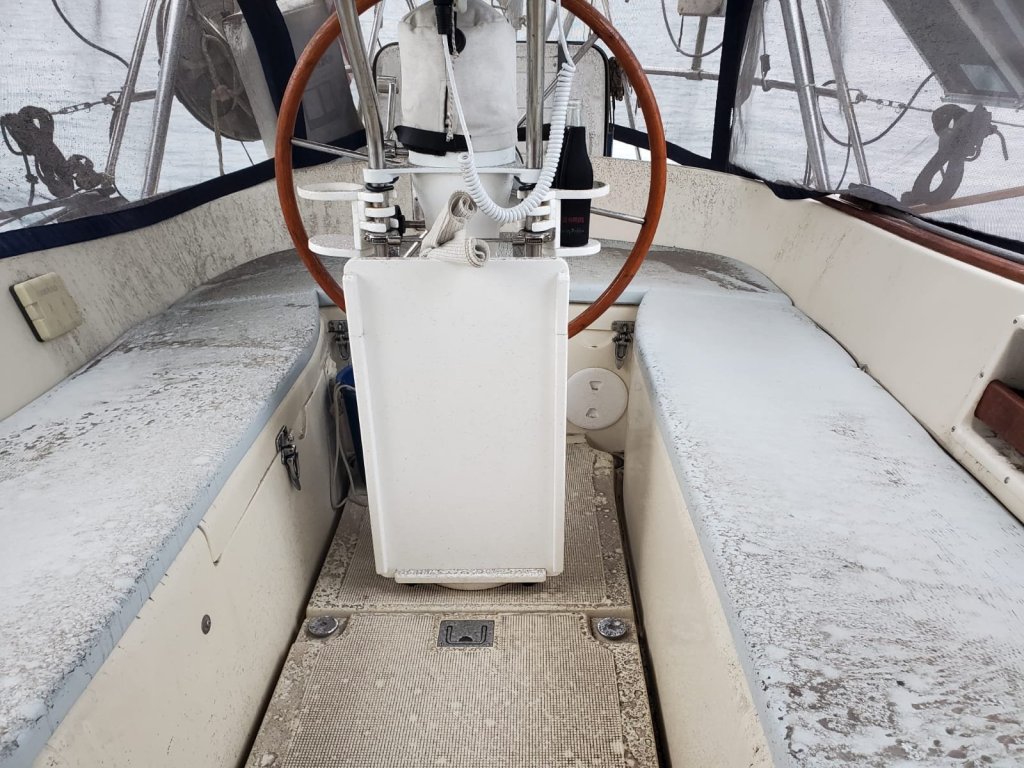
We woke up to a thin layer of ash covering the boat… and the table… and the floors… and the clean dishes. From that point on, we kept the boat tightly closed up. Which makes things hot and miserable inside, but it’s worth it to keep the indoor ash to a minimum. Volcanic ash is extremely fine and black – I’m thinking it’s much like the dust used by detectives to find fingerprints. It gets everywhere and is super hard to wash off. When it rains, it rains mud. Capt. Mike attempted the first of many wash-downs of Sanitas with bucket after bucket of sea water.

The cockpit is protected by a canvas cover… And it still got this dirty.
Ash really sticks to our new canvas, and to all the running rigging

The sky has been a heavy grey haze. Visibility is very poor, and we can’t even see the next island south in the chain. Air quality is bad, and we are constantly sniffling and dealing with headaches. When we went for a walk on the island, I could tap my teeth together and feel the grit in my mouth.

On Friday afternoon, we walked up to the hilltop village of Mustique. Little did we know, La Soufriere had just experienced it’s second eruption. We joined the group of villagers standing in the middle of the road, looking north and pointing at the huge grey volcanic plume.

It’s difficult to know where to go to wait out the eruptions and to find the best air quality and least amount of ash. Our sailing friends are mostly heading as far south as possible. In a normal (aka non-Covid) year, we’d probably turn around and sail straight to Grenada. They’re getting a bit of ash fall there, but not as much as we are in the Grenadines. If this continues for a while, we might start the process to head south about two months earlier than planned (requesting permission from the Coast Guard, PCR tests, quarantine, etc.) But for now, we’re just returning to the marina in Canouan, where we can access fresh water to clean the boat, and hot showers to clean ourselves.

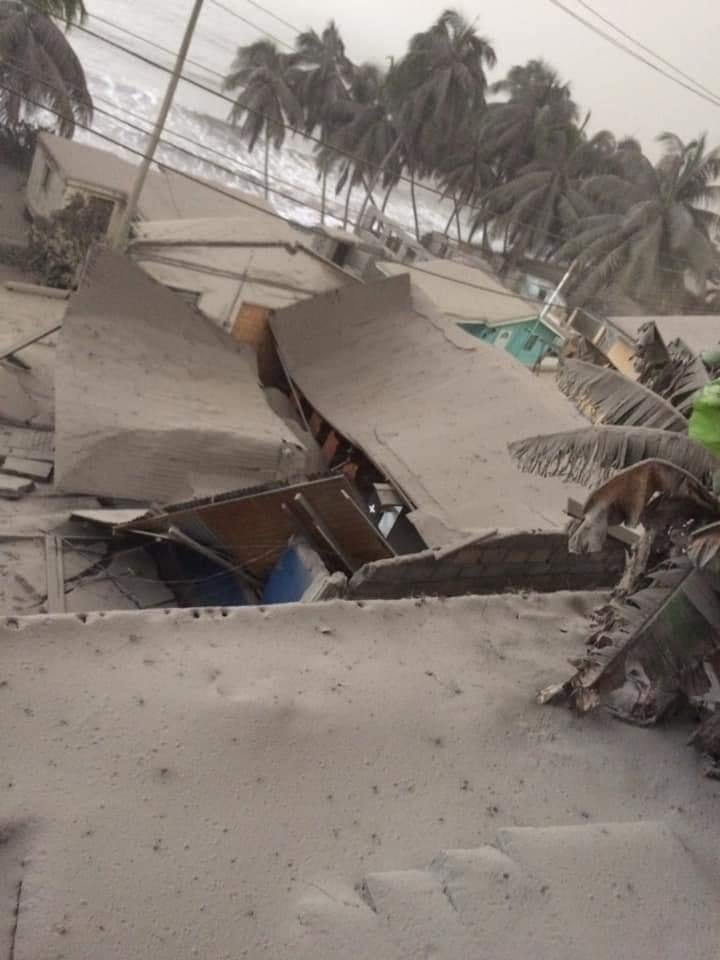
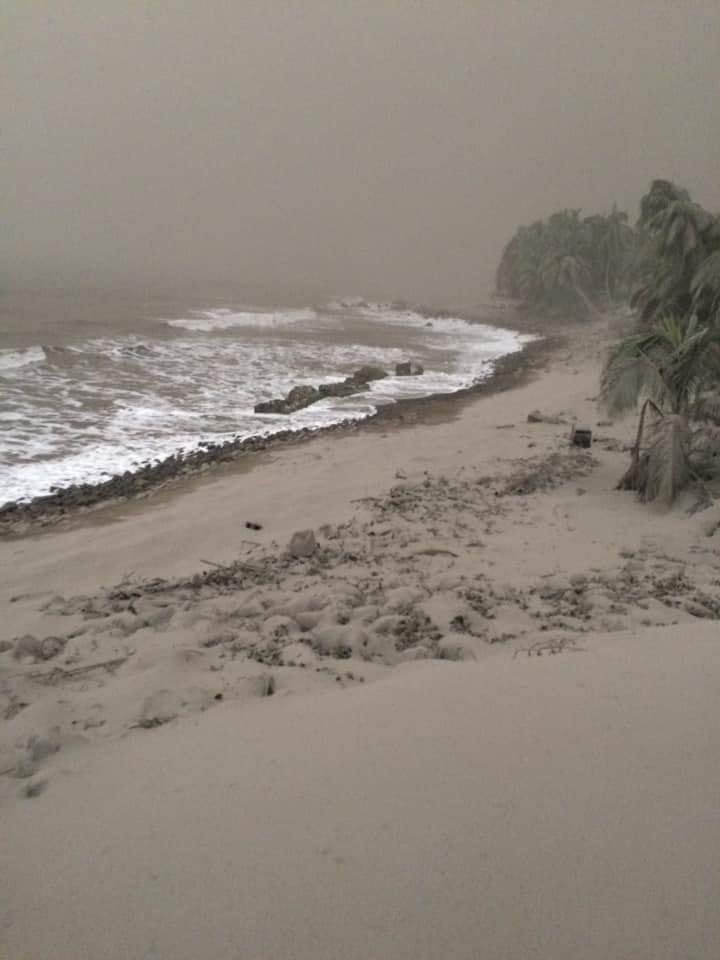
I’ll share a few photos from the local newspaper, showing how bad the ash fall has been on St Vincent. It looks like snow on the ground, and some northern villages have seen several inches of ash accumulation. Roofs are starting to cave in from the weight and the entire island is water rationing because ash can get into the water supply. If you can spare it, please consider donating to relief efforts for this beautiful country and her strong people.

Invest Caribbean GoFund Me

This is a photo I took at Owia in the northern part of St Vincent on Tuesday
These pictures are from the same area after the eruptions, with vegetation and homes covered in ash

Lobster – It’s what’s for dinner

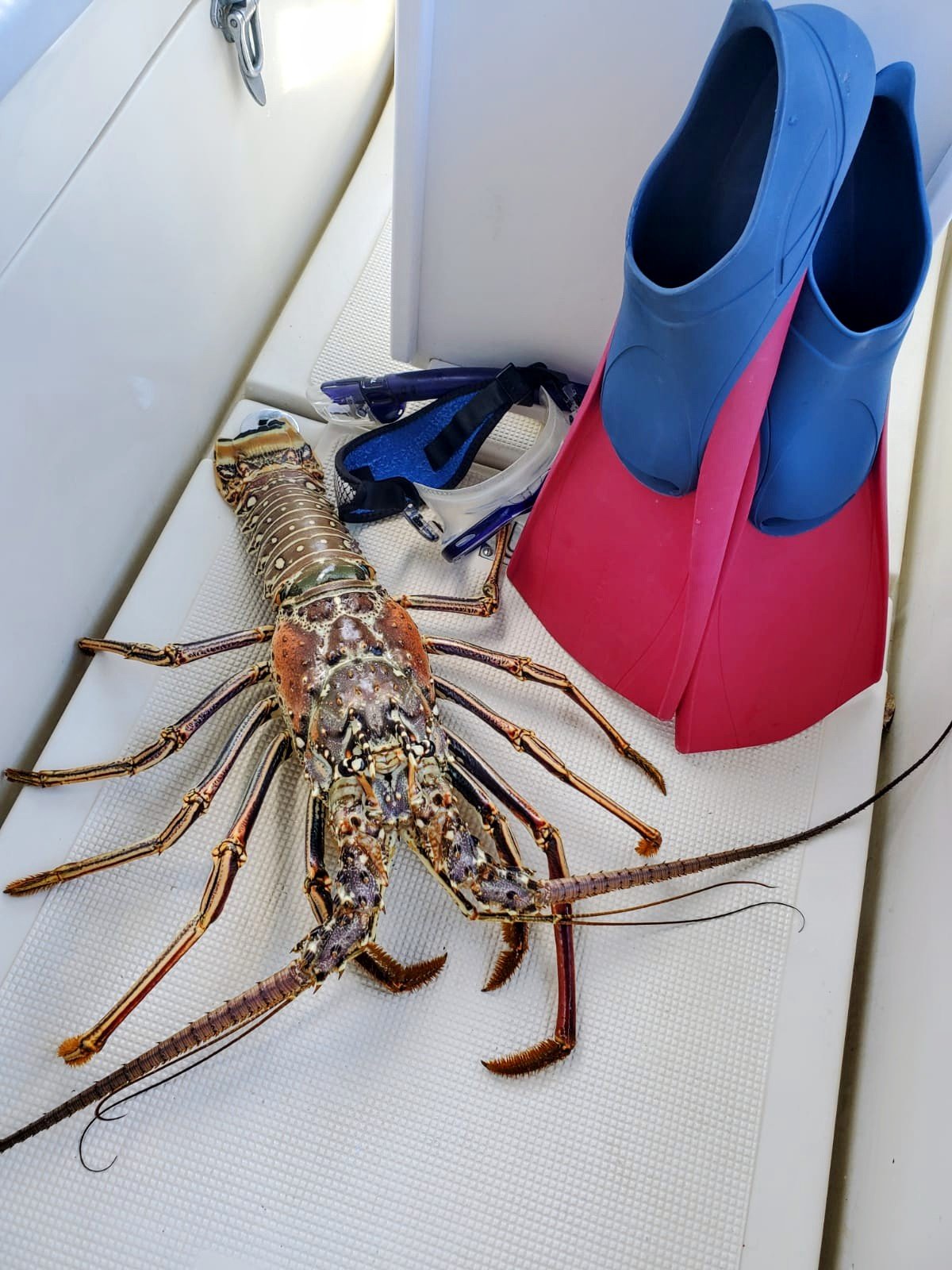
How did the biggest lobster I’ve ever seen end up in my cockpit?

  • Fisherman- You want lobster?
  • Me- How much per pound?
  • Fisherman- 20ec
  • Me- Nope
  • Fisherman- How much you pay?
  • Me- 12ec
  • Fisherman- 15?
  • Me- Ok
  • Fisherman- Holds up a gigantic 5-pound lobster
  • Me- Gulps. What have I gotten myself into?

That’s how, for 70ec (about $26) I ended up with a very large and very grumpy creature in my cockpit, and an unplanned afternoon of lobster butchering ahead of me.

I wasn’t planning on lobster for dinner
Size comparison to Mike’s snorkel gear

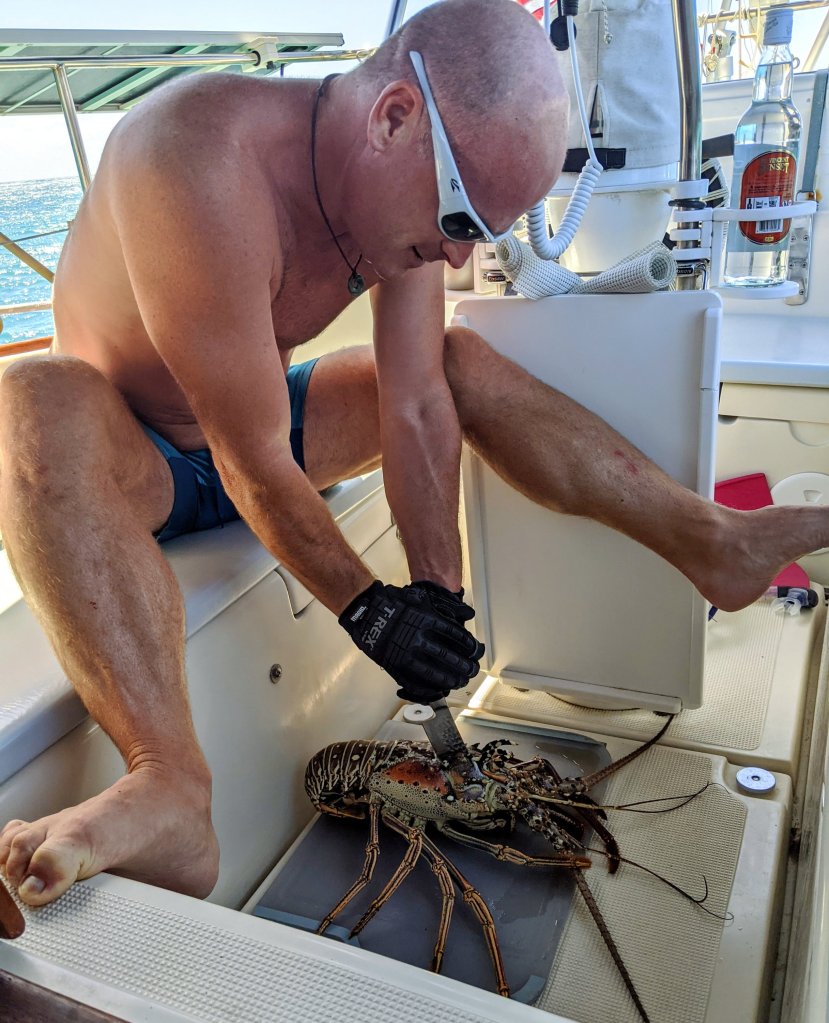
I’m usually in charge of lobster killing. When we have small lobsters it’s easy to simply put on a pair of gloves, hold the lobster over the side of the boat, and pull off the tail. The rest of the critter just goes back in the water. Then I use one antenna to pull out the poop chute. But this guy was so big (and wiggly) I didn’t think I could twist the tail off without killing it first. So I pulled Capt. Mike into the effort. He used our largest kitchen knife to make a quick stab behind the eyes to kill it as humanely as possible. Then we used a thin, long knife to cut around the tail in order to remove as much of the head meat with the tail as we could.

Putting him out of his misery

Looking back on it, I should have stopped right there. But… Such a big lobster also has some significant meat in the body and in the legs. And I was DETERMINED to retrieve as much of that meat as possible. So, while Capt. Mike took a nap, I proceeded to turn Sanitas’ cockpit into a disgusting crime scene. With a combination of knives and kitchen shears, a mixing bowl for the good bits and a plastic tub for the gross bits, I eventually ended up with a big pile of legs and “knuckles” to accompany the tail meat. I wish I had taken a photo of the aftermath. Did you know that lobster blood is originally clear, but it turns black when exposed to air? Or that it dries into a sort of jelly that sticks to everything it touches? Me neither! A couple of buckets of saltwater and a bit of deck brushing later, my butchering effort was finally complete.

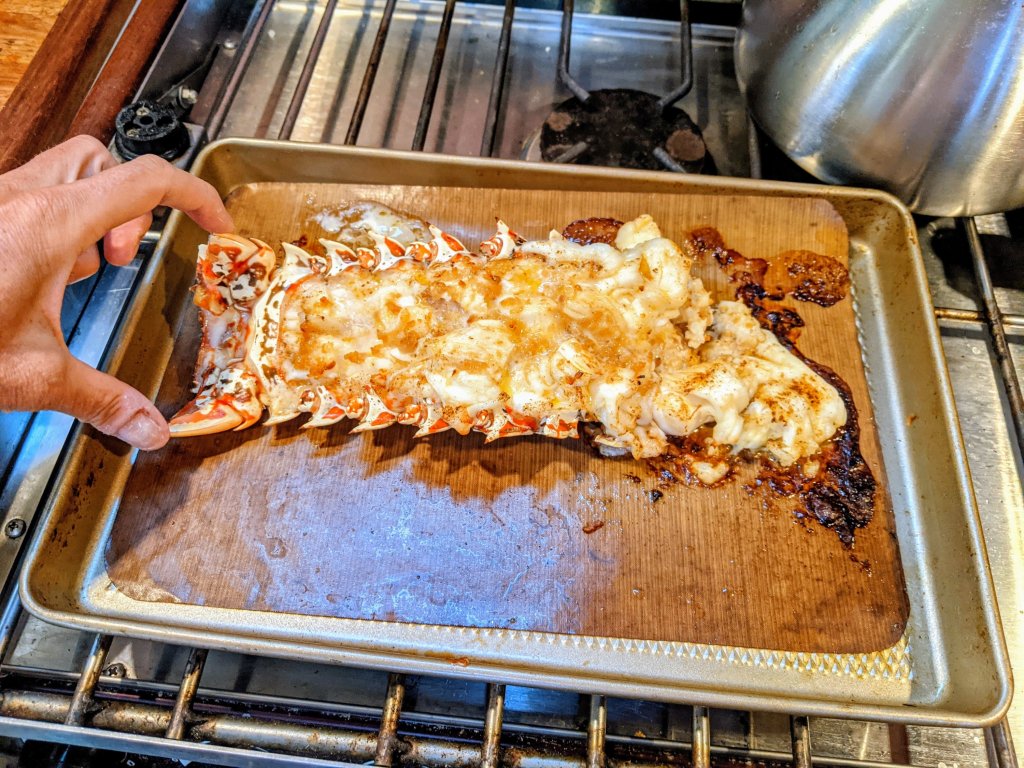
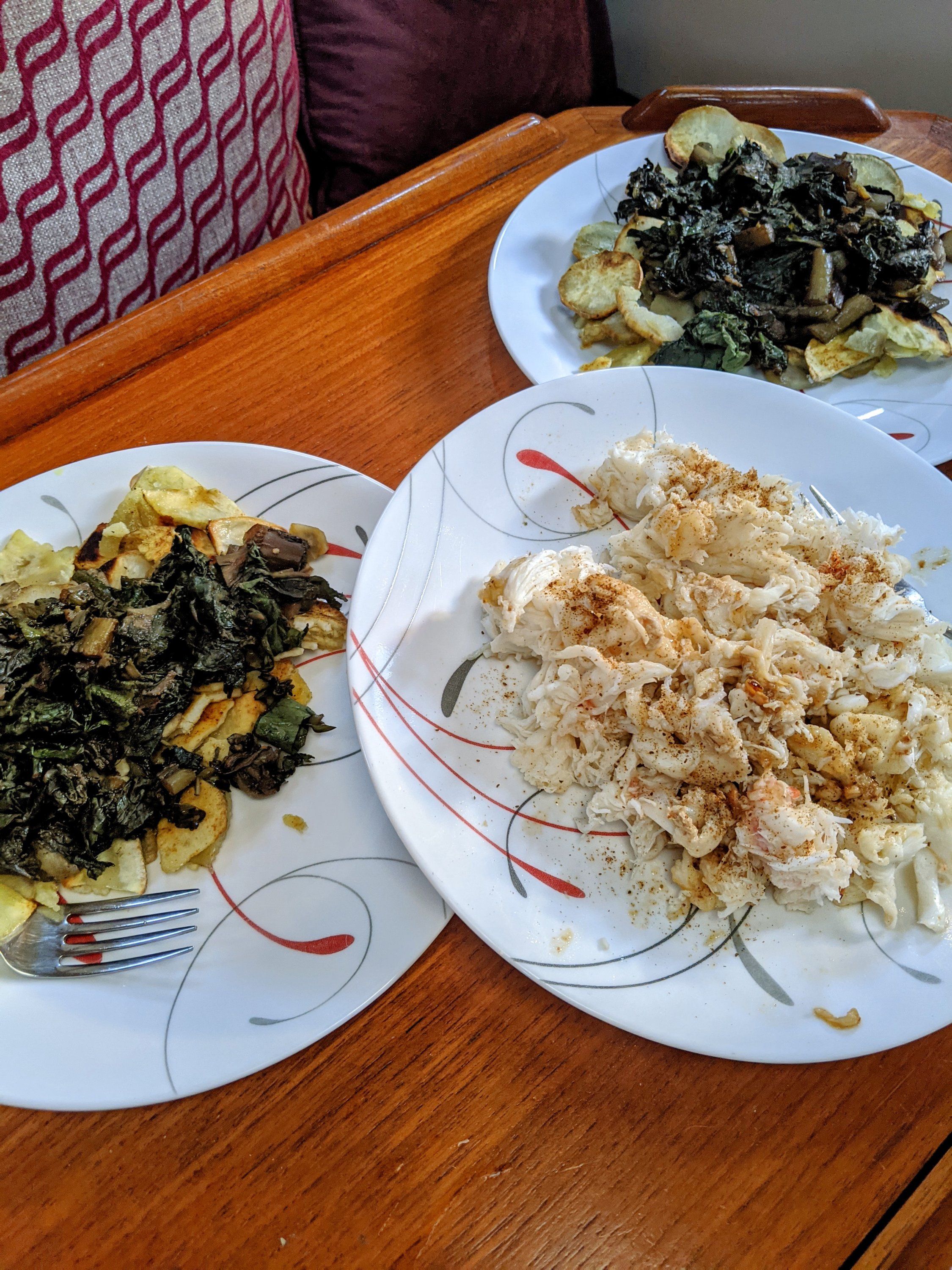
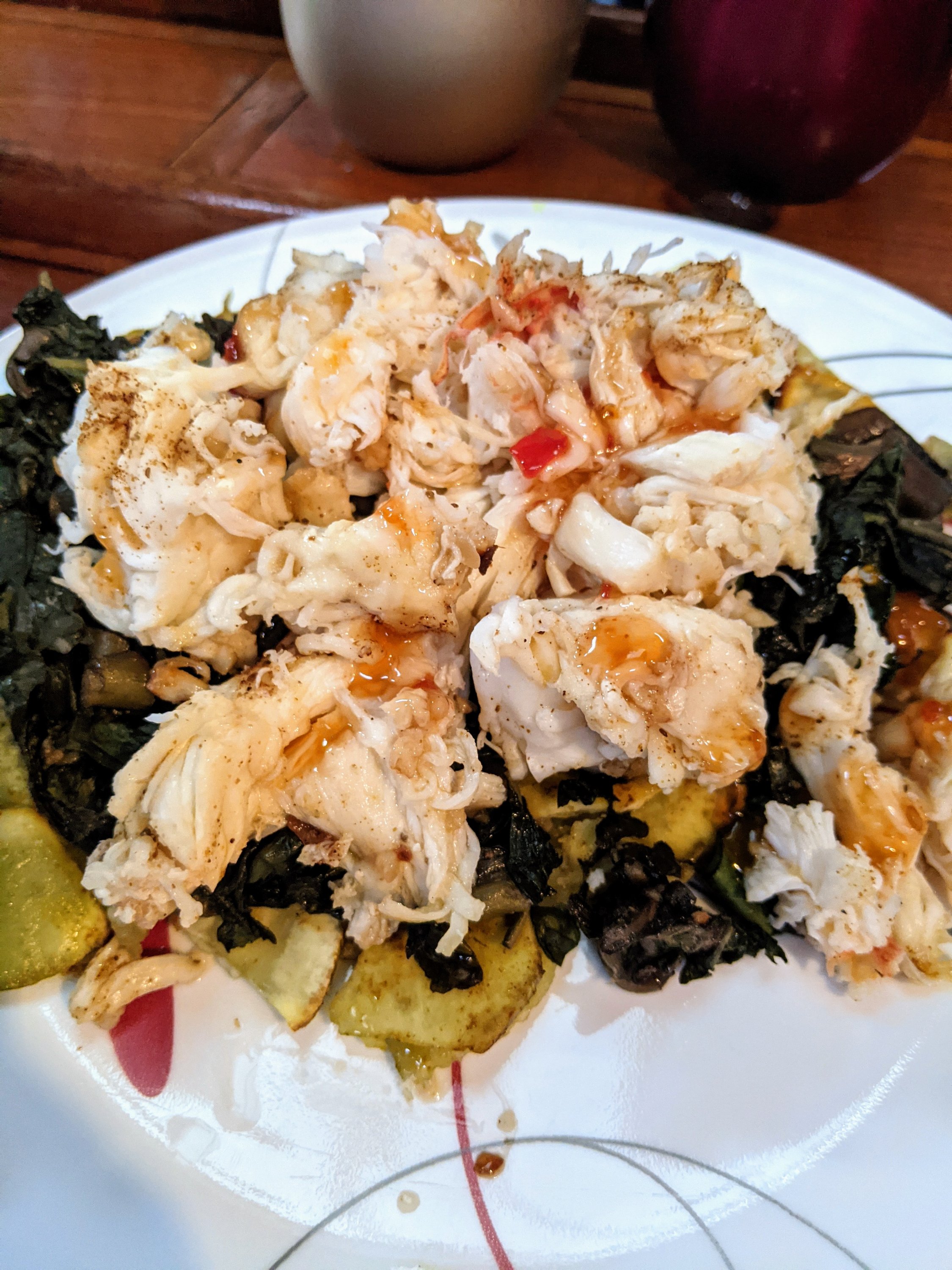
After a nap and a swim I resumed the effort with cooking lobster for dinner. We don’t have a grill on Sanitas, or a super large pot. So my go-to lobster cooking method is to treat the tail with butter, garlic, and Old Bay and to roast it in a very hot oven. We try to conserve propane by always baking more than one thing at a time in the oven. So Capt. Mike sliced up some strange looking local sweet potatoes and threw them in to roast at the same time. I’m strict about us always eating our veggies, so I sauteed a bag of chopped callalou with more garlic and some curry spices. Layering the potatoes, callalou, and lobster with a drizzle of sweet chili sauce over the top, I think my little galley turned out a restaurant-quality meal!

Tail filling up my 9×13 cookie sheet
Tail meat filling up a Corelle dinner plate
The finished product!

Lesson learned… Next time I find myself with a monster like this, I’m gonna take it to shore to clean it on the beach, probably involving a machete. Preferably, the beach will have a fire pit for grilling so neither my cockpit nor my galley will end up the the huge mess they were yesterday 😁

Kiteboarding adventures in The Grenadines!

The southern Grenadines are a kiteboarding mecca: strong, consistent trade winds, relatively calm waters protected by coral reefs, and lots of east-facing harbors. Here on Union Island there are several experienced kiteboarding schools and, with plenty of time on our hands, Capt. Mike finally got his chance to take a week of lessons from Happy Kite Grenadines!

Kiteboarding has evolved from the sport of windsurfing. The newer gear is slightly less expensive, and consumes less space in storage, making the sport more accessible than earlier iterations. A rider wears a harness around his waist, attached to a leading-edge inflatable kite by approximately 60 feet of control lines. He stands on a bidirectional board, similar to a wakeboard, and uses the kite to generate power and to control the direction and speed of travel. Is that a dry and boring enough description for you? 🤣 Well, when watching Mike’s lessons, I could feel the excitement and invigoration of flying across the surface of the ocean at high speeds, hoping to avoid boats, reefs, and other boarders, and definitely hoping to avoid a sudden and violent crash!

Did I mention a crash?

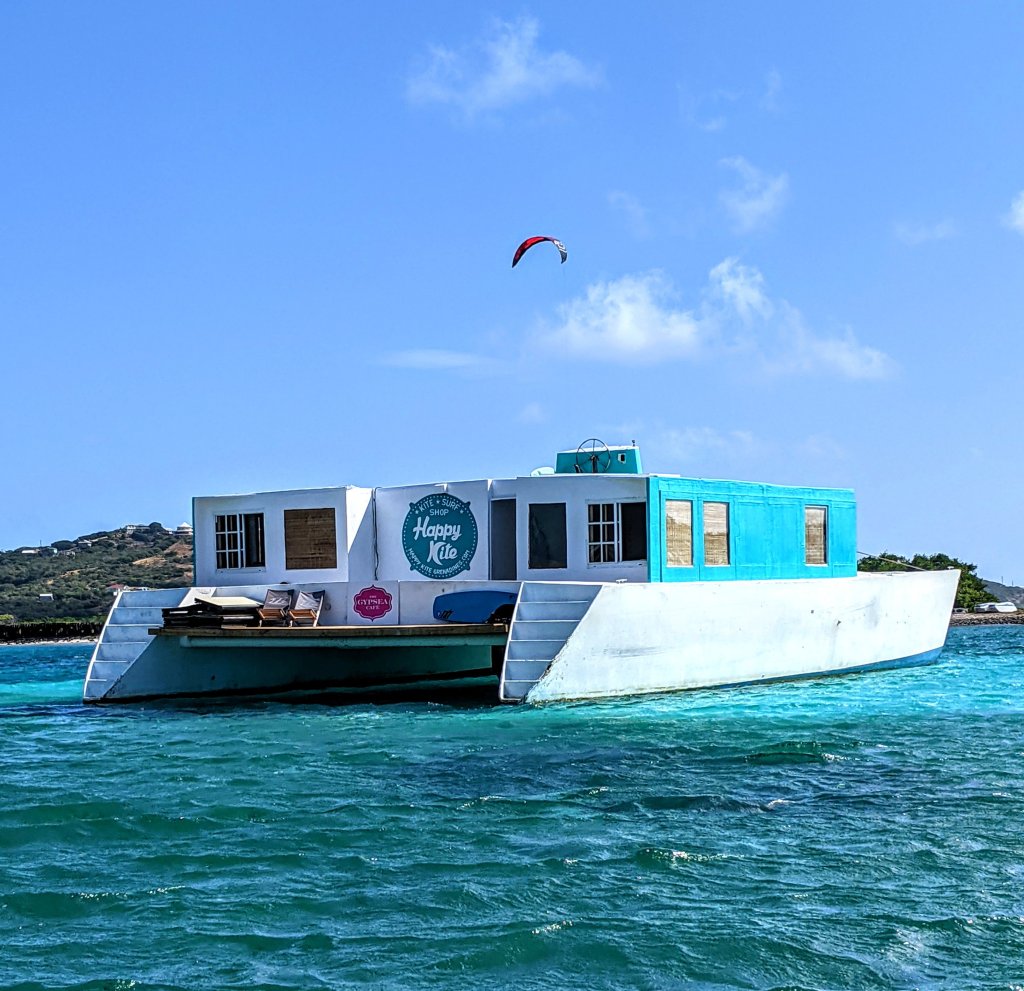
Happy Kite is run out of a turquoise catamaran anchored off Frigate Island. We anchored Sanitas there, next to SV Holiday, and Mike and Zach signed up for five consecutive days of private lessons and equipment rentals. I’m pretty impressed with the way they run their school! One instructor drives a fast dinghy. A second instructor communicates with Mike through a Bluetooth-enabled headset, providing guidance and real-time feedback while he was out there on the board. They started out on the beach, learning to inflate and configure the kite, as well as learning about safety devices and how to detach from the kite in an emergency. The first lessons focused on kite control, power zones, and generally how you can use the kite to lift you up and propel you forward.

Happy Kite Headquarters

Next, they moved into the water, not with a board yet, and learned to use the kite to body-drag you through the water. I guess this is important because even experienced kiteboarders fall off their boards, and you need to have a way to pull yourself back to it. Otherwise, the kiteboarding session could end almost as soon as it began! This part of the lesson does not look ANY fun to me at all! Getting dragged through the water, waves and choppy water repeatedly slapping you in the face, no goggles, fins, or snorkel to help us land creatures to feel more at home in the water. Blech!

Soon enough, Capt. Mike mastered the kite (Mike here. I wouldn’t say mastered. More like comprehended kite control) and the drag and was ready to tackle the board. I think his years of snowboarding the Colorado mountains really helped! There are lots of similarities between the two sports: holding an edge to carve through the water, shifting your weight and foot position to change direction, soft knees, sinking back on your heels, and of course, balancing your weight to stay in control of that board at high speeds. I could feel his excitement when the lessons finally clicked and Mike was able to get up onto the board and fly downwind – finally starting to work intuitively with the kite – and really felt that rush of speed! But, just like on a sailboat, you can’t simply speed downwind for ever. At least not if you ever want to get back to your boat or to land again! So he next had to learn to carve up wind – always a bit counterintuitive, lol.

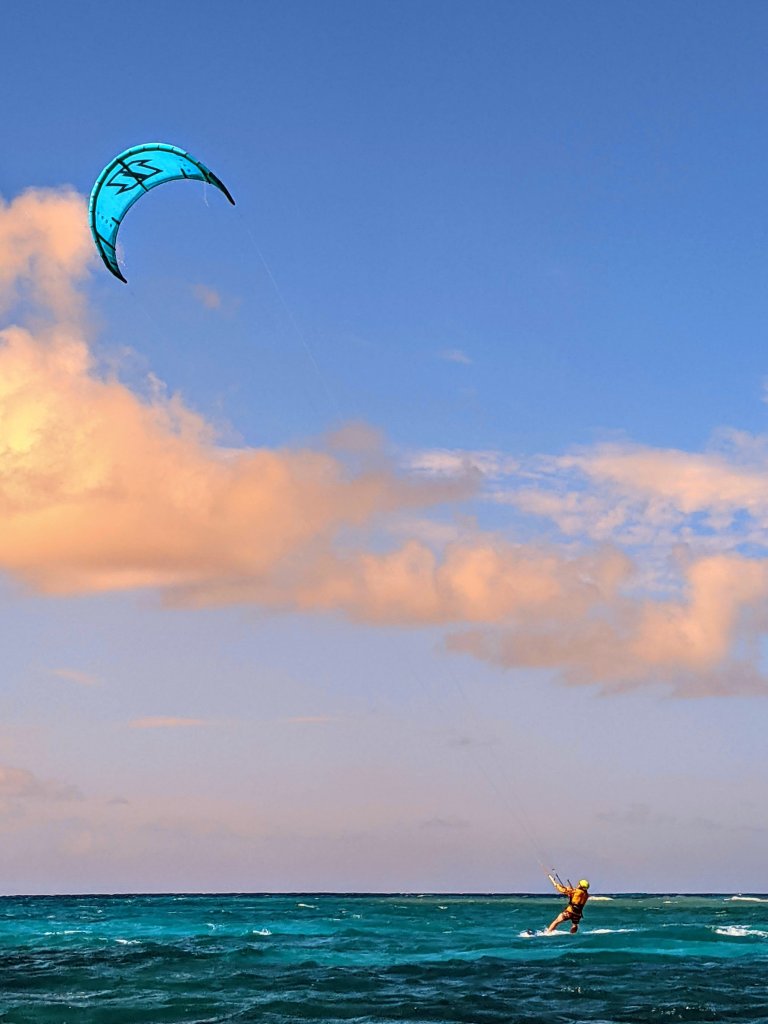
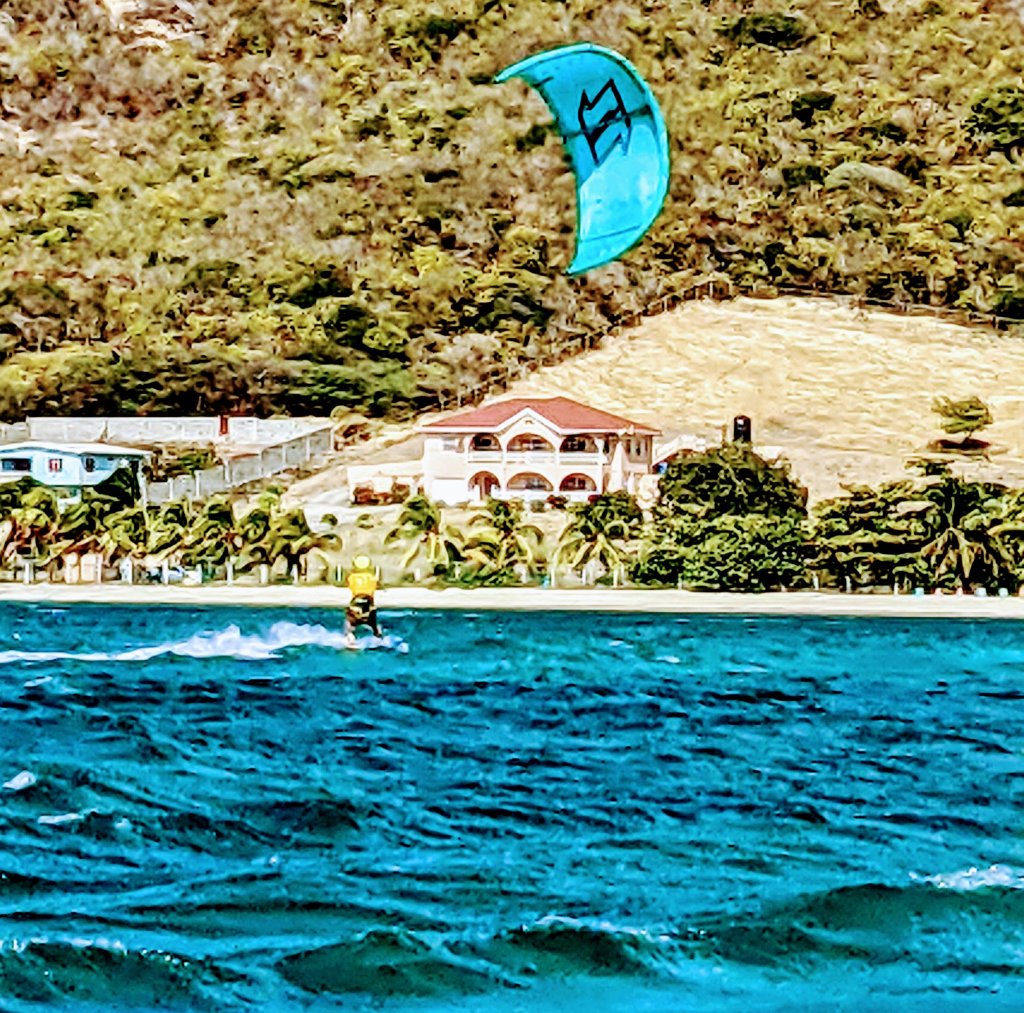
By the final day of lessons, Mike had: lost his new sunglasses, bloodied his big toe and shins, swallowed gallons of seawater, bruised his ribs with the harness, and spent hours on YouTube watching kiteboarding videos 😀 This was the big day! He’d finally mastered both kite and board, (Mike again protesting the use of the word mastered) and the goal of the day was to finally figure out how to link turns from downwind to upwind and back again without stopping and sinking down into the water. I went out on my dinghy and trailed Mike to get some photos and video on the final day. It was much more exciting than watching from Sanitas’ cockpit through binoculars! Not the easiest thing in the word to capture on a cell phone camera from a bouncing dinghy, and a fast moving kiteboarder way off in the distance, but I did my best!

He’s doing it!!

What’s next? Will Capt. Mike find some used kiteboarding gear to purchase down here? (And if so, where will we store it on teeny Sanitas?) Will Sanitas start anchoring in the windiest places we can find, instead of in the calmest? Will I become a kiteboarding widow, whiling away the hours, waiting for my adventure-seeking captain to return? Whatever happens, I’ll share it with you here!

Kite school graduates, celebrating with a ti punch on the Happy Kite catamaran

It’s Shopping Day Again

I love island shopping day! It’s always hot and sweaty, but also, always an adventure – you can’t say the same about a trip to Safeway 😉

It starts with a wet dinghy ride to the tiny town of Ashton. Before jumping into the dinghy, don’t forget to grab a small bag of trash to throw out at the dock, and don’t forget shoes (been there, done that). We usually stand up in the dinghy to attempt to get soaked with salt water only from the knees down. Then a two mile walk to the slightly larger town of Clifton – luckily there’s only one big hill to conquer on the way. I keep a running contest going to find the cutest baby goat family on our “urban hikes”. Extra points for little black sheep. Clifton is bustling with many small grocery stores, veggie stalls, and even a few clothing shops. Streets are busy right before lunch time – I guess you could call it Union Island rush hour.

Always a wet ride!
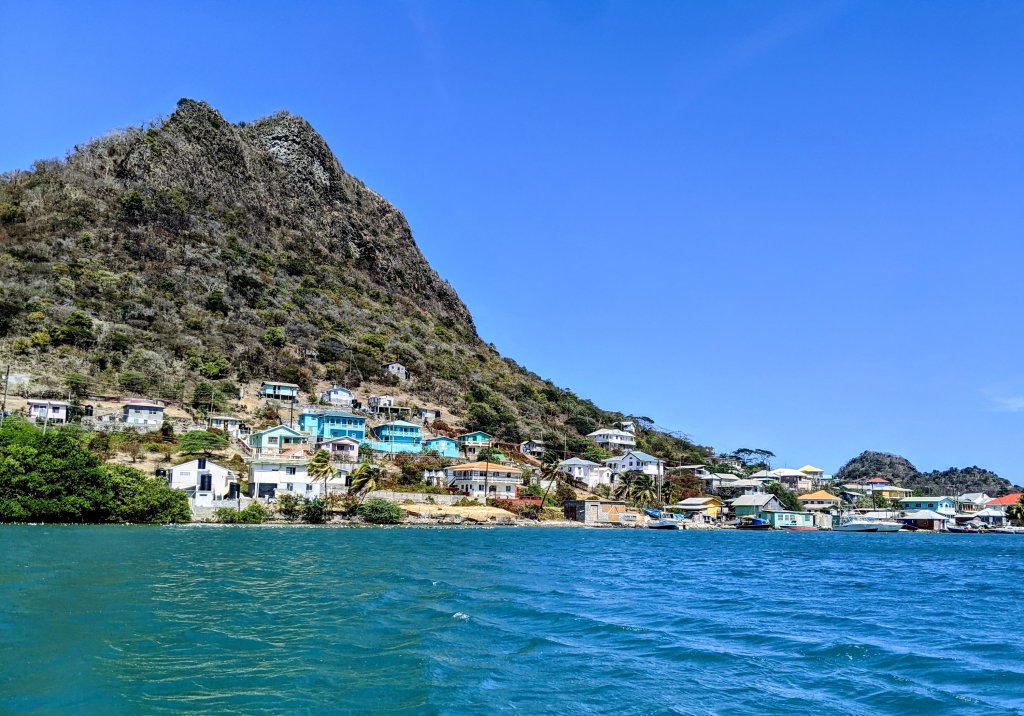
Ashton, Union Island
Baby goat rush hour

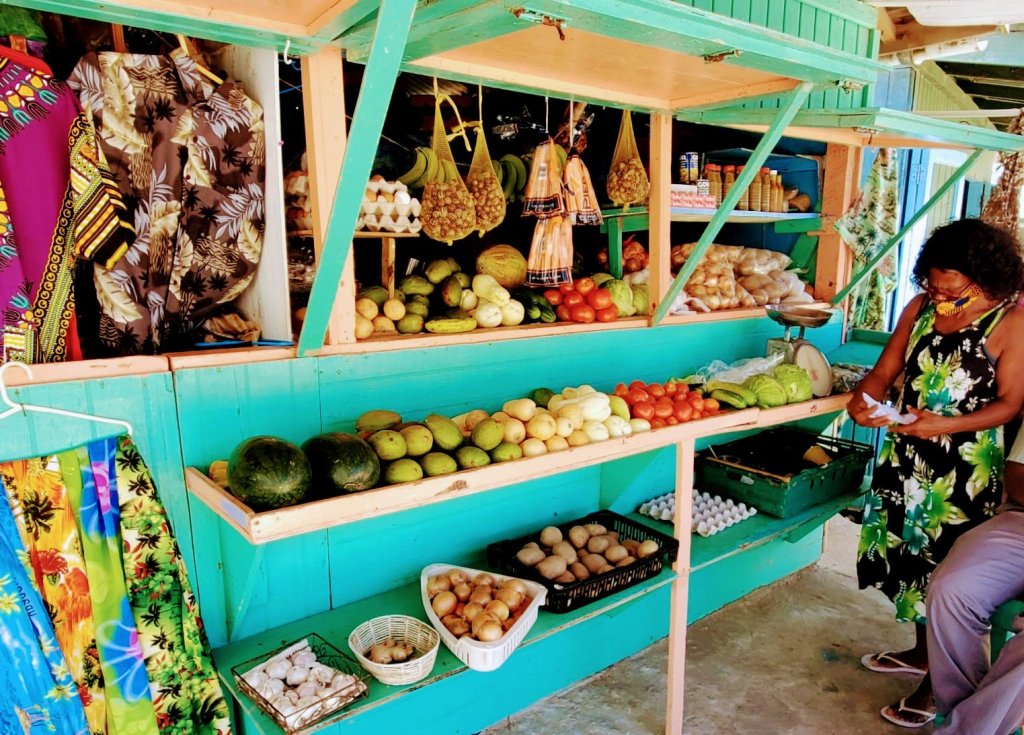
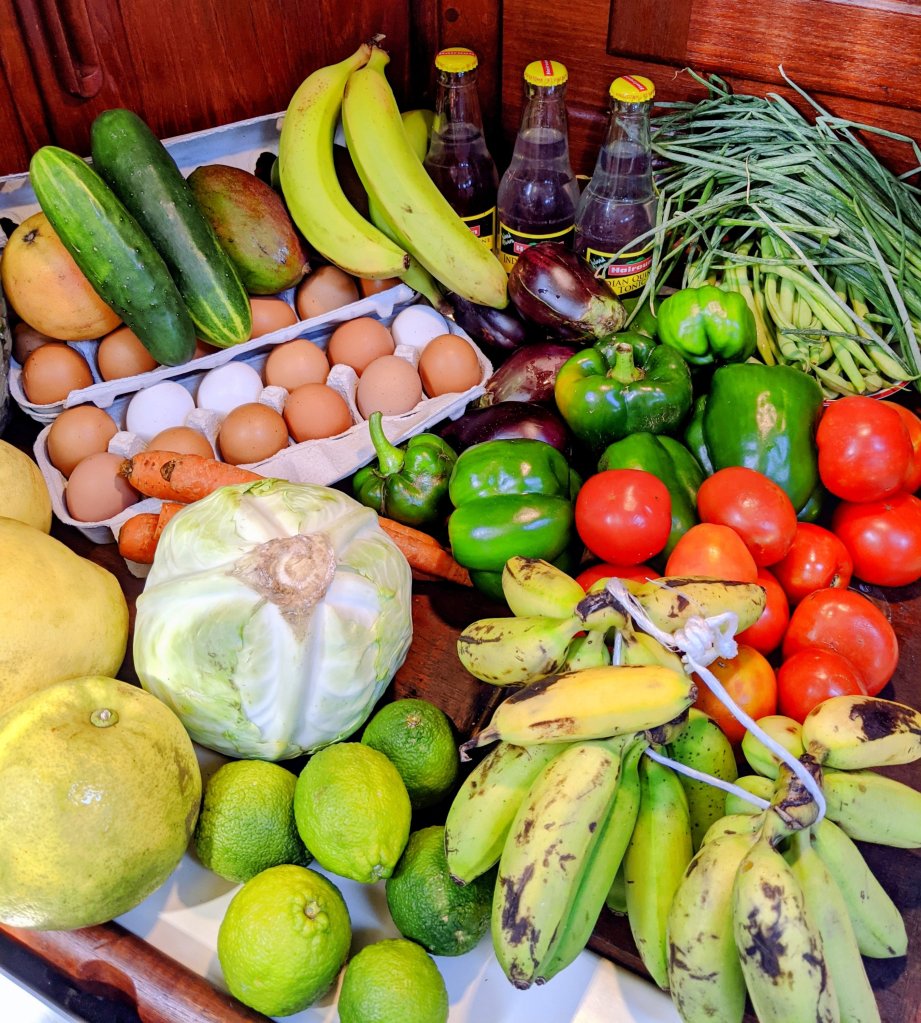
I wouldn’t call it one stop shopping… We stop at the cheapest, most rustic veggie stand next to Determination Bar first, where the super nice ladies help me pick out the best grapefruit and the local spring onions. But no chance of finding imported delicacies such as green peppers, green beans, or the kind of big ripe bananas us Americans are used to. So I finish my fruit and veggie shopping at Jenny’s brightly painted veg stand down by the town dock. She has chopped callalou and much nicer tomatoes, but I still have to keep searching for green peppers. About 130ec later ($48) our backpacks are full of about 10 days worth of fresh fruit and veg. Just one more stop at the grocery store for cheese, butter, and eggs and we’re good to go. No, scratch that. It’ll be better to return to the market for unrefrigerated eggs – they’ll last longer.

Now this is not at all the way the islanders shop. They seem to buy a day or two of food at a time and shop more often. Island friends say it’s because they rarely have enough cash to buy much at one time. Grocery stores usually have staples such as rice, flour, and sugar repacked into small plastic bags of a pound or 2 cups in addition to the 5- and 10-pound bags I’m used to finding. I really appreciate how lucky I am to be able to afford fresh, healthy food – we can stretch our cruising budget by cooking fresh food on the boat instead of eating in pricy tourist restaurants regularly. And when I stock up like this, we can take Sanitas off grid and get away from civilization for a week or more at a time. I know that the islanders are really suffering due to the lack of tourist income in Covid times, so I don’t negotiate on the price of produce. Sometimes I’ll exclaim, “Really?!? That much?” and the shop keeper will throw in a piece of citrus or a few extra bananas 🍌🥭🍈🍋

Jenny’s veggie stand
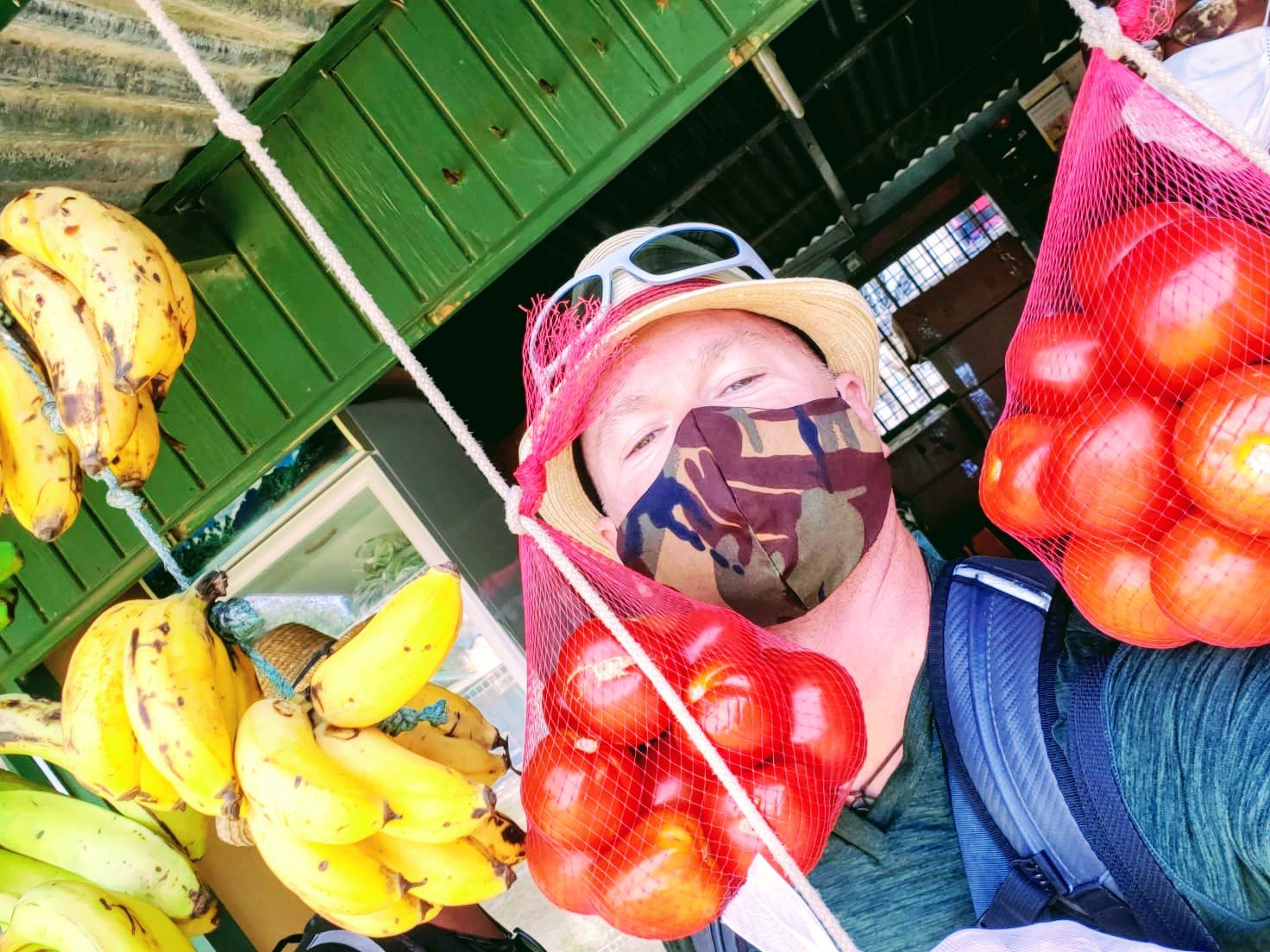
Vine-ripened tomatoes in winter

Another 2-mile walk back to the dock (we never seem to time the mini buses right here in Union Island), another dinghy ride (it’s not quite as wet in this direction) and then I have to clean and repackage all the veg. Take everything out of the plastic bags, check for bugs, pack in green produce bags to make things last longer, rotate the contents of my top-loading fridge to store the newest and most durable items on the bottom and the fragile things I need to eat first on top. While I’m at it, check the contents of the fruit hammock – make sure nothing’s going bad. And… Since I’m really on a roll…I found tiny bugs in the cornmeal last night. Good thing I package all my dry goods in sealed containers! But just in case, let’s take everything out of the galley cupboard, wipe everything down, and make sure the bugs didn’t escape their plastic prison. Phew!

A pretty good haul
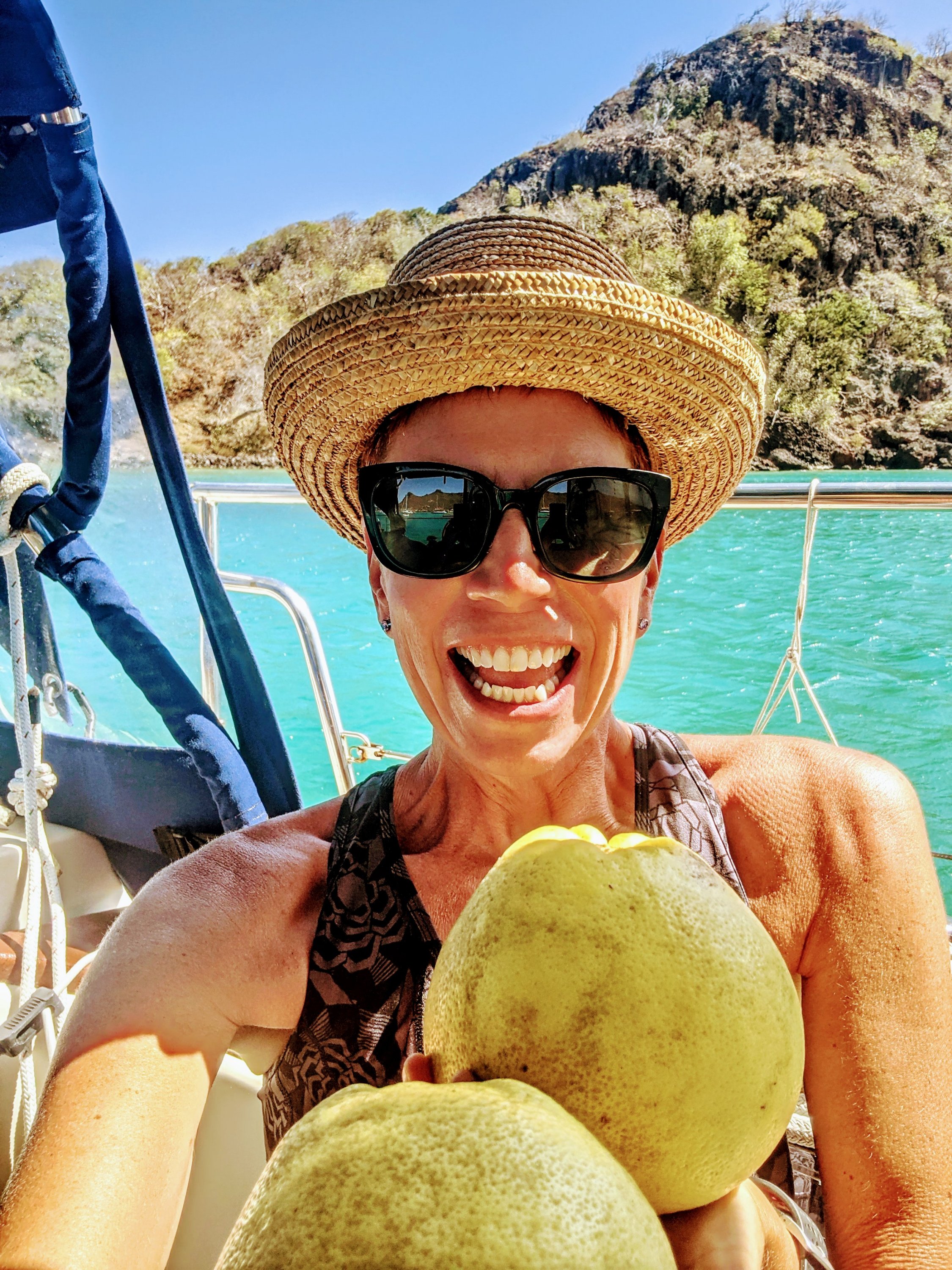
These grapefruits are HUGE!

When people ask, “What do you actually DO all day when you live in a sailboat?” I answer, “all the things you do – everything just takes a heck of a lot longer”. I hope you’ve enjoyed this glimpse into island shopping… I’m going to get started making falafel, a tomato cucumber salad, and maybe some butternut squash for dinner. What are you having?