Hard at work in the boatyard

We start our stay in the boatyard with a very manageable list of projects – mostly just standard maintenance and cleaning this year. But one thing leads to another, and then to another… I think in the week since we’ve been back, I’ve added more items to my To-Do list than I’ve crossed off!

I do the boring, non glamorous jobs. Like cleaning every surface inside the boat to remove the layer of boatyard dust. And unpacking and putting away everything that we stored on land. And doing an inventory of the provisions that we didn’t eat last season that seem to have survived heat and humidity and we’ll put right back in the rotation for this year. And touching up the interior teak with oil where it has been dulled and faded by sun or water leaks.

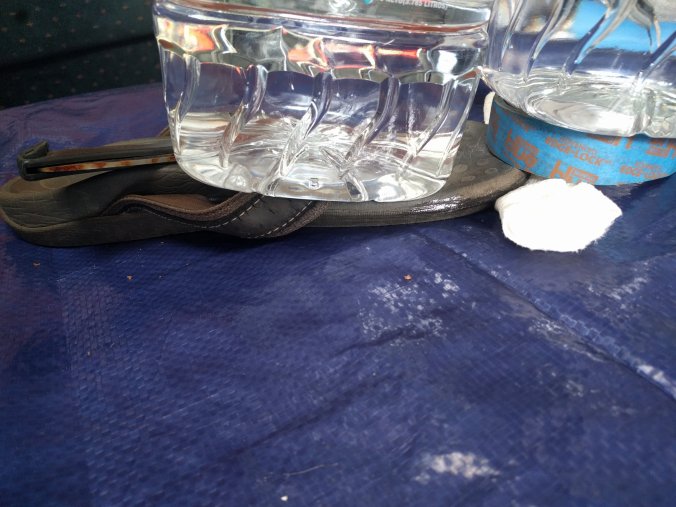
Just for fun, here’s a picture of Mike’s flip flop – glued together with silicon caulk and with a big hug of water holding it in place to dry!
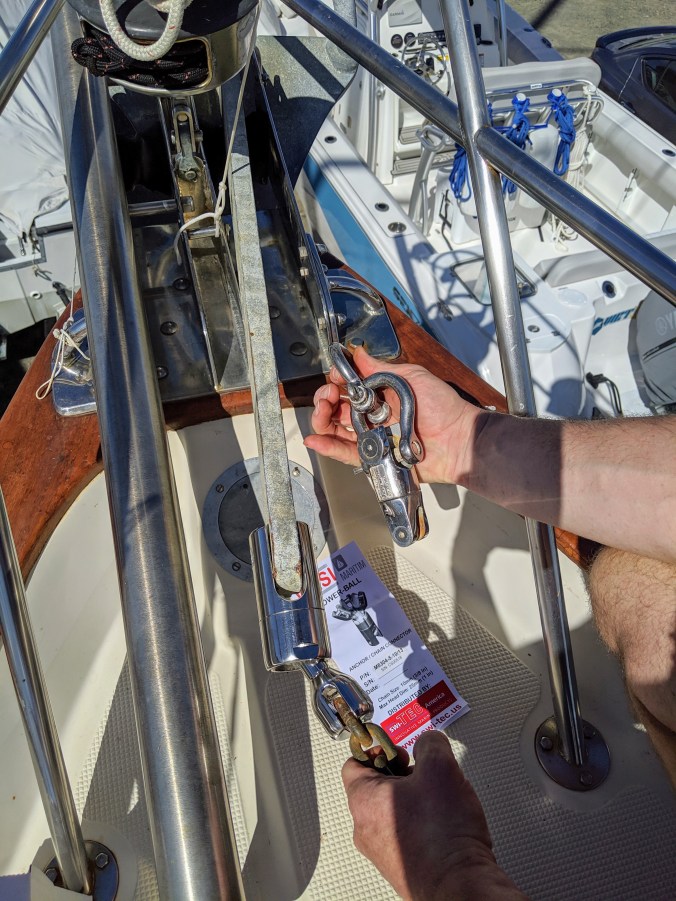
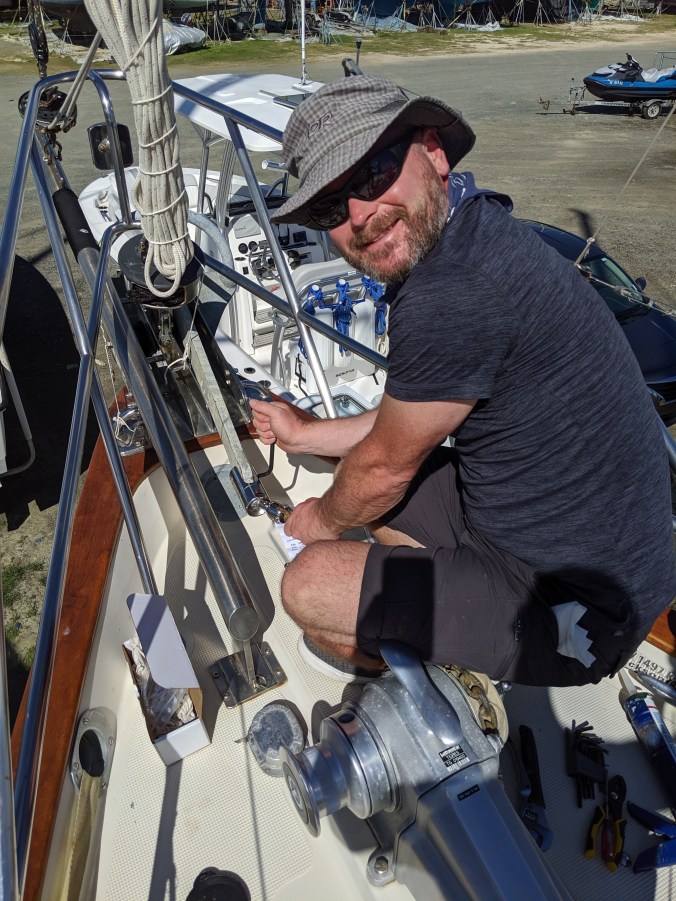
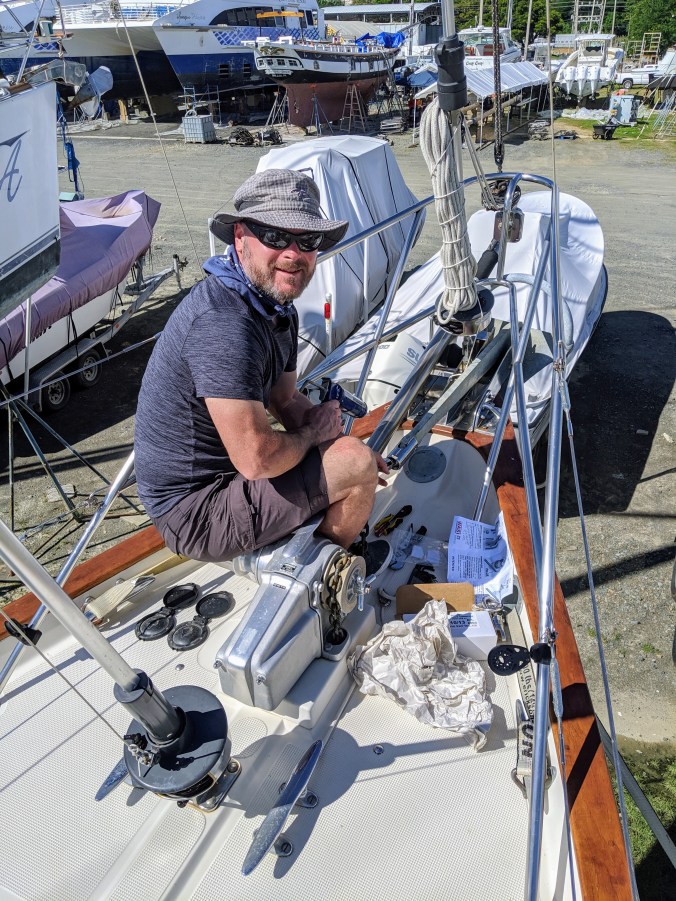
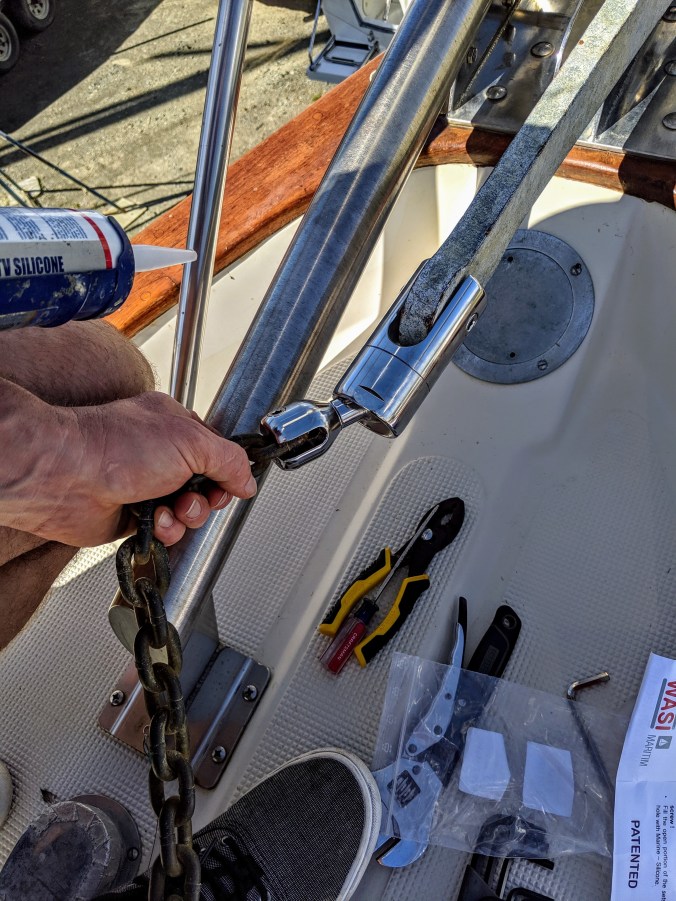
Capt. Mike does the important jobs that will actually keep us safe at sea. For example, replacing the swivel hardware that connects our big, heavy Bugel anchor to the rode chain. While the anchor has performed fabulously over the past two seasons, the connector has been known to fail, which could allow Sanitas to drift into another boat or onto shore, or at the very least could allow us to lose that expensive anchor! Our German friend, Andreas, recommended a Wasi anchor swivel, so Mike replaced it is an abundance of caution. Hopefully this will let us sleep soundly at night once we’re living on the hook again!
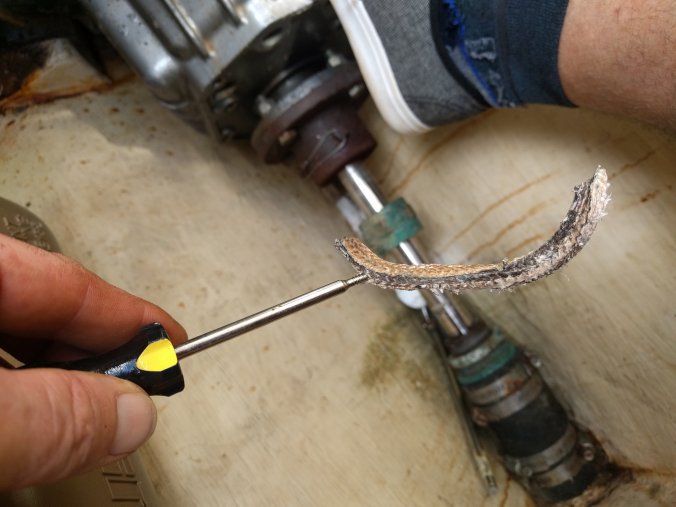
For his next trick, Capt. Mike replaced the stuffing material around the rudder post. My very nontechnical understanding of this is: there are two things that have to go from the inside of the boat (where the motor and steering mechanism are) to the outside of the boat (where they actually propel us or steer us through the water). These two items are the prop shaft which moves the propeller and the rudder shaft which moves (can you guess?) the rudder. The boundary between the inside and the outside is called the stuffing box. A thin strand of Teflon material, that looks kind of like an extra fat shoelace, wraps around the rudder post inside the stuffing box and forms a fairly tight seal. If installed properly, it keep MOST of the water out, just allowing a slow drip into the bilge.

Mike replaced the prop shaft stuffing material last season – there was so much water flowing in, we decided it wouldn’t be prudent to cross the Gulf Stream in that condition! That repair was complicated by the fact that Sanitas was in the water at the time, and keeping the wet stuff on the outside was pretty important so we’d stay afloat. It made much more sense to finish the job and replace the rudder post packing this time while she was safely on the hard and no chance of sinking.

Thanks to Al, who gave us this fancy tool which was perfect for removing the old packing material.
It’s definitely the most difficult space in the boat to work in. Capt. Mike has to do some serious boat yoga to fit into the space. And it’s almost unbearably hot. He had to use the big wrenches for this project!

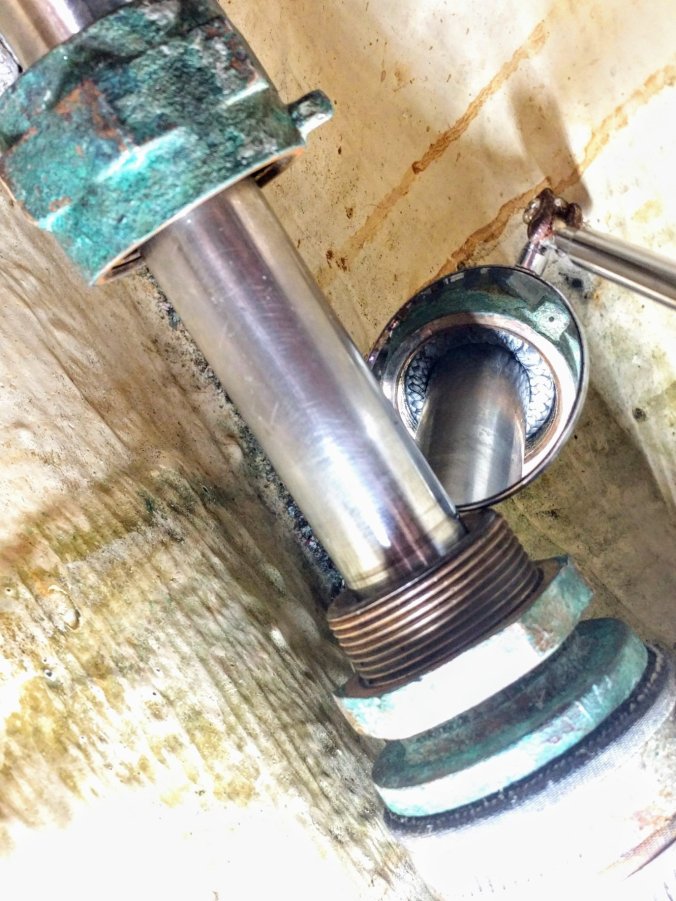
Right about in the center of this next photo, you can see a circle of textured material around the shaft. That’s the nice, new, clean stuffing!
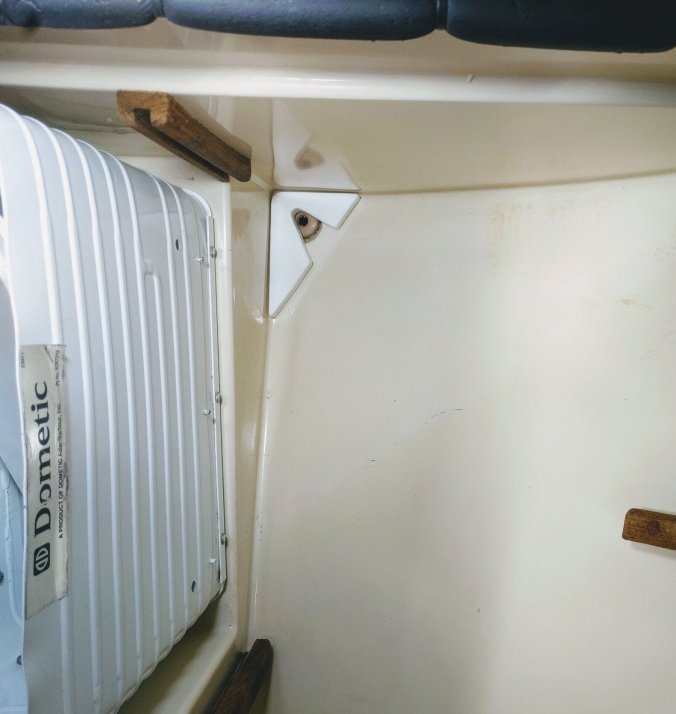
Not quite as dramatic, but still on the To-Do list, Mike made a small shelf for the bottom of our chest refrigeration. Condensation gathers at the bottom and this shelf will let me keep food out of that water. Plus i can never actual reach what’s way down there at the bottom of the fridge anyway!
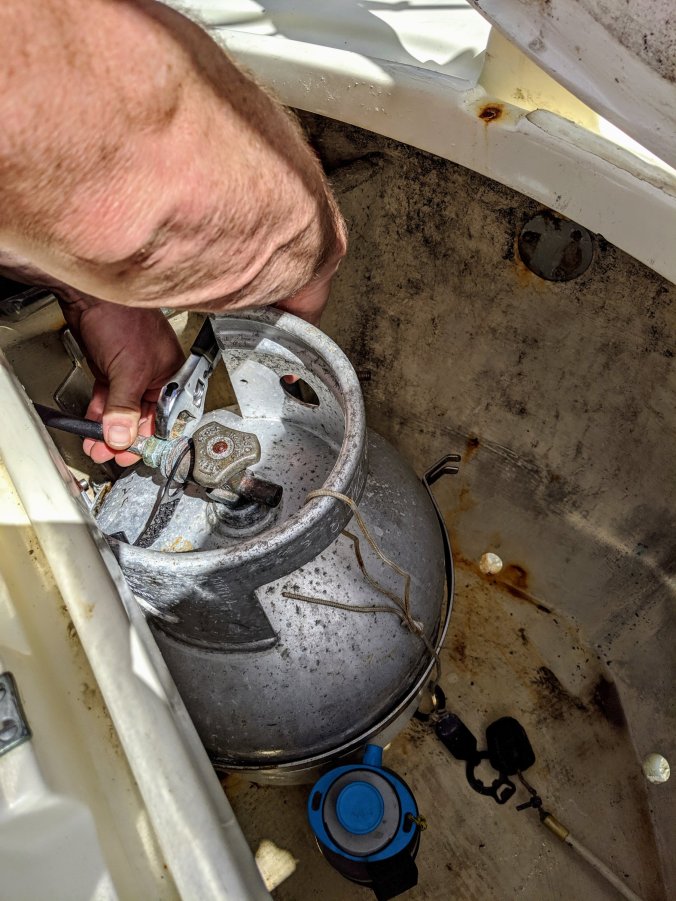
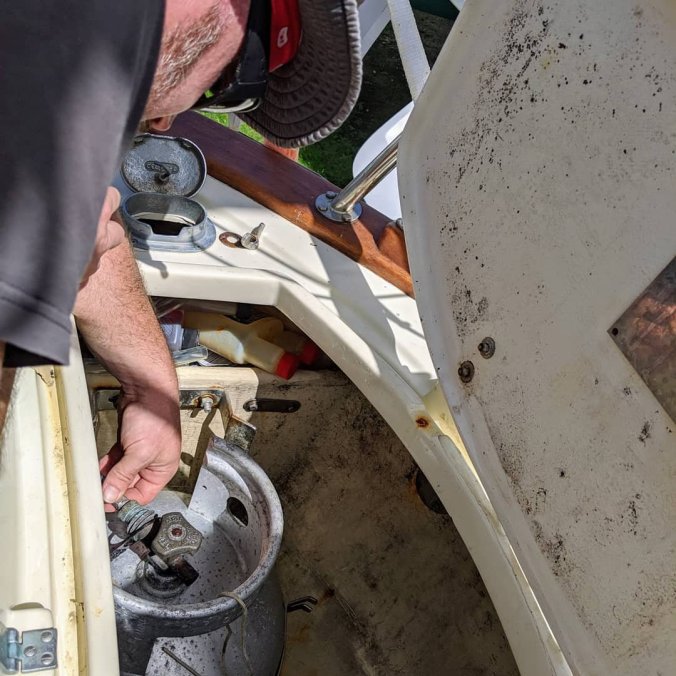
And then… After all this productivity, we ran into our first unpleasant surprise of the season. While testing the propane system, Mike discovered a leak. When he turns the propane on at the tank, we can hear the hiss of gas escaping, and can smell the propane. Luckily, the solenoid still works (we replaced it our first year) so we can narrow down the source of the leak to the external part of the system – not something leaking within the living space of the boat. Theoretically, this should be easier to trouble shoot and fix. However, we’ve squirted soapy water in ever hose and connection, watching for bubbles, and we haven’t found the source of the leak yet. Wish us luck as the search continues!
We’re Back!

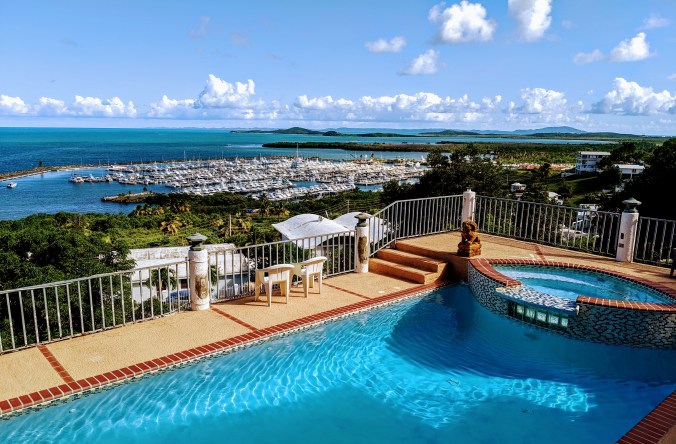
After 5 months, 4 countries, 3 states, 1400 km of hiking, and visits with countless friends and family members, summer vacation is over and we are back in Marina Puerto del Rey in Fajardo, Puerto Rico! We’re not allowed to live aboard in this boatyard, so we’ve rented an Airbnb just up the hill with a lovely view of the marina.

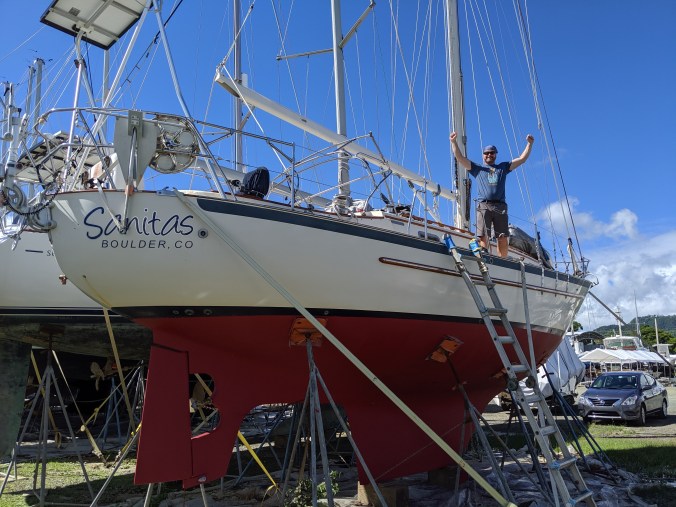
Sailing Vessel Sanitas is still on the hard in the boatyard where she has weathered hurricane season quite nicely. That’s partially thanks to our boat caretakers, Bianca and Johnny, who checked on her twice a month and performed extra storm prep during tropical storms Dorian and Karen. It’s also definitely due to the hard work Capt. Mike and I did in May to make sure everything aboard was as storm-ready as possible. We’ve done a thorough visual inspection and so far, so good – no mold or mildew, no bugs, no water in the bilge, nothing obviously broken. We’re keeping our fingers crossed that we continue to have no big surprises as we start up the systems and as we move into the water.

This month of preparation for the cruising season is the most expensive month of our year. We’re still paying boatyard fees for Sanitas and rental fees for a storage unit on land, as well as renting an apartment and car for daily use. We’re stocking up on spare parts, boat maintenance supplies, and canned and dry goods for six months. We’re paying for the only boat maintenance we don’t do ourselves; sanding and repairing the hull, applying a new coat of bottom paint, and polishing the hull. And we’re placing a new Amazon order practically every other day (did you know Amazon Prime free shipping works in Puerto Rico? Instead of 2-day shipping, it takes about 4 days, but who cares? It’s fantastic!) It makes me super anxious as we spend all this money, but I know we’ll be living at anchor and eating through those canned goods soon enough, spending practically nothing, so I try not to freak out.

This is our third time preparing for a winter in the Carribean. In fall of 2017 we had just bought Sanitas. She’d been out of the water for months while she was up for sale, so we found lots of surprises when we arrived at the boatyard in St Petersburg and set to work. The biggest, costliest project that first year was replacing the failed diesel fuel tank. In 2018, after surviving our first year of boat life, we returned to the boatyard with a massive to-do list of projects and things we needed to change to making living aboard a small sailboat more comfortable and our lives a bit happier. Each time, we spent much longer in the boatyard than we’d anticipated. But the investment of time and money up front made our cruising season go more smoothly. I’m hoping that third time’s a charm and that we know our boat well enough by now (and we’ve maintained her well enough as we go) that we can break free of the boatyard faster this time. I’d like to put in the work, and then hit the water! Let’s get to the the rewarding and fun part of cruising faster this time, ok?

Knock on wood because anyone who has ever owned a boat knows that there WILL be surprises – it’s just a matter of how serious and how costly… Ok, now back to work!

So how’s that medical insurance thing going?

About six months ago, I wrote a popular blog post about how I price-shop around for medical, dental, and vision services. So what do you do about medical insurance? So how’s that working out for us?

Prescriptions:

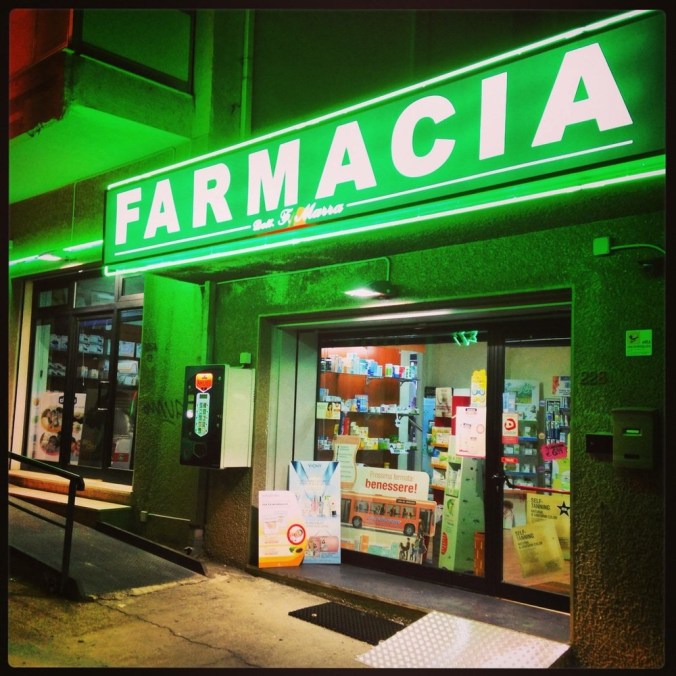
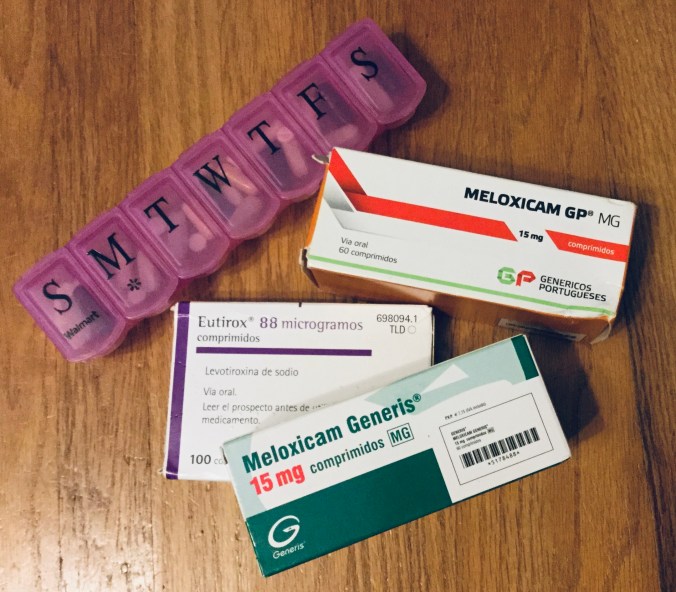
Have you ever heard anyone say “You can actually get that medicine in (insert name of country here) without a prescription!” During our summer in Europe, I decided to find out if it’s true. By the end of our Camino hike across Spain, I’d finished the years’ worth of prescription thyroid medication that I’d filled at the Walmart in Florida. (Don’t forget -if you pay out of pocket, you can buy all of your refills at once, instead of 90 days at a time!). I was pretty stressed out thinking about getting my prescription filled in Santiago. I needed to find a Farmacia, ask for a pharmacist who speaks English, explain which medicine I need (I kept the pill bottle), possibly get sent to a clinic to see a doctor and get a blood test (all by public transportation), possibly wait for the results, and hopefully get a new prescription by the end of it all. I’d worked myself into a bit of a frenzy thinking about it, but Santiago was the only place we’d be staying for more than one night at a time, so I bit the bullet and gave it a shot. I walked to the closest Farmacia, and timidly asked “Hablas usted Inglés?” The pharmacist answered, “a little” and took a look at my pill bottle. My thyroid medication is extremely common, so in less than ten minutes, I walked out of the Farmacia with 100 pills of my exact dosage for 9.95€. Yahoo! Emboldened, I walked down the street to the next Farmacia and asked again. This time, I walked out with 100 thyroid pills for 4.95€ Double yahoo! For 15 Euros or about $16.75 I had enough medication to carry me over until I’m in one place long enough to find a doctor and get settled. I also take a slow-release pain reliever for osteoarthritis. When I ran out of the pills in Portugal, I MAY have used my status as a pilgrim walking to Fatima to ask for a little bit of sympathy from the pharmacists. In Porto I was able to buy two boxes of 60 pills of meloxicam each for a total of 20€ Once again, it’s enough to last me through the rest of my European summer and until I could sort out something more permanent, and the price was quite reasonable.

What else have I done to keep medical costs down in the past six months?

Vision:

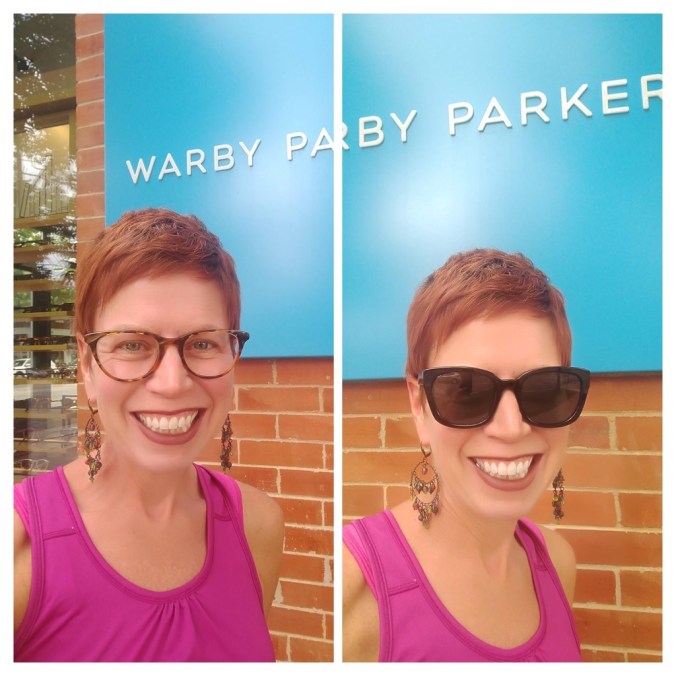
I’m extremely happy with the quality, style, and durability of Warby Parker prescription eyeglasses. My first pair of prescription sunglasses lasted for two years in the extremely harsh environment of sailing – even spending one whole night at the bottom of the ocean in the harbor under our boat, requiring a snorkel rescue the next day. So during our brief trip to Colorado this summer I ordered two new pairs: a clear lens pair for $95 and a pair of polarized sunglasses for $175. Not dirt cheap by any means, but try comparing to prices in the optometrist’s office and you’ll find it’s a pretty darn good deal. Stylish too!

Dental:

I bought another Groupon this year for Capt. Mike’s and my dental cleaning and x-rays. It’s a great deal for new customers, but of course they are going to try to find something else that needs fixing in your mouth, because that’s how the dental office makes their money. This dentist found two old fillings that she recommended replacing, and it think it’s legit. I have a mouth full of fillings and the old ones do fail eventually. The dentist’s office manager gave me the option to pay cash using their dental discount plan. But wait! With an hour of research on the internet, I found a different dental discount plan that allowed me to pay by the month rather than subscribing for a full year, and I could cancel as soon as the fillings were complete. AND the fillings were cheaper too even provided at the same office by the same dentist. Lesson learned – it never hurts to shop around, and don’t hesitate to ask for a few days to decide before agreeing to treatment.

Flu Shots:

Sure, my international insurance plan doesn’t cover preventative care like free flu shots. But honestly, I’d rather pay between $20 to $40 out-of-pocket once a year rather than paying thousands of dollars in premiums for high-deductible plan I don’t use! Once again, I did a bit of internet sleuthing. The drug store chains don’t post flu shot prices on their web sites, but you can easily Google it and find bloggers who have done the price comparison research. You probably won’t be surprised to learn that Costco offers the cheapest flu shots this year at $19.99. But you MIGHT be surprised to learn that ANYONE can use the Costco pharmacy services for prescriptions or shots even without a membership. I was surprised! And I’m going to keep it in mind for future cost cutting. There weren’t any Costco warehouse stores near where we were staying in upstate New York, so I went to the next cheapest option at Sam’s Club. $35 with a normal membership, $30 with a Plus membership. There was no line at the pharmacy, I walked right in and had my flu shot complete for the year in less than ten minutes. Drug stores, such as CVS and Rite Aid, are more convenient locations for getting a flu shot, but they’ll charge at least $40. Sometimes they’ll give you a gift certificate or coupon toward a prescription discount to offset the higher cost.

Doctors and Accidents:

Thankfully, I haven’t had any injuries or accidents or gotten very ill, so I haven’t had to see a doctor since I signed up for the IMG international medical plan. But I do have a United Health Services insurance card with an individual and group id number that works both in the US and overseas. The premiums for Mike and I are affordable, and the deductible is “only” $1000 so if a big accident did take place, we could cover those costs more easily than we could with a high deductible plan. I’ll be in Puerto Rico for at least a month this fall, so I’ll go to a medical center there (after doing some cost comparisons, of course) and get prescriptions for the next year.

Just-In-Time Living

Another “keeping it real post” about nomadic life. Since only about three people actually read this blog (Hi Mom and Dad! Hi Sharon! Love you guys ♥️) I guess it’s ok to go public with my love of thrift-store finds, and maybe even to admit what I spent on my 30th reunion outfit.

One of the toughest transitions from land life to boat life was getting used to the idea that I could no longer buy in bulk, and couldn’t keep things around just in case I might need them someday. There’s no room! There’s high humidity! You gain weight! You lose weight! Basically, if I manage to keep stuff around, by the time I need it either it’s no good anymore, or I don’t like it anymore. Capt. Mike shared with me a great article on minimalism that suggested using Craigslist like your own personal storage unit. If you don’t need it on a regular basis, sell it! When you need it again a few years later, odds are you’ll find something just like it on Craigslist or eBay. Great advice. I feel better now about parting with something that rates marginal on the “brings me joy” scale.

When we were packing last June for our summer in Europe, a record-setting heat wave was blanketing the continent. So we carefully packed light, and left thermal jackets behind. But we knew we’d end our trip at northern England in September when weather conditions could be very different. I stayed firm, forcing Mike to leave those wool tops and jeans behind: “We can spend $50 each at Primark when we get there. It’ll be fine.” And, for the most part, it was!

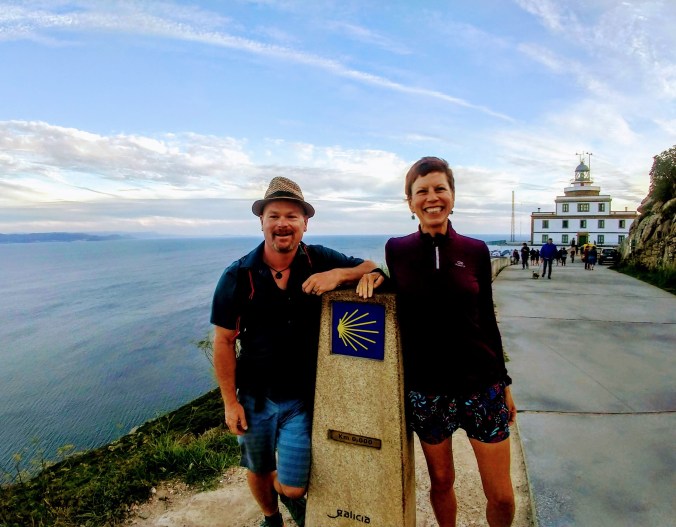
I think I walked off a layer of fat in the 900km between St Jean Pied-de-Port and Finisterre, and by the end of the Camino de Santiago I shivered through the chilly fall evening temps. But no problem! I discovered the European sporting goods chain Decathlon and bought my favorite color purple long sleeve top for €9.99. Plus, they have gluten free energy bars!

And yes, it was every bit as cold and rainy in Harrogate, North Yorkshire as we anticipated in September. But that was ok too. We spent our first afternoon wandering the town where we lived for four years in the late 90’s ducking into all of the charity shops and really enjoying the vibe of the town. We did great too! Mike found a pair of khakis and a navy blue sweater. I found a cute winter jacket for £9 and a pair of Converse sneakers for £15. After that promised trip to Primark, we were set for anything the cool and rainy English countryside could throw at us. You wouldn’t even recognize us by looking at our Camino photos and comparing to our English selves, and we didn’t have to carry all those warm clothes or have to pay to ship them ahead while backpacking.

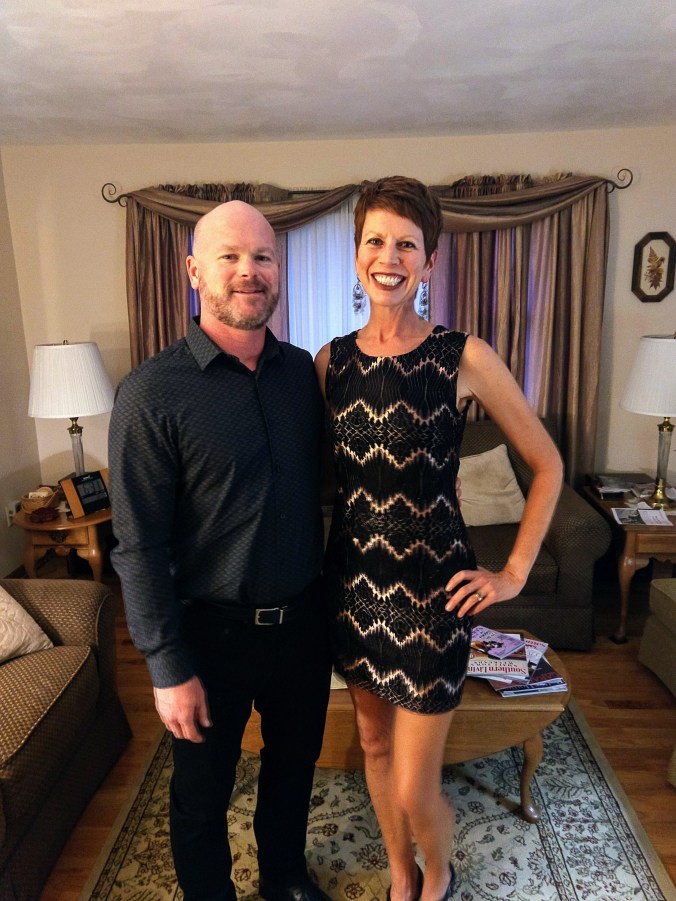
The coup de grace of our thrift store shopping adventure was preparation for my 30th high school reunion. The dress code was “cocktail” and we sure didn’t have anything in our backpacks to fit the bill. In fact, Capt. Mike decided he wouldn’t even attempt to achieve cocktail status, he’d be happy just hitting the halfway point between hiker and formal, lol. I think he hit the mark: black Gap jeans with the tags still attached and grey dressy button down shirt from Plato’s Closet with black leather shoes from Thrifty Shopper. Grand total – $28. I was feeling a bit more conflicted. After all, it was actually my reunion, and and hadn’t seen any of these people in 30 years. And I was more geek than cheerleader in college. I didn’t want to LOOK like I’d shopped in a thrift store. But … I’m a retiree on a fixed budget now, so I’m not going to spent a lot of money on fancy clothes I’ll never wear again, right? My outfit: dress from Plato’s Closet, purse from Thrifty Shopper, tall boots from MoShop30. Grand total = $22. I cheated and bought new high heels from TJ Maxx for another $20. We salty sailors / backpackers / homeless nomads clean up pretty good, don’t ya think?

The Camino in Spain vs the Camino in Portugal…

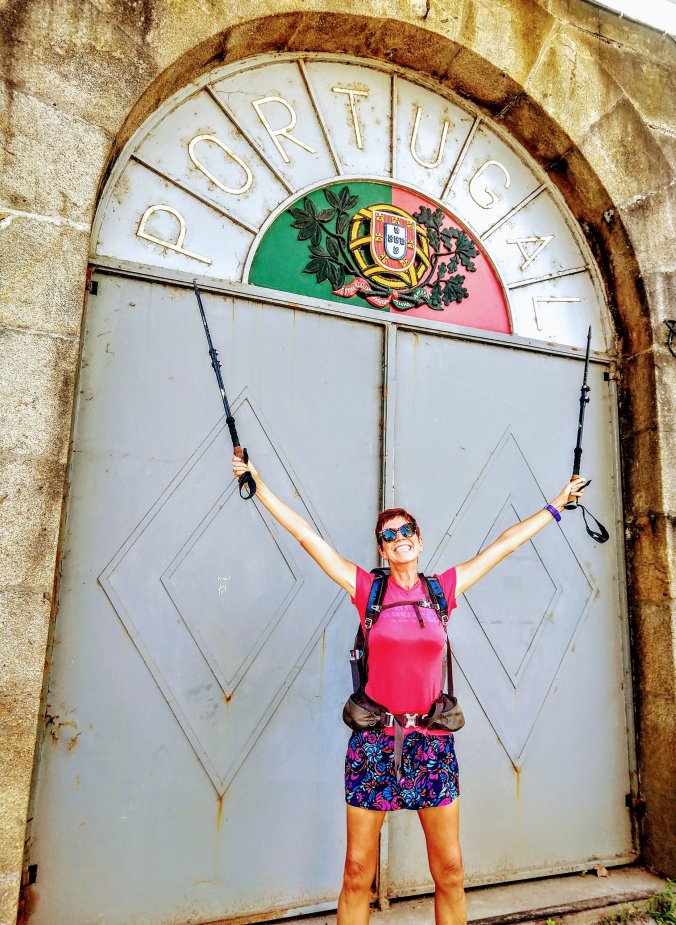
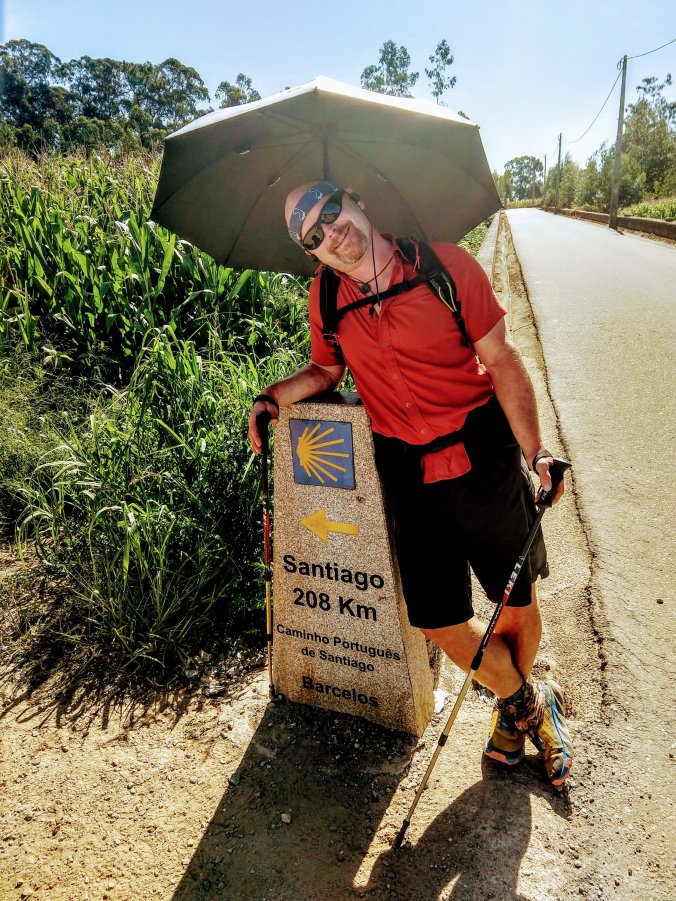
I’ve walked more than 1250km, over the better part of two months now, so I think I’m entitled to an opinion on this. And so far, I enjoyed my time walking the Camino Frances across Spain MUCH better than the Camino Central in Portugal. Now some of that could very well be mental attitude:

After two months of travel, most of it walking, it is entirely possible that I am a little bit tired.

And it’s much more exciting to be walking toward Santiago with hundreds of other pilgrims than to be walking away from Santiago by ourselves.

But there are a lot of external reasons that I prefer the Camino in Spain as well.

There are fewer services oriented toward pilgrims in Portugal: fewer albergues, cafes, pilgrim menus, and shops.

There is much less history and art to experience – few grand cathedrals, museums, and palaces. And the lovely white churches we do walk past are always locked. There ARE quite a few Roman bridges, but they get old.

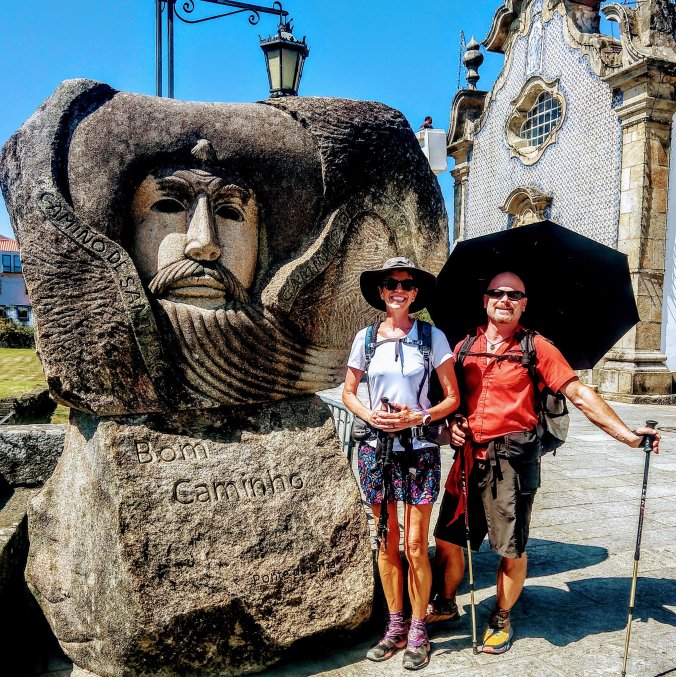
The language barrier makes things tricky. I had finally learned enough Spanish to make myself understood ordering in a restaurant or an albergue or to ask directions. I even dusted off my high school French a few times. But Portuguese is wacky! In writing, it kind of looks like Spanish spell-checked by a drunk. But when spoken, it sounds like Martian! My entire vocabulary consists of “good morning” (bom dia) and “thank you” (obrigado).

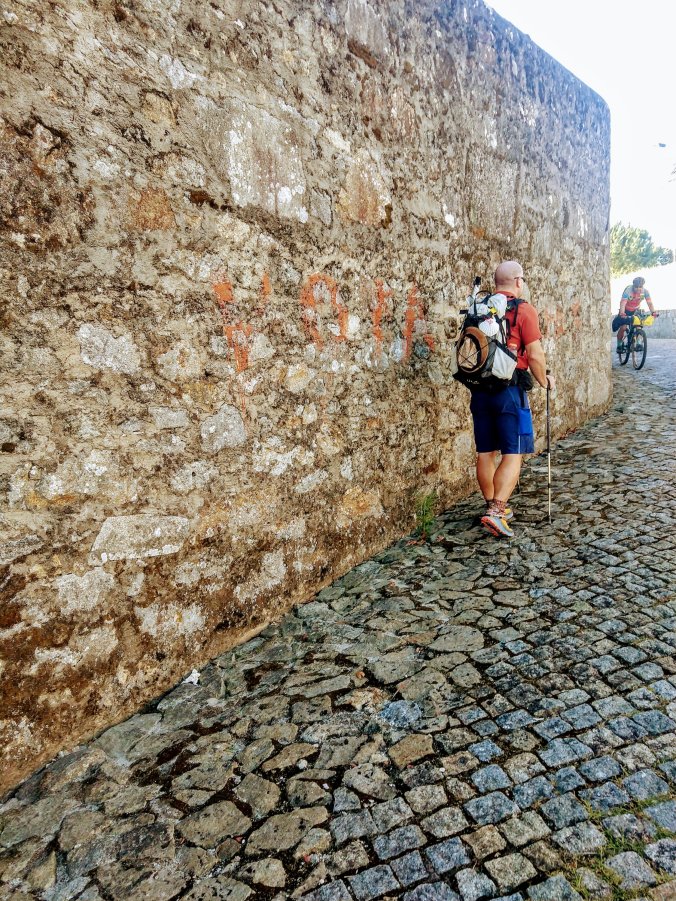
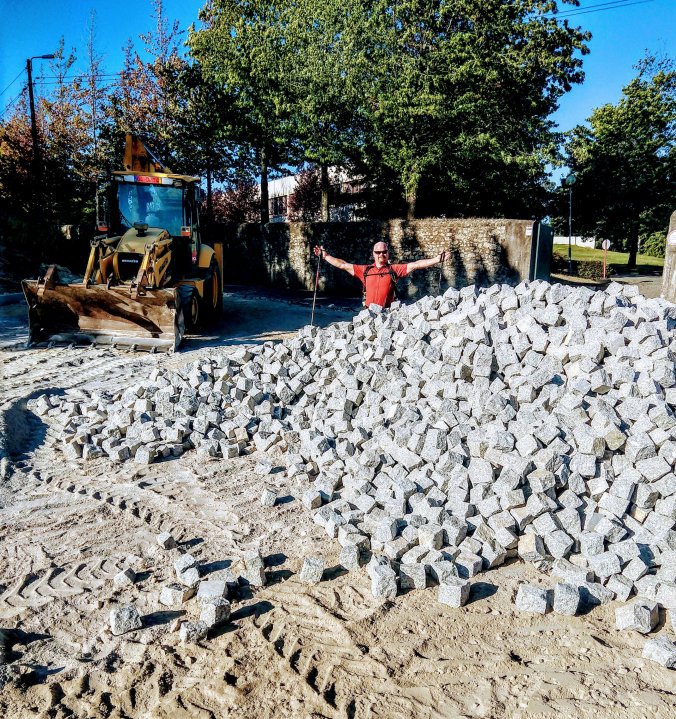
But the biggest downside to walking the Portuguese Camino is that it is almost entirely on roads. Sometimes in the narrow shoulder of very busy roads with trucks zooming by at 60mph. Sometimes on what our guidebook describes as “delightful country lanes” which really just means narrower roads with stone walls on both sides with less frequent trucks zooming by at 60mph. And maybe worse than the traffic is the surface of these roads – small square cobblestones that twist your ankles and make your feet ache after 25-30km under the weight of a backpack.

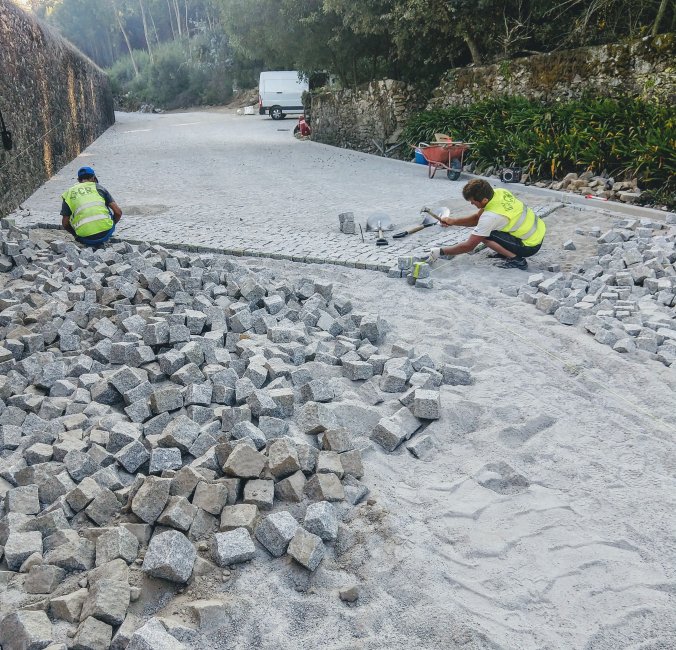
We came upon a road crew placing the stones on a new stretch of road – fascinating! It’s very labor intensive. The road bed is covered in sand. Strings are put in place to make straight lines to guide the cobblestone placement. Then two men sit in the road with a hammer in one hand and a pile of square rocks nearby and dig a hole, place a stone, and tap it into place. Over and over again. I wish they’d just leave them all as dirt – so much better for walking!

I know, I know… I’m not getting much sympathy from you as I complain about sore feet while spending two months in Europe. And you’re right! It’s time to snap out of it and enjoy the beauty of this small country. On the positive side, people are very friendly and keep warning us that we are walking the wrong way, lol. And there are way more English-speaking pilgrims than we encountered in Spain. So we get the chance to have several two-minute conversations with northbound travelers each day. And coffee and wine are both dirt cheap! There’s no tortilla option in the cafes, but cabbage soup is a pretty reliable gluten free option. And I learned how to say “without bread” in Portuguese (sem paõ). And we’re planning to take a three-night vacation from pilgrim-ing in beautiful Porto, so I think we’ll feel renewed and energized again as we continue south. Wish us luck!